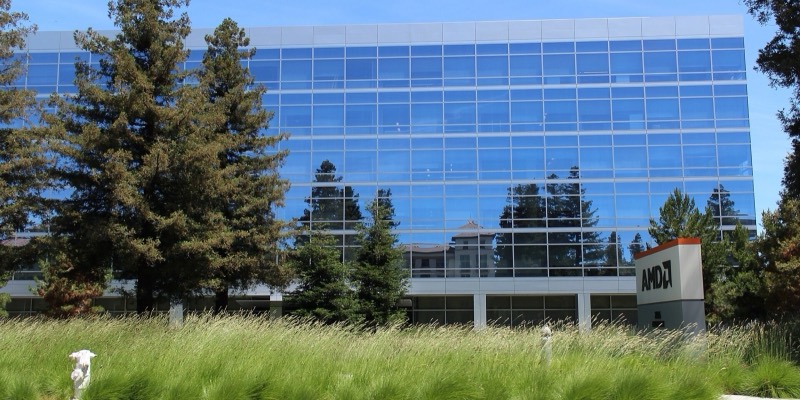
AMD’s headquarters in Santa Clara, California. Image: Coolcaesar / Wikimedia Commons, CC BY-SA 4.0
AMD crossed a $1 trillion market value for the first time on Monday, joining a tiny club of chipmakers as investors pile into bets on its growing role in AI, Reuters reports. Shares jumped 9.6% to $613.31, a record high, making AMD only the fourth U.S. chipmaker ever to reach the milestone, after Nvidia, Broadcom and Micron.
A 185% year
The milestone caps a remarkable run. AMD’s stock is up about 185% in 2026, according to Reuters, against a 15.8% gain for the Nasdaq over the same period, making it one of the best performers in the S&P 500 this year.
The rally has picked up speed recently. After AMD forecast quarterly revenue above Wall Street estimates in early August, its shares initially fell more than 7%, but they’ve since surged more than 26%.
Money is moving back into the AI trade. AMD is representative of that.
Thomas Hayes, chairman, Great Hill Capital, via Reuters
Why investors are buying
AMD is widely seen as the closest rival to Nvidia in the graphics processors that train and run AI models. According to Reuters, it has sped up its AI product launches and moved beyond selling individual chips to offering complete systems that combine processors, networking gear and related hardware, helping it compete more directly with Nvidia.
It’s also cashing in on a less glamorous corner of AI: the regular CPUs that sit alongside graphics chips in servers running AI “inference,” the work of answering users’ requests. That demand is helping AMD take market share from Intel.
The whole sector rallied
AMD wasn’t alone. Chip stocks broadly climbed on Monday, Reuters reports, with Intel jumping about 11.8% and Qualcomm rising 4.5%. The Philadelphia semiconductor index gained 2.7% to its highest level in over a month.
Still a long way behind Nvidia
For perspective, Nvidia crossed $1 trillion back in 2023 and is now worth more than $5 trillion. And AMD isn’t cheap: according to Reuters, it trades at roughly 41 times expected earnings, against about 16 times for Nvidia. Investors are paying up for AMD’s growth, which means it has to keep delivering.
Source: Reuters (via The Globe and Mail)