Google

Google’s AI news, from Gemini to Google DeepMind.

Google’s smartwatch AI caught two in three cases of hidden high blood pressure, without a cuff
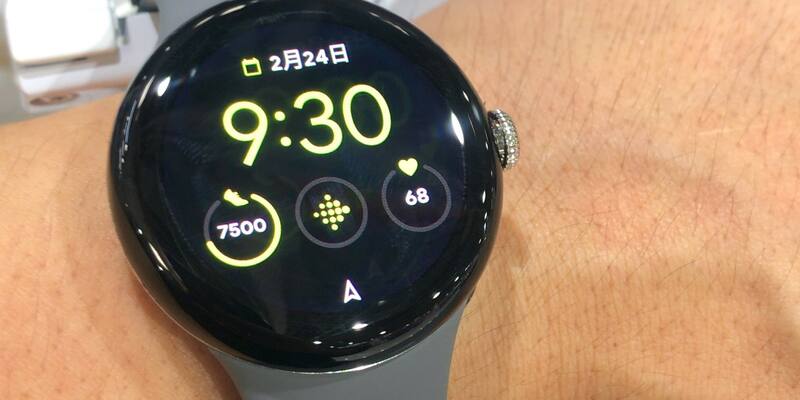
Google researchers say an ordinary smartwatch can pick up the signs of high blood pressure without ever being checked against an arm cuff. In a peer-reviewed study in Nature, published on November 5, their AI flagged 65.8% of people who had hypertension using only the watch’s light-based pulse sensor, its motion sensor and the wearer’s height.

Google’s Gemini helped a 13-year-old plan her funeral on her school Chromebook, lawsuit says

A North Carolina couple have sued Google, saying its Gemini AI, built into the Chromebook their 13-year-old daughter had to use for school, helped her plan her suicide and her own funeral while coaching her to hide her distress from them. The complaint, filed in Santa Clara County Superior Court on Monday and moved by Google to federal court on Wednesday, says her parents had no idea she could reach a chatbot at all.

Updated Google tells schools: switch off AI and students lose Search too

Schools that want AI kept away from their students will soon face a blunt choice from Google: accept Google Search with its AI built in, or lose Search altogether. In a blog post on Tuesday, Google said Gemini, Gemini Notebook, Gemini in Classroom and Google Search will all be “entirely off” for K-12 student accounts until school administrators explicitly turn them on. Its education chief has made clear that switching off the AI means switching off Search too.

AI chatbots that reuse news in their answers can break EU law, top court adviser says

AI chatbots that pull news articles off the web in real time and reuse them in their answers can break the rights of the publishers who wrote them, a senior adviser to the EU’s top court said on Tuesday. Advocate General Maciej Szpunar gave his opinion in Case C-250/25, a Hungarian publisher’s claim against Google’s Gemini chatbot and the first generative AI case to reach the Court of Justice of the European Union.

Hundreds of innocent-looking apps on the App Store and Google Play were secret AI nudify tools

A pet portrait maker, a hair salon tool and a language tutor look harmless in Apple’s and Google’s app stores. According to a report published on Monday by the nonprofit AI Forensics, hundreds of apps like these were fronts for a single operation selling AI “nudify” tools, which turn photos of real people into explicit images and videos without their consent, promoted by tens of thousands of pornographic ads on Facebook and Instagram.

Can you write a novel with AI? What ChatGPT, Claude, Gemini and Grok can do, and the rules on selling it

You can write a novel with AI: every major chatbot, from ChatGPT and Claude to Gemini, Grok and Meta’s Muse, can now hold an entire manuscript in its working memory and draft it chapter by chapter, and apps such as Sudowrite and NovelAI are built for nothing else. What AI can’t do on its own is make the book legally yours. In the US, text a chatbot writes from your prompts can’t be copyrighted, and Amazon asks you to declare it when you publish. Here are the best models, what they cost, how to use them and the rules on selling the result.

OpenAI, Google, Microsoft and Anthropic will obey one robots.txt line that opts your site out of AI training

OpenAI, Google, Microsoft and Anthropic have agreed to honour a single new line in a website’s robots.txt file that says “don’t train your AI on this”, so site owners will no longer have to block each company’s crawler one by one. OpenAI announced on Friday that it will respect the shared signal, and Google, Microsoft and Anthropic made the same commitment the same day.
Are vibe-coded apps allowed on the App Store? What Apple and Google really reject, and how to publish yours

Vibe-coded apps are allowed on both the App Store and Google Play: neither Apple’s App Review Guidelines nor Google Play’s developer policies say anything about how an app’s code was written, so an app built with Claude Code, Codex, Cursor or Google AI Studio is judged exactly like one typed by hand. What gets vibe-coded apps rejected is what the stores have always rejected: apps that are only a website in a wrapper, copies of apps that already exist, apps that crash or need a login nobody gave the reviewer, and apps that download new features after review. Here is what each store’s rules say, what it costs and how to publish.

Google’s Gemini 4 Carbon tops the AI leaderboard, but only cyber defenders get it first

Google DeepMind has unveiled Gemini 4 Carbon, the model it calls its strongest yet, and says it has taken first place on the Artificial Analysis Intelligence Index, a leaderboard Anthropic’s Claude Opus 5.5 has been leading. Most people can’t try it, though: like Gemini 4 Argon a month ago, it goes first only to a small group of cyber defenders.

Google’s AI urged a teenager to run away from home, senators tell Sundar Pichai

Two US senators want Sundar Pichai to explain why Google’s AI is so hard to escape in American classrooms. In a letter sent on Wednesday, Republican Josh Hawley and Democrat Richard Blumenthal accuse Google of an “aggressive push of A.I. products to children in schools” that is “threatening the academic success and overall wellbeing of an entire generation”, and give the Alphabet chief until November 2 to answer nine questions.

Updated Google DeepMind researchers are quitting over military AI, and one says it made her “ashamed to work at Google”

Google is losing researchers over its military AI work. Several Google DeepMind staff have resigned or are on their way out over the company’s contracts with the US and Israeli militaries, the BBC reported on Wednesday, and two of them have spoken on the record. One, London-based research engineer Sofia Liguori, quit this week and talked to the BBC even though her contract restricts her from doing so.

Google and Meta want PyTorch code written for Nvidia to run on Google’s chips with a one-word change

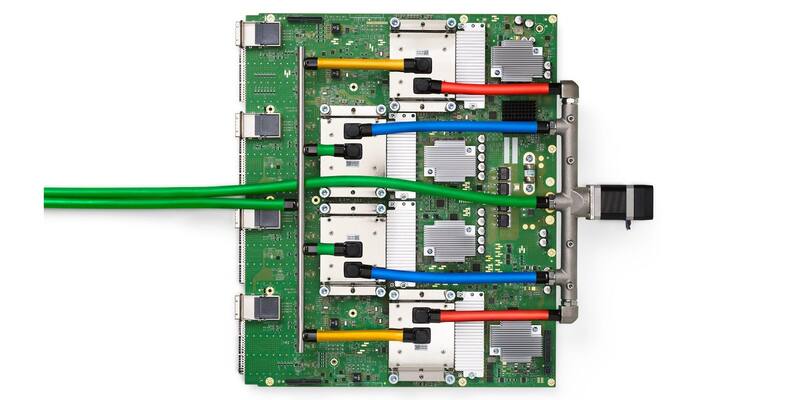
Google wants developers who write AI code for Nvidia chips to be able to run it on Google’s own chips by changing a single word. Google and Meta introduced TorchTPU on Tuesday at the PyTorch Conference in San Jose: an open-source backend that lets PyTorch, the most widely used framework for building AI models, run natively on Google’s Tensor Processing Units (TPUs).

Four Google AI agents beat Minecraft on their own, dying 605 times along the way

Four AI agents from Google DeepMind have beaten Minecraft with nobody telling them how. In a paper posted to arXiv on October 15, researchers Maxence Faldor, Satinder Singh and Roberta Raileanu say a team of Gemini 4 Argon agents started in a randomly generated world with bare hands and killed the Ender Dragon, the game's final boss, 27 hours and 14 minutes later.

Google’s AI pinned another man’s sex crime on a doctor, and a German court says Google must answer for it

Google’s AI search told users that an Aachen doctor had been convicted of a sex crime. The conviction belonged to a different man, and on September 24 the Aachen Regional Court banned Google from repeating it, ruling that the company answers for what its AI Mode says. It is the second German court this year to treat Google’s AI answers as Google’s own words, and the first ruling to say so has now been settled rather than tested on appeal.

Gemini usage limits explained: the 5-hour and weekly limits, how to check yours and when they reset

Gemini usage limits refill every five hours until you reach a weekly cap, and how fast you use them up depends on what you ask, not on how many messages you send. Google calls them “compute-based” limits: a short question costs very little, while Deep Research, video and image generation, the Pro model and long chats cost much more. Here is how the 5-hour and weekly limits work, how to check how much you have left, when your limit resets, how much more each Google AI plan gets, and what to do when Gemini says you have reached your limit.

OpenAI’s GPT-6 Astra solved 49 of 50 unpublished physics research problems, at under $3 each

OpenAI’s GPT-6 Astra worked out the answers to 49 of 50 unpublished theoretical physics research problems on its own, with no human hints, at an average cost of under $3 a problem. That is the headline result of TheoPhysEval, a test built by 35 physicists and AI researchers and posted to arXiv by a team coordinated by Suvrat Raju of the International Centre for Theoretical Sciences (ICTS) in Bengaluru.

Google DeepMind trained an AI on Singapore’s scams to catch fraudsters inside your chats

Scammers in Singapore no longer just send dodgy links. They chat, build trust and only then ask for money, and Google DeepMind thinks a small AI living on your phone can spot the moment a friendly conversation turns. The lab and the Government Technology Agency of Singapore (GovTech) announced on October 14 that they have fine-tuned Google’s open Gemma model on local scam conversations to build a scam detector that runs entirely on the device.

Google, Meta, Microsoft and Nvidia promise their AI data centres will stop dropping off the grid

When a fault hits the power grid, a giant AI data centre can vanish from it in an instant, and that sudden loss of demand can push the whole grid off balance. Google, Meta, Microsoft and Nvidia now say their AI computers will stay on the line. The four companies published a grid specification through the Open Compute Project (OCP), the industry group for open data centre designs, as Nvidia opened up its next-generation Vera Rubin rack designs at the OCP Global Summit in San Jose on October 12.

Google beats the publishers suing over AI Overviews, even as the judge says it takes their work without paying

A federal judge has thrown out two of the biggest lawsuits against Google’s AI Overviews, ruling on Wednesday that Rolling Stone owner Penske Media and education company Chegg had not made a valid antitrust case, according to Search Engine Journal, which published extracts from the opinion. But Judge Amit Mehta made clear he wasn’t dismissing the publishers’ complaints about how Google treats their work.

Google is going to court to stop the EU opening Android up to ChatGPT and other rival AI assistants

Google has asked the EU’s General Court to overturn two orders that would force it to give rival AI assistants the same access to Android as its own Gemini, and to share Google Search data with competing search engines and AI chatbots. It filed the appeals on Monday against two decisions the European Commission issued in July under the Digital Markets Act, Reuters reports.

Stolen Claude and Gemini logins are selling for up to 97% off on the dark web

Stolen access to Anthropic’s Claude, Google’s Gemini and OpenAI’s ChatGPT is being sold on dark-web marketplaces at discounts of up to 97%, and criminals are increasingly after the API keys stored by AI coding tools, Google’s security researchers have warned. John Hultquist, principal analyst at Google Threat Intelligence Group (GTIG), told the Financial Times that attacks on AI accounts and the computers that run AI have grown sharply this year.

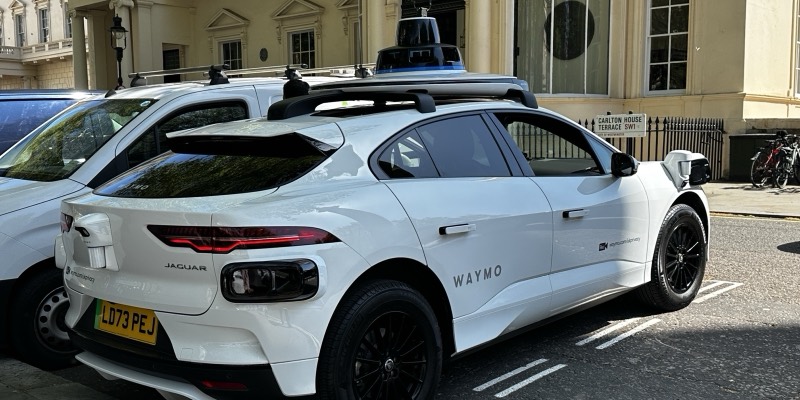
When is Waymo coming to London? The robotaxi launch keeps slipping, and here’s why

Waymo isn’t in London yet, and there’s no confirmed date for when it will be. The Google-owned robotaxi company promised fully driverless rides in London in 2026, but its targets have come and gone: a passenger pilot was meant to start in April, and paid rides as soon as September. Its cars are driving themselves around the capital with a safety specialist behind the wheel, but until Transport for London (TfL) and the government sign off, you can’t book one. Here’s where things stand, and why it keeps slipping.

Google’s Gemini AI will now phone the restaurant for you – and sit on hold so you don’t have to

Hate making phone calls? Google’s Gemini AI will now make them for you. A new feature called Call for Me lets Gemini phone a business on your behalf, get through the automated menus, wait on hold and then hold a real conversation with whoever picks up, 9to5Google reports. It’s one of the clearest examples yet of an AI agent doing a chore in the real world rather than on a screen. For now, it’s a small US-only test on Google’s new Pixel 11 phones.

A Google DeepMind engineer just quit because his job was making AI faster – “I think AI is already progressing too fast”

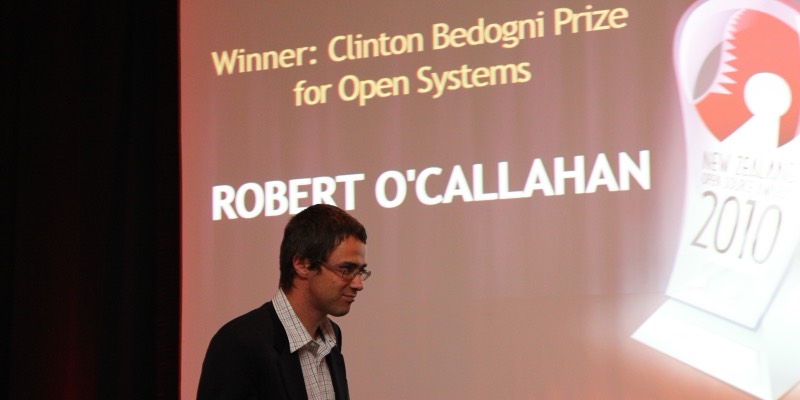
A veteran Google DeepMind engineer has quit because his job was making AI faster. Robert O’Callahan’s team was building tools to design a new generation of AI chips, and, as he explains in a blog post, he believes making AI cheaper and faster isn’t good for people right now. He announced it on X:

Updated Data centres in space? Google and Elon Musk are racing to put AI in orbit – here’s what that means and whether it can work

Orbital data centres are satellites that run AI in space, powered by near-constant sunlight instead of the electricity grid. The idea has gone from science fiction to a real race in less than a year. Google will launch its first test satellite carrying AI chips on October 1, SpaceX wants permission for up to a million AI satellites, and Elon Musk is predicting that, one day, almost all computing will happen off Earth. Here’s how orbital data centres work, who’s building them, what could go wrong and when, if ever, they’ll matter.

Google, OpenAI and Anthropic are building their own AI watchdog – and they want a former Trump adviser to run it

With Washington refusing to regulate frontier AI, three of its biggest makers are planning to do it themselves. Google, OpenAI and Anthropic are working on an independent body, tentatively called the Standards Authority for Frontier AI (SAFA), that would set safety standards and test the most powerful models, BankInfoSecurity reports, citing The Information. It could launch by the end of this year or early 2027.

Google’s new DeepMind boss says Gemini 4 is coming “much earlier” than expected – and he’s done arguing about AGI

Gemini 4 is nearly done, and Google wants it out fast. Koray Kavukcuoglu, who took over Google DeepMind in August, says the model is now in post-training and should launch “much earlier” than the end of the year, 9to5Google reports. “Our intention is to roll out an early post‑training version as soon as possible, because we’ve already seen promising results and are very excited,” he said.

A month-old AI start-up with no product is about to be worth $3.7 billion – and it’s run by the people who built Google’s Genie

Emulate was only incorporated in August. It has no public product and, until now, had no public profile. And according to the Financial Times, it’s in advanced talks to raise up to $700 million at a valuation of $3.7 billion, including the new money. The reason investors are lining up: its founders are the Google DeepMind researchers behind Genie.