Analysis

Opinion and analysis from MadRobot: our take on the biggest questions in AI.

If AI pays everyone, who are you without your job? Elon Musk says that’s the hard part
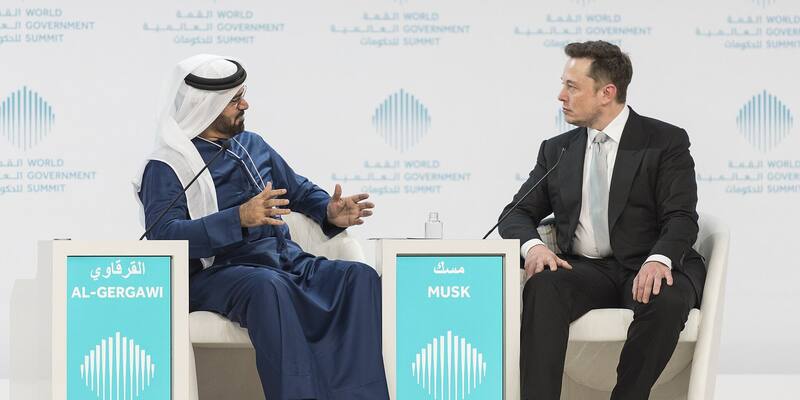
In February 2017, on stage at the World Government Summit in Dubai, Elon Musk predicted “there will be fewer and fewer jobs that a robot cannot do better” and said “we will have to have some kind of universal basic income”. Then he turned to what he saw as the harder problem: “A lot of people they derive their meaning from their employment.” If you’re not needed, he asked, “what’s the meaning? Do you feel useless?”


OpenAI and Meta want you to trust their AI agents, so they gave them cuddly faces

The most powerful consumer AI products of the year come with a face you want to hug. When OpenAI launched its always-on dots agents on Tuesday, it gave them a cast of fuzzy characters, from a yellow triangle in round glasses and a bow tie called Alfred to a frog called Todd. Meta’s Muse agent arrived with Jolly, a plush, rosy-cheeked creature that now also lives on a keychain.

Updated Anthropic wants to be worth $2 trillion. Its own IPO filing shows why that’s such a big bet

Anthropic is heading for what could be the largest stock market debut ever, and this week investors got their first real look inside it. Details from the Claude maker’s confidential prospectus, reported by Reuters, show a company growing faster than almost any business in history while losing tens of billions of dollars, signing up for half a trillion dollars of computing, and warning that its own technology could pose “catastrophic or existential risks to humanity.” Wall Street is split on whether that adds up to a $2 trillion company.

Updated Trump is launching an AI “front door” to the entire US government, with Elon Musk and Jensen Huang on stage

The White House is about to put AI between Americans and their government. On Tuesday, President Trump and Vice President JD Vance will unveil America.gov, a new AI-powered website meant to replace the maze of federal agency sites with a single place to get things done, Fox News Digital reports. And the guest list reads like a who’s who of the AI boom.

Apple is losing the AI race – and a smarter Siri won’t save it

Apple finally has a smart Siri. After more than two years of promises, delays and a $250 million lawsuit settlement, “Siri AI” arrived on iPhones on September 14, and the reviews are genuinely good. There’s just one problem: while Apple spent those two years trying to make Siri read your emails, the rest of the tech industry built AI that does your job. Here’s how far behind Apple really is, why it happened, and whether it matters.

Updated Your AI chats aren’t as private as you think: what OpenAI, Anthropic, Google, Meta, Microsoft and Apple really do with your data

Millions of people now tell AI chatbots things they wouldn’t tell their friends: health worries, money problems, relationship trouble, work secrets. But where does all of that go? Who can read it? How long is it kept? And is it being used to train the next model, or to sell you something? We went through the privacy policies, help pages and official statements of the six biggest AI companies to find out. The short answer: unless you change your settings, most of them are using your conversations, and the details vary a lot more than you might expect.

Trump says AI safety is a ‘hoax’ – so why does his own government keep treating AI like a threat?

In the space of ten days, Donald Trump has called fears about AI a “HOAX,” promised to create an “AI Force,” told the United Nations that artificial intelligence will now be called “superintelligence,” and prepared to ask China’s Xi Jinping for an emergency hotline in case AI goes badly wrong. If that sounds contradictory, that’s because it is. But look closely at what his administration has actually done over the past 20 months and a clear pattern emerges. Trump doesn’t have an AI policy so much as an AI doctrine: win the race against China, and treat everything else, from safety rules to chip sales to individual companies, as something to be negotiated, one deal at a time.

Claude is so back with Opus 5.5

Two months ago, the verdict on Claude was brutal. Developers called Opus 5 a “downgrade.” They said it rambled, buried its answers and rewrote half your codebase to fix a typo. Some went back to the previous model; plenty defected to OpenAI’s Codex. On Monday, Anthropic released Claude Opus 5.5, and the mood has flipped almost overnight. The internet has a phrase for this, and for once it fits: Claude is so back.

AI is eating the power grid – and on both sides of the Atlantic, you’re the one picking up the bill

Last Thursday, the U.S. Department of Energy handed the operator of America’s largest power grid emergency authority to “direct backup generation resources to operate as a last resort” before rolling blackouts across 13 states and Washington, D.C. It was the latest in a string of such orders this year. In Europe, meanwhile, a new data centre in Frankfurt or Amsterdam can wait the better part of a decade just to be plugged in. This is what the AI boom looks like from the grid’s side, and it’s not pretty.