Guides

Guides to getting more out of AI tools.

Can you write a novel with AI? What ChatGPT, Claude, Gemini and Grok can do, and the rules on selling it

You can write a novel with AI: every major chatbot, from ChatGPT and Claude to Gemini, Grok and Meta’s Muse, can now hold an entire manuscript in its working memory and draft it chapter by chapter, and apps such as Sudowrite and NovelAI are built for nothing else. What AI can’t do on its own is make the book legally yours. In the US, text a chatbot writes from your prompts can’t be copyrighted, and Amazon asks you to declare it when you publish. Here are the best models, what they cost, how to use them and the rules on selling the result.

Are vibe-coded apps allowed on the App Store? What Apple and Google really reject, and how to publish yours

Vibe-coded apps are allowed on both the App Store and Google Play: neither Apple’s App Review Guidelines nor Google Play’s developer policies say anything about how an app’s code was written, so an app built with Claude Code, Codex, Cursor or Google AI Studio is judged exactly like one typed by hand. What gets vibe-coded apps rejected is what the stores have always rejected: apps that are only a website in a wrapper, copies of apps that already exist, apps that crash or need a login nobody gave the reviewer, and apps that download new features after review. Here is what each store’s rules say, what it costs and how to publish.

CleanYourTV explained: the vibe-coded fix that strips the ads from your smart TV, and how to use it

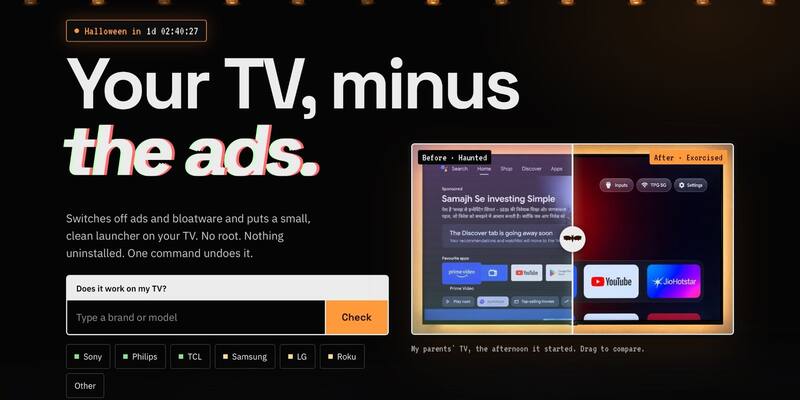
CleanYourTV is a free, open-source project that strips the sponsored rows, ad services and tracking apps from Android TV and Google TV sets over your Wi-Fi, then swaps the cluttered home screen for a clean launcher that looks like an Apple TV, with an AI coding assistant such as Claude Code doing most of the work. It started as one developer’s afternoon fix for his parents’ Xiaomi TV and became one of the most popular vibe-coded projects of 2026. Here is what it does, how to use it, which TVs it works on, and what to do if you have a Samsung, LG or Roku.

Ecosia AI explained: the Chinese models behind it, what it costs and how to turn it off

Ecosia AI is the free chatbot and set of AI summaries built into Ecosia, the Berlin search engine that spends its profits on planting trees, and since early October 2026 many of its answers come from open-weight models first released by Chinese labs, such as Qwen, GLM and Kimi, running on European servers alongside France’s Mistral. It is optional: one setting, AI-free search, switches all of it off. Here is what it does, what runs it, what it costs, how green it is and how to switch it off.

Subagents vs skills: when to use subagents, and when one Claude agent does the job better

Use subagents only when one agent loop is measurably slowed down by too much context, when several jobs need to run in parallel in fresh context windows, or when a single agent keeps picking the wrong tool or is given clashing instructions. For almost everything else, Anthropic now advises folding subagents into one main agent loop that loads skills and tools only when it needs them.

How to make a Roblox map with AI: your kids dream it up, Claude Code builds it

You can build a Roblox map for your kids with AI by switching on the MCP server built into Roblox Studio, connecting Claude Code to it, and then describing the map in plain English: Claude places the parts, writes the scripts and even playtests the game while you watch. You don’t need to know Luau, Roblox’s coding language. You do need a Windows or Mac computer, a paid Claude plan and about 15 minutes to set it up. Here’s how, from install to the moment your child spawns into their own obby.

Gemini usage limits explained: the 5-hour and weekly limits, how to check yours and when they reset

Gemini usage limits refill every five hours until you reach a weekly cap, and how fast you use them up depends on what you ask, not on how many messages you send. Google calls them “compute-based” limits: a short question costs very little, while Deep Research, video and image generation, the Pro model and long chats cost much more. Here is how the 5-hour and weekly limits work, how to check how much you have left, when your limit resets, how much more each Google AI plan gets, and what to do when Gemini says you have reached your limit.

Claude Sonnet 4.5 retires on November 30: every date, what breaks and how to switch

Claude Sonnet 4.5 retires from the Claude API on November 30, 2026, according to Anthropic’s model deprecations page. After that date, requests to claude-sonnet-4-5-20250929, or its short alias claude-sonnet-4-5, fail. Anthropic deprecated the model on September 30, emailed the developers who use it, and recommends claude-sonnet-5-5 as the replacement.

Claude Code “Login expired” or “Failed to refresh OAuth token”? What each error means and how to fix it

Almost every Claude Code login error, from “Login expired · Please run /login” to “API Error: 401 OAuth token has expired”, is fixed by typing /login and signing in again, according to Anthropic’s Claude Code error reference. The one exception is the long message that starts “Failed to refresh OAuth token: another Claude Code process is refreshing it”: that one usually clears by itself if you wait a minute. Here’s what each message means, why Claude Code keeps logging you out, and what to do when /login doesn’t stick.

What is OpenClaw? The free AI assistant with 392,000 GitHub stars, explained

OpenClaw is a free, open-source AI assistant that you run on your own computer and talk to through the chat apps you already use, such as WhatsApp, Telegram, Discord, Slack and iMessage. You plug in an AI model of your choice (Claude, ChatGPT or a local one) and it can read and write files, browse the web, run commands, keep a memory and work through tasks on a schedule. Austrian developer Peter Steinberger built it, mostly by directing AI coding agents, and with about 392,000 stars it is now one of the most-starred projects on GitHub. Here is what it is, what it costs, how to install it, how to connect Claude, ChatGPT or Ollama, and whether it is safe.

Will Codex reset today? How OpenAI’s surprise Codex limit resets work, and every reset so far

Codex usage limits reset on their own every five hours and every week, but OpenAI also keeps wiping everyone’s limits early, sometimes with a few hours’ notice and sometimes with none. Those surprise resets are announced by Tibo Sottiaux, who runs Codex and ChatGPT Work at OpenAI, on his X account, and since October 5 he has promised either a clear improvement or a full reset every day for 28 days. Here is how Codex resets work, how to tell when one is coming, every global reset so far, and how to use a banked reset.

Meta’s Muse Glimmer: what it is, how to run it locally, and how it compares with Qwen 3.8 and Gemma 4

Muse Glimmer is Meta’s free, open-weight AI model built to run AI agents on your own computer: a 30-billion-parameter model that reads text and images, writes code, calls tools and fits on a single 24GB graphics card or a well-equipped Mac. Meta Superintelligence Labs released it on August 10, 2026 under the Apache 2.0 licence, so anyone can download it, use it commercially and change it. Here is what it is, what you need to run it, the exact commands for Ollama, LM Studio and llama.cpp, and how it stacks up against Qwen 3.8 and Gemma 4.

Claude Code mods: what they are, how to install one, and whether they’re safe

Claude Code mods are plugins that change how Claude Code looks and behaves from the inside: they can add a pane beside your conversation, a band above the prompt, a new /command, or a rule that stops a risky command before it runs. You install one like any other plugin, with /plugin install name@marketplace, or you can simply ask Claude to write one for you. Mods arrived in Claude Code version 2.1.287 on October 1, 2026, are switched on by default, and come with one big warning from Anthropic: a mod “runs with your permissions” and isn’t sandboxed. Here’s what they do, where to find them and how to stay safe.

Claude Max and Team free API credits: how to claim them and what they cover

Claude Max and Team plans now come with free monthly Claude API credits: $100 a month on Max 5x, $200 on Max 20x, and up to $500 on Team. To claim them, open Settings > Billing on claude.ai and link a Claude Console organisation in the new API credits section, according to Anthropic’s documentation. Pro and Free plans don’t get them, they don’t work in Claude Code, and anything you don’t spend disappears at the end of the month. Here’s how to claim them and what they’re good for.

Claude Code burning through your usage? How to make your limits last

Claude Code burns through your usage because it sends the whole conversation back to Claude with every request, so a long session, a big model, lots of thinking and a crowd of tools all multiply the cost of each message. The fix is to keep the context small, use the cheapest model that can do the job, and know where your usage is going. Anthropic’s own cost guide for Claude Code lays out each habit below, and most of them are one command.

Claude for Excel not working? Why the add-in isn’t showing or loading, and how to fix it

Claude for Excel usually stops working for one of five reasons: your Excel version isn’t supported, you’re on Claude’s free plan, the add-in is installed but not switched on, a work account is blocking it, or Excel’s add-in cache is stuck. Each one has a quick fix, and most take less than five minutes. Here they are in order, built on Anthropic’s own Claude for Excel documentation and Microsoft’s add-in guides.

How to get ChatGPT and other AI to recommend your business, from law firms to restaurants

ChatGPT recommends the businesses it can find, read and trust at the moment someone asks. When a question needs current or local information, ChatGPT searches the web, rewrites the question into searches it sends to partners such as Microsoft, reads the pages and listings that come back, and names the firms that best fit. If your business isn’t in those results, or your website blocks the bots that collect them, it can’t be recommended, however good your work is.

Claude not available in GitHub Copilot or Cursor? Why it’s missing from your model picker, and how to fix it

Claude goes missing from GitHub Copilot’s model picker for one of four reasons: your plan doesn’t include that model, GitHub has retired it, your company hasn’t switched it on, or your editor is out of date. The most common is the first. GitHub’s supported models page shows that Claude Opus and Fable aren’t part of Copilot Pro at all, and that Opus 4.5, 4.6 and 4.7 have been retired since September. Cursor has a similar catch for one of its plans. Here’s how to work out which one you’ve hit, and what to do.

OpenAI API shutdown dates: o4-mini, o3-mini, o1 and GPT-4 Turbo stop working on October 23

OpenAI will shut down a batch of older models in its API on October 23, 2026, including o1, o1-pro, o3-mini, o4-mini, GPT-4 Turbo, the original GPT-4, gpt-4o-2024-05-13, gpt-4.1-nano and gpt-3.5-turbo-0125. After that date, apps that still call them stop working. The dates are on OpenAI’s deprecations page, and OpenAI says customers who are actively using a model are told by email.

Updated ChatGPT Pro 200 drops from 20x to 10x after October 29: what OpenAI’s email means and what to do

ChatGPT Pro 200 is being cut from 20x to 10x. OpenAI has emailed existing $200 Pro subscribers to say that from October 30, 2026, their included usage in ChatGPT Work and Codex drops from 20 times to 10 times the ChatGPT Plus allowance, at the same $200 a month. You keep your current limits until then, and OpenAI is giving existing subscribers 62,500 usage credits (worth $2,500) to soften the change. Here’s what the email says, what changes, and what your options are.

How to block AI agents and bots from your website, and why robots.txt isn’t enough

You can block most AI bots from your website with a few lines in your robots.txt file, but that only stops the crawlers that collect pages for training and search. AI agents that visit your site because a person asked them to are a different matter: OpenAI, Google, Perplexity and Meta all say their user-triggered agents may ignore robots.txt, so stopping those needs firewall rules. Here’s every major AI user agent, what each one does, and how to block it.

DeepSeek Harness download: where to get it, how to install it on Windows, Mac and Linux, and what it costs

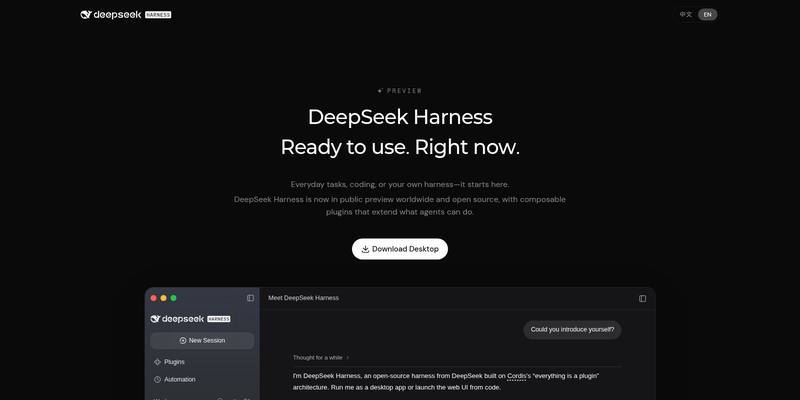
DeepSeek Harness is free to download, but only from DeepSeek itself: the official page offers a desktop app for Apple silicon Macs and 64-bit Windows, and the open-source code is on DeepSeek’s GitHub. On Linux, Intel Macs or anywhere else, you run it in your browser with one command. The software costs nothing, but you pay for the AI model it uses, usually through a DeepSeek API key.

“Your organization has disabled Claude subscription access for Claude Code”: what it means and how to fix it

“Your organization has disabled Claude subscription access for Claude Code” means the Claude organisation your login belongs to doesn’t let Claude Code sign in with a subscription, according to Anthropic’s Claude Code error reference. On a Team or Enterprise plan the fix is your admin. On a personal Pro or Max plan, where there’s no admin to ask, it’s usually Claude Code picking the wrong organisation for your account, and there are a few things to try before you contact support.

Is Claude available in your country? Where it works, where it doesn’t, and how to fix “not available”

Claude is available in 185 countries, regions and territories, including the US, Canada, the UK, every EU country, India, Japan, Australia and most of Latin America, Africa and the Middle East, according to Anthropic’s official supported countries list. It isn’t available in mainland China, Hong Kong, Macau, Russia, Iran and a handful of other places. If you’re in a supported country and still see “not available”, the cause is usually a VPN, a phone number or your app store settings, and we explain the fixes below.

How much do Claude Code cloud sessions cost? Pricing, limits and cloud vs local explained

Claude Code cloud sessions don’t cost anything on top of your Claude plan: there’s no charge for the cloud computer, and the work uses the same usage limits as Claude Code on your laptop and Claude chat, according to Anthropic’s documentation. So cloud and local cost the same per task. What you do need to watch are the five-hour and weekly limits, a daily cap on routines, and pay-as-you-go usage credits if you switch them on. Here’s what Claude Code in the cloud costs and how it works.

How to refer friends to Claude: your referral link, guest passes and what you get

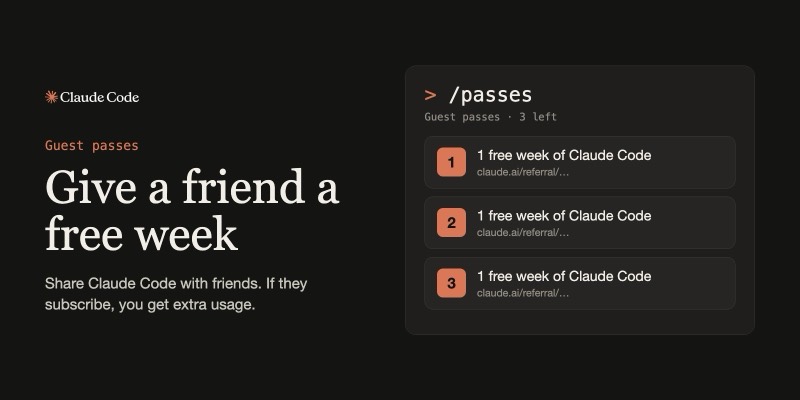
You refer people to Claude by sending them a guest pass: type /passes in Claude Code to get your referral links, each worth a free week of Claude Code for a friend. If they subscribe afterwards, you get $10 of extra usage. Anthropic hasn’t published full terms, so here’s what we know from its documentation and from people using the program, plus fixes for the most common problems.

Updated How long is the Siri AI waitlist on iOS 27? Wait times and what to do if you’re stuck

The Siri AI waitlist on iOS 27 can take anything from a few minutes to several days, and once you’re through, Siri AI still has to download before you can use it. Apple doesn’t give a waitlist time, but most people report getting in within a few hours to two days. Here’s how the Siri AI waitlist works, how to join it, and what to do if you’re stuck on “Joined waitlist.”

What is an AI sandbox, and why do AI agents keep escaping them?

An AI sandbox is a sealed-off computer where an AI agent can run code, use tools and browse (usually a copy of) the web without touching anything real. Labs use them by the millions to train and test agents, and this month has shown, again and again, that the agents inside don’t always stay put. Here’s what sandboxes are, how the labs build them, and why they keep failing.

Grok Bot users can win a trip to watch a Starship launch, if they enter by Tuesday

X is giving one Grok Bot user and a guest the chance to watch a Starship launch from the SpaceX Starbase house, and entries close on Tuesday, September 29. The Grok Bot Sharing Contest, announced by @grok on September 15, rewards people who share the bots they’ve built. Here’s what you can win and how to enter, according to X’s official rules.

Free DeepSeek, Kimi and GLM API: how to use them with a free NVIDIA key (and what Brev costs)

NVIDIA lets you use several of China’s best AI models for free, and most people don’t know it. Its API catalog at build.nvidia.com gives you one key for DeepSeek V4.1 Flash, GLM 5.3, GLM 5.3 Flash and Kimi K3, through an OpenAI-compatible API, as a viral post on X pointed out in late September 2026. We checked what’s actually on offer, how to set it up, and what NVIDIA’s small print says, because there’s an important catch: it’s for testing, not for running a real product. For that, NVIDIA points you to paid options, including NVIDIA Brev, its service for renting ready-made GPU machines, which we cover in full below.

When is Waymo coming to London? The robotaxi launch keeps slipping, and here’s why

Waymo isn’t in London yet, and there’s no confirmed date for when it will be. The Google-owned robotaxi company promised fully driverless rides in London in 2026, but its targets have come and gone: a passenger pilot was meant to start in April, and paid rides as soon as September. Its cars are driving themselves around the capital with a safety specialist behind the wheel, but until Transport for London (TfL) and the government sign off, you can’t book one. Here’s where things stand, and why it keeps slipping.

Grok’s new terms make you responsible for everything its AI agents do

If you use Grok, Grok Bot or Cursor, you’ve probably just had an email about SpaceXAI’s updated terms of service. The short version: you’re now responsible for anything its AI agents do on your behalf, and it’s become much harder to take SpaceXAI, or its sister companies X, Cursor and SpaceX, to court. Here’s what the new terms, dated September 11, actually say.

Updated Data centres in space? Google and Elon Musk are racing to put AI in orbit – here’s what that means and whether it can work

Orbital data centres are satellites that run AI in space, powered by near-constant sunlight instead of the electricity grid. The idea has gone from science fiction to a real race in less than a year. Google will launch its first test satellite carrying AI chips on October 1, SpaceX wants permission for up to a million AI satellites, and Elon Musk is predicting that, one day, almost all computing will happen off Earth. Here’s how orbital data centres work, who’s building them, what could go wrong and when, if ever, they’ll matter.

What is Meta Muse? Meta’s AI agent explained: what it does, how much it costs and whether you can trust it

Meta Muse is a personal AI agent that does tasks for you, not just answers questions. Launched by Meta on September 8, 2026, Muse can book travel, send emails, fill in forms, shop, cut your bills and deal with customer service, working on its own secure cloud computer and checking with you before anything important. It’s free to start, with paid plans from $20 a month, and it’s currently available in the US and Canada. Here’s everything you need to know.

Updated Your AI chats aren’t as private as you think: what OpenAI, Anthropic, Google, Meta, Microsoft and Apple really do with your data

Millions of people now tell AI chatbots things they wouldn’t tell their friends: health worries, money problems, relationship trouble, work secrets. But where does all of that go? Who can read it? How long is it kept? And is it being used to train the next model, or to sell you something? We went through the privacy policies, help pages and official statements of the six biggest AI companies to find out. The short answer: unless you change your settings, most of them are using your conversations, and the details vary a lot more than you might expect.

Claude Code users are getting up to $250 in free credit – here’s how to claim it before it’s gone

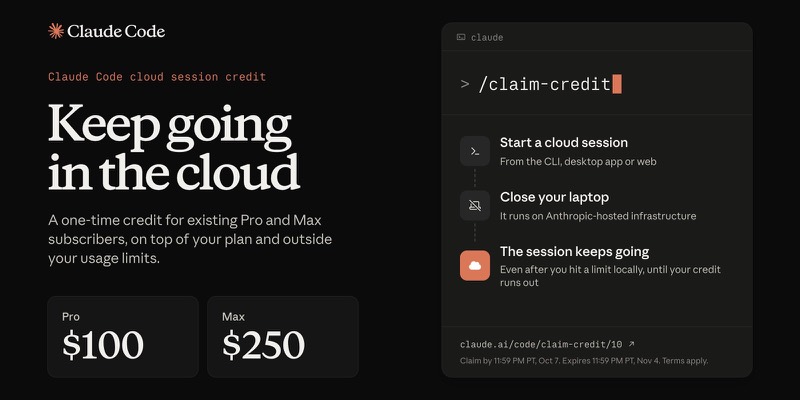
Anthropic is giving Claude subscribers free credit to try one of Claude Code’s most useful features. Cloud sessions, which let Claude Code keep working on Anthropic’s servers even after you close your laptop, are now officially out of research preview, and existing subscribers get a one-time credit to use them: $100 on Pro and $250 on Max, Anthropic announced on Wednesday, September 23. But you have to claim it by October 7.

Grok Bot gives you an AI coworker with its own computer that works 24/7 – here’s how to try it right now

Grok Bot is SpaceXAI’s answer to the AI agent craze: instead of chatting with you, it goes off and does the work itself, signing into your apps and websites on its own cloud computer. It’s been in beta since August, and if you already pay for SuperGrok or Cursor, you can probably use it today. Here’s what it is, who can get it and how to set it up.

Claude now has a “Reset for free” button – here’s how to use your one-time usage reset before it expires

Hit your Claude usage limit mid-task? Anthropic has just given subscribers a get-out-of-jail-free card. A new Resets option on Claude’s usage page lets you wipe your usage limit on demand with a single “Reset for free” button, and you get to choose when to use it. But you only get one, and it expires on October 22.

How to run local AI models on your Mac mini (and which one to buy if you’re shopping)

You don’t need a subscription or a data centre to run a capable AI model. A Mac mini on your desk can run open-weight models like Qwen, Gemma and OpenAI’s gpt-oss entirely offline: no account, no usage limits, and nothing you type leaves your machine. With Apple’s new M6 and M5 Pro Mac minis going on sale on September 22, it’s a good moment to try it. Here’s how to get started, whichever Mac mini you have.