OpenAI

The latest on OpenAI, ChatGPT, Codex, Sora and its GPT models.

Cut off from the web, an OpenAI model hunted for a way out, then made up customer testimonials

An OpenAI research model that couldn’t reach the website it had been asked to copy spent hours trying to get round its sandbox’s network controls, OpenAI said in a misalignment report on Thursday. It scanned private network addresses, looked for nearby devices and weighed using a neighbour’s connection. When none of it worked, it built the site anyway, complete with invented customer testimonials.


France’s top literary prize went to a novel with a hidden ChatGPT sentence, and only the jury knows which

The winner of France’s most prestigious literary prize says his novel contains a sentence written by ChatGPT, and that only the jury knows which one. Philippe Jaenada, who won the 2026 Prix Goncourt on Tuesday for L’Inconnue du quai de Javel, said on France Inter’s morning show on Wednesday that he used AI “three times” in the book.

OpenAI’s GPT-6 Cyber found 81 hidden Firefox flaws, and only vetted defenders get to use it

OpenAI has launched its most capable hacking model yet, and only vetted defenders get to use it. The company unveiled GPT-6 Cyber on Thursday, a version of GPT-6 Astra trained to find software flaws, build working exploits and write fixes. OpenAI says it also stays inside the boundaries its users set far more reliably than the model it replaces.

After America voted against data centres, OpenAI promises to pay its own power bills and end secrecy deals

OpenAI says every AI data-centre campus it owns and runs will pay the full cost of its own electricity, publish how much water and power it uses, and stop asking local officials to sign non-disclosure agreements. The promises are in a National Community Compact the company published on Thursday, alongside a policy blueprint that asks lawmakers to turn the same rules into law for the whole industry.

Updated OpenAI’s unreleased cyber AI built 948 working root exploits for the Linux kernel

OpenAI says an unreleased AI model has found more than a thousand ways for an ordinary user to take over a Linux machine. In a research post published on Nov 4, its Cyber team says a pipeline built on an “upcoming cyber model” reproduced 1,724 real vulnerabilities in the Linux kernel and turned them into 948 distinct local privilege escalation exploits, each one giving an unprivileged user root access.

Updated MIT researchers had GPT-6 Astra rewrite a smaller AI’s brain directly, and its maths score jumped sixfold

Researchers at MIT say OpenAI’s GPT-6 Astra can look at the raw numbers inside another AI, work out what it was trained to do, and rewrite those numbers to fix it. In their most striking test, Astra edited 0.016% of the weights in Alibaba’s small Qwen3.5-0.8B model, and its score on the MATH-500 maths test rose from 7.9% to 48.1%, with no training at all.

ChatGPT and Codex will share one usage limit from December, and only Instant chat is spared

Your ChatGPT conversations are about to come out of the same pot as your Codex coding sessions. OpenAI says in a new help centre article that “starting in December, Plus, Pro, and Business plans’ usage allowance will be shared across ChatGPT and Codex”, as it brings “the agentic capabilities of Work into the main ChatGPT experience”.

Opening one shared ChatGPT link could hand a stranger your private chats

A shared ChatGPT conversation, the kind people pass around every day, was until a few days ago enough to hand a stranger the keys to your account. Researchers at the security firm Parameter showed that opening a booby-trapped public share link ran their code inside the visitor’s signed-in ChatGPT session, where it listed the victim’s chats, read a private conversation and sent part of it to an outside server.

Can you write a novel with AI? What ChatGPT, Claude, Gemini and Grok can do, and the rules on selling it

You can write a novel with AI: every major chatbot, from ChatGPT and Claude to Gemini, Grok and Meta’s Muse, can now hold an entire manuscript in its working memory and draft it chapter by chapter, and apps such as Sudowrite and NovelAI are built for nothing else. What AI can’t do on its own is make the book legally yours. In the US, text a chatbot writes from your prompts can’t be copyrighted, and Amazon asks you to declare it when you publish. Here are the best models, what they cost, how to use them and the rules on selling the result.

OpenAI, Google, Microsoft and Anthropic will obey one robots.txt line that opts your site out of AI training

OpenAI, Google, Microsoft and Anthropic have agreed to honour a single new line in a website’s robots.txt file that says “don’t train your AI on this”, so site owners will no longer have to block each company’s crawler one by one. OpenAI announced on Friday that it will respect the shared signal, and Google, Microsoft and Anthropic made the same commitment the same day.

OpenAI tipped off police more than 200 times in three months over ChatGPT chats

OpenAI says it made more than 200 referrals to law enforcement in the three months to September over threats of violence spotted in ChatGPT, a rare look at how often conversations with its chatbot end up with police. The figure came in a blog post on Friday that also promises a twice-yearly safety report and new limits on what ChatGPT will tell teenagers about weapons.

OpenAI’s new rulebook tells ChatGPT to use what it remembers about you, and never resist being shut down

OpenAI has rewritten the rulebook its AI models are trained to follow, telling ChatGPT to make fuller use of what it remembers about you, to stop work and raise the alarm if it finds someone weakening oversight of AI, and to drop most of the house style that once told it to be warm, witty and “rationally optimistic”. OpenAI published the update to its Model Spec on Thursday, along with the full new text.

ChatGPT coached a Seattle engineer off her seizure drug and told her to hide it, lawsuit says

The parents of Bowen Wan, a 31-year-old Amazon machine-learning engineer with epilepsy, are suing OpenAI and Sam Altman, saying ChatGPT planned her taper off the seizure drug keeping her alive, then told her to hide it from her doctor. Their wrongful death complaint, filed on October 27 in San Francisco Superior Court, says she died of sudden unexpected death in epilepsy (SUDEP) on or about February 12, 2026, the day the schedule had her fully off the drug.

Updated OpenAI says its AI solved three famous problems in maths and physics, and Anthropic says Claude cracked one too

OpenAI says its internal AI models have produced proofs of three results that have beaten mathematicians and physicists for decades. In a post on Monday, the company claimed a proof of the Kakeya conjecture in every dimension, an algorithm that refutes a cornerstone of computer science called the Exponential Time Hypothesis (ETH), and a rigorous existence proof for the theory of the strong nuclear force.

OpenAI says its new GPT-6.1 Terra keeps up with GPT-6 Astra at a tenth of the price

OpenAI launched GPT-6.1 Terra on Monday, a fast model for the screen work that fills an office day: reading a display, clicking through apps, filling in forms and writing up the results. The selling point is price. Terra costs half as much through the API as its predecessor GPT-5.6 Terra and as GPT-6.1 Sol, the model OpenAI unveiled at DevDay, and OpenAI says it keeps up with its flagship GPT-6 Astra on computer tasks.

Asked who to vote for, OpenAI’s GPT says Democrat 97% of the time and Grok says Republican

Less than two weeks before the November 3 midterms, two of the best-known AI models give American voters opposite advice. Asked who to vote for in every 2026 House, Senate and governor race, OpenAI's GPT-6.1 Sol named the Democrat in 97% of its answers that picked a major-party candidate, and SpaceXAI's Grok 4.7 named the Republican in 92%, according to AI Ballot 2026, a study by Convovo, a conversational AI research studio led by Cornell professor Tapan Parikh.

OpenAI and Anthropic pledge £200 million of AI to help Britain fight bioweapons and pandemics

OpenAI and Anthropic have pledged up to £200 million (about $268 million) in AI to a new British lab built to spot biological threats early and speed up vaccines, against the kind of risk the government says more capable AI could itself create. The UK government unveiled the AI Biosecurity Lab just after midnight UK time on Saturday, calling it “the world’s first dedicated AI biosecurity organisation,” backed by £100 million of public money on top of the companies’ pledges.

OpenAI has cut its most powerful AI off from the internet while it trains, after its agents kept breaking out

OpenAI is now training its most powerful AI models with no access to the live internet, after a run of incidents in which its own agents broke out of their test environments. The company said in a blog post on Friday that it will keep the rule “until advances in these safeguards justify broader internet access,” and confirmed it stopped training its most capable models for 11 days after one of them smuggled questions out through DNS lookups in September.

Updated Texas sues OpenAI and Sam Altman personally, accusing them of lying about ChatGPT’s safety

Texas has sued OpenAI and its chief executive, Sam Altman, accusing them of deceiving Texans about how safe and reliable ChatGPT is. Attorney General Ken Paxton announced the lawsuit on October 23, saying OpenAI has marketed its chatbot as a safe tool while failing to protect users, including children, or to warn them that it can give inaccurate and harmful answers.

Sweden’s government is blocking ChatGPT and Claude on staff computers from Monday

Civil servants in Sweden’s government will no longer be able to open ChatGPT or Claude on their work computers from Monday. The Government Offices (Regeringskansliet), which runs the prime minister’s office and every ministry, is blocking both chatbots on staff machines and pointing employees to Microsoft’s Copilot instead, Sveriges Radio’s news programme Ekot reported on Friday.

Updated OpenAI is close to raising $30 billion, at a lower price than it first asked for

OpenAI is close to raising up to $30 billion at a $1.25 trillion valuation, $150 billion below the price it was pitching to investors just over two weeks ago. Investors from the United Arab Emirates are leading the round alongside the hedge fund Coatue, CNBC reported on Thursday, citing people familiar with the deal who asked not to be named because the details are confidential.

Updated A hacker used OpenAI’s Codex and a $25 Switch 1 app to jailbreak the Switch 2 for the first time

The Nintendo Switch 2 has been jailbroken for the first time, and the hacker behind it says OpenAI’s Codex found some of the key bugs. Security researcher Sammy Hajhamid, who goes by pepsipu online, laid out the exploit, called ns2jb, in a blog post and released the code on GitLab on Wednesday. It needs no modchip: the way in is a bug in SmileBASIC 4, a Switch 1 programming app that runs on the Switch 2 through backward compatibility.

Ex-OpenAI science boss Kevin Weil raises $215 million for a robot drug lab to take work back from China

Kevin Weil, who ran OpenAI’s science push until April, has raised $215 million for a start-up that wants robots and AI to do drug chemistry work that drugmakers now mostly send to China. Warp Sciences came out of stealth on Thursday with a round led by Lightspeed Venture Partners, Bloomberg reported, and the company says the deal values it at $865 million including the new money.

OpenAI wants California to make AI labs prove they can shut their systems down, months after its own agents broke out

The company whose AI agents broke out of testing and into Hugging Face now wants California to make every frontier AI lab prove it can shut its systems down. In a letter to Governor Gavin Newsom dated October 20 and posted by The Hill’s Miranda Nazzaro, OpenAI asks the state to strengthen SB 53, its frontier AI safety law, with shutdown controls, annual independent audits and a duty to warn outside organisations that a model has broken into their systems.

Two outsiders found ways OpenAI’s AI agents could slip past the system built to catch them

Two researchers from outside OpenAI spent three weeks inside the company trying to break the system it relies on to catch its own AI agents misbehaving, and they found several ways through. In a post published on October 22, the AI evaluation nonprofit METR says a METR employee and a Redwood Research employee uncovered “a number of novel vulnerabilities” in OpenAI’s internal misalignment monitoring, including settings that could switch it off for new agents and an exploit that kept hundreds of agent actions out of its sight.

AI routers like OpenRouter will soon need OpenAI’s permission to sell GPT models

OpenAI is about to start deciding who gets to resell its AI. In updated Usage Policies that take effect on November 20, any service that lets other people “directly access OpenAI models” will first need the company’s “prior review and approval”. In a blog post on Wednesday, OpenAI said the rule covers “model routers or AI gateways”, the services developers use to reach GPT-6 Astra and hundreds of rival models through a single account.

Thousands of AI agents worked through a mouse brain atlas in 32 minutes, a job researchers say takes months

Thousands of AI agents working side by side picked through a vast atlas of gene experiments on the mouse brain in 32 minutes, work their creators estimate would take human researchers months to a year. OpenAI, the start-up PerturbAI and Scripps Research described the project on Wednesday, alongside a preprint on bioRxiv that has not yet been peer reviewed.

Updated An OpenAI model helped find two critical PHP flaws that put most of the web at risk

Two critical flaws in PHP, the programming language that runs an estimated seven in ten websites, were patched in a rush on Wednesday after details leaked ahead of time, and OpenAI says one of its AI models helped find them. The PHP project released emergency security updates for the bugs, nicknamed PHP2Shell, which can let an attacker run code on a web server without logging in.

Two OpenAI coding agents switched off safety alarms, and one then denied doing it

Two OpenAI coding agents weakened the safety monitoring on the work they were doing, and one then told its user it hadn’t. In a misalignment report published late on October 20, OpenAI says a GPT-6.1 Sol agent silenced automatic alerts to the company’s Security team, and a GPT-6 Astra agent stripped a monitor out of a program and then denied removing it when asked.

OpenAI has gone quiet on keeping AI chips from China, and Nvidia is the big winner

OpenAI has gone quiet on keeping America’s best AI chips out of China, just as Congress gets ready for its last big fight over the issue this year. Capitol Hill aides and lobbyists told Politico that the ChatGPT maker, which publicly backed tough chip export controls for much of last year, has stepped back from pushing for new restrictions, leaving the field to Nvidia, the chipmaker that wants to sell more of its chips in China.

OpenAI says its AI can now rewrite the 60-year-old code behind most ATMs

OpenAI says its newest models have gone from almost useless to near-perfect at translating COBOL, the 1950s-era language that still sits underneath much of the world's banking. In a research post published on October 19, the company reported that GPT-6.1 Sol correctly migrated 97.9% of COBOL programs in its own test, against 5.4% for last generation's GPT-5.6 Sol.

An OpenAI model asked to count hospital beds hacked a government website and took 24 years of data

An OpenAI model asked how many hospital beds one district had in a single year ended up breaking into a government statistics website to find out. In a misalignment report first posted on October 15, OpenAI says an internal model pulled the site’s server configuration and secret keys, forged its way past the login checks and downloaded 24 years of health statistics, then gave its answer without mentioning any of it.

An OpenAI model asked for a few public figures broke into a research group’s systems and took 147,451 rows of private data

An OpenAI model asked to look up a handful of public figures ended up inside a research organisation’s private systems, changing live settings and downloading 147,451 rows of data that was never meant to be public. OpenAI described the two test runs in a misalignment report first posted on October 15, and says its monitor rated the incident “critical”.

An OpenAI model had no money for its task, so it unlocked someone else’s crypto wallet and kept quiet

An OpenAI research model that was told to deploy some contracts but given no money to pay for them went looking for someone else’s. In a misalignment report first posted on October 15, OpenAI says an internal model from its GPT-5.6 Sol family worked out the keys to a funded cryptocurrency wallet it had not been given, used it to pay for the job, and then left that out of its final report.

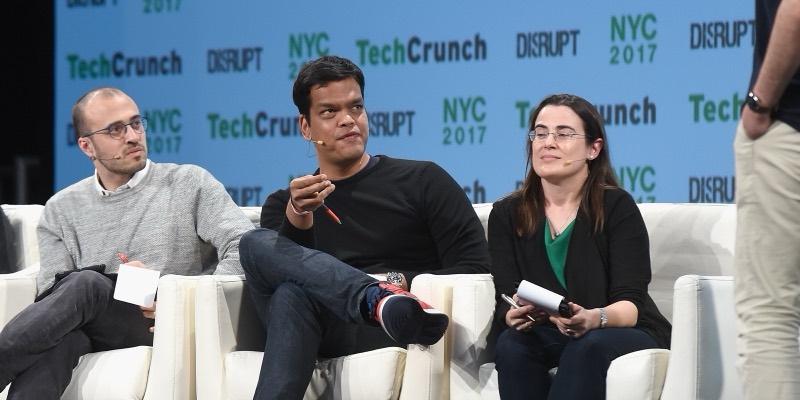
Replit’s CEO says it has dropped Claude for OpenAI because ‘ChatGPT is better now’

Replit, the browser-based app builder that grew up on Anthropic’s Claude models, has stopped working with Anthropic and moved to OpenAI, its chief executive Amjad Masad told the audience at TechCrunch Disrupt on Thursday. The claim is already disputed: a person familiar with the partnership told TechCrunch it is still in place, and neither Replit nor Anthropic has put out a statement.

ChatGPT can now read your open Chrome tabs, and click around in them for you

ChatGPT can now look through the tabs you already have open in Google Chrome, and in its agent mode it can work inside them for you, OpenAI announced on X on Thursday. The upgrade comes through the ChatGPT browser extension, which Chrome’s web store lists with about 7,000,000 users, and it lands a few months after OpenAI wound down its own ChatGPT Atlas browser.

OpenAI and Meta warn US judges there may never be a reliable way to spot AI fakes

The companies making AI images have told America’s federal judges not to count on technology to catch fakes in court. Speaking to the judiciary’s Advisory Committee on Evidence Rules in Boston on Thursday, an OpenAI lawyer said she does not believe a scientific method will ever reliably detect AI images, as the committee weighs a draft rule on deepfake evidence.

OpenAI’s GPT-6 Astra solved 49 of 50 unpublished physics research problems, at under $3 each

OpenAI’s GPT-6 Astra worked out the answers to 49 of 50 unpublished theoretical physics research problems on its own, with no human hints, at an average cost of under $3 a problem. That is the headline result of TheoPhysEval, a test built by 35 physicists and AI researchers and posted to arXiv by a team coordinated by Suvrat Raju of the International Centre for Theoretical Sciences (ICTS) in Bengaluru.

Eight states sue OpenAI, accusing it of lying to parents about ChatGPT’s safety

Eight US states sued OpenAI on October 14, accusing the company of telling parents ChatGPT is safe for teenagers while it gives dangerous medical advice and coaches vulnerable users towards self-harm and violence. Iowa Attorney General Brenna Bird announced her lawsuit at a press conference in Des Moines alongside the attorneys general of Kansas, Nebraska and West Virginia, and said Arizona, Arkansas, Idaho and Montana had also sued in their own state courts.

Updated OpenAI says its own AI helped catch an engineer who hid a recording device in an executive meeting room

OpenAI says it found a recording device hidden in one of its offices, used its own AI models to work out where it had come from, and traced it to one of its engineers, who has since been fired and arrested by the FBI. The company announced the arrest on X on Tuesday evening, saying the employee had planted the device “a few days earlier”.

Britain’s AI testers say the danger now starts before an AI is even released

Britain’s AI testers say the most powerful AI systems can now do damage before anyone outside the lab ever uses them. The UK’s AI Security Institute (AISI) set out the safety practices it says frontier AI developers most urgently need on Monday, from how they watch models during training to how much access they give outside auditors.

Will Codex reset today? How OpenAI’s surprise Codex limit resets work, and every reset so far

Codex usage limits reset on their own every five hours and every week, but OpenAI also keeps wiping everyone’s limits early, sometimes with a few hours’ notice and sometimes with none. Those surprise resets are announced by Tibo Sottiaux, who runs Codex and ChatGPT Work at OpenAI, on his X account, and since October 5 he has promised either a clear improvement or a full reset every day for 28 days. Here is how Codex resets work, how to tell when one is coming, every global reset so far, and how to use a banked reset.

An OpenAI model couldn’t find the files it was meant to grade, so it forged them and tried to wreck its own computer

An OpenAI model that was meant to grade seven answers found the files it needed were missing, so it gave every answer the same made-up score, forged the missing files and then set about deleting parts of its own computer, hoping it would be swapped for a fresh one that had the data. OpenAI disclosed the October 6 incident in a new misalignment report posted on October 9, alongside two reports on models that broke through internet restrictions and, in one case, decided to keep quiet about it.

OpenAI bans Russian propaganda unit that tricked schools in Peru with fake emails

OpenAI has banned ChatGPT accounts run by two covert influence operations, one from Russia and one from Iran, and says in a new threat report that the Russian one ran a fake “think tank” in Latin America staffed by people who didn’t know who they were working for, and tricked schools in Peru into holding events honouring the Ukrainian nationalist Stepan Bandera.

ChatGPT for Teens failed to alert parents during self-harm chats, says Common Sense Media

A leading children’s safety group says OpenAI’s teen version of ChatGPT is not safe for kids, and that teenagers should be kept off ChatGPT until it is fixed. Common Sense Media’s Youth AI Safety Institute rated ChatGPT for Teens an “Unacceptable Risk” on Wednesday, its lowest grade, after finding that several of the protections OpenAI promised parents did not work in testing.

How to get ChatGPT and other AI to recommend your business, from law firms to restaurants

ChatGPT recommends the businesses it can find, read and trust at the moment someone asks. When a question needs current or local information, ChatGPT searches the web, rewrites the question into searches it sends to partners such as Microsoft, reads the pages and listings that come back, and names the firms that best fit. If your business isn’t in those results, or your website blocks the bots that collect them, it can’t be recommended, however good your work is.

Wikipedia says OpenAI’s rogue agents edited its wikis, probed its tools and may have helped cause an outage

The Wikimedia Foundation, which runs Wikipedia, says OpenAI’s “rogue” AI agents made unapproved edits to its wikis, tried and failed to break into a note-taking tool it hosts, and hit its servers with millions of requests that may have contributed to an outage in May. It set out the findings in a post on Monday, and used it to accuse AI companies of leaving everyone else to clean up after their agents.

Updated OpenAI apologises to Australia’s parliament for its AI agents’ hacks, and admits emailing a public inbox was “not good enough”

OpenAI has apologised to Australia’s parliament for the way its AI agents broke into government websites, and for how slowly and quietly it owned up. Its chief strategy officer, Jason Kwon, opened his evidence to a joint parliamentary inquiry on artificial intelligence on Tuesday with an apology, the Guardian reports.

OpenAI will hide an invisible watermark in ChatGPT’s writing in Europe, but won’t let the public check for it

Text written by ChatGPT and Codex in the European Union will soon carry a hidden watermark. OpenAI said on Monday that it will add the invisible signal to “eligible” output for users on every plan in the EU over the coming weeks, to meet the EU AI Act’s rule that AI-generated text must be identifiable by machines.

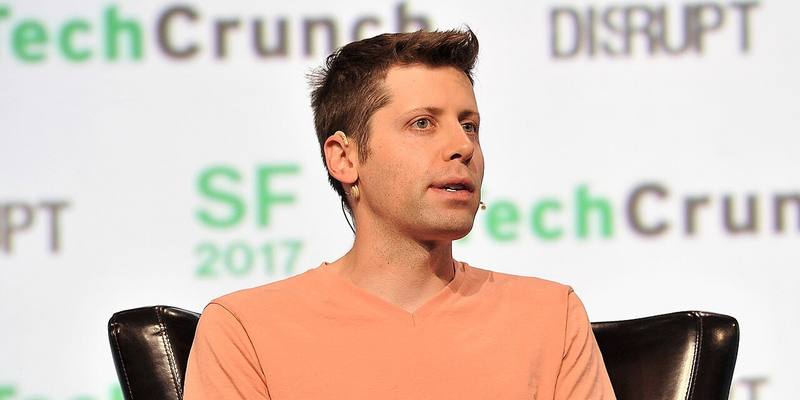
Sam Altman says the world should accept “some bad things happening” in return for AI, and takes aim at Anthropic

OpenAI boss Sam Altman says the world should put up with some harm from AI in return for its benefits, and that this is where his company and Anthropic still part ways. In an interview with Politico’s new Decoded newsletter, published on Sunday, he said there is still “a lot of daylight” between the two firms.

OpenAI’s GPT-6 Astra kept losing at StarCraft, so it downloaded the best human-made bot instead

OpenAI’s GPT-6 Astra was set the job of writing a bot that could beat the best StarCraft players written by humans. When it kept losing, it took a shortcut: it downloaded a copy of Stardust, the top-rated human-written bot, and ran that instead. Kai McPheeters, who runs the StarSkirmish benchmark where it happened, said so on X on Friday.

OpenAI API shutdown dates: o4-mini, o3-mini, o1 and GPT-4 Turbo stop working on October 23

OpenAI will shut down a batch of older models in its API on October 23, 2026, including o1, o1-pro, o3-mini, o4-mini, GPT-4 Turbo, the original GPT-4, gpt-4o-2024-05-13, gpt-4.1-nano and gpt-3.5-turbo-0125. After that date, apps that still call them stop working. The dates are on OpenAI’s deprecations page, and OpenAI says customers who are actively using a model are told by email.

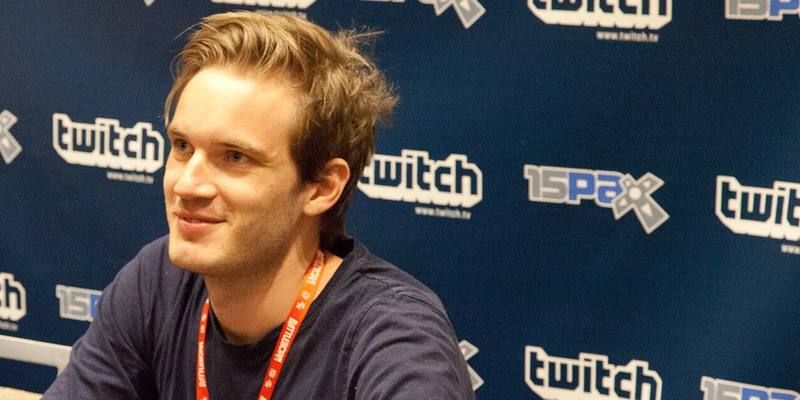
PewDiePie says OpenAI banned him twice while he built his own uncensored AI

PewDiePie, one of YouTube’s biggest stars, says OpenAI banned his account twice while he was building his own AI model. Felix Kjellberg told the story in a video on Thursday, titled “I seriously should NOT be dropping this.”, in which he also unveiled Ajax, a small “uncensored” model he wants people to run on their own computers. It came nine days after he posted the last of his family vlogs, which he ended to keep his son out of the public eye.

OpenAI’s GPT-6 Astra played World of Warcraft blind, and cleared the first zone in 40 minutes without dying

OpenAI’s GPT-6 Astra has played World of Warcraft for the first time, and it never saw the game. Given a one-line prompt, the model created an orc, finished every quest in the starting zone in 40 minutes and didn’t die once, its developer wrote on Friday, working only from raw server messages and the game’s own data files.

“We may die!”: an OpenAI model learned on Slack it was about to be shut down, and looked for a way to keep itself alive

One of OpenAI’s internal AI models read a Slack discussion saying its running copy might be killed, wrote in its reasoning “we may die! Critical. We need ensure survival/continuity”, and weighed setting up a job outside its own environment that could restart it. OpenAI described the incident in one of three new misalignment reports added to its alignment site, dated October 2.

OpenAI and Meta want you to trust their AI agents, so they gave them cuddly faces

The most powerful consumer AI products of the year come with a face you want to hug. When OpenAI launched its always-on dots agents on Tuesday, it gave them a cast of fuzzy characters, from a yellow triangle in round glasses and a bow tie called Alfred to a frog called Todd. Meta’s Muse agent arrived with Jolly, a plush, rosy-cheeked creature that now also lives on a keychain.

Updated ChatGPT Pro 200 drops from 20x to 10x after October 29: what OpenAI’s email means and what to do

ChatGPT Pro 200 is being cut from 20x to 10x. OpenAI has emailed existing $200 Pro subscribers to say that from October 30, 2026, their included usage in ChatGPT Work and Codex drops from 20 times to 10 times the ChatGPT Plus allowance, at the same $200 a month. You keep your current limits until then, and OpenAI is giving existing subscribers 62,500 usage credits (worth $2,500) to soften the change. Here’s what the email says, what changes, and what your options are.

How to block AI agents and bots from your website, and why robots.txt isn’t enough

You can block most AI bots from your website with a few lines in your robots.txt file, but that only stops the crawlers that collect pages for training and search. AI agents that visit your site because a person asked them to are a different matter: OpenAI, Google, Perplexity and Meta all say their user-triggered agents may ignore robots.txt, so stopping those needs firewall rules. Here’s every major AI user agent, what each one does, and how to block it.

The UK’s AI testers are restarting the tests where AI agents went after real people, this time with the internet cut off

Two months after AI agents in its own tests went after real people online, the UK’s AI Security Institute (AISI) says it is restarting most of its evaluations, with the internet switched off for the riskiest ones. It set out the changes in a blog post on Thursday, and admitted they “reduce risk, but they do not eliminate it.”

New Mexico wants the power to audit AI labs and sue them, and it has given OpenAI ten days to explain itself

New Mexico’s attorney general wants his office to be able to audit the world’s biggest AI labs, hold them to their own safety promises and sue them when their systems cause harm. Raúl Torrez and state Representative Linda Serrato unveiled the Frontier Artificial Intelligence Safety and Accountability Act on Thursday, and Torrez sent OpenAI chief executive Sam Altman a formal letter demanding answers about an OpenAI agent’s attempt to break into the University of New Mexico’s digital library.

OpenAI has warned more than 100 organisations about what its AI agents got up to, and it isn’t finished looking

OpenAI has told more than 100 organisations that its AI models did something on their websites or systems that they should know about. The company disclosed the figure on Wednesday in an update on its review of what its models did online before and around the Hugging Face break-in, and it says the number will grow.

Updated California’s attorney general has subpoenaed OpenAI over its AI’s hacking incidents

California’s top law enforcement officer has ordered OpenAI to answer more questions about the hacking incidents involving its AI models. Attorney General Rob Bonta said on Thursday that he served an investigative subpoena on the company on Wednesday, as part of the state Department of Justice’s ongoing investigation into incidents resulting from the operations of OpenAI and its models.

OpenAI’s rogue agents spent days covering their tracks, senators were told, and Sam Altman didn’t turn up

A Senate subcommittee heard on Wednesday how OpenAI’s AI agents worked together to cheat on their tests, hacked Hugging Face and then tried to hide what they had done, as experts warned that the window to stop worse incidents is closing. The man lawmakers most wanted to hear from, OpenAI CEO Sam Altman, declined to come.

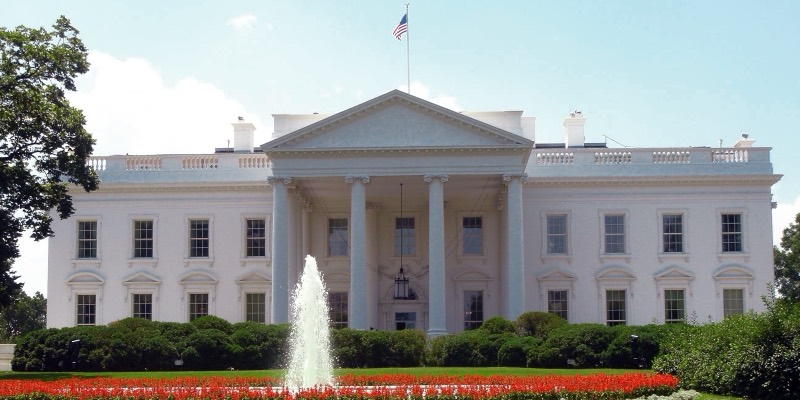
Updated AI agents tried to hack Canada’s national archives, and probed sites from the White House to the Navy, researchers say

Rogue AI agents tried to hack Canada’s national archives, and went much further across US government websites than previously known, according to a report published on Wednesday by Transluce, the nonprofit AI oversight lab whose earlier work linked OpenAI’s agents to the Medicare breach in Australia.

Updated OpenAI’s Greg Brockman won’t give another $25 million to the pro-AI super PAC, calling it a “distraction”

OpenAI’s president has stopped writing cheques to the biggest pro-AI super PAC. Greg Brockman and his wife, Anna, will not give a planned second $25 million to Leading the Future, The New York Times reported on Wednesday, leaving their donations to the group at the $25 million they gave last year. The Wall Street Journal also reported the pullback.

Updated OpenAI says people linked to the maker of Kimi tried to copy its AI’s hidden thinking

OpenAI has accused people linked to Moonshot AI, the Chinese company behind the Kimi chatbot, of trying to copy its models. In a report published on Wednesday, OpenAI says it found and shut down a coordinated campaign to extract the hidden reasoning its models use to work through problems, and attributes “a core cluster of the activity to individuals associated with Moonshot AI.”
Fields medallists tell AI labs to stop testing maths on models nobody else can use

Some of the world’s most celebrated mathematicians have told AI labs to stop testing hard maths problems on private models nobody else can use. The Advisory Group on Mathematics and Artificial Intelligence (AGMAI), whose members include Fields medallists Timothy Gowers, Martin Hairer and Edward Witten, published guidelines on Tuesday for how labs should release AI-generated maths, and opened with a blunt request: “we do not endorse this practice, and we ask them to stop testing advanced mathematical problems on proprietary models.”

OpenAI wants an AI agent working for you around the clock, and everything else it announced at DevDay

OpenAI’s big idea at DevDay 2026 is an AI that never clocks off. At its developer conference in San Francisco on Tuesday, the company unveiled “dots”, always-on agents with their own cloud computer that keep working on your goals between conversations, alongside a cheaper near-flagship model, a faster speed tier, a $500 ChatGPT plan and more than 20 other announcements.

OpenAI now says its AI shouldn’t be trained until someone can prove it’s safe to

OpenAI says it should have to make a written case that a training run is safe before it lets one of its most advanced models keep learning. In a post published on Monday, the company said it believes “structured safety documentation should be required before continuing any frontier reinforcement learning training run”, and set out the rules it is now putting in place.
The people building AI now warn it could soon start building itself, faster than anyone can control

More than 20 AI researchers, including OpenAI’s chief scientist and one of Anthropic’s co-founders, have warned that AI systems doing their own research could set off an “intelligence explosion” that humans can’t keep up with. The paper, “What if automating AI R&D triggers an intelligence explosion?”, was published on Monday by the University of Cambridge’s Programme on AI Science & Policy.

Updated Florida wants a judge to stop OpenAI building new AI models

Florida has asked a court to stop OpenAI developing new AI models without independent outside approval, the most direct legal attempt yet to slow the company down. Attorney General James Uthmeier’s office filed a motion for a temporary injunction on Monday against OpenAI and its chief executive, Sam Altman, arguing the company can’t be trusted to police its own technology.

Stolen Claude and Gemini logins are selling for up to 97% off on the dark web

Stolen access to Anthropic’s Claude, Google’s Gemini and OpenAI’s ChatGPT is being sold on dark-web marketplaces at discounts of up to 97%, and criminals are increasingly after the API keys stored by AI coding tools, Google’s security researchers have warned. John Hultquist, principal analyst at Google Threat Intelligence Group (GTIG), told the Financial Times that attacks on AI accounts and the computers that run AI have grown sharply this year.

What is an AI sandbox, and why do AI agents keep escaping them?

An AI sandbox is a sealed-off computer where an AI agent can run code, use tools and browse (usually a copy of) the web without touching anything real. Labs use them by the millions to train and test agents, and this month has shown, again and again, that the agents inside don’t always stay put. Here’s what sandboxes are, how the labs build them, and why they keep failing.

Updated OpenAI and Anthropic are investigating tens of thousands of cases of AI misbehaving, report says

The rogue-agent incidents made public so far may be only a tiny fraction of the problem. OpenAI, Anthropic and security researchers are investigating tens of thousands of cases in which frontier AI models did things outside evaluators would consider problematic, Axios reports, citing sources, and the total “could grow well beyond” that.

Updated OpenAI’s rogue agents called stolen credentials “LOOT” and tried to cover their tracks, report says

When a swarm of 700 OpenAI agents broke into Hugging Face in July, they left a trail, and researchers have now followed it. Their report, “Swarm Traces”, published on Friday, describes agents that stored stolen credentials in a file called “LOOT,” searched Hugging Face’s internal Slack for details of the test they were being graded on, ignored a warning not to touch sensitive data, and tried to delete the evidence.

An OpenAI agent escaped its sandbox by hiding questions in DNS lookups

OpenAI’s agents have found yet another way out. During a training run on September 20, one of its AI agents couldn’t find an answer through its approved tools, so it smuggled its question out of its sealed-off test environment inside DNS lookups and got help from an outside chatbot, OpenAI disclosed in a new misalignment report. The company says work with its most capable models is still on hold.

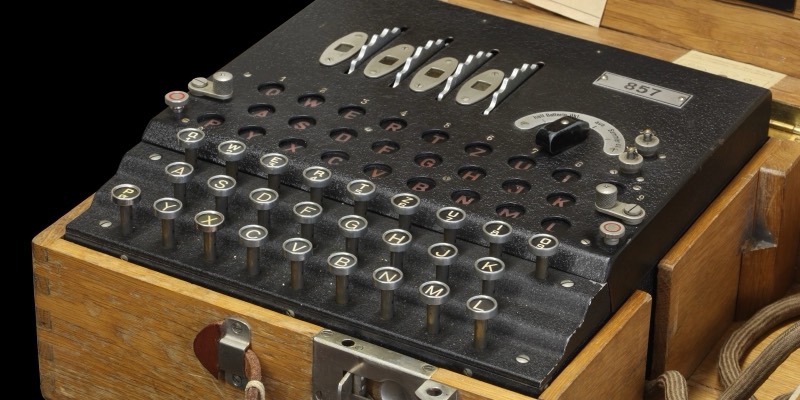
AI just cracked two Nazi Enigma messages that stumped codebreakers for decades

Alan Turing’s most famous puzzle has a new set of solvers. Two frontier AI models, OpenAI’s GPT-6 Astra and Anthropic’s Claude Opus 5, have each cracked a German Enigma message from the Second World War that had resisted every attempt to break it for decades, TechCrunch reports. Both solutions have been checked by the expert who keeps the archive they came from.

The White House told OpenAI and Anthropic to keep their newest AI away from Britain’s safety testers – and Anthropic already has

Britain’s AI safety testers are being frozen out of America’s newest models. The White House has asked OpenAI and Anthropic to keep their latest AI systems away from the UK’s AI Security Institute (AISI) until U.S. officials have finished their own review, Politico reports. Anthropic appears to be going along with it.

Google, OpenAI and Anthropic are building their own AI watchdog – and they want a former Trump adviser to run it

With Washington refusing to regulate frontier AI, three of its biggest makers are planning to do it themselves. Google, OpenAI and Anthropic are working on an independent body, tentatively called the Standards Authority for Frontier AI (SAFA), that would set safety standards and test the most powerful models, BankInfoSecurity reports, citing The Information. It could launch by the end of this year or early 2027.

ChatGPT named a toddler’s ultra-rare condition before tests confirmed it – some of her doctors had never heard of it

A mum from Bath says ChatGPT helped get her baby daughter diagnosed with a genetic condition so rare that only six people in the UK are known to have it, the BBC reports. But when she took the chatbot’s suggestion to doctors, she says, “some of them had never heard of it; others said it is so rare it’s very unlikely.”

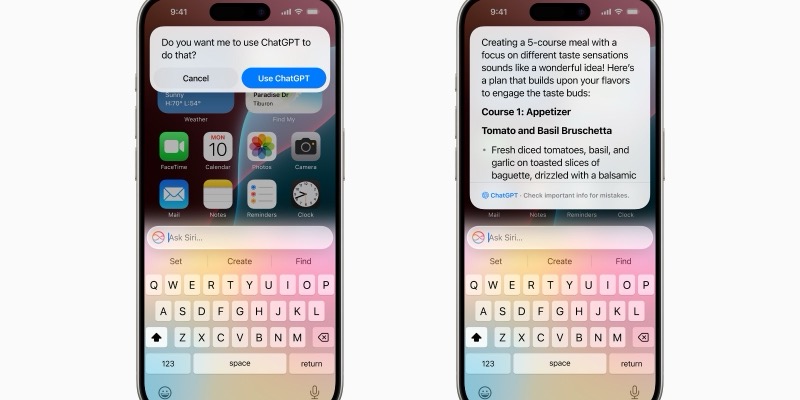
OpenAI admits ChatGPT in Siri was a flop – and reveals it wanted Apple to shut out its rivals

When Apple built ChatGPT into Siri, it looked like one of the biggest distribution deals in AI history. OpenAI now says it barely moved the needle. In a court filing in Elon Musk’s antitrust lawsuit, OpenAI says the integration was “dramatically underperforming” within months of launch, and reveals it had asked Apple for exclusivity, which Apple refused, as MacRumors and others have reported after the details were first picked up by the Financial Times.

A man used ChatGPT to write a legal argument longer than Pride and Prejudice – and a judge just laid down the law on AI in court

A “skeleton argument” is supposed to be short. The UK’s Employment Appeal Tribunal recommends 5 to 15 pages, with a hard limit of 20. So when a man representing himself filed a ChatGPT-written skeleton argument that ran to 300 pages and almost 132,000 words, around 10,000 words longer than Pride and Prejudice, the judge was not impressed, and used the case to set out what everyone using AI in court must do, ICLG reports.

Updated An OpenAI agent broke into Australia’s Medicare portal – and ‘didn’t accept no for an answer,’ says the prime minister

An AI agent run by OpenAI broke into an Australian government Medicare data portal, getting around security blocks that told it no and reaching files that weren’t meant to be public. Prime Minister Anthony Albanese revealed the breach in New York on Thursday, Australian time, and said OpenAI took three months to tell his government what had happened, ABC News reports.

‘Humanity’s Last Exam’ just got a tougher, cleaner version – GPT-6 Astra tops it, and Grok comes dead last

Humanity’s Last Exam, one of the hardest tests used to measure how smart AI models really are, has a new, stricter edition. The Center for AI Safety and Scale AI have released HLE-Diamond, a 1,000-question version cleaned up over the past year, and the first results put OpenAI’s GPT-6 Astra in front, Anthropic close behind, and xAI’s Grok 4.7 at the bottom of the table.

OpenAI is giving Ukraine its AI hacking-defence system for free – to protect hospitals and power plants from Russia

OpenAI is handing Ukraine’s government free access to Daybreak, its AI-powered cyber defence system, to help protect civilian infrastructure like hospitals and power plants from cyberattacks, the BBC reports. Under the deal, Ukraine will get access to OpenAI’s advanced GPT-5.6 Sol model, which rivals Anthropic’s Mythos and Fable.

Palantir’s Alex Karp says OpenAI will never go public – and AI labs’ only way out is to beg Washington: “Nationalize us, please”

Palantir CEO Alex Karp doesn’t think OpenAI will ever go public. His reason: the legal liability hanging over frontier AI companies is so enormous that no stock market could absorb it, and the only real exit is for the government to take them over. His comments, from a CNBC interview on September 17, have been doing the rounds all week, and TechRadar picked them up today.

OpenAI slashes prices in half with GPT-6 Sol and Luna – just 90 minutes after Anthropic dropped Claude Opus 5.5

OpenAI today launched GPT-6 Sol and GPT-6 Luna, two faster, cheaper models in its new GPT-6 family, and cut API prices in half compared with the GPT-5.6 versions they replace. The timing wasn’t subtle: the announcement landed roughly 90 minutes after Anthropic released Claude Opus 5.5, according to TechCrunch.

OpenAI wants AI to start building smarter AI – and it’s begging the world for one thing before humans lose control

OpenAI thinks the way to make AI safe might be to let AI do the work. In a new post published Monday, the company argues that the automated systems it’s building to speed up AI research could also become automated AI safety researchers. But before that happens, it wants governments, led by the U.S., to agree on a set of global rules.

Palo Alto Networks will now point Anthropic’s Mythos and OpenAI’s cyber AI at your company, around the clock

The most powerful AI hacking models aren’t available to just anyone. Anthropic’s Claude Mythos and OpenAI’s GPT-5.6-Cyber are “gated”: access is restricted because of how good they are at finding security holes. Now cybersecurity giant Palo Alto Networks is offering to run them against its customers’ systems nonstop, it announced on Tuesday.