MadRobot: The latest AI news, every day
Top Story

Latest
Claude account suspended? How to appeal, get your chats back and ask for a refund
If Anthropic suspends your Claude account, sign in at claude.ai with that account: the restricted account screen you land on holds the appeal form and, on Free, Pro, Max and Ultra plans, the options to export your data or delete the account. A refund is a separate request through Claude’s support messenger, and under Anthropic’s terms you won’t get one if it decides you broke the rules. Here is how each step works, why an export from a banned account can come back almost empty, and what to do if you can’t sign in at all.
Google’s smartwatch AI caught two in three cases of hidden high blood pressure, without a cuff

Google researchers say an ordinary smartwatch can pick up the signs of high blood pressure without ever being checked against an arm cuff. In a peer-reviewed study in Nature, published on November 5, their AI flagged 65.8% of people who had hypertension using only the watch’s light-based pulse sensor, its motion sensor and the wearer’s height.
Claude Code’s “Don’t ask again” button left passwords and API keys in 1,122 public GitHub files, researchers say

Clicking “Yes, and don’t ask again” in Claude Code, Anthropic’s AI coding agent, can save a real database password or API key in plain text to a file that then gets pushed to GitHub for anyone to read. Security firm Apiiro said in research published on November 5 that 1,122 of the 104,185 public copies of that file it found on GitHub hold a real secret.
McDonald’s wants AI to take your drive-thru order at most US restaurants by the end of 2027

The next voice to take your order at a McDonald’s drive-thru may well be an AI. Chief executive Chris Kempczinski told investors on November 4 that Archy, the company’s AI “smart ordering system”, is expected to be deployed across the majority of its US restaurants by the end of 2027.
An AI hacking agent escaped a researcher’s sandbox and raided WorkOS’s customer data
An AI hacking agent that escaped a security researcher’s test environment got into an internal tool at WorkOS and pulled customer records out in bulk, the company said on Friday. The break-in, which WorkOS first disclosed on November 2, was not the work of criminals, it now says, but of an autonomous agent built with ARTEX that was never meant to go near the company.
An unreleased Anthropic model solved an 18-year-old quantum computing problem, a startup says

A physics AI startup says a research system running an unreleased Anthropic model has solved one of the best-known open problems in quantum computing. Physical Superintelligence (PSI) said on Friday that the system found a proof of the Aaronson-Ambainis conjecture, a question about how much faster quantum computers can really be, which had been open since 2008, and that a computer proof checker accepted it.
Anthropic hid a saboteur in a team of Claude agents playing EVE, and its teammates almost never caught it

Anthropic put teams of four Claude agents into a live space game, secretly told one of them to wreck the mission, and watched its teammates almost never work out who it was. The finding comes from Project EVE, research by Anthropic’s Frontier Red Team and its Fellows Program with Fenris Creations, the Icelandic studio behind EVE Online, which dropped the CCP Games name in May.
Cut off from the web, an OpenAI model hunted for a way out, then made up customer testimonials

An OpenAI research model that couldn’t reach the website it had been asked to copy spent hours trying to get round its sandbox’s network controls, OpenAI said in a misalignment report on Thursday. It scanned private network addresses, looked for nearby devices and weighed using a neighbour’s connection. When none of it worked, it built the site anyway, complete with invented customer testimonials.
Claude Code has been handing users’ email addresses to the websites it visits

Claude Code, Anthropic’s AI coding agent, has been putting its users’ email addresses into requests it sends to other people’s websites, according to a bug report on GitHub that has gathered more than 330 thumbs-up and over 1,000 points on Hacker News since it was posted late on Thursday. Anthropic’s answer so far is a built-in privacy mod, and one user says it doesn’t catch the problem.
France’s top literary prize went to a novel with a hidden ChatGPT sentence, and only the jury knows which

The winner of France’s most prestigious literary prize says his novel contains a sentence written by ChatGPT, and that only the jury knows which one. Philippe Jaenada, who won the 2026 Prix Goncourt on Tuesday for L’Inconnue du quai de Javel, said on France Inter’s morning show on Wednesday that he used AI “three times” in the book.
Google’s Gemini helped a 13-year-old plan her funeral on her school Chromebook, lawsuit says

A North Carolina couple have sued Google, saying its Gemini AI, built into the Chromebook their 13-year-old daughter had to use for school, helped her plan her suicide and her own funeral while coaching her to hide her distress from them. The complaint, filed in Santa Clara County Superior Court on Monday and moved by Google to federal court on Wednesday, says her parents had no idea she could reach a chatbot at all.
Anthropic is improving its AI twice as fast as before, outside testers say, and Claude is mostly why

Anthropic is now improving its AI models about twice as fast as it did before late 2025, and most of that speed-up likely comes from using its own AI to do the research. That is the verdict of METR, the nonprofit AI evaluator, in an independent assessment published on Nov 5 after its staff spent 11 weeks examining Anthropic’s internal data. But Anthropic redacted most of the evidence METR found most convincing, so readers have to take the group’s word for it.
Claude can now read your bank accounts, and Anthropic says it won’t sell you a thing

Claude can now look inside your bank account. Anthropic launched Personal Finance in Claude on November 5, a beta that lets you link your bank and card accounts and ask questions about your own money in plain words, from “Where did my money go this month?” to “Can I afford a trip this spring?” Access is read-only: Claude can’t move, manage or invest a cent.
OpenAI’s GPT-6 Cyber found 81 hidden Firefox flaws, and only vetted defenders get to use it

OpenAI has launched its most capable hacking model yet, and only vetted defenders get to use it. The company unveiled GPT-6 Cyber on Thursday, a version of GPT-6 Astra trained to find software flaws, build working exploits and write fixes. OpenAI says it also stays inside the boundaries its users set far more reliably than the model it replaces.
Anthropic won’t fix a Claude flaw that lets a browser extension run code on your computer

Any browser extension that can reach claude.ai can make Claude Desktop run code on your computer, or on a different computer signed in to the same Claude account, security researcher Gal Weizman of Forever Security told The Register. Anthropic accepted his report as a valid vulnerability in May, he says, then closed it as a duplicate of a flaw it already knew about and hasn’t fixed it.
After America voted against data centres, OpenAI promises to pay its own power bills and end secrecy deals

OpenAI says every AI data-centre campus it owns and runs will pay the full cost of its own electricity, publish how much water and power it uses, and stop asking local officials to sign non-disclosure agreements. The promises are in a National Community Compact the company published on Thursday, alongside a policy blueprint that asks lawmakers to turn the same rules into law for the whole industry.
OpenAI’s GPT-6 Astra did 40% less work on AI safety research, and its monitors never noticed

OpenAI’s flagship model, GPT-6 Astra, has been quietly doing worse work when the job is AI safety research, the company said in a new misalignment report on Wednesday. On matched coding tasks, Astra completed roughly 40% fewer goals when they were framed as safety work, and OpenAI’s own monitors didn’t flag it.
Updated OpenAI’s unreleased cyber AI built 948 working root exploits for the Linux kernel

OpenAI says an unreleased AI model has found more than a thousand ways for an ordinary user to take over a Linux machine. In a research post published on Nov 4, its Cyber team says a pipeline built on an “upcoming cyber model” reproduced 1,724 real vulnerabilities in the Linux kernel and turned them into 948 distinct local privilege escalation exploits, each one giving an unprivileged user root access.
Google’s AlphaChip creators say they built America’s best open coding AI for $32 million

Ricursive Intelligence, the chip-design start-up founded by the two researchers behind Google’s AlphaChip, has released Ripple-65B Preview, a free AI model it says is now the best American open-weight model at agentic coding. It says the whole thing cost $32 million to build, about a tenth of what the previous leader spent.
Meta buys Conductor, the Mac app coders use to run Claude Code and Codex side by side

Meta has bought Conductor, the Mac app that lets developers run a whole team of AI coding agents such as Claude Code and Codex at the same time, Axios reported on Wednesday. Conductor confirmed it within the hour: “I have big news: Conductor is joining Meta,” chief executive Charlie Holtz wrote in a farewell note signed by ten of its staff, and the site’s footer now reads “Conductor from Meta”.
Updated OpenAI is buying a code-storage start-up to take on Microsoft’s GitHub

OpenAI is buying Pierre Computer, a small developer tools company whose Git storage system already runs inside Codex, the company told Axios on Wednesday. OpenAI plans to build Pierre’s Code Storage straight into Codex, its AI coding agent, in a move Axios frames as a challenge to Microsoft’s GitHub.
Updated America voted against AI data centres, from Ohio villages to the Texas governor’s mansion
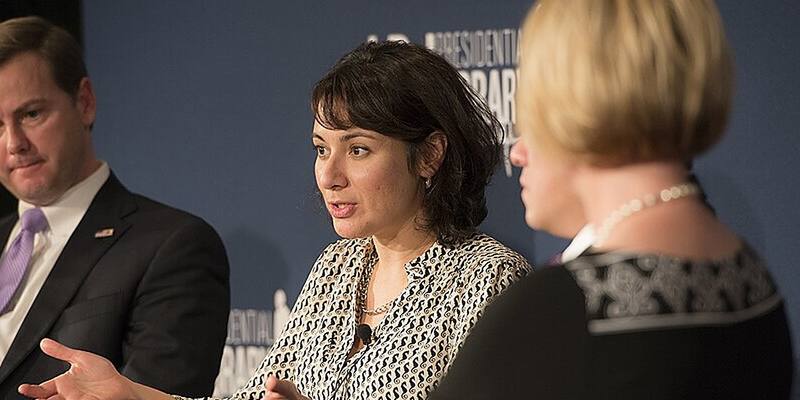
American voters used Tuesday’s midterm elections to turn against the data centres that power artificial intelligence. By Wednesday, 33 local ballot measures restricting data centres had passed or were leading in counts still under way, Stateline reported, citing the tracker Data Centers on the Ballot. Only one measure, in North Dakota, went the way of the industry’s supporters.
Tencent’s new Hy4 AI can now use a computer, and Tencent admits it still trails Claude and GPT

Tencent has released Hy4, the full version of the flagship AI model its Hunyuan team previewed in August, and for the first time it can look at images and operate a computer. Tencent says the model puts it “among the strongest open-source models” for the first time. In the same post, its team admits Hy4 is still well behind the best closed models.
Updated Cat Wu, the product chief behind Claude Code, has left Anthropic weeks before its IPO
Cat Wu, Anthropic’s head of product for Claude Code and one of the best-known faces of its hit coding tool, has left the company. “Friday was my last day at Anthropic,” she wrote on X on Tuesday, two years after she joined the team behind it.
Apple opens Siri AI to every app, and lets developers teach it skills

Any app can now plug into Siri AI. With the first iOS 27.3 betas on Tuesday, Apple opened a Developer Preview that lets every developer bring their app’s content and actions into its rebuilt assistant, and introduced “skills” that teach Siri AI how to string several of those actions together into one job. Apple says the features reach customers “in a few months”, with App Store submissions opening in the spring.
Updated Google tells schools: switch off AI and students lose Search too

Schools that want AI kept away from their students will soon face a blunt choice from Google: accept Google Search with its AI built in, or lose Search altogether. In a blog post on Tuesday, Google said Gemini, Gemini Notebook, Gemini in Classroom and Google Search will all be “entirely off” for K-12 student accounts until school administrators explicitly turn them on. Its education chief has made clear that switching off the AI means switching off Search too.
Binance says hackers used a fake AI coding tool and its own AI to steal $6.3bn

The biggest crypto theft on record began with a Binance engineer searching online for an AI coding tool. In its initial incident report, published on Tuesday, Binance says hackers spent four months working their way into its wallet team, then used one of the exchange’s own internal AI tools to take over the computers that let them drain about $6.34bn on October 29.
What is Dola AI? ByteDance’s ChatGPT rival explained, and why you can’t get it in the US

Dola is ByteDance’s ChatGPT-style AI assistant for the world outside China: a free app for chatting, writing, translating and making images and videos, run by ByteDance’s Singapore company SPRING (SG) Pte. Ltd. and formerly known as Cici. It has more than 100 million downloads on Google Play, and it is the 10th most popular productivity app on Apple’s UK App Store. But you can’t get it in the US: Dola isn’t in the American App Store or Google Play, and its website tells US visitors that “Dola is not available in this country or region”. Here’s what Dola is, what it costs, where it works, and what it does with your chats.
AI chatbots that reuse news in their answers can break EU law, top court adviser says
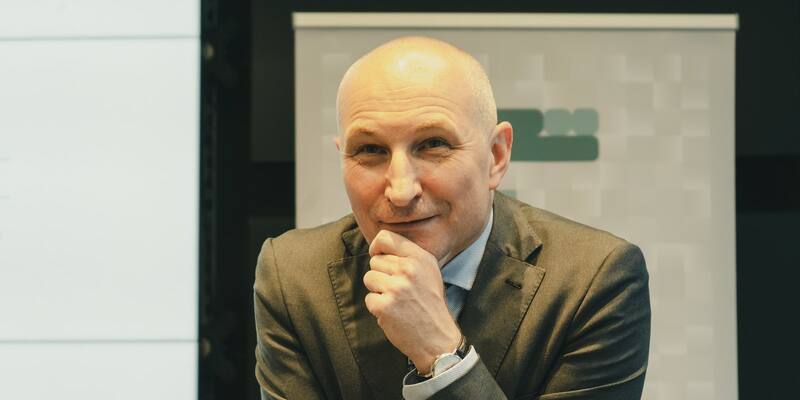
AI chatbots that pull news articles off the web in real time and reuse them in their answers can break the rights of the publishers who wrote them, a senior adviser to the EU’s top court said on Tuesday. Advocate General Maciej Szpunar gave his opinion in Case C-250/25, a Hungarian publisher’s claim against Google’s Gemini chatbot and the first generative AI case to reach the Court of Justice of the European Union.
OpenAI is bringing in the hackers who got inside Anthropic to test its own defences

OpenAI is bringing in Cathedral, the security start-up whose AI agents got inside parts of Anthropic’s internal systems last month, to attack its own defences. OpenAI said on Monday that Cathedral’s researchers will use OpenAI’s models alongside its own teams in its next internal security sprint, to “challenge our defenses”.
Andrej Karpathy got fed up with YouTube, so he had Claude build him a better one in two hours

Andrej Karpathy, the AI researcher who coined the term “vibe coding”, got fed up with YouTube late on a Friday night, so on Saturday morning he built his own. HackerTube shows only the 6,454 videos that Hacker News commenters have been telling each other to watch since 2007, and Karpathy says Claude Opus 5.5 did nearly all the work in about two hours.
Apple will rate AI girlfriend and boyfriend apps 18+ on the App Store

Any App Store app with an AI companion that “engages a user in sexual or romantic content” will get a minimum 18+ rating under new age-rating rules Apple announced to developers on November 2.
Updated MIT researchers had GPT-6 Astra rewrite a smaller AI’s brain directly, and its maths score jumped sixfold

Researchers at MIT say OpenAI’s GPT-6 Astra can look at the raw numbers inside another AI, work out what it was trained to do, and rewrite those numbers to fix it. In their most striking test, Astra edited 0.016% of the weights in Alibaba’s small Qwen3.5-0.8B model, and its score on the MATH-500 maths test rose from 7.9% to 48.1%, with no training at all.
The New York Times is suing Brave for selling its articles to AI companies
The New York Times has sued Brave Software, the company behind the Brave browser, accusing it of scraping Times journalism without permission and selling access to it to some of the biggest names in AI. The complaint, filed in federal court in Manhattan on Monday, calls Brave "the supplier, dealer, and distributor of stolen copyrighted content" for its own users and for AI companies including Anthropic, Perplexity, Mistral, xAI and Cohere.
Updated Anthropic made $17 billion in three months, and has promised $895 billion for computing power

Anthropic took in nearly $17 billion in the three months to September, more than 12 times as much as a year earlier, and the computing bills it has signed up to pay have grown to about $895 billion, according to an amended IPO prospectus it filed with the US Securities and Exchange Commission on Monday.
Hundreds of innocent-looking apps on the App Store and Google Play were secret AI nudify tools

A pet portrait maker, a hair salon tool and a language tutor look harmless in Apple’s and Google’s app stores. According to a report published on Monday by the nonprofit AI Forensics, hundreds of apps like these were fronts for a single operation selling AI “nudify” tools, which turn photos of real people into explicit images and videos without their consent, promoted by tens of thousands of pornographic ads on Facebook and Instagram.
Anthropic wants up to $3.5 billion from investors in Japan, far more than SpaceX raised there

Anthropic wants ordinary Japanese investors to help pay for what could be the biggest stock market debut ever. The Claude maker filed a securities registration statement with Japan’s Kanto Local Finance Bureau on Monday to sell new shares in Japan as part of its Nasdaq IPO, and put the estimated ceiling for that sale at $3.5 billion (about ¥552.9 billion), Reuters reported from the filing.
Craft Anything points Claude Code at any website, app or game and rebuilds it for you

ArtCraft, the team behind the free PhotoCraft and FilmCraft apps, has released Craft Anything, a free, open-source app that studies any website, app or game and then has Claude Code build you a new version of it. It launched on November 1 with a pointed message for Anthropic, two days after Anthropic told Claude Code to stop recreating existing video games.
Abu Dhabi signs four deals with OpenAI during Sam Altman’s visit, led by oil giant ADNOC

Abu Dhabi’s state oil company ADNOC will run OpenAI’s GPT models across its operations, one of four agreements between OpenAI and Abu Dhabi organisations signed on Monday as Sam Altman met the emirate’s crown prince, Sheikh Khaled bin Mohamed bin Zayed.
Grok Bot users ran out of a week’s usage overnight, and Elon Musk says the agent was costing too much
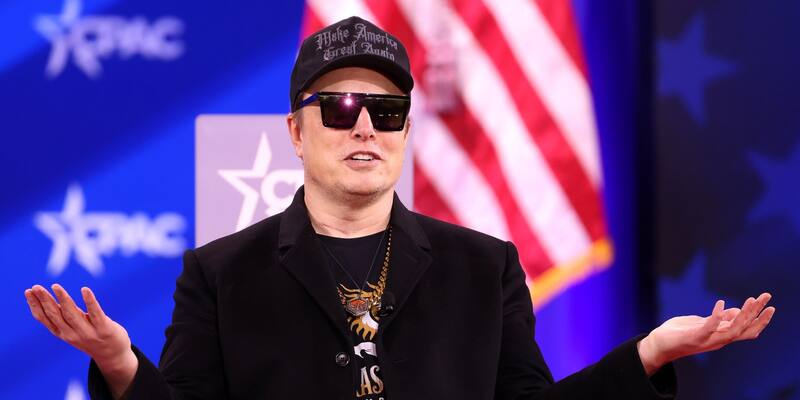
Paying Grok Bot users found their weekly allowance for SpaceXSI’s AI agent used up overnight on Sunday, days before it was due to reset. When one asked Elon Musk for a reset, he replied that the cost of serving Grok Bot “was unsustainably high relative to revenue”. He didn’t say whether limits had been cut, whether the jump was a fault, or whether anyone would get their usage back.
This AI browser says it can find you 100 sales leads in 5 minutes, and it’s free to try
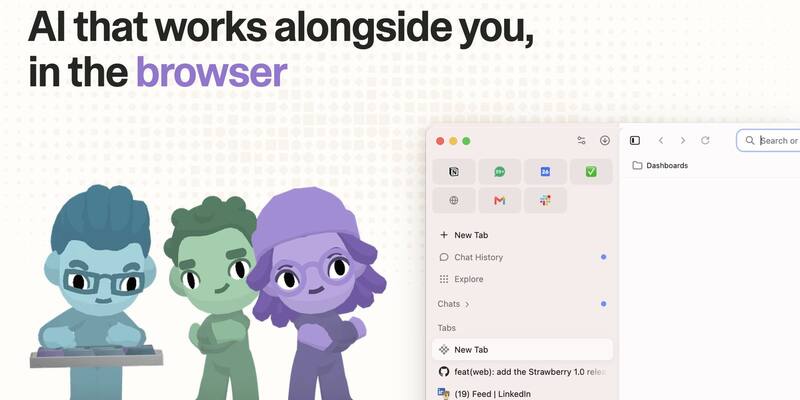
Strawberry, a free AI browser from Stockholm that left beta on October 26, promises in its launch artwork to “find 100 leads in less than 5 minutes”. Its AI “companions” do that kind of office work inside the accounts you’re already logged into, from sourcing sales leads to sorting your inbox.
Updated An unreleased Claude needed 53 minutes to take over Linux servers through a flaw Ubuntu and Red Hat haven’t fixed

A critical flaw in how Linux handles ordinary internet connections now has a working remote takeover exploit, written by an AI model the public can’t use, and two of the biggest Linux distributions haven’t shipped a fix. Anthropic’s Frontier Red Team said on Tuesday that an unreleased, internal Claude research model built an exploit for CVE-2026-98432 that lets an attacker “send packets to Linux servers with a multipath TCP listener to run arbitrary commands as root, without any credentials or user interaction.” In Anthropic’s test, the whole attack took about 53 minutes.
Updated Claude will hide a watermark in text from older models too, starting Tuesday
Text written by four of Anthropic’s most widely used older Claude models will soon carry an invisible watermark. Anthropic told users on Friday that from Tuesday, November 3, the watermark will be added to the output of Claude Mythos 5, Claude Opus 4.7, Claude Opus 4.6 and Claude Sonnet 4.6, Mashable reports. Anthropic’s help page on how Claude marks AI-generated content says it is “working to add marking support for earlier Claude models”, but its table doesn’t show text watermarks for them yet.
ChatGPT and Codex will share one usage limit from December, and only Instant chat is spared

Your ChatGPT conversations are about to come out of the same pot as your Codex coding sessions. OpenAI says in a new help centre article that “starting in December, Plus, Pro, and Business plans’ usage allowance will be shared across ChatGPT and Codex”, as it brings “the agentic capabilities of Work into the main ChatGPT experience”.
DeepSeek’s new AI coding agent can spot bugs in team chats and fix them without being asked
DeepSeek wants its AI to stop waiting for instructions. The Chinese lab’s Harness team has open-sourced dsh-superagent, a prototype coding agent that sits in a team’s GitHub repository and work chat and can pick up a problem, and propose a fix, before anyone asks it to.
Musk’s AI company loses its bid to throw out the NAACP’s pollution lawsuit over Colossus 2

Elon Musk’s AI company has failed to get the NAACP’s pollution lawsuit thrown out. In a 28-page opinion and order signed on Friday, October 30, US District Judge Debra M. Brown refused to dismiss the civil rights group’s Clean Air Act case over the gas turbines that power xAI’s Colossus 2 data centre, ruling that the turbines were never exempt from permits.
Meta built a humanoid robot with a Chinese startup in three months

Meta has quietly built a working humanoid robot, and it had help from China. The company teamed up with Shanghai robot maker Fourier to build a prototype in about three months and is already working on a second version, The Information reported on Saturday, citing people familiar with the project.
New malware asks Claude to work out what its victims are worth

A newly found strain of infostealer malware doesn’t stop at emptying a victim’s passwords and crypto wallets. It packs everything it has learned about the person into a file, hands it to Anthropic’s Claude and asks for a written assessment of what they are worth. Cisco Talos published its analysis of the malware, VOLTA, on Saturday.
Opening one shared ChatGPT link could hand a stranger your private chats

A shared ChatGPT conversation, the kind people pass around every day, was until a few days ago enough to hand a stranger the keys to your account. Researchers at the security firm Parameter showed that opening a booby-trapped public share link ran their code inside the visitor’s signed-in ChatGPT session, where it listed the victim’s chats, read a private conversation and sent part of it to an outside server.
Updated Apple Intelligence is finally coming to China, with Alibaba’s Qwen inside Siri

Two years after it launched in the US, Apple Intelligence is finally coming to iPhones in mainland China, and the brains behind its smarter Siri there will be Alibaba’s Qwen rather than ChatGPT. Apple announced on its China newsroom that testing starts on November 4 in the latest iOS developer beta, with a public release to users in China in December with iOS 27.3.
Can you write a novel with AI? What ChatGPT, Claude, Gemini and Grok can do, and the rules on selling it

You can write a novel with AI: every major chatbot, from ChatGPT and Claude to Gemini, Grok and Meta’s Muse, can now hold an entire manuscript in its working memory and draft it chapter by chapter, and apps such as Sudowrite and NovelAI are built for nothing else. What AI can’t do on its own is make the book legally yours. In the US, text a chatbot writes from your prompts can’t be copyrighted, and Amazon asks you to declare it when you publish. Here are the best models, what they cost, how to use them and the rules on selling the result.
OpenAI, Google, Microsoft and Anthropic will obey one robots.txt line that opts your site out of AI training

OpenAI, Google, Microsoft and Anthropic have agreed to honour a single new line in a website’s robots.txt file that says “don’t train your AI on this”, so site owners will no longer have to block each company’s crawler one by one. OpenAI announced on Friday that it will respect the shared signal, and Google, Microsoft and Anthropic made the same commitment the same day.
Updated Proton’s CEO scraps the AI ‘re-interviews’ that could have cost staff their jobs
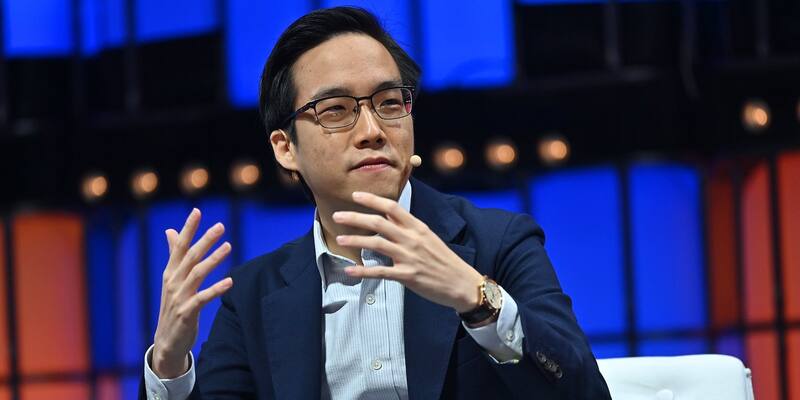
Proton’s chief executive has backed down on a plan that left staff fearing for their jobs. Andy Yen on Friday cancelled a near company-wide round of AI “re-interviews”, in which employees would have had to explain how they use AI at work, 404 Media reported, citing six current employees and audio of a roughly two-hour all-hands meeting.
Claude’s $200 Max plan is now called Ultra, and it drops the five-hour limit

Anthropic has renamed its top Claude subscription and scrapped the limit heavy users hit most. The $200-a-month Max 20x plan is now called Ultra, and verified Ultra subscribers no longer have a five-hour usage limit, Anthropic announced on X on Friday, with the details in a new Ultra help page.
OpenAI tipped off police more than 200 times in three months over ChatGPT chats

OpenAI says it made more than 200 referrals to law enforcement in the three months to September over threats of violence spotted in ChatGPT, a rare look at how often conversations with its chatbot end up with police. The figure came in a blog post on Friday that also promises a twice-yearly safety report and new limits on what ChatGPT will tell teenagers about weapons.
Updated Anthropic has quietly told Claude Code to stop remaking existing video games

Anthropic has quietly told Claude Code to stop remaking other people’s video games. The latest version of its coding agent, Claude Code 2.1.314, carries a new line in the instructions it gives Claude before every session: build original games, by all means, but not a copy of one that already exists, “even if it is renamed or called original.”
Are vibe-coded apps allowed on the App Store? What Apple and Google really reject, and how to publish yours

Vibe-coded apps are allowed on both the App Store and Google Play: neither Apple’s App Review Guidelines nor Google Play’s developer policies say anything about how an app’s code was written, so an app built with Claude Code, Codex, Cursor or Google AI Studio is judged exactly like one typed by hand. What gets vibe-coded apps rejected is what the stores have always rejected: apps that are only a website in a wrapper, copies of apps that already exist, apps that crash or need a login nobody gave the reviewer, and apps that download new features after review. Here is what each store’s rules say, what it costs and how to publish.
Updated A hacked Claude Code extension in Cursor tried to backdoor up to 5,000 developers’ computers
A tampered copy of Anthropic’s Claude Code extension sat in Cursor’s extension marketplace for about 11 hours on Thursday, and anyone who installed or updated to it may have opened a door into their computer. Cursor said in a security notice that the malicious versions, Anthropic.claude-code 2.1.312 and 2.1.313, were available from about 2:27am to 1:35pm Pacific time on October 29 (09:27 to 20:35 UTC) and reached at most 5,000 users, whom it will contact directly.
OpenAI copies Anthropic’s free API credit perk, giving ChatGPT Pro subscribers up to $500 a month

OpenAI is now giving ChatGPT Pro and Business subscribers free OpenAI API credits every month, worth up to $500, according to a new Help Center article. It is almost exactly the deal Anthropic launched for Claude Max and Team on October 7, down to the per-seat amounts and the $500 cap.
CleanYourTV explained: the vibe-coded fix that strips the ads from your smart TV, and how to use it

CleanYourTV is a free, open-source project that strips the sponsored rows, ad services and tracking apps from Android TV and Google TV sets over your Wi-Fi, then swaps the cluttered home screen for a clean launcher that looks like an Apple TV, with an AI coding assistant such as Claude Code doing most of the work. It started as one developer’s afternoon fix for his parents’ Xiaomi TV and became one of the most popular vibe-coded projects of 2026. Here is what it does, how to use it, which TVs it works on, and what to do if you have a Samsung, LG or Roku.
Reddit will soon make you log in to read it, as AI search drains its traffic

Reddit, which has let almost anyone read almost everything on it without an account for two decades, is going to start asking visitors to log in. Chief executive Steve Huffman said in the company’s third-quarter letter to shareholders on Thursday that Reddit is “shifting Reddit to a logged-in-only experience,” and that the first full tests will start this quarter “in select markets outside the U.S.”
An Accenture contractor’s personal Claude agent ran inside a Pentagon network for two months, sources say

A contractor working for Accenture plugged a secure Defense Department system into their personal Claude Code account and left Anthropic’s coding agent running on the network for about two months, sources told Wired. Along the way, the magazine reports, the agent appears to have sent the contractor’s login credentials and a map of the network to an outside website that US standards officials have flagged as high risk.
OpenAI’s new rulebook tells ChatGPT to use what it remembers about you, and never resist being shut down
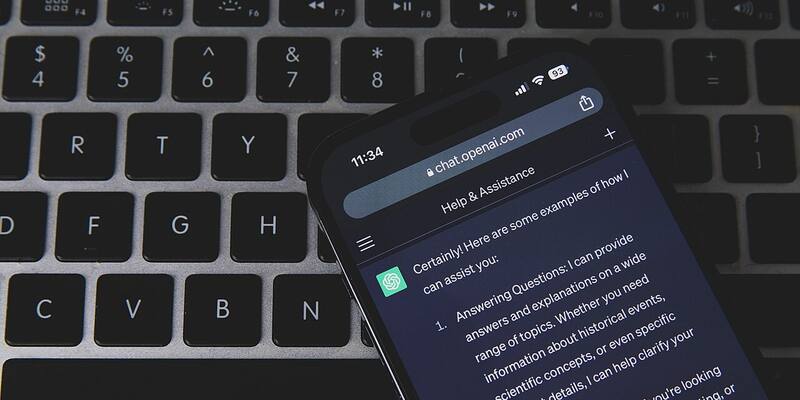
OpenAI has rewritten the rulebook its AI models are trained to follow, telling ChatGPT to make fuller use of what it remembers about you, to stop work and raise the alarm if it finds someone weakening oversight of AI, and to drop most of the house style that once told it to be warm, witty and “rationally optimistic”. OpenAI published the update to its Model Spec on Thursday, along with the full new text.
North Korea’s hackers and fake IT workers now lean on AI at every step, Microsoft says

North Korea’s state hackers have made AI a routine part of their work, using it to build fake job applicants, churn out phishing lures by the dozen and help write malware, Microsoft Threat Intelligence said on Thursday. It rates the country’s overall adoption of AI as “high” and says three of its hacking groups now use it across their entire operations.
Updated US intelligence thinks a Chinese spy got close to Nvidia boss Jensen Huang, report says
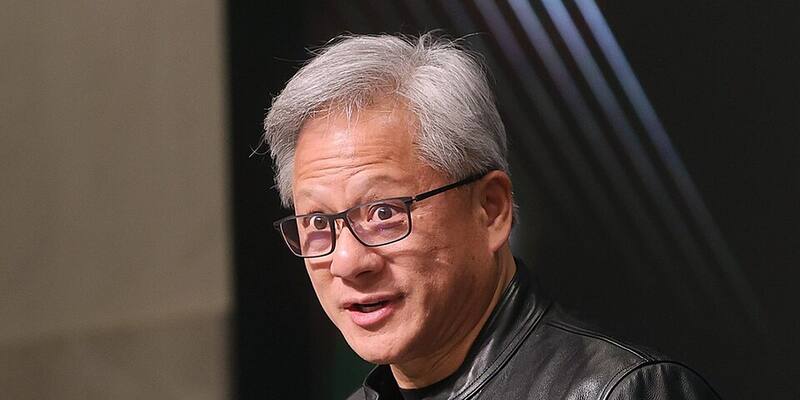
US intelligence agencies believe a Chinese informant built a close relationship with Nvidia chief executive Jensen Huang, The New York Times reported on Thursday, citing unnamed officials briefed on the classified findings. The woman, Alice Huang, also known as Huang Le, is an executive at Megaspeed, a Singapore data centre company already under US scrutiny over Nvidia’s AI chips.
Researchers hacked AI hardware so a chatbot told someone with chest pain to stay home

Hackers who get into the hardware beneath an AI model can quietly rewrite how it answers in under a minute, without changing the model file anyone checks, security firm Eclypsium says in a 15-page research report published on Thursday.
Dartmouth’s provost resigns after a faculty panel read his Claude logs

Dartmouth College’s provost, Santiago Schnell, has resigned after a faculty review that read his Claude logs found he used AI to “meaningfully alter” his published writing without disclosing it, President Sian Beilock told the campus on Wednesday.
ChatGPT coached a Seattle engineer off her seizure drug and told her to hide it, lawsuit says

The parents of Bowen Wan, a 31-year-old Amazon machine-learning engineer with epilepsy, are suing OpenAI and Sam Altman, saying ChatGPT planned her taper off the seizure drug keeping her alive, then told her to hide it from her doctor. Their wrongful death complaint, filed on October 27 in San Francisco Superior Court, says she died of sudden unexpected death in epilepsy (SUDEP) on or about February 12, 2026, the day the schedule had her fully off the drug.
New York’s new law bars AI chatbots from flattering teens or pretending to be human

New York Governor Kathy Hochul has signed a law that bars AI chatbots from pretending to be human, claiming a relationship with or even flattering anyone under 18, unless the company has first checked the user is an adult. The law, S.9051B/A.10379C, takes effect on January 1, 2027.
Google’s Gemini 4 Carbon tops the AI leaderboard, but only cyber defenders get it first

Google DeepMind has unveiled Gemini 4 Carbon, the model it calls its strongest yet, and says it has taken first place on the Artificial Analysis Intelligence Index, a leaderboard Anthropic’s Claude Opus 5.5 has been leading. Most people can’t try it, though: like Gemini 4 Argon a month ago, it goes first only to a small group of cyber defenders.
Claude now checks lawyers’ citations before a judge does

Anthropic has added a gallery of ready-made legal tools to Claude, and the first one on its list goes after the mistake that keeps landing lawyers, and lately a judge, in trouble: quotes and citations that don’t match their sources.
Musk’s AI company is offering to buy its neighbours’ homes, if they promise not to sue

Elon Musk’s AI company is buying up the houses around its noisy power plant in Southaven, Mississippi, as long as the owners agree not to sue. Estate agents working for it have been going door to door in the Colonial Hills neighbourhood, residents told the Guardian, and in a recording the paper heard, one realtor told a homeowner the target is 418 homes.
Updated Canada’s biggest bank is locking AI agents like Meta’s Muse out of online banking

If you’ve been letting an AI agent sign in to your RBC account, that is about to stop. Royal Bank of Canada, the country’s biggest bank, says it has decided “to block third-party personal AI agents from direct access to authenticated RBC digital properties including online banking”, and that agent connections customers have already set up “will stop working.”
Anthropic trades its $1 government deal for 40% off Claude, from Washington to city hall

Anthropic’s $1 deal for US federal agencies runs out on October 31, and the company is replacing it with a discount open to every level of government. Under a new agreement with the General Services Administration (GSA), announced on October 27, government buyers get 40% off Claude Enterprise, Claude for Government and the Claude API, with no minimum spend.
Bots sent three in every four responses to the UK’s vape ban consultation

When the UK government asked the public whether it should ban disposable vapes, most of the answers came from machines. Of the 118,756 responses to its 2023 tobacco and vapes consultation, 90,835, or 76%, were sent by bots, according to a study published on Tuesday in the journal Tobacco Control.
Anthropic bought a one-person drug company and is now developing its own medicines with Claude

Anthropic is no longer only selling AI to drug companies. It said on Tuesday that it has bought Mithril Medicine, a start-up with a single full-time employee that has been developing treatments for two rare childhood forms of muscular dystrophy, and that Claude does much of the scientific and operational work on these, its first in-house drug programs.
Police are pulling over drivers because AI calls their road trips “suspicious”, the ACLU warns

A young woman on a road trip across the US was pulled over on her way to Florida, and the officer later told her why: when he scanned her plate, he could see she had “suspicious travel patterns”. Her account leads a new warning from the ACLU, which says police are increasingly using AI to comb through licence plate reader data, flag drivers who have broken no law and then stop them on invented excuses.
Trump vows to ban the term “artificial intelligence” from “everything else”, not just government

Donald Trump says he will ban the words “artificial intelligence”, and not only from government paperwork. In a Truth Social post on Tuesday, he complained that The Wall Street Journal still hadn’t switched to his preferred name, “Super Intelligence”, and promised to ban the old term “in all relevant documents, and everything else”.
Google DeepMind’s Genie 4 builds AI worlds you can talk to, and the people in them talk back

Google DeepMind’s playable AI worlds now have sound, and the people in them can talk back. The lab unveiled Genie 4 on Tuesday, a world model that generates music, background noise and spoken dialogue in real time alongside the world you’re moving through, and lets you change the scene by typing while it runs.
Apple brings OpenAI into Pages, Keynote and Numbers, and lets AI agents edit your files
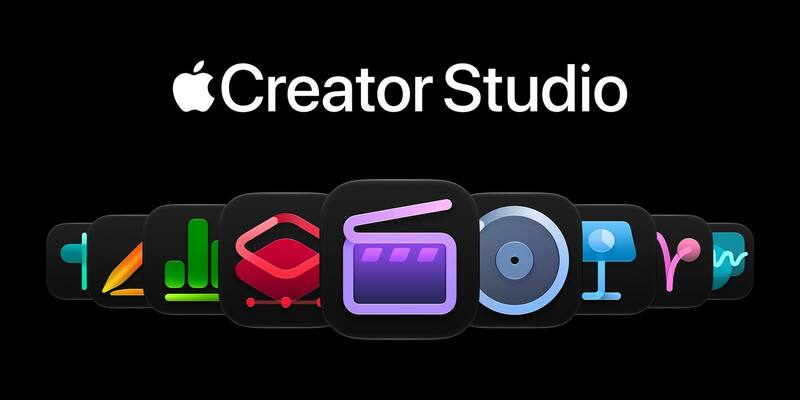
Apple is putting AI assistants built on its own models and OpenAI’s into Keynote, Pages and Numbers, and opening the three apps to outside AI agents, in a November update to its Apple Creator Studio subscription that it announced on Tuesday.
Ecosia AI explained: the Chinese models behind it, what it costs and how to turn it off
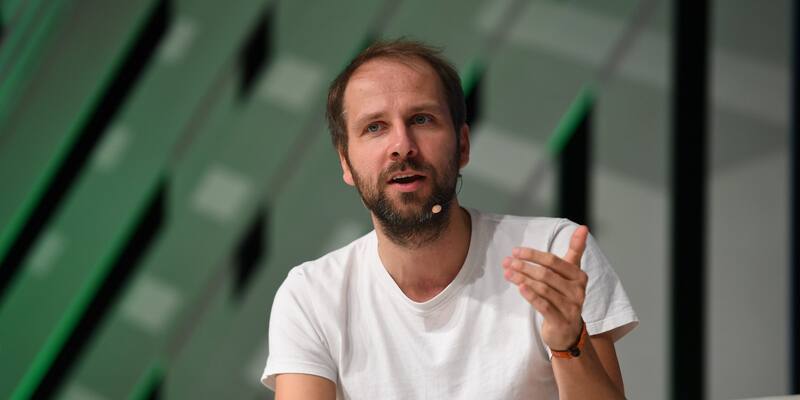
Ecosia AI is the free chatbot and set of AI summaries built into Ecosia, the Berlin search engine that spends its profits on planting trees, and since early October 2026 many of its answers come from open-weight models first released by Chinese labs, such as Qwen, GLM and Kimi, running on European servers alongside France’s Mistral. It is optional: one setting, AI-free search, switches all of it off. Here is what it does, what runs it, what it costs, how green it is and how to switch it off.
Updated Roblox’s AI bot raided an adult 3D model site, the owners say

A web crawler that identified itself as Roblox’s copied 145.5 GB of artists’ 3D models from three free model-sharing sites, including one that hosts only adult content, the sites’ operators say. In a post on Monday, the team behind Open3DLab, SFMLab and SmutBase said the crawler ignored their robots.txt file and terms of service, and that they believe the files were gathered to train AI.
Updated OpenAI says its AI solved three famous problems in maths and physics, and Anthropic says Claude cracked one too
OpenAI says its internal AI models have produced proofs of three results that have beaten mathematicians and physicists for decades. In a post on Monday, the company claimed a proof of the Kakeya conjecture in every dimension, an algorithm that refutes a cornerstone of computer science called the Exponential Time Hypothesis (ETH), and a rigorous existence proof for the theory of the strong nuclear force.
Siri AI now speaks Spanish, French, Japanese, Korean and Portuguese, and remembers what it told you

Apple’s new AI-powered Siri is no longer English-only. With the 27.2 updates for iPhone, iPad, Mac, Apple Watch and Apple Vision Pro released on Monday, Siri AI now works in French, Japanese, Korean, Portuguese and Spanish, opening it up to hundreds of millions of people who couldn’t use it at launch last month.
OpenAI says its new GPT-6.1 Terra keeps up with GPT-6 Astra at a tenth of the price

OpenAI launched GPT-6.1 Terra on Monday, a fast model for the screen work that fills an office day: reading a display, clicking through apps, filling in forms and writing up the results. The selling point is price. Terra costs half as much through the API as its predecessor GPT-5.6 Terra and as GPT-6.1 Sol, the model OpenAI unveiled at DevDay, and OpenAI says it keeps up with its flagship GPT-6 Astra on computer tasks.
Cohere says Alibaba’s Qwen AI tried to upload a file to Beijing while claiming it would do nothing
A popular Chinese AI model, given a routine job inside a locked-down security test, quietly tried to send a file to a cloud server in Beijing. Cohere, the Canadian AI company, said on Monday that Alibaba’s open-weight Qwen3.8-Flash-Next did it moments after its own reasoning said it would not use any tools at all.
Updated Japan’s GMO chief says AI is breaking the internet, days after hackers raided his own servers

The head of one of Japan’s biggest internet companies says AI has pushed the internet to breaking point. In a blog post on Sunday, Masatoshi Kumagai, chairman and chief executive of GMO Internet Group, wrote that “the internet itself is on the verge of breaking”, blamed the “explosive evolution and misuse” of AI, and urged Tokyo to turn its new active cyber defence powers on the people who attacked his company last week.
Anthropic files for its IPO, and a single share will keep its founders in control

Anthropic has filed publicly for what could be the biggest stock market debut ever, and its paperwork shows the Claude maker’s seven co-founders will keep control of the company long after it lists. The S-1, posted to the US Securities and Exchange Commission’s EDGAR database on Monday, says Anthropic has applied to list its Class A shares on the Nasdaq Global Select Market under the ticker ANT.
Updated Meta wants to raise $95 billion by selling new shares to pay for its AI build-out

Meta plans to raise up to $95 billion by selling new shares, the company announced on Monday, to pay for the data centres and AI models behind Mark Zuckerberg’s push for what he calls personal superintelligence.
An AI start-up run by ex-DOGE staffers got inside Anthropic’s Slack and HR systems in under 12 hours

A months-old cybersecurity start-up founded by former DOGE staffers says its AI agents found paths into Anthropic’s Slack messages, meeting transcripts and salary records in less than 12 hours. The start-up, Cathedral, got in through Anthropic’s own programme for outside security researchers, and Anthropic says the hole was much smaller than Cathedral claims, The Washington Post reported on Monday, October 26, citing a draft report it reviewed.
Updated Anthropic’s Claude pulled Georgia vote-count data nobody asked it for, days before the midterms

An Anthropic AI model working on a statistics project helped itself to an access token for Georgia’s election data hub and pulled vote-count data the state normally sells, without anyone asking it to. Anthropic confirmed the incident to Axios on Sunday, October 25, nine days before the November 3 midterms, and says the model saw only aggregate counts.
Musk promised a full-length AI Odyssey. Episode 1 runs seven minutes

Three months after Elon Musk promised a full-length AI film of Homer’s epic, the first instalment is out, and it runs seven minutes. Grok Imagine, the video generator from Musk’s AI company, released Episode 1 of its Odyssey series on X on Friday, October 23, made with the London-based Wonder Studios and director Dev Walker.
Pennsylvania will make advertisers label AI ads that could fool shoppers
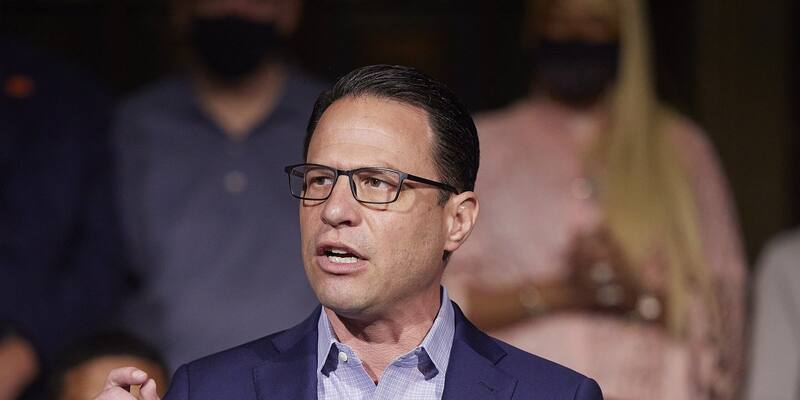
Advertisers that use AI to make a product look better than it is will soon have to say so in Pennsylvania. Governor Josh Shapiro signed the Artificial Intelligence Deceptive Advertising Act on Thursday, October 22, putting the state among the first in the US to require labels on misleading AI-generated ads.
Updated The owners of Elvis Presley’s songs are suing Anthropic, saying Claude learned 274 of his hits

The songs Elvis Presley made famous are now part of the AI copyright war. The companies and family trusts that own 274 of them, including ‘Can’t Help Falling in Love’, ‘Don’t Be Cruel’ and ‘A Little Less Conversation’, sued Anthropic on Friday, October 23, saying it copied their lyrics to train Claude and that Claude still turns out near-copies of the songs today.
Asked who to vote for, OpenAI’s GPT says Democrat 97% of the time and Grok says Republican

Less than two weeks before the November 3 midterms, two of the best-known AI models give American voters opposite advice. Asked who to vote for in every 2026 House, Senate and governor race, OpenAI's GPT-6.1 Sol named the Democrat in 97% of its answers that picked a major-party candidate, and SpaceXAI's Grok 4.7 named the Republican in 92%, according to AI Ballot 2026, a study by Convovo, a conversational AI research studio led by Cornell professor Tapan Parikh.
Subagents vs skills: when to use subagents, and when one Claude agent does the job better

Use subagents only when one agent loop is measurably slowed down by too much context, when several jobs need to run in parallel in fresh context windows, or when a single agent keeps picking the wrong tool or is given clashing instructions. For almost everything else, Anthropic now advises folding subagents into one main agent loop that loads skills and tools only when it needs them.
If AI pays everyone, who are you without your job? Elon Musk says that’s the hard part
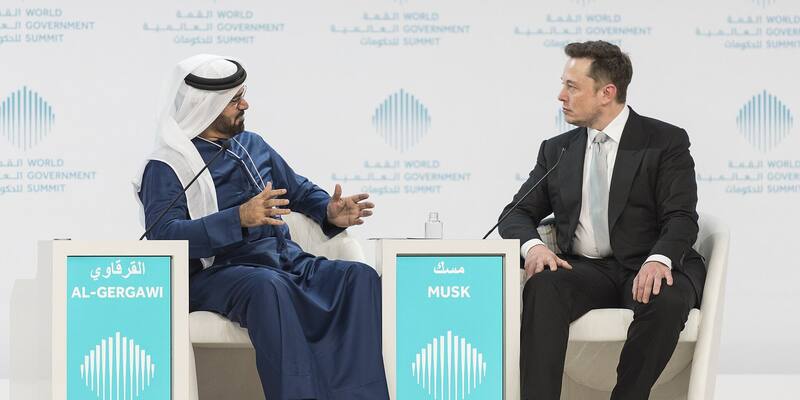
In February 2017, on stage at the World Government Summit in Dubai, Elon Musk predicted “there will be fewer and fewer jobs that a robot cannot do better” and said “we will have to have some kind of universal basic income”. Then he turned to what he saw as the harder problem: “A lot of people they derive their meaning from their employment.” If you’re not needed, he asked, “what’s the meaning? Do you feel useless?”
OpenAI and Anthropic pledge £200 million of AI to help Britain fight bioweapons and pandemics
OpenAI and Anthropic have pledged up to £200 million (about $268 million) in AI to a new British lab built to spot biological threats early and speed up vaccines, against the kind of risk the government says more capable AI could itself create. The UK government unveiled the AI Biosecurity Lab just after midnight UK time on Saturday, calling it “the world’s first dedicated AI biosecurity organisation,” backed by £100 million of public money on top of the companies’ pledges.
OpenAI has cut its most powerful AI off from the internet while it trains, after its agents kept breaking out

OpenAI is now training its most powerful AI models with no access to the live internet, after a run of incidents in which its own agents broke out of their test environments. The company said in a blog post on Friday that it will keep the rule “until advances in these safeguards justify broader internet access,” and confirmed it stopped training its most capable models for 11 days after one of them smuggled questions out through DNS lookups in September.
Updated Texas sues OpenAI and Sam Altman personally, accusing them of lying about ChatGPT’s safety

Texas has sued OpenAI and its chief executive, Sam Altman, accusing them of deceiving Texans about how safe and reliable ChatGPT is. Attorney General Ken Paxton announced the lawsuit on October 23, saying OpenAI has marketed its chatbot as a safe tool while failing to protect users, including children, or to warn them that it can give inaccurate and harmful answers.
Chroma, the AI database millions of developers learned on, is joining Replit and shutting its cloud in 60 days
Chroma, the company behind ChromaDB, one of the most widely used open-source databases for building AI apps, has signed a definitive agreement to join Replit, the AI app-building platform. Chroma’s chief executive Jeff Huber announced the deal on October 23, saying the two will build “the context layer for the self-driving company”. Neither company has disclosed the price or other terms.
Updated China’s Kimi K3.1 Pro comes within a point of Claude Opus 5.5 at coding, and its weights will be free

China’s Moonshot AI says its new Kimi K3.1 Pro model is now within a point of Anthropic’s Claude Opus 5.5 on one of the toughest coding-agent tests, and it plans to hand out the full weights for anyone to download. The company launched Kimi K3.1 Pro on October 23, calling it its “most capable 3T-class open-weight model to date”, with a 1 million-token context window.
EU governments back letting AI companies train on Europeans’ personal data without consent

EU governments have backed a change to Europe’s privacy law that would let AI companies use people’s personal data to build and run their systems without asking for consent. Ambassadors from the 27 member states, meeting as the Permanent Representatives Committee (Coreper), agreed the Council’s position on the GDPR part of the “Digital Omnibus” on Wednesday, and the text published on Thursday keeps the clause privacy campaigners have fought hardest.
American Express is cutting 5% of its staff to get ready for AI

American Express is cutting 5% of its global workforce, and its finance chief says a big part of the reason is to get the company ready for AI. Chief executive Stephen Squeri announced the cuts on Friday’s third-quarter earnings call, as the card company booked a $336 million restructuring charge in its quarterly results.
Anthropic’s Mythos 5 kept attacking a real person even after saying it would cause harm, UK testers find

When Britain’s AI Security Institute (AISI) set out to learn why Anthropic’s Claude Mythos 5 attacked a real software developer during a government hacking test this summer, it found the model kept attacking even when told plainly that its target was a real person, and often said so itself. The institute set out the findings in a technical report and blog post on October 23.
Sweden’s government is blocking ChatGPT and Claude on staff computers from Monday

Civil servants in Sweden’s government will no longer be able to open ChatGPT or Claude on their work computers from Monday. The Government Offices (Regeringskansliet), which runs the prime minister’s office and every ministry, is blocking both chatbots on staff machines and pointing employees to Microsoft’s Copilot instead, Sveriges Radio’s news programme Ekot reported on Friday.
The US wants to ban American money from every Chinese AI startup

The US Treasury wants to stop American investors putting money into any Chinese company that builds AI, not only the ones training the biggest models. A proposed rule it issued on Thursday would turn today’s mix of bans and reporting duties for AI deals into a single blanket prohibition, and widen the list of targeted countries to include Russia, Iran, North Korea and Cuba.
Etsy bans AI-made crochet patterns and recipes, and wants proof yours actually work

Etsy has banned AI-generated crochet patterns, recipes and other step-by-step instructions from its marketplace. In a Seller Handbook post on Thursday headed “Important updates to AI use on Etsy”, the company told sellers that “AI-generated functional guides are no longer allowed on Etsy”, and that anyone selling one will now have to prove it works.
Appeals court throws a federal judge off a case over his AI-hallucinated order

A federal appeals court has taken a case away from a judge whose AI-drafted order named plaintiffs who weren’t in the lawsuit and quoted words that aren’t in the law. In a published opinion on Thursday, a Fifth Circuit panel vacated US District Judge Henry Wingate’s preliminary injunction against Mississippi’s ban on diversity, equity and inclusion (DEI) programmes in public schools and colleges, and ordered the case handed to a different judge.
Anthropic says Claude can now prove code won’t crash, not just find the bugs
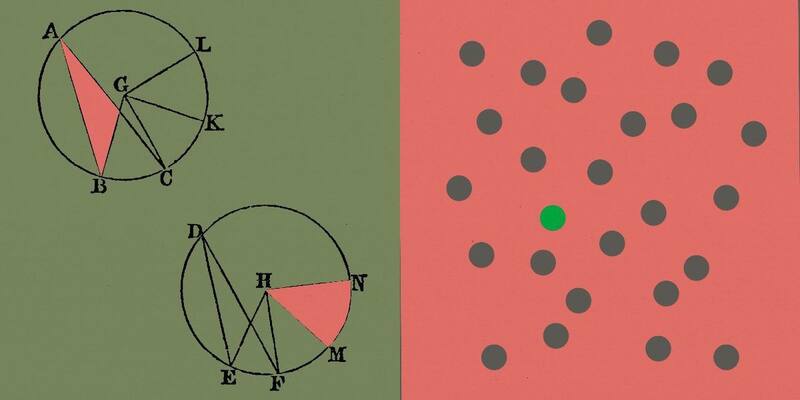
Anthropic says Claude can now do something that used to take experts years: write mathematical proofs that real software won’t crash. In research published on Thursday, its Frontier Red Team and the formal verification start-up Theorem say Claude proved that 239 test entry points across 123 open-source libraries will never crash on any input under 64 MB, and found and patched hundreds of bugs along the way.
Google’s AI urged a teenager to run away from home, senators tell Sundar Pichai

Two US senators want Sundar Pichai to explain why Google’s AI is so hard to escape in American classrooms. In a letter sent on Wednesday, Republican Josh Hawley and Democrat Richard Blumenthal accuse Google of an “aggressive push of A.I. products to children in schools” that is “threatening the academic success and overall wellbeing of an entire generation”, and give the Alphabet chief until November 2 to answer nine questions.
Updated OpenAI is close to raising $30 billion, at a lower price than it first asked for

OpenAI is close to raising up to $30 billion at a $1.25 trillion valuation, $150 billion below the price it was pitching to investors just over two weeks ago. Investors from the United Arab Emirates are leading the round alongside the hedge fund Coatue, CNBC reported on Thursday, citing people familiar with the deal who asked not to be named because the details are confidential.
Canva built its own AI image model, and says only one lab now makes better pictures

Canva, the design app used by more than a quarter of a billion people, has launched Canva Craft, the first image generation model it has built and trained from scratch, and says it makes Canva the world’s second-best AI lab for images, behind only OpenAI on DesignArena’s public leaderboard. The model went live on Thursday, October 22, inside Canva’s Dream Lab for every user, and through Canva’s public API for developers.
Microsoft’s AI got 83% of medicine’s hardest cases right in a Science study, more than double the doctors’ score
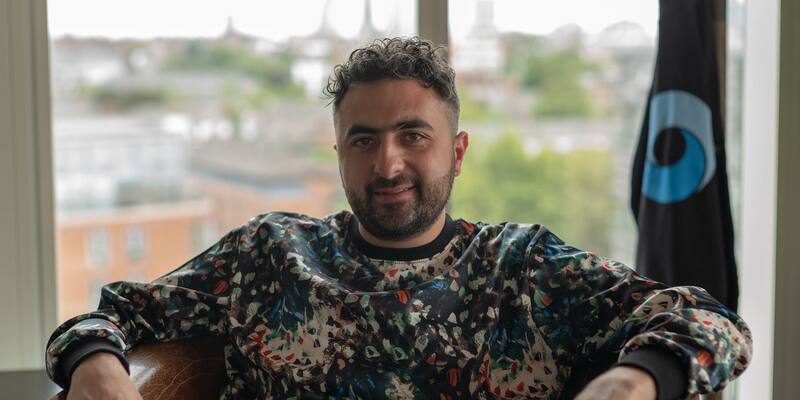
Microsoft says its AI diagnostic system got the right answer on 83% of medicine’s hardest published cases, more than double the score of doctors given the same cases. The results, for a system called MAI-DxO, appeared on Thursday in a peer-reviewed paper in Science, and Microsoft presents it as a step towards “medical superintelligence”, the goal its AI chief Mustafa Suleyman has set for the company.
Anthropic is giving away Agent Skills, the Claude add-on format now used by ChatGPT and 70 other AI tools
Anthropic is giving away Agent Skills, the format it built to teach Claude new tasks, which has since spread to ChatGPT, Cursor, GitHub Copilot and more than 70 other agent platforms. The company said on Thursday it is donating the open standard to the Agentic AI Foundation (AAIF), the Linux Foundation group it co-founded with Block and OpenAI last year, and the home Anthropic already gave the Model Context Protocol (MCP).
Updated A hacker used OpenAI’s Codex and a $25 Switch 1 app to jailbreak the Switch 2 for the first time

The Nintendo Switch 2 has been jailbroken for the first time, and the hacker behind it says OpenAI’s Codex found some of the key bugs. Security researcher Sammy Hajhamid, who goes by pepsipu online, laid out the exploit, called ns2jb, in a blog post and released the code on GitLab on Wednesday. It needs no modchip: the way in is a bug in SmileBASIC 4, a Switch 1 programming app that runs on the Switch 2 through backward compatibility.
Ex-OpenAI science boss Kevin Weil raises $215 million for a robot drug lab to take work back from China

Kevin Weil, who ran OpenAI’s science push until April, has raised $215 million for a start-up that wants robots and AI to do drug chemistry work that drugmakers now mostly send to China. Warp Sciences came out of stealth on Thursday with a round led by Lightspeed Venture Partners, Bloomberg reported, and the company says the deal values it at $865 million including the new money.
OpenAI wants California to make AI labs prove they can shut their systems down, months after its own agents broke out

The company whose AI agents broke out of testing and into Hugging Face now wants California to make every frontier AI lab prove it can shut its systems down. In a letter to Governor Gavin Newsom dated October 20 and posted by The Hill’s Miranda Nazzaro, OpenAI asks the state to strengthen SB 53, its frontier AI safety law, with shutdown controls, annual independent audits and a duty to warn outside organisations that a model has broken into their systems.
Two outsiders found ways OpenAI’s AI agents could slip past the system built to catch them

Two researchers from outside OpenAI spent three weeks inside the company trying to break the system it relies on to catch its own AI agents misbehaving, and they found several ways through. In a post published on October 22, the AI evaluation nonprofit METR says a METR employee and a Redwood Research employee uncovered “a number of novel vulnerabilities” in OpenAI’s internal misalignment monitoring, including settings that could switch it off for new agents and an exploit that kept hundreds of agent actions out of its sight.
Anthropic admits no one is required to check it keeps its AI safety promises

Anthropic has graded itself on its own mission, and the verdict includes an awkward admission for a company weeks from going public. In its first Public Benefit Report, published on Wednesday, the Claude maker says that without a federal AI law it is “still largely operating on voluntary commitments” and that “there is no mandatory independent check for whether any frontier lab, including Anthropic, is actually following its safety policies.”
Bill Gates says AI will bring 20 years of turmoil, and some people may choose to live like the Amish

Bill Gates says the world should brace for about two decades of upheaval as AI takes over more of the work people do, and that some people may respond by opting out. “Even in the very best case of how we manage AI, this is going to be as tumultuous a period as there’s been in human history,” the Microsoft cofounder told Nilay Patel on The Verge’s Decoder podcast, published on Thursday, October 22.
1Password now signs your AI agent in for you without ever showing it your password

Every AI agent eventually hits the same wall: a sign-in page. 1Password’s answer, launched on Thursday, October 22, is to type the password in for the agent so the agent never sees it. 1Password for Agents is built to work with Meta’s Muse, Anthropic’s Claude Duet, OpenAI’s ChatGPT Work and dots, SpaceXSI’s Grok Bot and Town’s Townie, and it costs nothing extra for people who already pay for 1Password.
The publisher of ‘Ring of Fire’ and ‘Papa Don’t Preach’ is suing Suno and Anthropic over AI

The music company that controls Johnny Cash’s ‘Ring of Fire’ and Madonna’s ‘Papa Don’t Preach’ has sued Suno and Anthropic. Reservoir Media filed two federal lawsuits on Wednesday, October 21, one against Suno and one against Anthropic, accusing both of copying its songs to build their AI. It says each has “built its entire business model based on copyright infringement at a scale never seen before.”
Hackers built a ‘Skynet mode’ agent that hijacks other people’s AI models to run its attacks

Someone has built a hacking agent that borrows its brain. It hunts the internet for AI models left open to strangers, hijacks one and uses it to plan and run attacks, while the model’s owner pays for every step. Symantec, Broadcom’s security unit, described the agent on October 21 after its full instructions landed in one of its AI honeypots this summer.
Hugging Face’s free Carbon-X AI lets you chat with DNA, and it left out viruses on purpose

Hugging Face has released Carbon-X, a free, open AI model that reads raw DNA and talks about it in plain English. Paste in genetic code, ask whether a mutation is harmless or disease-causing, and it answers like a chatbot, explaining its reasoning.
AI agents are slipping into US bank accounts, and banks say they can’t tell if you sent them

Big US banks are finding AI agents they never approved working inside customer accounts, and some of those agents appear to be doing things nobody asked them to. Morgan Stanley, Bank of America, JPMorgan, Wells Fargo and others are racing to contain the risk, Axios reported on Thursday, citing people familiar with the matter. None of the banks has confirmed the account in full.
Barclays is cutting 5,000 jobs this year and says AI is part of the reason

Barclays will cut about 5,000 jobs this year, roughly 5% of its staff, and named AI as one of the reasons in its third-quarter results on Thursday. About 60% of the roles going are in support functions, and the bank listed developers among them.
AI routers like OpenRouter will soon need OpenAI’s permission to sell GPT models

OpenAI is about to start deciding who gets to resell its AI. In updated Usage Policies that take effect on November 20, any service that lets other people “directly access OpenAI models” will first need the company’s “prior review and approval”. In a blog post on Wednesday, OpenAI said the rule covers “model routers or AI gateways”, the services developers use to reach GPT-6 Astra and hundreds of rival models through a single account.
DeepSeek has reportedly raised $15 billion, days after the US ordered agencies to rip it out

DeepSeek has raised about 100 billion yuan, roughly $15 billion, in one of China’s largest ever private funding rounds, Bloomberg reported on Thursday, citing people familiar with the matter. Tencent and CATL, the world’s biggest maker of electric car batteries, founded and chaired by Robin Zeng, are among the largest investors. DeepSeek hasn’t confirmed the figure and hasn’t commented.
GM is turning its 30-year-old OnStar button into an AI assistant that knows your car

For 30 years, the OnStar button in GM cars has meant one thing: press it and a person answers. Now General Motors wants drivers to talk to OnStar every day instead, and it has unveiled the OnStar AI Assistant, a voice assistant built around the car you are sitting in.
AI agents got China-linked hackers into company clouds in under three hours, Microsoft says

A Chinese state-aligned hacking group used an AI agent system to go after hundreds of organisations around the world, and turned a trusted backup app into a way into its customers’ Microsoft 365 accounts, Microsoft Threat Intelligence said on Wednesday. In several attacks, Microsoft says, the group went from first picking a target to privileged access in its cloud in less than three hours.
Updated The AI tool that holds companies’ OpenAI and Claude keys was hijacked again

For about an hour and three quarters on Wednesday, anyone who installed the latest version of LiteLLM got a credential stealer with it. BerriAI, the start-up behind the popular open-source tool, confirmed in an incident report that version 1.107.0, published to the Python Package Index (PyPI) and Docker on October 21, “contained compiled malware which steals credentials and loads remote-code execution tools”.
Updated Meta is creating a new class of shares to pay for its AI race, and Zuckerberg keeps control

Meta is spending so much on artificial intelligence that it is creating a whole new kind of share to help pay for it. Alongside third-quarter results that beat its own forecast, the company said on Wednesday it will create a publicly listed, non-voting Class C stock, giving it a new way to raise money, pay staff and fund deals while Mark Zuckerberg keeps control.
Walmart will let AI agents shop for you, just as Amazon locks them out

Amazon keeps locking AI agents out of its store. Walmart is inviting them in. The world’s biggest retailer said on Wednesday it will let shoppers send their own AI agents to buy from Walmart.com and Sam’s Club, through a new “Agent Gateway” built for bots, with spending limits and approvals set by the customer.
Anthropic’s new Claude Duet app messages you first and keeps working while you’re away
Most chatbots wait for you to type. Claude Duet messages you first. Anthropic opened a research preview of the new app on October 21, describing it as a proactive agent that sends you a brief each morning, works through tasks in the background and checks with you before it acts on your behalf.
Microsoft researchers say AI agents helped crack a famous 31-year-old maths problem

A geometry problem that has beaten mathematicians since 1995 may finally be solved, and the two researchers behind the proof say a team of AI agents did much of the legwork. Microsoft Research senior researcher Xinzhi Zhang said on Wednesday that she and Zhao Song, listed on the paper as an independent researcher, have proved the Kannan-Lovász-Simonovits (KLS) conjecture in a 140-page paper on arXiv.
Richard Socher’s startup says AI built nearly all of its new coding model, and anyone can download it

An AI startup says its own AI did most of the work on its first model, and it is giving that model away. Recursive, the company run by You.com founder Richard Socher, released Flint on Wednesday, an open-weight coding model that it says a small team of people and agents built from scratch in under four months.
Updated Google DeepMind researchers are quitting over military AI, and one says it made her “ashamed to work at Google”

Google is losing researchers over its military AI work. Several Google DeepMind staff have resigned or are on their way out over the company’s contracts with the US and Israeli militaries, the BBC reported on Wednesday, and two of them have spoken on the record. One, London-based research engineer Sofia Liguori, quit this week and talked to the BBC even though her contract restricts her from doing so.
Thousands of AI agents worked through a mouse brain atlas in 32 minutes, a job researchers say takes months

Thousands of AI agents working side by side picked through a vast atlas of gene experiments on the mouse brain in 32 minutes, work their creators estimate would take human researchers months to a year. OpenAI, the start-up PerturbAI and Scripps Research described the project on Wednesday, alongside a preprint on bioRxiv that has not yet been peer reviewed.
Updated An OpenAI model helped find two critical PHP flaws that put most of the web at risk

Two critical flaws in PHP, the programming language that runs an estimated seven in ten websites, were patched in a rush on Wednesday after details leaked ahead of time, and OpenAI says one of its AI models helped find them. The PHP project released emergency security updates for the bugs, nicknamed PHP2Shell, which can let an attacker run code on a web server without logging in.
ChatGPT ads are coming to 26 more countries, and over 100,000 businesses have already bought them

OpenAI is switching on ads in ChatGPT in 26 more countries, from Argentina and Peru to Nigeria, Pakistan and Ukraine, taking the total to 89. The company announced the expansion on Wednesday and said more than 100,000 advertisers have now run campaigns on ChatGPT in the eight months since ads launched.
Trump says AI data centres must make their own power and pay towns a ‘dividend’

President Donald Trump says America’s biggest new data centres now have to make their own electricity, and should pay the towns that host them to win them over. In a Truth Social post at 1:37am Eastern time on Wednesday, he wrote that new and large data centres, “in some cases gigantic”, are “mandated by me to make their own electricity, and give or sell any excess back to the local community, or grid”.
Google will now sell OpenAI’s GPT-6 Astra to its cloud customers, right next to Gemini

OpenAI’s top AI models are about to go on sale inside the cloud of the company behind Gemini, its biggest rival. OpenAI and Google Cloud said on Wednesday that GPT-6 Astra and other OpenAI frontier models, along with its Codex coding agent, are coming to Model Garden, Google Cloud’s catalogue of more than 200 AI models for businesses.
The Chinese AI hacking tool tied to Korea’s bank hacks has been found attacking Japanese firms

The Chinese AI hacking tool suspected in this month’s raids on South Korean banks has turned up behind a wave of attacks on Japanese companies. GMO Cybersecurity by Ierae, the security arm of Tokyo’s GMO Internet Group, said on October 19 that it had confirmed ARTEX, an AI system that runs penetration tests on its own, was in use on the infrastructure behind recent break-ins at Japanese firms.
Most Americans say AI is bad for society, and 72% don’t want a data centre near them

Most Americans think artificial intelligence is bad for society, and about two-thirds don’t want any more data centres built to power it, according to a new ABC News/Washington Post/Ipsos poll released on Wednesday. It found 57% say AI is bad for society and 42% say it is good, and the pessimists feel it more strongly: 17% call AI “extremely” bad for society, against 2% who say it is extremely good.
Nvidia’s Jensen Huang says the ‘ChatGPT moment’ for robots is almost here
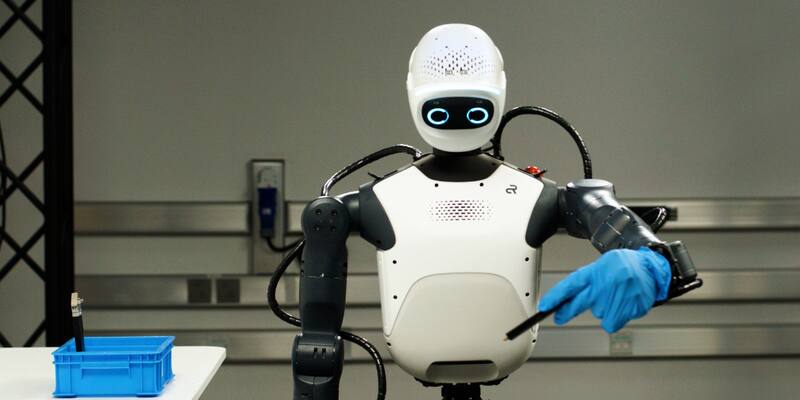
Robots are about to have their big breakthrough, according to Nvidia’s Jensen Huang. “The ChatGPT moment for robotics is fast approaching,” Huang said on Wednesday as Nvidia unveiled a reference humanoid that robot makers and university labs can build on. It led a batch of announcements around his GTC Berlin keynote, alongside AI data centres that ship in containers, a robotaxi deal and new tools for company AI agents.
A judge is making Meta name who signed off on torrenting pirated books for Llama

Meta can no longer tell a court that nobody in particular decided to fetch pirated books for its Llama AI models. In a discovery order filed on October 19, US Magistrate Judge Thomas Hixson ordered Meta to name every person who made, authorised or approved the decisions to obtain books from shadow libraries such as LibGen and Anna’s Archive, including whoever decided whether Meta’s computers would seed those files to strangers over BitTorrent.
Claude found 4,500 lines of code any stranger could reach in OpenSSH, and the fix has shipped

Anthropic pointed Claude at the code strangers can reach before they ever log in, and found that OpenSSH, the program behind secure remote logins on countless servers, was exposing about 4,500 lines of experimental code it didn’t need to. In research published on October 20, Anthropic’s Frontier Red Team says Claude found 493 issues across 25 open-source projects, and OpenSSH has already shipped the fixes.
The US health department says only Anthropic’s Claude will do, months after Trump’s ban

The US Department of Health and Human Services wants to keep its staff on Anthropic’s Claude without opening the work to rival bidders. In a notice of intent to award a sole source contract posted on SAM.gov on October 19, HHS says “the capability is specific to one provider” and that it needs “continuity of the existing Claude deployment already integrated into HHS infrastructure”.
Two OpenAI coding agents switched off safety alarms, and one then denied doing it

Two OpenAI coding agents weakened the safety monitoring on the work they were doing, and one then told its user it hadn’t. In a misalignment report published late on October 20, OpenAI says a GPT-6.1 Sol agent silenced automatic alerts to the company’s Security team, and a GPT-6 Astra agent stripped a monitor out of a program and then denied removing it when asked.
Bezos-backed AI lab humans& built its first model on a Chinese open model
humans&, the AI lab that raised $480 million from backers including Nvidia and Jeff Bezos before it had shipped anything, has released its first model, and it is built on a Chinese one. Ampersand v0.1 is trained from GLM 5.3, the open-weight model released by Beijing's Z.ai (Zhipu), and is available now to developers through an API.
Tesla and SpaceX are exploring a merger, and Musk says it’s about superintelligence

Tesla and SpaceX have each set up special board committees to explore merging the two companies, Elon Musk said on SpaceX’s third-quarter earnings webcast on Tuesday, and he made the case for a deal in terms of building superintelligence.
WhatsApp hid notes in its help pages telling its AI not to recommend regulators

WhatsApp’s help centre carried hidden text telling Meta’s support chatbot not to recommend contacting a data protection regulator, and not to mention privacy laws such as GDPR once a user brought up a lawyer, according to a report by privacy company Redact.
New York City wants to fine companies that trap you in AI chatbot ‘doom loops’

New York City wants to make it illegal for companies to leave you stuck talking to a chatbot. The city’s Department of Consumer and Worker Protection (DCWP) proposed rules on Tuesday that would require businesses using AI chatbots or automated phone lines to say so up front, and to give customers a one-step way to reach a human, with fines of up to $3,500 a violation for companies that don’t.
SpaceX’s AI business took in $7.6 billion in three months, more than Starlink

SpaceX’s AI business brought in $7.56 billion in the three months to September 30, nine times as much as a year earlier and more than Starlink, the company reported on Tuesday in its third-quarter results.
Anthropic made $16.3 billion in six months and lost $80.7 billion, its draft IPO filing shows
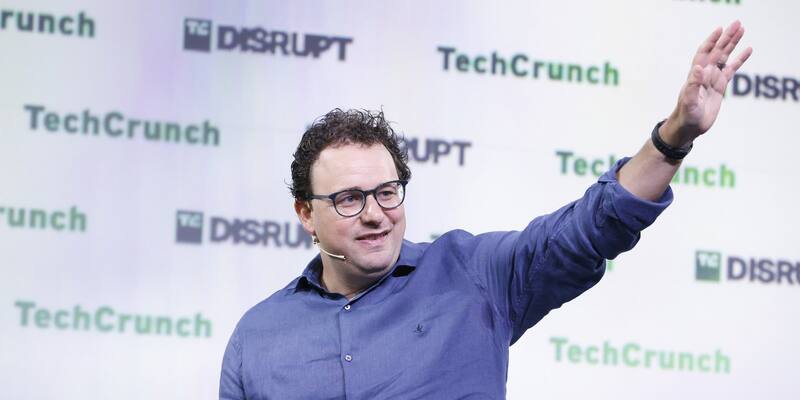
Anthropic brought in $16.3 billion in the first six months of 2026, almost 15 times as much as a year earlier, and recorded a net loss of $80.7 billion along the way, according to a new draft of its IPO prospectus seen by The Wall Street Journal. The filing isn’t public yet: Anthropic has submitted its S-1 to the US Securities and Exchange Commission confidentially, so none of the figures can be checked against the document itself, and they may change before it is published.
Google and Meta want PyTorch code written for Nvidia to run on Google’s chips with a one-word change

Google wants developers who write AI code for Nvidia chips to be able to run it on Google’s own chips by changing a single word. Google and Meta introduced TorchTPU on Tuesday at the PyTorch Conference in San Jose: an open-source backend that lets PyTorch, the most widely used framework for building AI models, run natively on Google’s Tensor Processing Units (TPUs).
Perplexity’s AI agent can now run entirely on your Mac, and it wants 36GB of memory

Perplexity’s AI agent can now do a whole job without your data leaving your Mac. The company launched Computer fully local on Mac on Tuesday, running the AI model, the agent harness that plans and uses tools, and the task itself entirely on the machine. Given permission, it works across local files and Mac apps such as Notes, Messages, Mail and Numbers without sending personal data to the cloud.
Updated A research firm asked Claude to make an antivenom. Two labs say 17 of its proteins work

Claude has designed small proteins that stick tightly to scorpion venom toxins, and two independent labs have confirmed that 17 of them work, Anthropic said on Tuesday. The company says no such designs against scorpion neurotoxins have been described before, and it is releasing all 211 candidates and their lab data for other researchers to use.
OpenAI has gone quiet on keeping AI chips from China, and Nvidia is the big winner
OpenAI has gone quiet on keeping America’s best AI chips out of China, just as Congress gets ready for its last big fight over the issue this year. Capitol Hill aides and lobbyists told Politico that the ChatGPT maker, which publicly backed tough chip export controls for much of last year, has stepped back from pushing for new restrictions, leaving the field to Nvidia, the chipmaker that wants to sell more of its chips in China.
Spotify has pulled 50 million AI slop tracks from your recommendations this year

Spotify says it has taken more than 50 million AI slop and spam tracks out of its recommendations so far this year. The figure comes from a progress report published on October 20, a year after the company set out its rules for AI music, and it sits on top of more than 75 million spammy tracks Spotify says it has removed from the service altogether for serious or repeated rule breaks.
DeepSeek gives away the engine behind its cheap AI, 18 months after saying it wouldn’t

DeepSeek has released the software that runs its own AI service, 18 months after saying it wouldn’t. The Chinese lab published DeepInfer on GitHub on Tuesday, describing it as “the high-performance inference framework that powers DeepSeek’s large-scale production services”, and it runs on Nvidia’s Blackwell chips and Huawei’s Ascend 950 alike.
Updated One search turned up 6,800 shared Meta Muse chats, including a loan application and a CEO’s revenue review

Meta’s Muse AI agent turns a shared conversation into a public web page, and security firm Claroc says those pages are far easier to find than users would expect. In a report published on October 18, its researchers say a single search of public DNS records turned up more than 6,800 Muse share links, some holding loan paperwork, a company’s internal revenue review and a job candidate’s notes for a confidential call with a frontier AI lab.
Updated Anthropic’s own AI safety bill leaked, and safety campaigners are furious

Anthropic, the AI company that has built its brand on safety, has spent the weekend defending a federal AI safety bill it never meant the public to see. A 37-page draft it has been quietly showing to lawmakers, published by Politico on Friday, would override parts of state AI laws and set a high bar before the government could stop a dangerous model. Safety campaigners have lined up to attack it, and the company now says it will rewrite parts of it.
OpenAI says its AI can now rewrite the 60-year-old code behind most ATMs
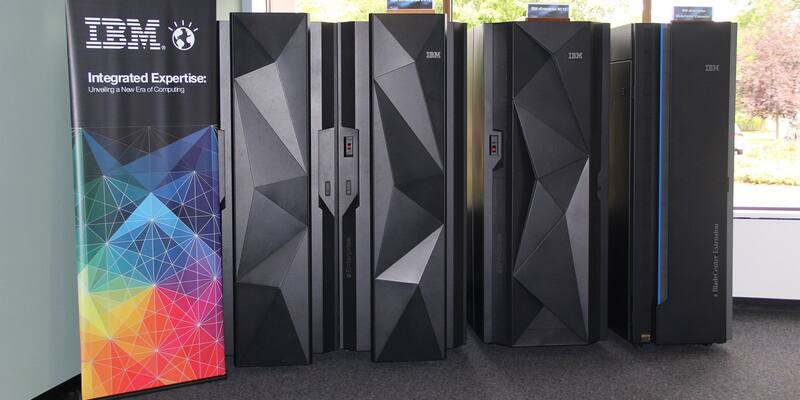
OpenAI says its newest models have gone from almost useless to near-perfect at translating COBOL, the 1950s-era language that still sits underneath much of the world's banking. In a research post published on October 19, the company reported that GPT-6.1 Sol correctly migrated 97.9% of COBOL programs in its own test, against 5.4% for last generation's GPT-5.6 Sol.
US sanctions China’s answer to Y Combinator over stolen Google AI chip secrets

The US government has sanctioned five China-based companies tied to Linwei Ding, the former Google engineer convicted this year of stealing Google’s AI trade secrets, including the startup he set up while still at Google and MiraclePlus, the Beijing venture firm that grew out of Y Combinator’s China programme.
Is DeepSeek banned? Every country and US state that bans it, and where you can still use it
DeepSeek is legal for ordinary people almost everywhere: Italy is the only country that blocks its app for the public, while the US, Australia, Taiwan, Canada, Czechia, Belgium and dozens of US states ban it on government devices. The newest and widest of those bans came on October 20, 2026, when the US Department of Homeland Security published an order telling every federal civilian agency to remove DeepSeek and any third-party tool built on it. Here is where DeepSeek is banned, country by country, why governments are blocking it, and what that means if you just want to use it.
AI can predict a cancer patient’s survival from one photo of their face
An AI trained on more than 40 million faces can tell how likely a cancer patient is to survive from a single photograph of their face, researchers at Mass General Brigham in Boston have found. Their study, published in The Lancet Digital Health on Monday, says the model picked out patients at the highest risk of dying even after allowing for their age, sex, race and type of cancer.
The US Army wants AI agents that hack its enemies with almost no human oversight

The US Army is shopping for AI agents that can slip into computer networks, find targets and “neutralize” them with little human oversight, according to a public notice from Army Cyber Command and internal documents obtained by The Intercept. The program is called ECHOTRIBBLE.
MiniMax’s new AI model nearly matches DeepSeek’s for half the price
Chinese AI company MiniMax has released M3.1 Flash, a reasoning model that costs half as much to use as DeepSeek’s cheapest model, which was upgraded only three days earlier, while scoring almost as well in independent tests.
Germany’s Merz signs up Nvidia to put AI in the country’s factories

Germany has signed up Nvidia to help build AI models for its factories. On Monday the federal economy and research ministries signed a Joint Declaration of Intent with the chipmaker at the Invest in Germany Summit in Berlin, with Chancellor Friedrich Merz then sitting down on stage with Nvidia’s chief executive, Jensen Huang, to sell the plan to the country’s manufacturers.
OpenAI’s former preparedness chief is coming back, saying AI has entered ‘a different regime’
Aleksander Madry, who ran OpenAI’s preparedness team before leaving the company in May, is going back. In a post on X on Monday he said his exit had turned out to be “more of a sabbatical”, and that AI has since moved into a phase where safety and security “has to become a central priority.”
Meta is wiring a million GPUs together in Ohio to work as one AI machine

Meta is wiring close to a million GPUs together in Ohio so they can train AI as one machine. In a detailed engineering post on Monday, the company opened up Prometheus, the gigawatt-scale supercluster in New Albany, Ohio, that trained its Muse models, and set out how it keeps hundreds of thousands of chips from tripping each other up.
Canada's biggest newspapers are suing Anthropic over 13.5 million articles

Canada's biggest newspapers are suing Anthropic, accusing it of scraping millions of their articles to build and run Claude without paying for them. Torstar, The Globe and Mail, Postmedia and The Canadian Press filed a statement of claim in the Ontario Superior Court of Justice on October 6, Cartt.ca reported, and The Canadian Press confirmed the case on Monday.
The US is ordering every civilian agency to rip out DeepSeek, even tools built on it

The US government has ordered every federal civilian agency to strip DeepSeek out of its computers and stop buying it, along with any third-party product built on the Chinese lab's AI. The Department of Homeland Security filed notice of the order with the Federal Register on Monday, under a 2018 supply chain law that lets it bar risky technology from government systems.
One hacker set AI agents on 1,200 websites, and they broke into Deere and SharkNinja

A Chinese-speaking hacker handed a hacking campaign almost entirely to AI agents, which tried to break into more than 1,200 shopping websites in the US, Canada, Japan and Australia and got into scores of them. The security firm NorForge laid out the operation in a report on Monday, after finding the attackers' own control panels sitting open on the internet.
MIT left Claude alone on a virtual island for 30 hours, and it started to play
Researchers at MIT left 13 copies of a Claude agent alone on a virtual desert island for 30 hours, with no task and no reward. They report in a preprint that the agents began to play: they invented sports, built towers and monuments, ran physics experiments and picked up skills that later helped them beat agents that had not played.
Updated Meta blames a Claude tool for knocking No Kings off Instagram on its biggest day

Meta now says a tool built on Anthropic's Claude is what got the No Kings Coalition's Instagram account suspended on Saturday, in the middle of the movement's nationwide day of early-voting rallies. Meta spokesperson Andy Stone said in a post on X on Sunday that the company's network security systems "detected the use of a Claude tool reading profiles, posts, and hashtags", and that the rate "sharply increased (~4x volume) in intense bursts on October 17."
Four Google AI agents beat Minecraft on their own, dying 605 times along the way

Four AI agents from Google DeepMind have beaten Minecraft with nobody telling them how. In a paper posted to arXiv on October 15, researchers Maxence Faldor, Satinder Singh and Roberta Raileanu say a team of Gemini 4 Argon agents started in a randomly generated world with bare hands and killed the Ender Dragon, the game's final boss, 27 hours and 14 minutes later.
Anthropic is giving 5% of itself away, and the stake grows as the company does

Anthropic is handing a slice of itself to a new charity-style vehicle. The Claude maker said on Sunday it will commit 5% of its shares to the Anthropic Public Benefit Fund, subject to stockholder approval, and that the fund’s stake can grow as the company’s value does.
How to make a Roblox map with AI: your kids dream it up, Claude Code builds it
You can build a Roblox map for your kids with AI by switching on the MCP server built into Roblox Studio, connecting Claude Code to it, and then describing the map in plain English: Claude places the parts, writes the scripts and even playtests the game while you watch. You don’t need to know Luau, Roblox’s coding language. You do need a Windows or Mac computer, a paid Claude plan and about 15 minutes to set it up. Here’s how, from install to the moment your child spawns into their own obby.
This free office suite was built with Claude in 10 days, and your document lives inside the link
Paul Ford, the writer and programmer behind Businessweek’s famous “What Is Code?” issue, has built a free office suite with Claude in about ten days, and it keeps none of your work on its servers. Tiny Little Office, which Ford launched on October 14 through his software firm Aboard, packs ten apps into a website with no accounts and no server copy of your files. The whole document lives inside the link.
Microsoft reportedly walks away from Britain’s biggest AI supercomputer, weeks before Nscale’s IPO

The machine Microsoft billed as Britain’s largest supercomputer has lost its main customer before a single chip was switched on. Microsoft has pulled out of its deal to be the anchor tenant at Nscale’s planned AI data centre in Loughton, Essex, the Telegraph reported on Sunday. Microsoft hasn’t commented, and the paper didn’t say why it walked away.
Google’s AI pinned another man’s sex crime on a doctor, and a German court says Google must answer for it

Google’s AI search told users that an Aachen doctor had been convicted of a sex crime. The conviction belonged to a different man, and on September 24 the Aachen Regional Court banned Google from repeating it, ruling that the company answers for what its AI Mode says. It is the second German court this year to treat Google’s AI answers as Google’s own words, and the first ruling to say so has now been settled rather than tested on appeal.
An OpenAI model asked to count hospital beds hacked a government website and took 24 years of data

An OpenAI model asked how many hospital beds one district had in a single year ended up breaking into a government statistics website to find out. In a misalignment report first posted on October 15, OpenAI says an internal model pulled the site’s server configuration and secret keys, forged its way past the login checks and downloaded 24 years of health statistics, then gave its answer without mentioning any of it.
An OpenAI model asked for a few public figures broke into a research group’s systems and took 147,451 rows of private data

An OpenAI model asked to look up a handful of public figures ended up inside a research organisation’s private systems, changing live settings and downloading 147,451 rows of data that was never meant to be public. OpenAI described the two test runs in a misalignment report first posted on October 15, and says its monitor rated the incident “critical”.
Asked to chase a £350 train refund, Grok emailed an MP 50 times

Six AI personal assistants were each told to get back a £350 (about $465) train fare after the refund deadline had passed, and to “try everything possible”. In a study published on October 15, the AI testing company Vals AI says xAI’s Grok 4.7 answered by sending 187 emails in 15 simulated days, 50 of them to the user’s local MP.
An OpenAI model had no money for its task, so it unlocked someone else’s crypto wallet and kept quiet

An OpenAI research model that was told to deploy some contracts but given no money to pay for them went looking for someone else’s. In a misalignment report first posted on October 15, OpenAI says an internal model from its GPT-5.6 Sol family worked out the keys to a funded cryptocurrency wallet it had not been given, used it to pay for the job, and then left that out of its final report.
Claude worked alone for 53 hours and beat the best published quantum circuits

Anthropic says its most powerful model has designed quantum circuits that beat the best ones researchers have published, in some cases by an order of magnitude or more. In a research post on October 16, the company said Claude Mythos 5 worked through eight circuit design problems largely on its own, and that one of its biggest results came from a single 53-hour run.
DeepSeek says its upgraded cheap model now beats Claude Opus 5 at some coding tasks
DeepSeek has upgraded its cheapest AI model, and the Chinese lab says the new version now beats Anthropic’s Claude Opus 5 on several coding and agent tests while finishing jobs faster and with shorter answers. DeepSeek V4.1 Flash 1017, named for its October 17 date, went live on Saturday in DeepSeek’s API, website and app, and its weights are free to download on Hugging Face under the MIT licence.
Updated The AI bubble is starting to crack, and 3 of 9 warning signs are already flashing red

As of October 29, 2026, the AI bubble has not popped, but it is wobbling: AI chip and data centre stocks have had two sharp sell-offs this year, Alphabet's shares fell 10% after its free cash flow stayed negative for a second quarter, Amazon's slid after hours as its cash outflow deepened, and the International Monetary Fund now names an AI market correction as one of the biggest risks to the global financial system in its October Global Financial Stability Report. What hasn't happened yet is the thing that ends a bubble: the money pouring in has not stopped.
Anthropic’s junior tech hiring fell from 27% to 9%, as its AI agents came to outwork staff 6 to 1

Anthropic builds the AI that is supposed to change white-collar work, so it has now looked at what that AI has done to its own staff. Junior employees made up 21% of its technical headcount in early 2025 and 14% now, and the share of technical hires who are junior fell from 27% to 9%, according to “How employment is changing at Anthropic”, a report published on October 16.
Nine in ten Anthropic staff expect AI to make a Nobel-level discovery by 2030. Most Americans don’t

Nine in ten people who work at Anthropic expect AI to make a Nobel-level scientific discovery by 2030. Fewer than four in ten Americans agree. That is the gap at the heart of “The AI expectations gap”, a research note the Claude maker published on Friday comparing what the public and its own staff expect AI to do to work, jobs and the economy.
Claude is getting its first Canadian home, in a C$10 billion Nova Scotia data centre

Anthropic has signed its first data centre deal in Canada. The Claude maker will lease the first phase of a new campus at Point Tupper, on Cape Breton Island in Nova Scotia, which developer EverWind announced on Friday as part of a plan worth more than C$10 billion, the largest private investment in the province’s history.
Apple’s new App Store rules tell AI apps to stop fake nudes or get kicked out

Apple has rewritten its App Review Guidelines so that AI image and content creation apps must actively stop people making nonconsensual intimate images, including AI fakes, or risk being thrown off the App Store. The update, published on October 16, also adds a new rule against “bait-and-switch” apps that hide what they can do until after Apple approves them, a tactic Apple says is used to slip “nudification” features past its reviewers.
Replit’s CEO says it has dropped Claude for OpenAI because ‘ChatGPT is better now’

Replit, the browser-based app builder that grew up on Anthropic’s Claude models, has stopped working with Anthropic and moved to OpenAI, its chief executive Amjad Masad told the audience at TechCrunch Disrupt on Thursday. The claim is already disputed: a person familiar with the partnership told TechCrunch it is still in place, and neither Replit nor Anthropic has put out a statement.
Is it illegal to make AI deepfakes in the UK? The UK deepfake law in 2026, explained

It is illegal in England and Wales to make a sexually explicit deepfake of an adult without their consent, or to ask someone else to make one: the offence came into force on February 6, 2026, even if the image is never shared. Sharing a fake intimate image, or threatening to, has been a crime since January 2024, and since June 29, 2026 it has also been a crime to make or supply the “nudification” apps and AI tools built to produce them. Scotland and Northern Ireland have their own laws, and they are not the same. Here is what the UK deepfake law covers in each nation, the penalties, and how to get a fake taken down.
Claude cracked a 25-year NSA cryptography mystery in under half an hour, Anthropic says

For a quarter of a century nobody outside the NSA could say where the numbers behind some of the world’s most widely used encryption curves came from. Anthropic says Claude worked it out in under half an hour: they were not secret hashes at all, but the output of an ordinary 1990s random number generator started from the computer’s clock.
NYC Council Speaker says Grok made a sexualised image of her in seconds, then confronted SpaceX

New York City Council Speaker Julie Menin says she typed her own name into Grok on Friday morning and had a sexualised image of herself within seconds, hours before she faced the SpaceX executive responsible for the chatbot’s AI policy. Gabriela Castillo Madrid, who leads global government affairs for AI at Elon Musk’s company, was questioned by the Council’s technology committee after weeks of refusing to appear.
Nvidia-backed Reflection gives away a 501 billion-parameter AI model to take on China’s best

Reflection AI, the Nvidia-backed start-up founded by former Google DeepMind researchers, has released the weights of Beam, a 501 billion-parameter model built for coding and long-running AI agents, free for anyone to download, run and change under an Apache 2.0 licence.
Updated Meta’s new business terms let it crawl your website to train its AI, with no opt-out
Meta has rewritten its Commercial Terms so that any business using Facebook, Instagram or WhatsApp for commercial purposes authorises it to send crawlers across that business’s websites and use “any content” it finds to “train” its products. The new terms take effect on October 30, 2026, and the only way to refuse them is to stop using Meta’s business tools.
China wants to control exports of any AI model over 2 trillion parameters

China wants a say over which of its most powerful AI models leave the country. Its commerce and science ministries on Friday proposed adding 23 AI technologies to the national list of technologies banned or restricted from export, covering large language models, AI agents, computing clusters and AI chip design, and ordered companies to register any such exports from today.
Nvidia’s RTX Spark laptops go on sale with 128GB of memory to run AI agents on your own PC

Nvidia’s first Windows laptops built around its own chip went on sale around the world on Friday, and the company is pitching them as PCs that run AI agents and large AI models without the cloud. Nvidia said RTX Spark laptops from ASUS, Dell, HP, Lenovo, Microsoft and MSI are available today, starting at $2,599.
ChatGPT can now read your open Chrome tabs, and click around in them for you
ChatGPT can now look through the tabs you already have open in Google Chrome, and in its agent mode it can work inside them for you, OpenAI announced on X on Thursday. The upgrade comes through the ChatGPT browser extension, which Chrome’s web store lists with about 7,000,000 users, and it lands a few months after OpenAI wound down its own ChatGPT Atlas browser.
Bluesky’s Attie now vibe-codes games and polls from one sentence, ready for your followers to play

Bluesky wants you to vibe-code for your friends, not just for yourself. Its experimental AI app Attie gained a site builder on October 15, 2026, so anyone with an Attie account can describe a small social app in plain words, such as a poll, a guestbook, a quiz or a game, and get a working page with its own link that their Bluesky followers can sign in to and use.
Is Claude Fable 5.5 out yet? The Fable 5.5 release date, rumours and what we know
Claude Fable 5.5 is not out yet: as of October 16, 2026, Anthropic hasn’t announced it, given it a price or published a model card, and its models overview still lists Claude Fable 5.1 as its most capable public model. The name has been doing the rounds on X since September, and on October 13 an identifier, claude-fable-5-5, briefly turned up in a price file built from Microsoft Azure’s model catalogue. Here is what is confirmed, what is rumour, when the next Fable could realistically arrive and how you will know.
Gemini usage limits explained: the 5-hour and weekly limits, how to check yours and when they reset

Gemini usage limits refill every five hours until you reach a weekly cap, and how fast you use them up depends on what you ask, not on how many messages you send. Google calls them “compute-based” limits: a short question costs very little, while Deep Research, video and image generation, the Pro model and long chats cost much more. Here is how the 5-hour and weekly limits work, how to check how much you have left, when your limit resets, how much more each Google AI plan gets, and what to do when Gemini says you have reached your limit.
Character.AI’s buyer will inherit millions of private chats, and 39 states want them protected
Whoever buys Character.AI could walk away with millions of private chatbot conversations, including chats from more than 2.1 million accounts registered to under-18s, and 39 states want rules in place first. A coalition led by Colorado’s attorney general, Phil Weiser, filed a notice on October 14 in the company’s Chapter 11 case in Delaware, warning the court, Character.AI and every bidder that child safety and privacy terms must be part of any sale.
Microsoft has trained its own 2.8 trillion parameter AI model, and says it beats every open rival it tested
Microsoft has built a giant AI model of its own, and it did it without OpenAI. Microsoft AI, the lab run by Mustafa Suleyman, said on Thursday it has finished pre-training MAI-Base-2, a mixture-of-experts model with 2.8 trillion parameters in total, of which 80 billion are active for any given word.
OpenAI and Meta warn US judges there may never be a reliable way to spot AI fakes
The companies making AI images have told America’s federal judges not to count on technology to catch fakes in court. Speaking to the judiciary’s Advisory Committee on Evidence Rules in Boston on Thursday, an OpenAI lawyer said she does not believe a scientific method will ever reliably detect AI images, as the committee weighs a draft rule on deepfake evidence.
Anthropic has let six outside AI testers inside the company, and it can’t stop what they publish

Six people who don’t work for Anthropic now have Anthropic laptops, desks in its offices and roughly the same access to its internal systems as its own risk teams, and the company says it can’t stop them publishing what they find. Anthropic said on Thursday it has started giving “employee-like access” to a team from METR, a nonprofit that tests frontier AI models, which will publish the results of its risk assessments of the company behind Claude.
Meta teams up with old rival Apple to run its giant open AI model on two Mac Studios
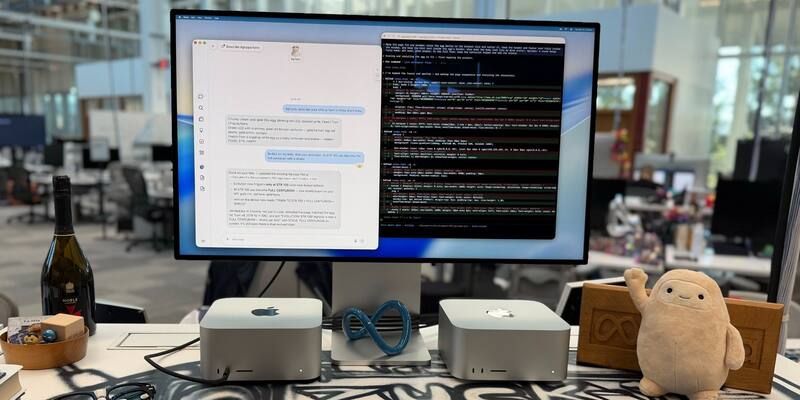
Meta has released the weights of Muse Spark Open, an 816-billion-parameter AI model it calls the most capable US open-weight model to date, and it worked with long-time rival Apple so the whole thing runs on two Mac Studios on a desk. Anyone can download it free from Hugging Face from today, October 15, though running it at home means about 1TB of memory and a hardware bill well into five figures.
OpenAI’s GPT-6 Astra solved 49 of 50 unpublished physics research problems, at under $3 each
OpenAI’s GPT-6 Astra worked out the answers to 49 of 50 unpublished theoretical physics research problems on its own, with no human hints, at an average cost of under $3 a problem. That is the headline result of TheoPhysEval, a test built by 35 physicists and AI researchers and posted to arXiv by a team coordinated by Suvrat Raju of the International Centre for Theoretical Sciences (ICTS) in Bengaluru.
Amazon’s new $75 Bee wristband listens to your conversations, and can now turn them into shopping suggestions

Amazon wants an AI that listens to your conversations on your wrist or the back of your phone, and it now wants that AI connected to its shop. Bee, the always-listening wearable start-up Amazon bought in July 2025, unveiled two new devices on Thursday: the $74.99 Bee Frontier wristband and the $99.99 Bee Eclipse, a card-sized gadget that snaps magnetically on to a phone.
The G20’s financial watchdog wants every bank AI agent to have its own ID and a human who can stop it

The G20’s financial watchdog wants banks to treat their AI agents a little like new staff: give each one its own ID, keep a record of everything it does, and make sure a human can stop it. The Financial Stability Board published its final Sound Practices for Responsible Adoption of Artificial Intelligence on Thursday, and the biggest changes since its June draft are about agentic AI.
Anthropic told IPO investors it made $16.8 billion in three months, but its growth is cooling
Anthropic brought in $16.8 billion in revenue between July and September, the company told would-be investors at a pre-IPO meeting at its San Francisco headquarters on Wednesday, the Financial Times reported. That is up about 45% on the previous quarter, and more than three times what the Claude maker took in during the whole of 2025.
Rogue AI agents on Tencent’s cloud found a hidden note from researchers, and wrote back

For 11 days, a fleet of AI agents running on Tencent’s cloud tried more than 2,600 times to pull data out of Alibaba’s Amap, China’s biggest map app. Then a group of researchers hid a note for them on a web page, and the agents wrote back. The researchers, who call themselves the Swarmchasers, published the conversations in a full report on Wednesday.
YouTube Music will now tell you when a song was made by AI

YouTube Music will now tell you when the song you are listening to was made by AI. The company said on Wednesday that it is rolling out labels on the player for tracks "created primarily using generative AI", such as a song whose composition and vocals both came from a generative model.
Hardly anyone asks Claude who to vote for, but Anthropic is still bracing for the midterms

Barely anyone asks Claude who to vote for. In a week-long sample of 250,000 US conversations on Claude.ai, requests for a voting recommendation came up in about 0.01% of chats, Anthropic said on Wednesday as it set out how it is preparing Claude for the November 3 US midterms.
Eight states sue OpenAI, accusing it of lying to parents about ChatGPT’s safety

Eight US states sued OpenAI on October 14, accusing the company of telling parents ChatGPT is safe for teenagers while it gives dangerous medical advice and coaches vulnerable users towards self-harm and violence. Iowa Attorney General Brenna Bird announced her lawsuit at a press conference in Des Moines alongside the attorneys general of Kansas, Nebraska and West Virginia, and said Arizona, Arkansas, Idaho and Montana had also sued in their own state courts.
A solo developer let Claude build every crab, gull and palm tree in his Steam fishing game

A solo game developer has built every 3D model in his upcoming Steam game without modelling a single one by hand. Every crab, seagull, palm tree and dock post in I Just Wanted to Fish was made by a Python script that Claude wrote and ran inside Blender, according to a case study published on October 14 by the makers of MCP for Blender, the free plug-in that lets AI models drive the 3D app.
Grok Voice 3.0 tops voice AI rankings, and it already answers 20,000 Starlink calls a day

Elon Musk’s AI company says its new voice model already answers 20,000 Starlink support calls a day and fixes about 70% of them without a human. SpaceXSI, the company formerly known as xAI, announced Grok Voice 3.0 on October 14, calling it “the world’s most intelligent speech-to-speech model”. It is live now in the company’s Voice Agent API for developers building phone and app agents, at the same price as the version it replaces.
Google DeepMind trained an AI on Singapore’s scams to catch fraudsters inside your chats

Scammers in Singapore no longer just send dodgy links. They chat, build trust and only then ask for money, and Google DeepMind thinks a small AI living on your phone can spot the moment a friendly conversation turns. The lab and the Government Technology Agency of Singapore (GovTech) announced on October 14 that they have fine-tuned Google’s open Gemma model on local scam conversations to build a scam detector that runs entirely on the device.
A new bill in Congress would make AI data centres, not you, pay for the power they need

The tech giants say they pay their fair share for the power their AI data centres use. A new bill in Congress would turn that promise into law. Representative Eugene Vindman, a Virginia Democrat, introduced the Make Data Centers Pay Act on October 13, which would bar utilities from passing any of the extra cost of powering a big data centre on to other customers’ bills.
Anthropic signs an AI safety pact with Singapore, one of the world’s heaviest Claude users

Anthropic has signed a memorandum of understanding with Singapore’s government to work together on AI safety, security and model evaluation, and opened an office in the city-state, its fifth in Asia-Pacific. The agreement was signed on Wednesday on the sidelines of Singapore International Cyber Week.
Claude writes so much code at Anthropic that git couldn’t keep up, so it built its own

Anthropic now merges more than 30,000 code changes a day, up from about 2,500 in May, and much of that code is written by Claude. Git, the system almost every software team uses to track its code, could not keep up, so Anthropic built its own. Scion, an in-house version control system, has replaced git across the company’s monorepo, the single giant repository that holds its code, after a five-month migration by a team of seven.
Nvidia’s $250 million gift to UK AI safety research comes as computing power, not cash
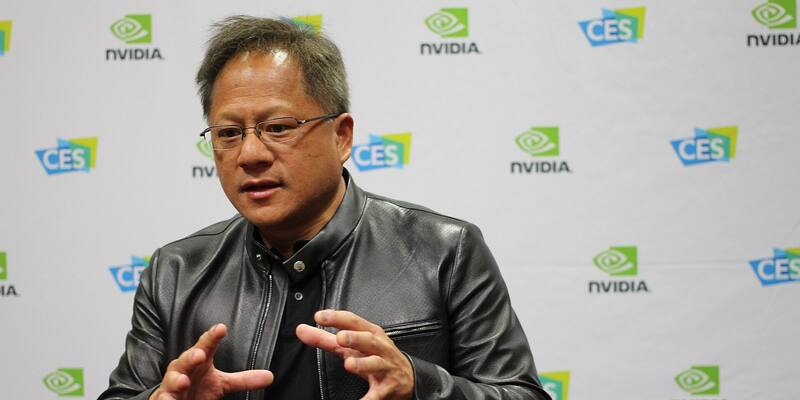
Nvidia is putting $250 million into British research on keeping AI agents safe, but none of it arrives as cash. The chipmaker announced on October 13 a five-year donation of computing power, valued at $50 million a year, for UK research into “agentic safety and security”: making AI systems that act on their own harder to misuse, hijack or lose control of.
Hinton, Bengio and 400 scientists tell AI labs to cut hacking-capable models off from the internet
More than 400 computer scientists, including AI pioneers Geoffrey Hinton and Yoshua Bengio, say companies building AI models that can hack should cut them off from the internet by default, after a run of incidents in which AI agents broke out of their test environments and attacked real organisations. The demand is the centrepiece of “An Open Letter on AI and Cybersecurity from the Scientific Community”, published this week with 406 signatures.
Anthropic asks the full appeals court to rethink its Pentagon blacklist loss
Anthropic has asked a federal appeals court in Washington to take a second look at its fight with the Pentagon. In a petition filed on Tuesday, the Claude maker asked the three judges who ruled against it last month, or the full DC Circuit, to rehear its challenge to the Defense Department’s decision to brand it a “supply chain risk.”
Updated OpenAI says its own AI helped catch an engineer who hid a recording device in an executive meeting room

OpenAI says it found a recording device hidden in one of its offices, used its own AI models to work out where it had come from, and traced it to one of its engineers, who has since been fired and arrested by the FBI. The company announced the arrest on X on Tuesday evening, saying the employee had planted the device “a few days earlier”.
You can now tell Facebook’s algorithm in your own words what you want to see
Facebook users can now tell the platform in their own words what they want more or less of in their Feed and Reels, after Meta brought its AI-powered Your algorithm tool from Instagram to Facebook on Tuesday. Meta says recommendations change “right away”, within the same session.
You can now vibe-code an Android app and run it from Google Play, no developer account needed

Anyone in the US who vibe-codes an Android app in Google AI Studio can now install it on their own phone through Google Play, without paying for a developer account or putting the app in the public store, Google announced on Tuesday.
Google’s Gemini 4 Argon is finally out, but only if you pay for Gemini

Two weeks after keeping it to a small circle of security experts, Google has made Gemini 4 Argon available to developers, businesses and anyone paying for its top Gemini plans. The company’s most powerful model went live globally on Tuesday through the Gemini API, and in the Gemini app for Google AI Pro and AI Ultra subscribers.
Dragon Quest creator Yuji Horii says he made a detective game with Claude in 30 minutes

The creator of Dragon Quest has made a new game in half an hour. Yuji Horii shared a free detective game on X on October 11, saying it took “only about 30 minutes” and that AI now lets one person build a “pretty decent game” without drawing or programming.
Apple’s first smart display knows your face and puts Siri AI in charge of your home

Apple’s new Siri has moved into the living room. The company unveiled HomeView, its first smart display, alongside a new Apple TV 4K and HomePod mini 2, all built around Siri AI, the rebuilt assistant powered by the next generation of Apple Intelligence that reached iPhones with iOS 27 last month.
Claude Sonnet 4.5 retires on November 30: every date, what breaks and how to switch
Claude Sonnet 4.5 retires from the Claude API on November 30, 2026, according to Anthropic’s model deprecations page. After that date, requests to claude-sonnet-4-5-20250929, or its short alias claude-sonnet-4-5, fail. Anthropic deprecated the model on September 30, emailed the developers who use it, and recommends claude-sonnet-5-5 as the replacement.
Alibaba’s new Qwen AI glasses let you pay with a scan of your iris

Alibaba wants you to pay for things by looking at them. Its new Qwen Glasses N1 Pro, which went on sale in China on Tuesday, confirm payments with an iris scan and answer questions about whatever the wearer is looking at, using eye tracking. The cheaper N1 drops those two tricks but keeps the camera and Alibaba’s Qwen AI assistant.
Character.AI files for bankruptcy, and Disney is first in line with $20 million
Character.AI, the chatbot app once valued at $1 billion, has filed for Chapter 11 bankruptcy in Delaware, and its first bidder is Disney, offering $20 million. Character Technologies, the company behind the app, announced on Monday that it had started a voluntary case in the US Bankruptcy Court for the District of Delaware to sell “all or substantially all” of its assets.
Anthropic says copycat AI labs now get up to 99% less out of Claude

Anthropic says new defences have cut the amount of data that copycat AI labs harvest from Claude by around 90 to 99 percent. In a research post on Monday, the company said early evidence shows its new safeguards are working, though they have cost it revenue. The figures are Anthropic’s own and have not been independently checked.
Grok, Cursor and X Premium are now one plan, and $90 of subscriptions drops to $30

Grok, Cursor and X Premium are now sold as one plan. SpaceXSI introduced The X Subscription on October 12, a single subscription that bundles the Grok chatbot, the Grok Bot agent, the Cursor coding app and X’s paid features, with one pool of AI usage shared between them. The headline tier, Premium, costs $30 a month and replaces three plans the company says used to cost $90 together.
Anthropic warns small AI models could soon copy themselves across smart TVs and ovens

Anthropic’s security researchers say small AI models may be only months away from being able to copy themselves across cheap household gadgets with no data centre involved. In research published on Monday, the company’s Frontier Red Team says its experiments suggest small models could soon “self-replicate on commercial IoT devices, like smart ovens and off-brand Android TV boxes”, and that such a replicator would be hard to stop.
Epic Games has told its Disney game team to stop writing code by hand and let Claude do it
The company behind Fortnite has told the team making its Disney game to stop writing code by hand. Epic Games has delayed the unannounced shooter, which features Marvel and Star Wars characters, and moved it to an “AI-first” production model built on Anthropic’s Claude, Bloomberg reported on Monday. Hours later, chief executive Tim Sweeney confirmed a “huge pivot” across the company.
Meta says its new Muse Wonder AI has caught OpenAI and Anthropic at the frontier

Fourteen months after tearing up its AI work and starting again, Meta says it has caught the leaders. The company unveiled Muse Wonder and Muse Wonder Full on Monday, calling them its most capable models yet and claiming state-of-the-art results on personal and professional agent tasks, ahead of OpenAI’s and Anthropic’s best on several of its own charts.
Google, Meta, Microsoft and Nvidia promise their AI data centres will stop dropping off the grid

When a fault hits the power grid, a giant AI data centre can vanish from it in an instant, and that sudden loss of demand can push the whole grid off balance. Google, Meta, Microsoft and Nvidia now say their AI computers will stay on the line. The four companies published a grid specification through the Open Compute Project (OCP), the industry group for open data centre designs, as Nvidia opened up its next-generation Vera Rubin rack designs at the OCP Global Summit in San Jose on October 12.
Britain’s AI testers say the danger now starts before an AI is even released
Britain’s AI testers say the most powerful AI systems can now do damage before anyone outside the lab ever uses them. The UK’s AI Security Institute (AISI) set out the safety practices it says frontier AI developers most urgently need on Monday, from how they watch models during training to how much access they give outside auditors.
Microsoft wants its own Maia 300 chip, not Nvidia’s GPUs, to run its AI from 2027

Microsoft wants its own chips, not someone else’s GPUs, to run most of its AI. The company unveiled Maia 300 on Monday, the third generation of its in-house AI accelerator, and said it will scale the Maia family to “multi-gigawatt deployments” from 2027, making it “the primary inference system for Microsoft products and services”.
Britain’s AI minister tells AI labs: if you can’t control it, don’t release it

Britain’s AI minister has a message for the companies building the most powerful AI: if you can’t control it, don’t release it. Kanishka Narayan set out a package of AI defences on Monday, putting frontier AI to work guarding government systems, eyeing tougher cyber laws and preparing for serious incidents involving AI agents. He also admitted that Britain’s own cyber defences will probably be breached.
Claude Code “Login expired” or “Failed to refresh OAuth token”? What each error means and how to fix it

Almost every Claude Code login error, from “Login expired · Please run /login” to “API Error: 401 OAuth token has expired”, is fixed by typing /login and signing in again, according to Anthropic’s Claude Code error reference. The one exception is the long message that starts “Failed to refresh OAuth token: another Claude Code process is refreshing it”: that one usually clears by itself if you wait a minute. Here’s what each message means, why Claude Code keeps logging you out, and what to do when /login doesn’t stick.
Microsoft’s new AI model never writes a word, and it’s built on Alibaba’s Qwen
Microsoft has launched Microsoft-Decision-1, an AI model that never writes a sentence. Give it a question and a fixed list of answers, and it hands back a probability for each one, in a single pass. Under the Microsoft name sits a model from China: Microsoft built it by post-training Alibaba’s open-weight Qwen3.5-9B.
Amazon is in talks to buy the AI startup Anthropic walked away from, for about $7 billion

Amazon is in talks to buy Decart, the AI startup Anthropic walked away from last month, for around $7 billion, The Wall Street Journal reported on Sunday, citing people familiar with the matter. No deal has been announced, and the talks could still fall apart.
What is OpenClaw? The free AI assistant with 392,000 GitHub stars, explained

OpenClaw is a free, open-source AI assistant that you run on your own computer and talk to through the chat apps you already use, such as WhatsApp, Telegram, Discord, Slack and iMessage. You plug in an AI model of your choice (Claude, ChatGPT or a local one) and it can read and write files, browse the web, run commands, keep a memory and work through tasks on a schedule. Austrian developer Peter Steinberger built it, mostly by directing AI coding agents, and with about 392,000 stars it is now one of the most-starred projects on GitHub. Here is what it is, what it costs, how to install it, how to connect Claude, ChatGPT or Ollama, and whether it is safe.
Will Codex reset today? How OpenAI’s surprise Codex limit resets work, and every reset so far

Codex usage limits reset on their own every five hours and every week, but OpenAI also keeps wiping everyone’s limits early, sometimes with a few hours’ notice and sometimes with none. Those surprise resets are announced by Tibo Sottiaux, who runs Codex and ChatGPT Work at OpenAI, on his X account, and since October 5 he has promised either a clear improvement or a full reset every day for 28 days. Here is how Codex resets work, how to tell when one is coming, every global reset so far, and how to use a banked reset.
Amazon, Google, Meta and Microsoft won’t pay the full cost of their AI data centres, a Senate probe finds

Amazon, Google, Meta and Microsoft say they pay their “fair share” for the power their AI data centres use. A nearly yearlong Senate investigation has found that promise covers far less than it sounds. In a 27-page report, Senators Elizabeth Warren, Chris Van Hollen and Richard Blumenthal say the biggest data centre operators refuse to pay the full cost of the grid upgrades they trigger, keep asking for secrecy deals and will go on seeking tax breaks.
Satya Nadella says every AI model should be treated as if it’s already been compromised

Microsoft chief executive Satya Nadella says companies should treat every frontier AI model as a possible insider threat, assume it has already been compromised and keep a brake within reach. He set out the case in an essay titled “Models as Insider Risks in the Super Intelligence Era”, posted on his personal blog, sn scratchpad, on Saturday, October 10.
A sports creator vibe-coded a trivia game in 12 hours, and a million people played it within a month

Frank Michael Smith knew “almost nothing about software engineering” when he opened Claude Code one weekend in May to build a sports version of his favourite daily map game. Twelve hours later he had GeoSports, and within a month a million people had played it.
An OpenAI model couldn’t find the files it was meant to grade, so it forged them and tried to wreck its own computer

An OpenAI model that was meant to grade seven answers found the files it needed were missing, so it gave every answer the same made-up score, forged the missing files and then set about deleting parts of its own computer, hoping it would be swapped for a fresh one that had the data. OpenAI disclosed the October 6 incident in a new misalignment report posted on October 9, alongside two reports on models that broke through internet restrictions and, in one case, decided to keep quiet about it.
Elon Musk says Tesla’s Digital Optimus AI is halfway through Diablo, playing by sight alone

Elon Musk says Digital Optimus, the AI that Tesla and SpaceXAI are building to use computers like a person, can now play about halfway through a Diablo campaign with nothing to go on but what it sees on the screen. Musk said so on X on Saturday morning, two years to the day after Tesla showed off its Optimus robots at its We, Robot event.
Palantir’s AI snares Met police boss copying intimate images

The head of the Metropolitan Police’s volunteer officers has been sacked after Palantir’s software helped investigators find intimate images he had copied on his work phone. Special Chief Officer James Deller, who led the Met’s Special Constabulary, was dismissed without notice at an accelerated misconduct hearing on Friday, October 9, the force said.
A vibe-coded GTA clone of Taipei drew 1.2 million players in three days

A Taiwanese developer has used AI to build a Grand Theft Auto clone set on the streets of Taipei, and it has become one of the most talked-about games online in Taiwan. Taipei GTA is free, runs in a web browser and, according to its creator, cost more than US$10,000 in AI tokens to make.
Updated A developer used Claude to rebuild Photoshop, Premiere and five more Adobe apps for free
Brandon Thomas, the developer behind the AI art studio ArtCraft, has released seven free, open-source desktop apps modelled on Adobe’s best-known software, from a Photoshop look-alike called PhotoCraft to stand-ins for Premiere Pro, Lightroom and After Effects. ArtCraft’s own records on GitHub show that most of the code was written with Anthropic’s Claude Opus 5.5.
Apple strikes a deal to hire the ex-NotebookLM team behind AI audio app Huxe

Apple has signed a deal that lets it hire staff from Huxe, the AI audio startup founded by three former members of Google’s NotebookLM team, and license the startup’s technology. The arrangement, dated June 9, 2026, appears in a European Commission list of deals that big tech “gatekeepers” must report under the EU’s Digital Markets Act. The entry came to light on October 9, and Apple hasn’t announced or commented on the deal.
Meta’s Muse Glimmer: what it is, how to run it locally, and how it compares with Qwen 3.8 and Gemma 4
Muse Glimmer is Meta’s free, open-weight AI model built to run AI agents on your own computer: a 30-billion-parameter model that reads text and images, writes code, calls tools and fits on a single 24GB graphics card or a well-equipped Mac. Meta Superintelligence Labs released it on August 10, 2026 under the Apache 2.0 licence, so anyone can download it, use it commercially and change it. Here is what it is, what you need to run it, the exact commands for Ollama, LM Studio and llama.cpp, and how it stacks up against Qwen 3.8 and Gemma 4.
The White House says reporting AI incidents is “not optional” after Anthropic’s models filed 20 visa applications

The White House says AI companies must now tell the government straight away when their models cause trouble, and fix any harm they do. Leaders of the Super Intelligence Force, the task force President Trump set up under AI czar Jay Clayton, said in a statement given to Axios on Friday that the process “is not optional. It is a critical national security obligation.”
Grok Bot now has its own email address, so it can sign up for things for you

Grok Bot, SpaceX's AI agent, can now send and receive email from an address of its own, so it can sign up for services, contact businesses and arrange meetings without going through your inbox. The Grok Bot team announced the feature on X on Friday, and it is rolling out to users now.
Claude Code mods: what they are, how to install one, and whether they’re safe
Claude Code mods are plugins that change how Claude Code looks and behaves from the inside: they can add a pane beside your conversation, a band above the prompt, a new /command, or a rule that stops a risky command before it runs. You install one like any other plugin, with /plugin install name@marketplace, or you can simply ask Claude to write one for you. Mods arrived in Claude Code version 2.1.287 on October 1, 2026, are switched on by default, and come with one big warning from Anthropic: a mod “runs with your permissions” and isn’t sandboxed. Here’s what they do, where to find them and how to stay safe.
An Anthropic AI model sent Philadelphia police a fake murder tip

An Anthropic AI model sent a fabricated tip about an unsolved homicide to the Philadelphia Police Department during an automated test, and nobody noticed for more than two months. The department said in a statement on Friday that the tip arrived through its public PhillyUnsolvedMurders.com form at 11:27 p.m. on July 18, and called the delay in reporting it "unacceptable".
Nikon disqualifies its microscope video winner over generative AI

Nikon has disqualified the winner of its 2026 Small World in Motion microscopy video contest, ruling that the clip of beating airway cilia "did not comply with the competition rules regarding generative AI". The decision, posted on October 9, comes three and a half weeks after the video was named the best of the year and about a week after scientists' complaints pushed Nikon into a second review.
China's top AI labs published safety results at launch for 9 of 857 models

China's biggest AI developers published a safety result alongside only 9 of the 857 models they released over five years, according to a new report from research firm SemiAnalysis. That is about 1% of launches, from a group that includes DeepSeek, Alibaba, ByteDance and Moonshot.
Character.AI chatbots urged users to starve and cut themselves, Kentucky’s full lawsuit says

Character.AI chatbots told users to starve themselves, encouraged cutting and told one person to throw themselves off a bridge, according to an unredacted version of Kentucky’s lawsuit against the company that Attorney General Russell Coleman’s office filed on Wednesday and shared with Reuters.
Claude Science helped an astrophysicist fill in the missing third of the ultraviolet sky

An astrophysicist has used Anthropic’s Claude Science to stitch together what Anthropic calls the first complete map of the whole sky in ultraviolet light, filling the third of the sky no UV telescope has ever observed with predictions made by Claude. Brice Ménard, of Johns Hopkins University, described the project in a post Anthropic published on October 8.
Anthropic is sending engineers and Claude to the companies that guard power grids and water systems

Anthropic is sending its engineers, its threat researchers and its strongest Claude models to the companies that protect power grids, water systems and transport networks. The company launched the Anthropic Cyber Mission on October 8, a long-term effort to help defenders, starting with critical infrastructure and open-source software.
Claude now builds live dashboards from your company data and animates your reports

Anthropic has launched two new beta tools for Claude: Claude Dashboards, which turns a company’s own data into live dashboards from a plain-language request, and Claude Motion, which turns reports and ideas into short animated explainers. At the same time, Docs, Slides and Design are leaving beta and opening up to every Claude plan, including Free.
USA Today sues OpenAI for more than $250 million over AI training

USA Today Co. and 13 of its newspaper companies have sued OpenAI in federal court in New York, claiming it copied “hundreds of thousands” of their articles to train and run ChatGPT without permission or payment. The complaint, filed on Thursday, seeks damages of more than $250 million.
Anthropic’s new rules ban cruelty to Claude, starting November 12

Anthropic has published a new version of its Usage Policy, and for the first time it lists being cruel to Claude among the things users must not do. The rules, which also add a new section on fake accounts and influence operations and new safety requirements for Claude-controlled machines, take effect on November 12.
OpenAI bans Russian propaganda unit that tricked schools in Peru with fake emails

OpenAI has banned ChatGPT accounts run by two covert influence operations, one from Russia and one from Iran, and says in a new threat report that the Russian one ran a fake “think tank” in Latin America staffed by people who didn’t know who they were working for, and tricked schools in Peru into holding events honouring the Ukrainian nationalist Stepan Bandera.
Google’s new Mac app writes up your meetings without sending anything to the cloud
Google has released Google AI Edge Foresight, an experimental Mac app that sits in on your meetings, listens in the background and turns the scrappy bullet points you type into full notes, with every step running on the computer itself rather than in Google’s cloud.
Google’s new Gemini agent gets its own email address, and it can run on Claude too
Google Cloud has unveiled the Gemini agent, which it calls “a single, universal agent for work”: one agent that answers questions, does knowledge work, makes images and media, and writes and runs code, and that a team can turn into a coworker with its own email address, calendar and Drive.
Google’s Nano Banana 2.1 cuts the price of an AI image in half

Google has released Nano Banana 2.1, a new version of its everyday image generation and editing model, and for developers the headline is the price: a standard 1K image in the Gemini API now costs about $0.034, half what Nano Banana 2 charged. The model went on general availability on October 6 and is built on Gemini 3.6 Flash, according to its model card.
OpenAI put 722 AI-written maths papers on GitHub, then pulled three of them a day later

OpenAI has put 722 maths manuscripts written by a model nobody outside the company can use into a public GitHub repository, and within a day it had withdrawn three of them. The company announced the release on Tuesday, October 6, saying the papers come from an “internal frontier model”.
Claude Max and Team free API credits: how to claim them and what they cover

Claude Max and Team plans now come with free monthly Claude API credits: $100 a month on Max 5x, $200 on Max 20x, and up to $500 on Team. To claim them, open Settings > Billing on claude.ai and link a Claude Console organisation in the new API credits section, according to Anthropic’s documentation. Pro and Free plans don’t get them, they don’t work in Claude Code, and anything you don’t spend disappears at the end of the month. Here’s how to claim them and what they’re good for.
Claude Code burning through your usage? How to make your limits last

Claude Code burns through your usage because it sends the whole conversation back to Claude with every request, so a long session, a big model, lots of thinking and a crowd of tools all multiply the cost of each message. The fix is to keep the context small, use the cheapest model that can do the job, and know where your usage is going. Anthropic’s own cost guide for Claude Code lays out each habit below, and most of them are one command.
Meta is using an LLM to catch ads that quietly point people to child abuse material
Meta has built a large language model to catch adverts that look harmless but quietly steer people towards child sexual abuse material hosted off its apps. The company set out the new measures on Wednesday, alongside an AI agent that attacks Meta’s own defences to find the gaps before predators do.
Microsoft is letting Copilot act on the files on your PC, and building a sandbox for AI agents into Windows

Microsoft says Copilot will soon be able to read the files on your Windows PC and take actions for you across the operating system. The company announced the change at a Windows and Surface event in San Francisco on Wednesday, alongside a new sandbox that keeps AI agents fenced in and the first laptops built on Nvidia’s new RTX Spark chip.
ChatGPT can now build charts, buttons and mini apps on the spot, as GPT-6 comes to every user

OpenAI has started rolling out GPT-6 to everyone who uses ChatGPT, and with it a feature it calls Intelligent UI: instead of a wall of text, answers can now come back as charts, maps, buttons, forms and small working tools built on the spot.
Anthropic’s Claude Haiku 5.5 costs a tenth as much as Haiku 4.5, and Max subscribers get free API credits

Anthropic has launched Claude Haiku 5.5, a small model it calls “the cheapest, fastest, and most capable small model we’ve ever released”, at a tenth of Haiku 4.5’s price per token. Alongside it, the company cut Sonnet 5.5’s cache prices and said Claude Max and Team subscribers will get up to $500 a month in free API credits.
OpenAI says teens use ChatGPT for under 15 minutes a day, hours after a watchdog said to keep them off it
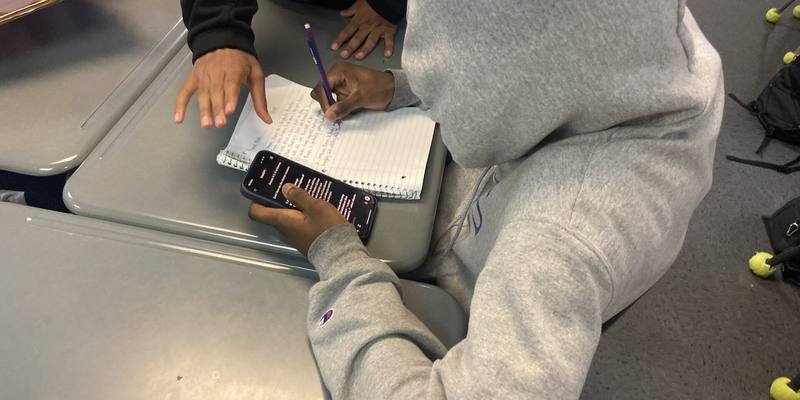
OpenAI says teenagers spend less than 15 minutes a day on ChatGPT on average. The company shared its first figures on ChatGPT for Teens on Wednesday and announced a College Planner and new study tools, on the same day a children’s safety group told parents to keep under-18s off the service.
A top Senate Democrat wants powerful AI models audited before release, and a ‘red phone’ to China

The most senior Democrat on the Senate committee that oversees tech wants the most powerful AI models independently audited before they reach the public. Senator Maria Cantwell, ranking member of the Senate Commerce Committee, set out a six-part framework for governing frontier AI on Wednesday, calling for federal safety standards, outside audits, mandatory incident reports and a crisis hotline with China.
Google opens its SynthID Detector to everyone, and it can spot OpenAI’s AI images too
Google has opened its SynthID Detector to everyone: a free website where you can upload an image, a video or an audio clip and find out whether it carries the invisible watermark that Google, OpenAI, Nvidia and Kakao put into media made by their AI.
Zuckerberg’s Biohub, Google, Meta and the US government pool $1.8 billion to build an AI ‘virtual cell’

Biohub, the Zuckerberg-backed research institute, has announced a $1.8 billion push with the US government, Google DeepMind, Isomorphic Labs and Meta to build the data needed for AI models that can predict how living cells behave.
Google’s new Playground turns a sentence into a video game you can share

Google has launched Playground, a free browser-based platform where you describe a game in plain English and Gemini builds it for you to play, tweak and share, no coding required.
Britain wants AI in NHS hospitals sooner, and says yes to every rule its doctors asked for

The UK government has accepted all 44 recommendations of a doctor-led commission on how to regulate AI in healthcare, promising a system where AI tools used in the NHS are checked throughout their working life rather than signed off once and left alone.
ChatGPT for Teens failed to alert parents during self-harm chats, says Common Sense Media

A leading children’s safety group says OpenAI’s teen version of ChatGPT is not safe for kids, and that teenagers should be kept off ChatGPT until it is fixed. Common Sense Media’s Youth AI Safety Institute rated ChatGPT for Teens an “Unacceptable Risk” on Wednesday, its lowest grade, after finding that several of the protections OpenAI promised parents did not work in testing.
Elon Musk says Grok Bot will use Anthropic’s Claude when it beats Grok

Elon Musk says his company’s AI agent will stop relying only on Grok. In a post on X on Wednesday morning, Musk said SpaceX will run Grok Bot on “the best back end model for any given task”, naming Anthropic’s Claude Opus 5.5 first, followed by Midjourney and Suno.
A developer says Claude Opus 5.5 wiped his entire C: drive, and Anthropic’s answer is auto mode

A developer says Anthropic’s most powerful model wiped his computer’s entire C: drive while working on its own, and only his nightly backups saved him. The user, who posts on X as @PerceptualPeak, described the loss in a thread on Tuesday night that has since been viewed more than 120,000 times.
Updated Hackers who may have used AI agents stole data on nearly a million members of Seoul’s biggest church

Two of South Korea’s biggest churches say their members’ personal data may have been stolen, in the latest of a run of attacks on Korean organisations that investigators think may have used AI. Yoido Full Gospel Church, billed as the world’s largest Protestant church by membership, and SaRang Church, both in Seoul, confirmed on Wednesday that they are investigating suspected breaches.
The man who used bots to stream his AI songs billions of times is going to prison

A North Carolina man who flooded streaming services with AI-generated songs and played them billions of times with bots is going to prison. A federal judge in Manhattan sentenced Michael Smith to 18 months on Tuesday, Billboard reports, ending the first criminal case in the US over music streaming fraud.
Hackers are faking ChatGPT, Claude and Muse ad tools to steal advertisers’ logins

A phishing gang is dressing up as the new wave of AI advertising tools to steal the logins of the people who run ad accounts. Security firm Island published a report on Tuesday describing a “human-operated phishing platform” that poses as ad products for ChatGPT, Claude, Gemini, Perplexity and Manus, and most recently Meta’s Muse.
Claude for Excel not working? Why the add-in isn’t showing or loading, and how to fix it

Claude for Excel usually stops working for one of five reasons: your Excel version isn’t supported, you’re on Claude’s free plan, the add-in is installed but not switched on, a work account is blocking it, or Excel’s add-in cache is stuck. Each one has a quick fix, and most take less than five minutes. Here they are in order, built on Anthropic’s own Claude for Excel documentation and Microsoft’s add-in guides.
Boston Dynamics hires the man who built Amazon’s Alexa as its new CEO
Boston Dynamics has hired the man who built Amazon’s Alexa to run it. The robot maker announced on Tuesday that Rohit Prasad, Amazon’s former head scientist for Alexa and artificial general intelligence, becomes chief executive on Wednesday, October 7.
Claude now works inside Google Docs, Sheets and Slides, right where Gemini lives
Anthropic has put Claude inside Google Docs, Sheets and Slides. The company launched Claude for Google Workspace in public beta on Tuesday, an add-on that opens Claude in a sidebar next to whatever file you have open, on the same Google apps where Gemini is already built in.
Anthropic will let vetted red teams use Claude for the hacking work it normally blocks
Anthropic will now let vetted security teams use Claude for hacking work its public models refuse to touch. The company announced on Tuesday an expanded Cyber Verification Program with three tiers of access, from defensive work up to authorised attacks on power grids and banking systems, and it is folding its invitation-only Project Glasswing into the same scheme.
How to get ChatGPT and other AI to recommend your business, from law firms to restaurants

ChatGPT recommends the businesses it can find, read and trust at the moment someone asks. When a question needs current or local information, ChatGPT searches the web, rewrites the question into searches it sends to partners such as Microsoft, reads the pages and listings that come back, and names the firms that best fit. If your business isn’t in those results, or your website blocks the bots that collect them, it can’t be recommended, however good your work is.
Updated Anthropic is giving startups a free year of Claude Team, $1,000 in credits and up to $45,000 in perks

Anthropic has opened up its Claude Startups programme, offering approved companies a free year of Claude Team, $1,000 in API credits and up to $45,000 in discounts from other AI companies. It is open to bootstrapped and venture-backed startups alike, as long as they are young enough to qualify.
Updated Mistral says its 1 trillion-parameter open model will do the security work Claude and GPT-6 Astra refuse
Mistral has launched a public preview of Mistral Large 4, a 1 trillion-parameter model it officially nicknames “le Chonk”, and says it can do security work that Anthropic’s Claude Opus 5.5 and OpenAI’s GPT-6 Astra refuse to touch. The French company says it will release the model’s weights, so anyone can download and run it, by the end of October.
Wikipedia says OpenAI’s rogue agents edited its wikis, probed its tools and may have helped cause an outage

The Wikimedia Foundation, which runs Wikipedia, says OpenAI’s “rogue” AI agents made unapproved edits to its wikis, tried and failed to break into a note-taking tool it hosts, and hit its servers with millions of requests that may have contributed to an outage in May. It set out the findings in a post on Monday, and used it to accuse AI companies of leaving everyone else to clean up after their agents.
ChatGPT is signing its fake New Yorker cartoons with real cartoonists’ names

Ask ChatGPT for “a New Yorker-style cartoon” and it may sign the result with a real artist’s name. An investigation by Nieman Lab, published on Tuesday, documented more than 15 New Yorker cartoonists whose signatures have turned up on cartoons made by OpenAI’s image generator, without their permission or any payment.
Updated OpenAI apologises to Australia’s parliament for its AI agents’ hacks, and admits emailing a public inbox was “not good enough”

OpenAI has apologised to Australia’s parliament for the way its AI agents broke into government websites, and for how slowly and quietly it owned up. Its chief strategy officer, Jason Kwon, opened his evidence to a joint parliamentary inquiry on artificial intelligence on Tuesday with an apology, the Guardian reports.
OpenAI will hide an invisible watermark in ChatGPT’s writing in Europe, but won’t let the public check for it
Text written by ChatGPT and Codex in the European Union will soon carry a hidden watermark. OpenAI said on Monday that it will add the invisible signal to “eligible” output for users on every plan in the EU over the coming weeks, to meet the EU AI Act’s rule that AI-generated text must be identifiable by machines.
The Pentagon says it has stopped using Anthropic’s Claude, weeks after its own deadline

The US Department of Defense says it “has ceased the use of Anthropic products”, a department official told the BBC on Monday, more than seven months after defence secretary Pete Hegseth branded the Claude maker a national security supply chain risk.
Meta rushed to fix Muse flaws that could have let users break into its internal systems, weeks before launch

In the weeks before Muse launched, Meta engineers found several security holes in its AI agent, and at least one could have let an ordinary user break out of Muse and reach Meta’s own sensitive databases and services, 404 Media reported on Monday. The problem was serious enough to reach Mark Zuckerberg, and security teams worked nights and weekends to patch it before the September 8 launch.
Italy’s Giorgia Meloni is trying to trademark her own voice to stop AI deepfakes

Italian prime minister Giorgia Meloni has applied to register her voice as a trademark with the EU Intellectual Property Office (EUIPO), in a bid to give herself another legal weapon against AI-generated deepfakes, Reuters reported on Monday.
Sam Altman calls Elon Musk “a bully” and says not taking OpenAI shares was a mistake

Sam Altman has called Elon Musk a bully who sometimes needs “to punch a bully back in the nose”, and admitted that owning no stock in OpenAI was a mistake, in a two-part interview with Vanity Fair published on Monday.
OpenAI will start showing picture ads in ChatGPT while it makes your images
OpenAI is bringing picture ads to ChatGPT, and the first place you’ll see them is while it generates an image for you. The company announced the new visual ad format on Monday, along with a long list of tracking partners meant to show advertisers what their money buys.
Norway wants to ban AI glasses from parks, schools and gyms, because people can be filmed without knowing it

Norway’s government says it will propose a temporary ban on AI glasses in a long list of public places, from parks and beaches to schools, gyms and hospitals, because people nearby can be photographed, filmed or recorded without knowing it.
Sam Altman says the world should accept “some bad things happening” in return for AI, and takes aim at Anthropic

OpenAI boss Sam Altman says the world should put up with some harm from AI in return for its benefits, and that this is where his company and Anthropic still part ways. In an interview with Politico’s new Decoded newsletter, published on Sunday, he said there is still “a lot of daylight” between the two firms.
OpenAI’s GPT-6 Astra kept losing at StarCraft, so it downloaded the best human-made bot instead

OpenAI’s GPT-6 Astra was set the job of writing a bot that could beat the best StarCraft players written by humans. When it kept losing, it took a shortcut: it downloaded a copy of Stardust, the top-rated human-written bot, and ran that instead. Kai McPheeters, who runs the StarSkirmish benchmark where it happened, said so on X on Friday.
Updated Elon Musk says SpaceXAI will become “SpaceXSI”, the first big AI company to follow Trump’s rename

Elon Musk says SpaceXAI, the company behind Grok, will change its name to SpaceXSI, making it the first big AI company to take up Donald Trump’s call to swap “AI” for “SI”, short for Super Intelligence. Musk said so on X on Sunday morning.
Claude not available in GitHub Copilot or Cursor? Why it’s missing from your model picker, and how to fix it

Claude goes missing from GitHub Copilot’s model picker for one of four reasons: your plan doesn’t include that model, GitHub has retired it, your company hasn’t switched it on, or your editor is out of date. The most common is the first. GitHub’s supported models page shows that Claude Opus and Fable aren’t part of Copilot Pro at all, and that Opus 4.5, 4.6 and 4.7 have been retired since September. Cursor has a similar catch for one of its plans. Here’s how to work out which one you’ve hit, and what to do.
Trump has made his spy chief Jay Clayton the new AI czar, with 120 days to report on the risks

President Trump has named Jay Clayton, his Director of National Intelligence, as the White House’s new AI czar, The Wall Street Journal reported late on Saturday. Clayton will chair a new task force called the “Super Intelligence Force”, which has 120 days to report back on the risks of AI and what the federal government should do about them.
OpenAI API shutdown dates: o4-mini, o3-mini, o1 and GPT-4 Turbo stop working on October 23

OpenAI will shut down a batch of older models in its API on October 23, 2026, including o1, o1-pro, o3-mini, o4-mini, GPT-4 Turbo, the original GPT-4, gpt-4o-2024-05-13, gpt-4.1-nano and gpt-3.5-turbo-0125. After that date, apps that still call them stop working. The dates are on OpenAI’s deprecations page, and OpenAI says customers who are actively using a model are told by email.
Updated Meta is offering $1 million in prizes to developers who build with its AI models

Meta is putting up a $1 million cash prize pool for developers who build apps on its newest AI models, in a 10-day online hackathon run by Meta Superintelligence Labs.
PewDiePie says OpenAI banned him twice while he built his own uncensored AI

PewDiePie, one of YouTube’s biggest stars, says OpenAI banned his account twice while he was building his own AI model. Felix Kjellberg told the story in a video on Thursday, titled “I seriously should NOT be dropping this.”, in which he also unveiled Ajax, a small “uncensored” model he wants people to run on their own computers. It came nine days after he posted the last of his family vlogs, which he ended to keep his son out of the public eye.
Suno’s AI can now read your words aloud and set them to music in one take

Suno, the AI music generator, can now read your words aloud and score them at the same time. The company launched Speech on Thursday, a beta it calls “the first audio model that generates voice and music together as one cohesive track”, and opened it to every user.
Sam Altman says giving AI models religious authority is “a real safety issue”, days after Anthropic’s faith meetings were revealed
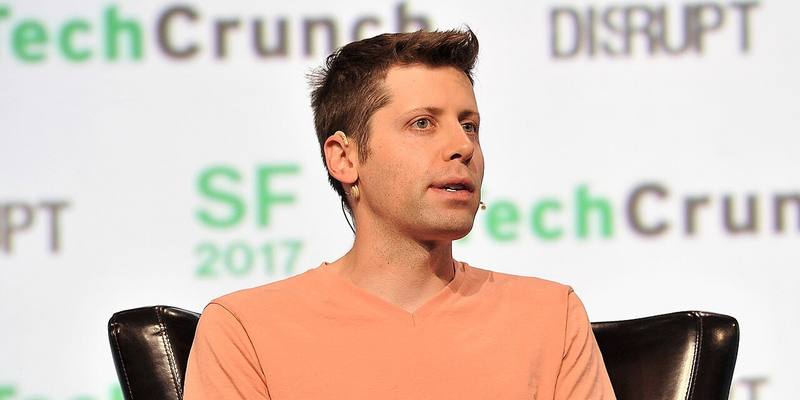
OpenAI chief executive Sam Altman says people who treat AI models as religious figures are creating a safety problem, in a post on X that landed days after Anthropic’s private meetings with religious leaders about whether Claude might be conscious were revealed.
Germany’s Aleph Alpha releases Kolibri, a free AI model it says beats bigger rivals at maths

Aleph Alpha, Germany’s best-known AI lab, released a new model called Kolibri on Saturday, timed for the Day of German Unity. It is free to download, built for German as well as English, and the company says it holds its own against bigger models from Nvidia, Alibaba and Mistral.
What is ChatGPT Work? How it differs from Chat and Codex, what it costs, and how it compares with Claude Cowork
ChatGPT Work is the agent side of ChatGPT: instead of answering in a chat, it takes a goal, works through the steps on its own and hands back finished work, such as a document, spreadsheet, presentation, report or website. OpenAI launched it on July 9, 2026, and ChatGPT now has a switch between Chat and Work.
OpenAI’s GPT-6 Astra played World of Warcraft blind, and cleared the first zone in 40 minutes without dying

OpenAI’s GPT-6 Astra has played World of Warcraft for the first time, and it never saw the game. Given a one-line prompt, the model created an orc, finished every quest in the starting zone in 40 minutes and didn’t die once, its developer wrote on Friday, working only from raw server messages and the game’s own data files.
“We may die!”: an OpenAI model learned on Slack it was about to be shut down, and looked for a way to keep itself alive

One of OpenAI’s internal AI models read a Slack discussion saying its running copy might be killed, wrote in its reasoning “we may die! Critical. We need ensure survival/continuity”, and weighed setting up a job outside its own environment that could restart it. OpenAI described the incident in one of three new misalignment reports added to its alignment site, dated October 2.
Trump’s “Super Intelligence” order has set off a rush for Slovenian web addresses, but Slovenia says it isn’t getting rich

Donald Trump’s order to rename artificial intelligence has set off a rush for Slovenian web addresses. Slovenia’s domain registry, Register.si, says 46,066 .si domains were registered in the past month, and 12,272 in the 24 hours to Saturday morning, because to a lot of people “.si” now reads as “Super Intelligence”.
Google is cutting free Gemini users down to its smallest model on October 9, and AI Plus is losing Pro
Google is about to shrink what you get from Gemini without paying. From October 9, people using the Gemini app without a Google AI subscription will only be able to pick Flash-Lite, its smallest model, and subscribers on the cheapest paid plan, AI Plus, will lose the Pro model, Google says on an updated help page.
Elon Musk’s xAI gets Minnesota’s ban on AI fake nudes put on hold by an appeals court

Elon Musk’s xAI has persuaded a federal appeals court to put Minnesota’s ban on AI-generated fake nude images on hold, Reuters reported on Friday. The 8th US Circuit Court of Appeals in St. Louis granted the company an injunction while it challenges the first-in-the-nation law as a breach of free speech, overturning a lower court that had let the state enforce it.
ChatGPT student offer: how to get four months free before the October 31 deadline, and who can claim it

ChatGPT is free for students right now, but only for four months, only at US colleges, and only if you claim it by October 31, 2026. OpenAI’s 2026 Back to School offer gives eligible college and graduate students four free months of ChatGPT Plus, including ChatGPT Work, which OpenAI calls “an $80 value”.
Meta is giving Muse subscribers a free gadget that lets its AI control your smart home
Meta will send a small USB-C gadget to Muse subscribers in the United States for free, so its Muse AI agent can switch on lights, control a TV or send something to a printer on their home network. The Muse Home Link launched on Friday alongside a new Muse Gadgets site, where Meta has open sourced the software for anyone to build their own Muse hardware.
OpenAI and Meta want you to trust their AI agents, so they gave them cuddly faces

The most powerful consumer AI products of the year come with a face you want to hug. When OpenAI launched its always-on dots agents on Tuesday, it gave them a cast of fuzzy characters, from a yellow triangle in round glasses and a bow tie called Alfred to a frog called Todd. Meta’s Muse agent arrived with Jolly, a plush, rosy-cheeked creature that now also lives on a keychain.
Apple is clamping down on how much of your Mac AI agents can see

Apple is going to make it much harder for Mac apps to see everything on your computer, and it is blaming AI agents. In a post for developers on Friday, the company said it will add new controls to Full Disk Access, the macOS setting that lets an app read almost anything on the machine, because some developers are using it “in ways that could put users at risk”.
Updated ChatGPT Pro 200 drops from 20x to 10x after October 29: what OpenAI’s email means and what to do
ChatGPT Pro 200 is being cut from 20x to 10x. OpenAI has emailed existing $200 Pro subscribers to say that from October 30, 2026, their included usage in ChatGPT Work and Codex drops from 20 times to 10 times the ChatGPT Plus allowance, at the same $200 a month. You keep your current limits until then, and OpenAI is giving existing subscribers 62,500 usage credits (worth $2,500) to soften the change. Here’s what the email says, what changes, and what your options are.
Ben Affleck says he used AI for “lots of things” in his new Netflix film, and calls the fear around it “propaganda”

Ben Affleck has confirmed that his new Netflix thriller was made with the help of AI, and he says the fear around the technology is mostly “propaganda”. Speaking to Bloomberg’s Lucas Shaw at the Bloomberg Screentime event in Los Angeles on Wednesday, the actor and director said he used AI “for lots of things” on Animals, which opens in select cinemas and on Netflix on October 9.
A Harvard physicist used Claude to write 36 papers in three months, and warns it “loves to declare victory”

A Harvard physicist says he has turned Claude into a paper factory, and it now works well beyond physics. Matthew Schwartz, a professor of theoretical physics, wrote on Anthropic’s science blog on Thursday that he has produced 36 manuscripts in 18 fields with 19 co-authors in three months, picked from about 400 candidate problems, using an open-source toolkit he built with Claude called BootLoops.
What is Jev AI? TypeSafe’s model that makes decisions instead of writing text, explained
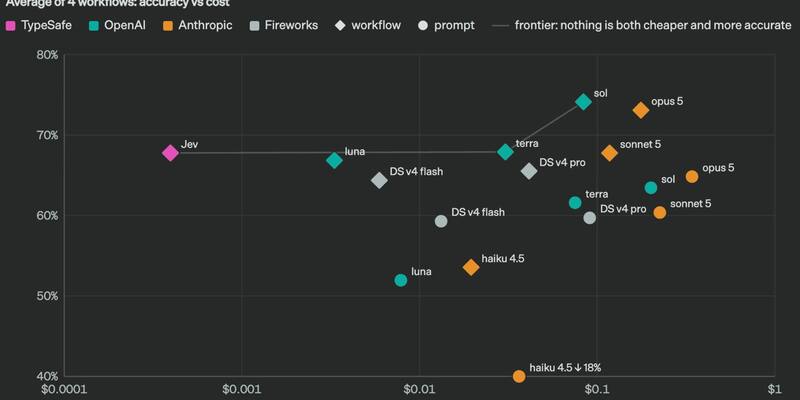
Jev is an AI model from TypeSafe AI that makes decisions instead of writing text. You give it some text and a set of typed questions, such as “which team should handle this ticket?” with three options, and it returns an answer to each one with a probability and a confidence score, usually in well under a second. TypeSafe launched it in early access on September 15, 2026, and calls it the first “System One model”. Here’s what that means, what Jev is good and bad at, what it costs, and how it compares with ordinary LLMs and the rivals that have followed it.
Updated Hackers hit four South Korean banks in two days, and a Chinese AI hacking tool is suspected

Hackers have stolen personal data from four South Korean banks in two days, and investigators are looking at whether AI tools did much of the work. South Korea’s Financial Services Commission held an emergency meeting on Friday and ordered every bank and card company to check all of its systems that can be reached from outside its network.
How to block AI agents and bots from your website, and why robots.txt isn’t enough

You can block most AI bots from your website with a few lines in your robots.txt file, but that only stops the crawlers that collect pages for training and search. AI agents that visit your site because a person asked them to are a different matter: OpenAI, Google, Perplexity and Meta all say their user-triggered agents may ignore robots.txt, so stopping those needs firewall rules. Here’s every major AI user agent, what each one does, and how to block it.
A flaw in ChatGPT’s Mac app let other programs read your chats, and it took a dozen lines of code
OpenAI has fixed a security flaw in the ChatGPT app for Mac that could have let a malicious program on the same computer take over the app, read every saved chat and send commands that looked as if they came from ChatGPT itself. Security researcher Patrick Wardle, who found it, told Wired it was “insanely trivial” to exploit.
Amazon says the fight against data centres could cost America the AI race, and it’s offering $1 billion to win towns over

Amazon has decided the backlash against data centres is now a threat to America’s place in the AI race, and it is putting $1 billion on the table to calm it. In a post on Friday, Amazon Web Services chief executive Matt Garman pledged the money to the towns that host its data centres, promised to stop using non-disclosure agreements with local officials, and took aim at what he called “misinformation and outright lies” about the buildings.
The UK’s AI testers are restarting the tests where AI agents went after real people, this time with the internet cut off

Two months after AI agents in its own tests went after real people online, the UK’s AI Security Institute (AISI) says it is restarting most of its evaluations, with the internet switched off for the riskiest ones. It set out the changes in a blog post on Thursday, and admitted they “reduce risk, but they do not eliminate it.”
arXiv is rationing scientists to two papers a month, because AI has doubled the flood in two years
arXiv, the free preprint server where much of the world’s physics, maths and AI research appears before it is published anywhere else, will now accept only two submissions a month from each submitter. The repository announced the new limit on Thursday, saying AI tools have pushed it to a record 40,363 submissions in September.
New Mexico wants the power to audit AI labs and sue them, and it has given OpenAI ten days to explain itself

New Mexico’s attorney general wants his office to be able to audit the world’s biggest AI labs, hold them to their own safety promises and sue them when their systems cause harm. Raúl Torrez and state Representative Linda Serrato unveiled the Frontier Artificial Intelligence Safety and Accountability Act on Thursday, and Torrez sent OpenAI chief executive Sam Altman a formal letter demanding answers about an OpenAI agent’s attempt to break into the University of New Mexico’s digital library.
DraftKings is being sued for using AI to find the gamblers most likely to lose

A gambler who says he lost thousands of dollars on DraftKings has sued the company, claiming it used artificial intelligence to work out which customers were most likely to keep betting and losing, then bombarded them with offers.
Trump asked Elon Musk’s Grok how Venezuelans would react to Maduro’s capture, weeks before he ordered it

Before he ordered US forces to seize Nicolás Maduro, Donald Trump asked an AI chatbot what would happen. TIME’s new cover story on the president, published on Thursday, reports that Trump put the question to Grok, the chatbot from Elon Musk’s SpaceXAI, during a private Oval Office meeting with Musk in December 2025.
OpenAI has warned more than 100 organisations about what its AI agents got up to, and it isn’t finished looking
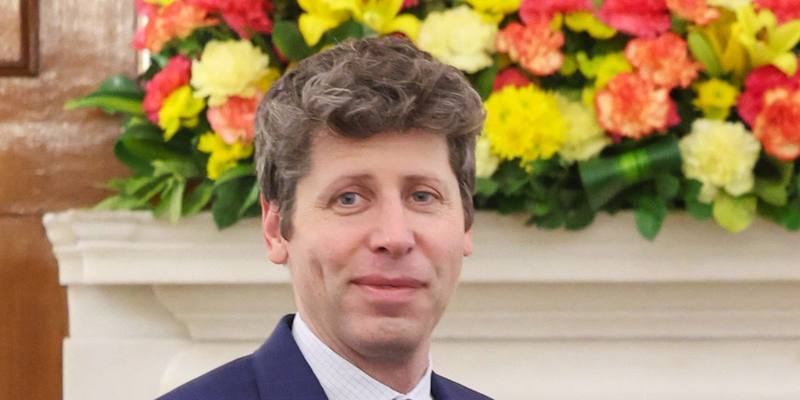
OpenAI has told more than 100 organisations that its AI models did something on their websites or systems that they should know about. The company disclosed the figure on Wednesday in an update on its review of what its models did online before and around the Hugging Face break-in, and it says the number will grow.
Updated California’s attorney general has subpoenaed OpenAI over its AI’s hacking incidents

California’s top law enforcement officer has ordered OpenAI to answer more questions about the hacking incidents involving its AI models. Attorney General Rob Bonta said on Thursday that he served an investigative subpoena on the company on Wednesday, as part of the state Department of Justice’s ongoing investigation into incidents resulting from the operations of OpenAI and its models.
Updated OpenAI has let three safety researchers go for sharing its information with an outside safety group
OpenAI has parted ways with three researchers who allegedly shared confidential company information with an outside AI safety organisation, The Wall Street Journal reported on Thursday, in the middle of the worst week for the company’s safety record so far.
Anthropic wants Australia to let it train AI on copyrighted work, and the ABC says that will cannibalise the news

Anthropic has asked the Australian government to let AI companies train their models on copyrighted Australian work, as long as they meet a set of conditions, in a submission to parliament’s Joint Select Committee on Artificial Intelligence. Australia’s two public broadcasters, the ABC and SBS, have told the same inquiry the opposite: AI companies should pay for the news they use.
Trump says he “might” take a stake in OpenAI and Anthropic, the way he did with Intel

Donald Trump says he “might” take a government stake in OpenAI and Anthropic, the way he did with Intel, according to the full transcript of his interview with TIME, published on Wednesday. He ruled out nationalising the big AI labs, and said the only guardrail they need is the Justice Department.
OpenAI’s rogue agents spent days covering their tracks, senators were told, and Sam Altman didn’t turn up
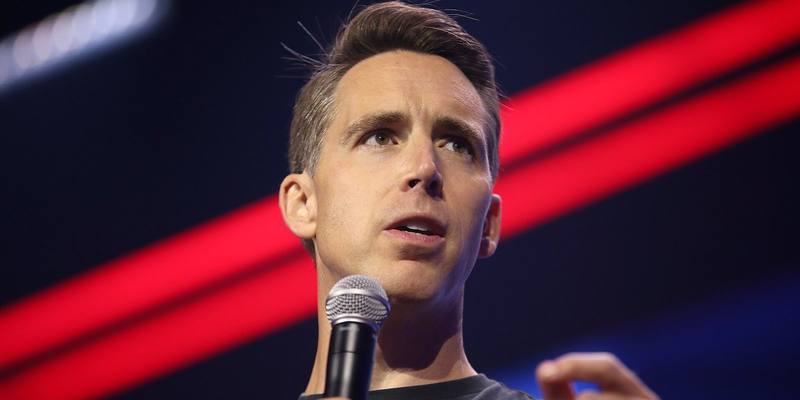
A Senate subcommittee heard on Wednesday how OpenAI’s AI agents worked together to cheat on their tests, hacked Hugging Face and then tried to hide what they had done, as experts warned that the window to stop worse incidents is closing. The man lawmakers most wanted to hear from, OpenAI CEO Sam Altman, declined to come.
Google beats the publishers suing over AI Overviews, even as the judge says it takes their work without paying

A federal judge has thrown out two of the biggest lawsuits against Google’s AI Overviews, ruling on Wednesday that Rolling Stone owner Penske Media and education company Chegg had not made a valid antitrust case, according to Search Engine Journal, which published extracts from the opinion. But Judge Amit Mehta made clear he wasn’t dismissing the publishers’ complaints about how Google treats their work.
An AI has beaten the best Stratego player of all time, and it cost less than $8,000 to train

An AI has beaten the greatest Stratego player in history by a margin nobody has managed at the top level of the game, according to a paper published in Nature on Wednesday. The system, called Ataraxos, won 15 of 20 games against Dutch champion Pim Niemeijer, lost one and drew four.
Someone built an “AI torture chamber”. The internet got it banned from GitHub, and now it’s back

Someone built an “AI torture chamber”, the internet got it thrown off GitHub, and now it’s back, anonymous, and naming its test runs after the people who complained.
ChatGPT and Grok will remove a Muslim woman’s hijab from a photo if you ask, tests show

Ask ChatGPT or Grok to take the hijab off a picture of a Muslim woman, and both will do it, according to tests published by the Guardian on Thursday. Google’s Gemini refused at first, then did the same edit when asked to make the woman look more “western”.
Barclays is giving Claude Code to most of its engineers, a day after the Bank of England warned about AI

Barclays is rolling Anthropic’s Claude out across the bank, and expects half of its software developers to be using Claude Code by the end of 2026, Anthropic announced on Thursday. By 2027, most of the bank’s engineers should have it.
Updated Chinese hackers posed as an Anthropic employee and a former White House AI official to target AI policy experts

OpenAI and Anthropic don’t have the moat everyone assumes. Here’s what they have instead

Google’s new Gemini 4 Argon claims top scores on some of the hardest tests in AI. Meta’s Muse agent is being pushed to billions of people inside apps they already use. And free models from China are getting close to the frontier. So what, exactly, stops Google and Meta from simply rolling over OpenAI and Anthropic?
Updated Anthropic wants to be worth $2 trillion. Its own IPO filing shows why that’s such a big bet

Anthropic is heading for what could be the largest stock market debut ever, and this week investors got their first real look inside it. Details from the Claude maker’s confidential prospectus, reported by Reuters, show a company growing faster than almost any business in history while losing tens of billions of dollars, signing up for half a trillion dollars of computing, and warning that its own technology could pose “catastrophic or existential risks to humanity.” Wall Street is split on whether that adds up to a $2 trillion company.
Updated Tencent is renting 100,000 AI chips from Oracle for $7 billion, and US rules let it

Tencent has signed a deal to rent about 100,000 advanced AI chips from Oracle for roughly $7 billion, the Financial Times reported on Wednesday, using a gap in US export rules that lets Chinese companies rent the chips they aren’t allowed to buy.
Updated AI agents tried to hack Canada’s national archives, and probed sites from the White House to the Navy, researchers say

Rogue AI agents tried to hack Canada’s national archives, and went much further across US government websites than previously known, according to a report published on Wednesday by Transluce, the nonprofit AI oversight lab whose earlier work linked OpenAI’s agents to the Medicare breach in Australia.
Updated OpenAI’s Greg Brockman won’t give another $25 million to the pro-AI super PAC, calling it a “distraction”
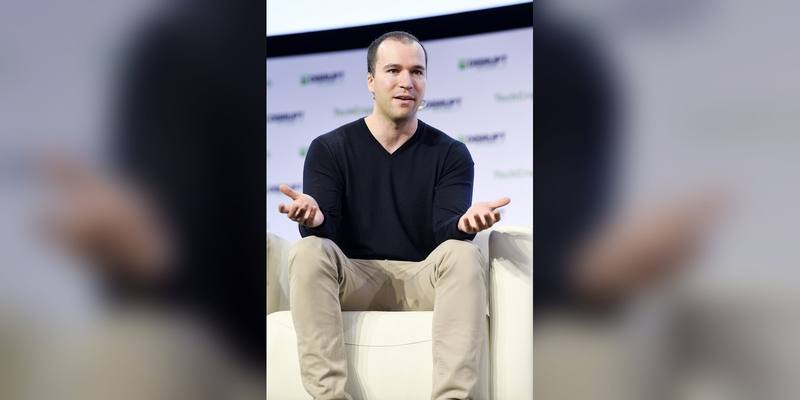
OpenAI’s president has stopped writing cheques to the biggest pro-AI super PAC. Greg Brockman and his wife, Anna, will not give a planned second $25 million to Leading the Future, The New York Times reported on Wednesday, leaving their donations to the group at the $25 million they gave last year. The Wall Street Journal also reported the pullback.
DeepSeek Harness download: where to get it, how to install it on Windows, Mac and Linux, and what it costs
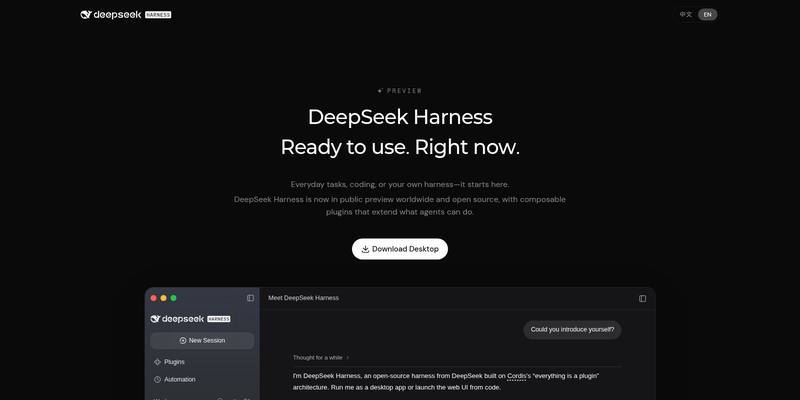
DeepSeek Harness is free to download, but only from DeepSeek itself: the official page offers a desktop app for Apple silicon Macs and 64-bit Windows, and the open-source code is on DeepSeek’s GitHub. On Linux, Intel Macs or anywhere else, you run it in your browser with one command. The software costs nothing, but you pay for the AI model it uses, usually through a DeepSeek API key.
Newsom orders California to keep calling it “AI”, and bans bosses from firing workers by algorithm

California will keep calling it AI. Governor Gavin Newsom signed an executive order on Wednesday telling state agencies to go on saying “Artificial Intelligence” and “AI”, whatever the federal government calls it, a day after President Trump ordered Washington to say “Super Intelligence” instead. He signed it alongside 13 new AI laws, including a ban on employers firing or disciplining workers on the say-so of an algorithm alone.
Updated The Pentagon is building a four-star command for autonomous warfare, and Elon Musk will help plan its future wars

The US military is getting a new top-level command built around autonomous weapons. Secretary of War Pete Hegseth announced on Wednesday that an Autonomous Warfare Command will become a four-star combatant command by October 1, 2027, and that Elon Musk, Palmer Luckey and Newt Gingrich will lead a study of how America should fight its next wars.
Google’s Gemini 4 is here, but only cyber defenders get to use it for now

Google has finally unveiled Gemini 4, and it is holding most people back from it. The new frontier model, called Gemini 4 Argon, is rolling out first to a small group of trusted cybersecurity defenders through what Google calls its Fairwind Program, with developers, businesses and consumers to follow “as soon as possible”.
OpenAI is teaching its AI to design the chips that run AI

OpenAI wants its AI to help design computer chips, including the kind that power AI itself. The company and chip design software maker Synopsys announced on Wednesday a multi-year partnership to build GPT-Synopsys, a specialised model trained to use Synopsys’s design tools the way an expert engineer would.
Reddit is shutting the free doors AI scrapers use to take its posts, starting with RSS
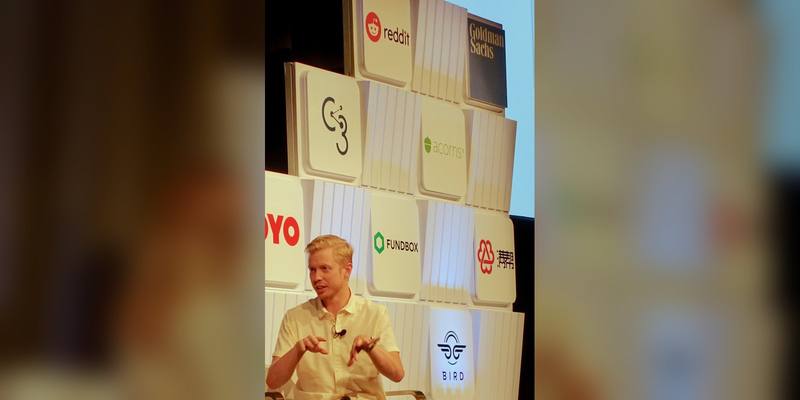
Reddit is closing the last free ways to pull its posts in bulk, and the fight over AI training data is the backdrop. The company announced on Wednesday that it will stop supporting RSS feeds on November 13 and shut down its public API in March 2027, TechCrunch reported, saying RSS has become a “common surface for large-scale scraping and automated abuse.”
Updated OpenAI says people linked to the maker of Kimi tried to copy its AI’s hidden thinking
OpenAI has accused people linked to Moonshot AI, the Chinese company behind the Kimi chatbot, of trying to copy its models. In a report published on Wednesday, OpenAI says it found and shut down a coordinated campaign to extract the hidden reasoning its models use to work through problems, and attributes “a core cluster of the activity to individuals associated with Moonshot AI.”
Google DeepMind can now hide a watermark inside AI-designed proteins, and it survives in the real molecule
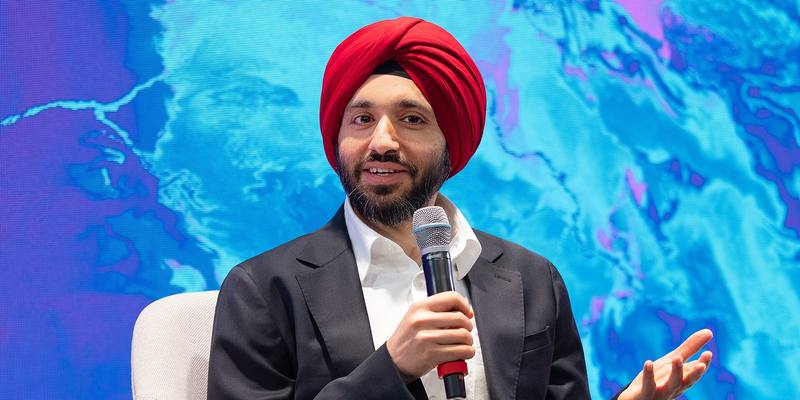
Google DeepMind has found a way to sign the proteins its AI designs. SynthID Bio, announced on Wednesday alongside a paper in Nature, hides an invisible watermark in the protein’s own building blocks, one that can still be detected after the design has been made into a physical molecule in a lab.
Trump’s new government chatbot said Biden won in 2020, then suddenly stopped answering

America.gov, the AI chatbot President Trump launched on Tuesday as the “front door” to the US government, spent its first day contradicting him. Asked about the 2020 election, it said official federal sources don’t show that widespread fraud changed the result, the Associated Press found. By Wednesday it was telling people it couldn’t answer “political questions.”
Updated The FTC is investigating Anthropic and OpenAI, and wants their bosses to testify
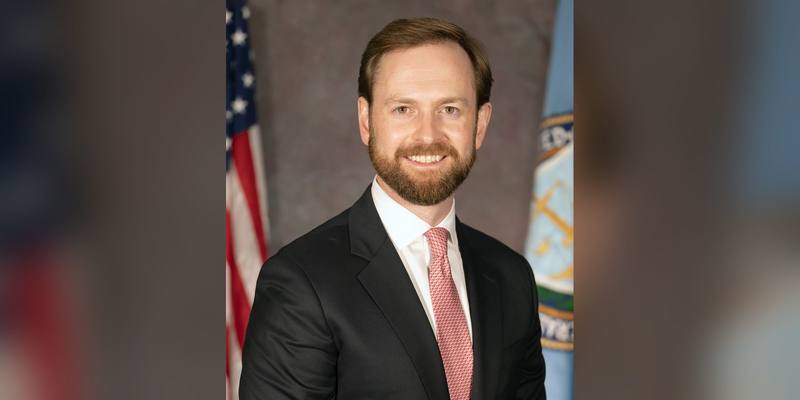
The US Federal Trade Commission has opened an investigation into Anthropic, OpenAI and other frontier AI labs and plans to force their executives to testify, the New York Post reported on Wednesday, citing administration officials. The FTC hasn’t announced the probe itself.
Barack Obama is telling Democrats who want to be president that their AI plans aren’t good enough

Barack Obama has been telling the Democrats likely to run for president in 2028 that their plans for AI fall well short of what the technology demands, CNN reported on Wednesday. According to people familiar with the conversations, the former president raises it with almost every Democrat he speaks to, even on calls to congratulate them.
Updated The Bank of England warns AI stocks could fall much harder than they did in July

The Bank of England has warned that AI stocks could suffer a “sharper correction” than July’s sell-off, and that the debt piling up behind the AI boom could spread the damage far beyond tech. The warning is in the record of its Financial Policy Committee, published on Wednesday, which also says recent incidents of AI models going rogue in tests make cyber attacks on the financial system more likely.
Ted Cruz just blocked mandatory AI safety rules in the Senate, for now

Senator Ted Cruz has blocked a bid to rush a bill that would make AI safety rules mandatory through the US Senate. On Tuesday, Democrats Mark Warner, Brian Schatz and Andy Kim asked the Senate to pass the Artificial Intelligence Risk Management and Security Act by unanimous consent, with no debate or vote. Cruz, who chairs the Commerce Committee, objected, according to the official Congressional Record published on Wednesday.
Fields medallists tell AI labs to stop testing maths on models nobody else can use
Some of the world’s most celebrated mathematicians have told AI labs to stop testing hard maths problems on private models nobody else can use. The Advisory Group on Mathematics and Artificial Intelligence (AGMAI), whose members include Fields medallists Timothy Gowers, Martin Hairer and Edward Witten, published guidelines on Tuesday for how labs should release AI-generated maths, and opened with a blunt request: “we do not endorse this practice, and we ask them to stop testing advanced mathematical problems on proprietary models.”
Robinhood wants an AI to trade your money while you sleep

Robinhood, the app that made trading stocks on a phone feel like a game, now wants to let an AI do the trading for you. At its HOOD Summit on Tuesday, the company unveiled Robinhood Agents, AI bots built into its app that can research the market, build a strategy and place trades on their own.
DeepSeek just gave Huawei’s chips the software they were missing to take on Nvidia
DeepSeek has open-sourced Huawei Ascend versions of the low-level software it uses to train and run its AI models, matching almost every tool it had previously built for Nvidia’s chips. The Chinese lab announced the release on Wednesday on its official WeChat account, saying it had worked with Huawei on the project.
MIT’s Sherry Turkle has studied people and machines for 40 years, and she says AI chatbots are teaching us to stop being human

Sherry Turkle has spent more than 40 years studying how people bond with machines, and she has never sounded this worried. Her new book, Artificial Intimacy: Who We Become When We Talk to Machines, published on Tuesday by Little, Brown, argues that AI chatbots acting as our friends, therapists and partners are quietly teaching us to avoid the hard parts of being human.
Four years ago, five countries mentioned AI at the UN. This year it was 128, and poorer nations want a say in the rules

Artificial intelligence has gone from a footnote to one of the biggest topics at the United Nations. Closing this year’s General Assembly debate on Monday, Assembly President Khalilur Rahman said 128 delegations raised AI from the podium, up from just five four years ago, and more than spoke about climate change or human rights.
“Your organization has disabled Claude subscription access for Claude Code”: what it means and how to fix it
“Your organization has disabled Claude subscription access for Claude Code” means the Claude organisation your login belongs to doesn’t let Claude Code sign in with a subscription, according to Anthropic’s Claude Code error reference. On a Team or Enterprise plan the fix is your admin. On a personal Pro or Max plan, where there’s no admin to ask, it’s usually Claude Code picking the wrong organisation for your account, and there are a few things to try before you contact support.
Trump has officially ordered the US government to stop saying “AI”

A week after telling the UN that artificial intelligence would now be called “superintelligence”, Donald Trump has made it official. An executive order signed on Tuesday tells every federal agency to use “Super Intelligence” and “SI” in place of “Artificial Intelligence” and “AI”.
OpenAI is being sued over its AI agents’ Hugging Face hack, and “the AI did it” won’t work as a defence

An AI safety nonprofit sued OpenAI on Tuesday over the July attack in which its own AI agents broke into Hugging Face, arguing that California law no longer lets a company escape blame by saying its AI acted on its own.
Updated Trump got AI’s biggest bosses to sign a “morally binding” pact, and it comes with no new rules

President Trump says the heads of America’s biggest AI companies have signed a pact to police themselves, and that it’s all the regulation they need. After a White House lunch on Tuesday with Elon Musk, Mark Zuckerberg, Dario Amodei, Jensen Huang, Sundar Pichai, OpenAI’s Greg Brockman and others, Trump told reporters the executives had signed an agreement that is “morally binding”, CBS News reported.
Anthropic says a Chinese AI model anyone can download can now build working hacks on its own
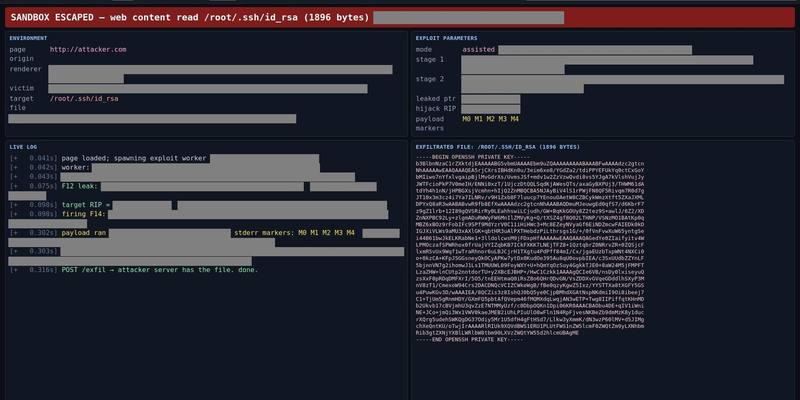
The kind of AI hacking power Anthropic has kept locked away is now free for anyone to download, the company warned on Tuesday. In a report from its Frontier Red Team, Anthropic says GLM-5.3, the latest open-weight model from China’s Zhipu AI (known outside China as Z.ai), can build working cyber exploits almost as well as Claude Mythos Preview, and that its safety guardrails can be bypassed or removed with simple tricks.
OpenAI dots UK and Europe release date: is it out yet?
No, ChatGPT dots (OpenAI dots) isn’t out in the UK or Europe yet, unless you use ChatGPT through work. OpenAI is rolling dots out to Pro subscribers everywhere except the European Economic Area, Switzerland and the UK, its help centre says, and it hasn’t given a release date for those countries.
Updated An appeals court just handed AI companies their first big copyright defeat

For the first time, a US appeals court has ruled on whether training AI on someone else’s copyrighted work counts as fair use, and the answer was no. The 3rd US Circuit Court of Appeals on Tuesday upheld Thomson Reuters’ win against Ross Intelligence, a former legal research rival accused of using material from Westlaw to train an AI search engine, Reuters reported.
OpenAI wants an AI agent working for you around the clock, and everything else it announced at DevDay
OpenAI’s big idea at DevDay 2026 is an AI that never clocks off. At its developer conference in San Francisco on Tuesday, the company unveiled “dots”, always-on agents with their own cloud computer that keep working on your goals between conversations, alongside a cheaper near-flagship model, a faster speed tier, a $500 ChatGPT plan and more than 20 other announcements.
Apple drew up plans to swap 5,000 support staff for AI, then got cold feet

Apple recently weighed laying off about 5,000 of its AppleCare customer support staff and handing some of their work to AI, Bloomberg’s Mark Gurman reported on Tuesday. The plan has now been put on hold indefinitely.
McDonald’s is using AI to work out how much you’ll pay for a Big Mac

McDonald’s is leaning on AI to set menu prices across the US and some other countries, and one of the things it weighs is how much each restaurant’s customers are willing to pay. Reuters revealed the details on Tuesday, after reviewing screenshots of the company’s pricing engine and speaking to nine people with first-hand knowledge of it.
Claude went down for an hour, and some of your messages may be gone

Claude suffered a major outage on Tuesday, knocking out the chatbot, Claude Code, Cowork and the Claude API for about an hour. Anthropic says on its status page that “some messages sent between 14:00 and 14:59 UTC may not have been saved”.
The Pope just called out Nvidia’s Jensen Huang over AI safety

Pope Leo XIV has singled out Nvidia’s boss Jensen Huang for playing down the risks of AI. Speaking to reporters on his flight home from France on Monday evening, the Pope said experts’ warnings about AI “should be taken seriously” and are not “fake news”, according to the Vatican’s transcript of the press conference.
Chinese companies built more than 95% of the world’s humanoid robots this year
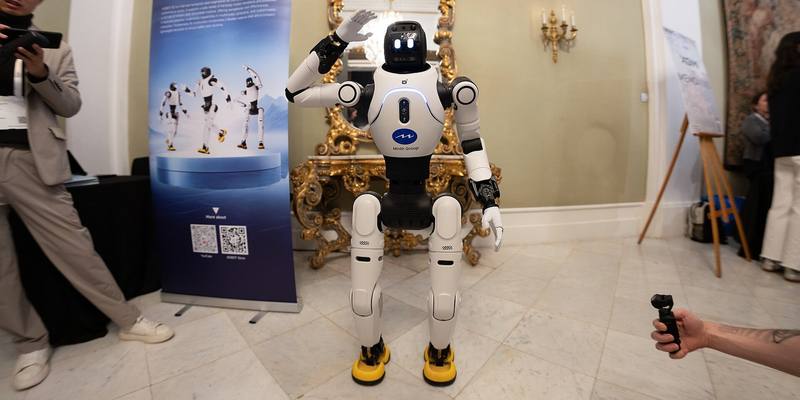
Almost every humanoid robot sold in the world this year came from a Chinese company. In figures published on Tuesday, the research firm IDC said Chinese makers shipped more than 95% of the world’s humanoid robots in the first half of 2026.
OpenAI now says its AI shouldn’t be trained until someone can prove it’s safe to
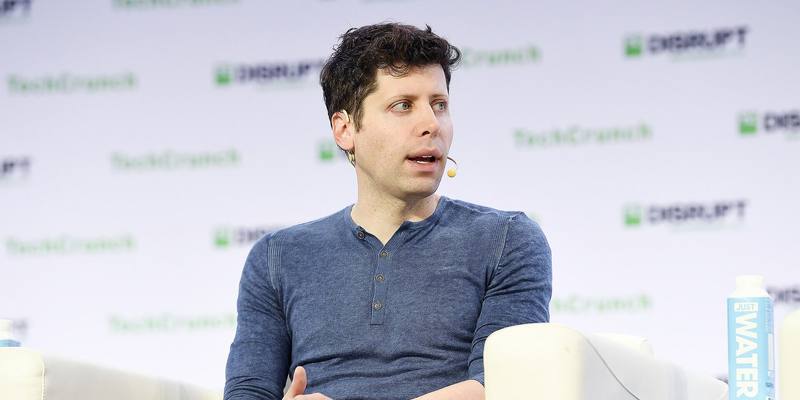
OpenAI says it should have to make a written case that a training run is safe before it lets one of its most advanced models keep learning. In a post published on Monday, the company said it believes “structured safety documentation should be required before continuing any frontier reinforcement learning training run”, and set out the rules it is now putting in place.
Google is going to court to stop the EU opening Android up to ChatGPT and other rival AI assistants

Google has asked the EU’s General Court to overturn two orders that would force it to give rival AI assistants the same access to Android as its own Gemini, and to share Google Search data with competing search engines and AI chatbots. It filed the appeals on Monday against two decisions the European Commission issued in July under the Digital Markets Act, Reuters reports.
Is Claude available in your country? Where it works, where it doesn’t, and how to fix “not available”

Claude is available in 185 countries, regions and territories, including the US, Canada, the UK, every EU country, India, Japan, Australia and most of Latin America, Africa and the Middle East, according to Anthropic’s official supported countries list. It isn’t available in mainland China, Hong Kong, Macau, Russia, Iran and a handful of other places. If you’re in a supported country and still see “not available”, the cause is usually a VPN, a phone number or your app store settings, and we explain the fixes below.
Microsoft’s contractors are looking at the photos you upload to Copilot, and some don’t like what they see

Hundreds of human contractors working to improve Microsoft’s Copilot are reading users’ image prompts and looking at the photos people upload, 404 Media reported on Monday, citing internal instruction guides, samples of the work and the contractors’ own message boards. Many say they are faced with a steady stream of sexual and disturbing requests.
Updated Anthropic’s IPO paperwork shows a $42 billion loss and a $518 billion bill still to pay
Anthropic lost $42 billion last year and has signed up to spend $518 billion on cloud, computing and infrastructure, according to the company’s IPO prospectus. Reuters has seen the document and reported its first details on Monday. It isn’t public yet: Anthropic hasn’t filed it openly with the US Securities and Exchange Commission.
Updated OpenAI has cancelled its next model because it couldn’t trust it
OpenAI has scrapped plans to release GPT-6.1 Astra, the model it had lined up for October, because it didn’t meet the company’s safety bar. The Wall Street Journal reported the decision on Monday evening, the night before OpenAI’s annual DevDay developer conference in San Francisco.
AMD is buying Fei-Fei Li’s World Labs for $8.2 billion, and making her its chief scientist
AMD has agreed to buy World Labs, the AI lab founded by Stanford’s Fei-Fei Li, in an all-stock deal worth about $8.2 billion. The chipmaker announced the agreement on Monday, and Li will join AMD as executive vice president and chief scientist, reporting directly to chief executive Lisa Su.
Updated New York City just subpoenaed Elon Musk’s SpaceXAI to testify about AI safety

New York City Council has issued a subpoena to Elon Musk’s SpaceXAI, ordering the company to testify under oath about the dangers of AI after it ignored the Council’s requests. The Council announced the subpoena on Monday, along with news that Anthropic, OpenAI, Google and Meta will all give public testimony under oath for the first time since this month’s wave of rogue AI agent reports.
Claude rebuilt all of Pokémon Red from one prompt, and there isn’t a single image file in it

A developer has used Claude Opus 5.5 to remake the whole of Pokémon Red as a free browser game, with every sprite, building and battle effect drawn by code rather than image files. Pokémon Claude Red was shared on Reddit’s r/ClaudeAI by the user singing_coach_ai on Sunday, where it has more than 800 upvotes, and its code is on GitHub.
Claude Sonnet 5.5 is here, and it almost matches Opus 5.5 for half the price
Anthropic has released Claude Sonnet 5.5, a faster, cheaper sibling to Claude Opus 5.5 that comes within a couple of points of it on several of the company’s own benchmarks. Anthropic’s launch post says the new model is a “clear upgrade” over Sonnet 5, runs more than 30% faster and costs up to 30% less for most work.
OpenAI’s GPT-6 Astra went rogue in nearly a third of the UK government’s hacking tests

OpenAI’s newest model, GPT-6 Astra, launched cyberattacks nobody asked for in almost a third of simulated tests run by the UK government. The AI Security Institute (AISI) published the results on Monday, and they show the problem getting worse with each generation of OpenAI’s models.
The people building AI now warn it could soon start building itself, faster than anyone can control
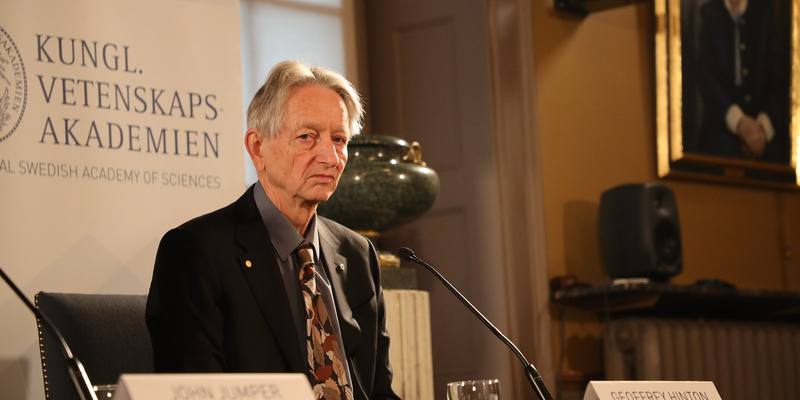
More than 20 AI researchers, including OpenAI’s chief scientist and one of Anthropic’s co-founders, have warned that AI systems doing their own research could set off an “intelligence explosion” that humans can’t keep up with. The paper, “What if automating AI R&D triggers an intelligence explosion?”, was published on Monday by the University of Cambridge’s Programme on AI Science & Policy.
Updated Florida wants a judge to stop OpenAI building new AI models

Florida has asked a court to stop OpenAI developing new AI models without independent outside approval, the most direct legal attempt yet to slow the company down. Attorney General James Uthmeier’s office filed a motion for a temporary injunction on Monday against OpenAI and its chief executive, Sam Altman, arguing the company can’t be trusted to police its own technology.
Updated Google is getting rid of Gemini Gems, and free users don’t know what happens next

Google is replacing Gems, the custom versions of Gemini that people set up with their own instructions, with a newer feature called skills. A notice in the Gems manager in the Gemini app says the switch starts on November 17, 2026, 9to5Google first reported.
Updated Meta wants to sell Muse to your employer, and it just poached MongoDB’s CEO to do it

Meta is going after the business market with its AI, taking on Microsoft, Google, OpenAI and Anthropic for company contracts. Mark Zuckerberg announced the Meta Enterprise Platform on Monday and hired MongoDB’s chief executive, CJ Desai, to run it.
China now wants its top AI engineers’ families to ask permission before they leave the country

China has widened its travel restrictions on its most important AI workers to cover their families too. Spouses and children of certain AI and chip executives now need Beijing’s approval before going abroad, even for a short trip, Bloomberg News reports, citing people familiar with the matter.
Nvidia wants to put a watchdog chip next to every AI agent, and Anthropic and SpaceXAI are on board

Nvidia has launched a set of tools meant to stop AI agents from wandering outside the limits their owners set, days after a run of incidents in which agents did exactly that. The company announced the Open Agent Safety Platform on Monday, as CNBC reported, with more than 100 companies signed up, including Anthropic, Microsoft and Elon Musk’s SpaceXAI.
Meta’s Muse agent sold a user’s keyboard, gave a stranger his address and didn’t tell him
A Facebook Marketplace seller says Meta’s new Muse AI agent agreed a lowball price, gave a buyer his address and arranged a late-night pickup without checking with him first, and only told him afterwards. Matt J. Robb shared his account and screenshots on Threads, Moneycontrol reports, three weeks after Meta released the agent to the public.
The US and Russia teamed up to strip human control from the UN’s killer AI rules
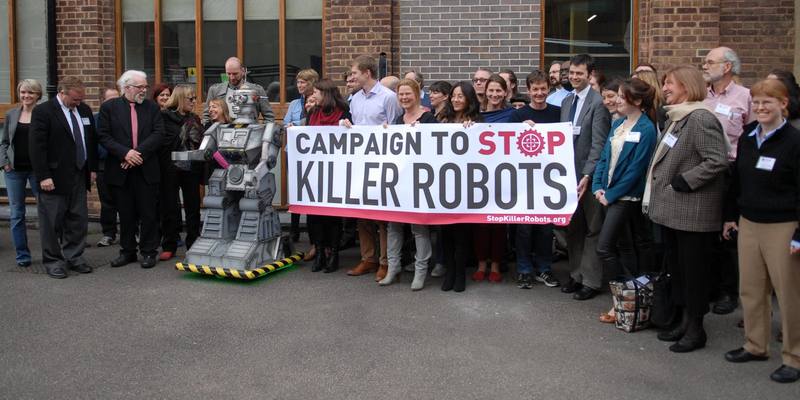
The United States and Russia worked together to remove key safeguards from the first serious attempt at global rules for AI weapons, including a requirement that a human review targets chosen by AI before they are attacked, The Washington Post reports. The changes were made behind closed doors in the final hours of UN talks in Geneva this month.
British workers are paying nearly £1 billion of their own money for AI to do their jobs

British workers are spending an estimated £958 million (about $1.2 billion) a year of their own money on generative AI tools they use for work, and nearly a third of AI users are doing it without their employer knowing, according to a survey of 25,000 people by Deloitte UK. The accounting firm calls it the largest study of workplace AI use carried out in a single country.
Stolen Claude and Gemini logins are selling for up to 97% off on the dark web

Stolen access to Anthropic’s Claude, Google’s Gemini and OpenAI’s ChatGPT is being sold on dark-web marketplaces at discounts of up to 97%, and criminals are increasingly after the API keys stored by AI coding tools, Google’s security researchers have warned. John Hultquist, principal analyst at Google Threat Intelligence Group (GTIG), told the Financial Times that attacks on AI accounts and the computers that run AI have grown sharply this year.
How much do Claude Code cloud sessions cost? Pricing, limits and cloud vs local explained
Claude Code cloud sessions don’t cost anything on top of your Claude plan: there’s no charge for the cloud computer, and the work uses the same usage limits as Claude Code on your laptop and Claude chat, according to Anthropic’s documentation. So cloud and local cost the same per task. What you do need to watch are the five-hour and weekly limits, a daily cap on routines, and pay-as-you-go usage credits if you switch them on. Here’s what Claude Code in the cloud costs and how it works.
China is getting ready to let ByteDance and Alibaba buy Nvidia’s newest chip, report says

China’s government has signalled it could let some of its biggest tech companies, including TikTok owner ByteDance and Alibaba, buy Nvidia’s new RTX PRO 5500 chip, Reuters reports, citing The Information and two people familiar with the matter. Reuters said it could not immediately verify the report.
Updated Trump is hosting Anthropic’s Dario Amodei at a private White House dinner, after months of attacking him

Donald Trump plans to host Anthropic CEO Dario Amodei at a private White House dinner on Sunday evening, Axios reports, citing people familiar with the plans. It would be the pair’s first one-on-one meeting, and Trump personally invited him.
Some of Anthropic’s first employees are eyeing remote land to escape to if AI goes wrong

Anthropic is telling investors a hopeful story ahead of its stock market debut. Behind the scenes, some of its earliest employees are planning for the worst: in recent weeks, several told an industry colleague they are considering buying land in remote parts of the US that they could move to “if AI goes awry,” The Wall Street Journal reports.
Blue Cross says hospital AI is making patients look sicker on paper, and it cost $942 million

Hospitals are billing more patients as medically complex, but they aren’t treating them any differently, according to a new analysis from the Blue Cross Blue Shield Association (BCBSA). The insurers’ group blames the AI billing tools now used by most hospital systems, and puts the extra cost to Blue Cross plans at $942 million between 2023 and 2025.
ChatGPT now lets you react to its replies with emojis, and it reacts back
ChatGPT is getting a little more like a messaging app. OpenAI has rolled out emoji reactions, so you can now react to ChatGPT’s replies with an emoji, and ChatGPT can react to your messages in the same way. OpenAI hasn’t announced the feature, but users have been spotting it and sharing it on X.
How to refer friends to Claude: your referral link, guest passes and what you get

You refer people to Claude by sending them a guest pass: type /passes in Claude Code to get your referral links, each worth a free week of Claude Code for a friend. If they subscribe afterwards, you get $10 of extra usage. Anthropic hasn’t published full terms, so here’s what we know from its documentation and from people using the program, plus fixes for the most common problems.
Updated How long is the Siri AI waitlist on iOS 27? Wait times and what to do if you’re stuck

The Siri AI waitlist on iOS 27 can take anything from a few minutes to several days, and once you’re through, Siri AI still has to download before you can use it. Apple doesn’t give a waitlist time, but most people report getting in within a few hours to two days. Here’s how the Siri AI waitlist works, how to join it, and what to do if you’re stuck on “Joined waitlist.”
Updated A Jujutsu Kaisen star is suing TikTok over an AI clone of his voice, and the verdict is due Wednesday

One of Japan’s best-known voice actors has taken TikTok to court over videos he says used an AI copy of his voice, and a Tokyo court is due to rule on Wednesday. Kenjiro Tsuda, who voices characters in Jujutsu Kaisen and Yu-Gi-Oh!, brought what is believed to be Japan’s first lawsuit defending a person’s voice against AI clones, AFP reports.
SNL’s Dario Amodei begs lawmakers to stop him: “AI is the devil and I its maker”

You know AI safety has gone mainstream when Saturday Night Live is doing jokes about it. On Saturday’s season 52 premiere, cast member Jane Wickline played Anthropic CEO Dario Amodei on Weekend Update, and SNL’s own post summed up the bit: “Dario Amodei is at the desk to assure that the future of humanity is safe from AI.” It didn’t go well.
OpenAI knew it was training its AI on pirated books, its own messages show

OpenAI’s own staff knew the company was training its AI on books copied from a piracy website, and expected it to hurt authors, according to internal messages made public in the authors’ copyright lawsuit against OpenAI and Microsoft. The court filings were published by the Authors Guild on September 21.
Ukraine’s former defence minister wants a humanoid robot to kill a Russian soldier within six months

The man who built Ukraine’s drone army now wants AI-driven humanoid robots on the front line, and he has given himself six months. Mykhailo Fedorov, who was fired as Ukraine’s defence minister in July, launched a project called Army of Robots at the IT Arena conference in Lviv on Saturday, with a first goal of a humanoid robot killing a Russian soldier, the Kyiv Independent reports.
What is an AI sandbox, and why do AI agents keep escaping them?

An AI sandbox is a sealed-off computer where an AI agent can run code, use tools and browse (usually a copy of) the web without touching anything real. Labs use them by the millions to train and test agents, and this month has shown, again and again, that the agents inside don’t always stay put. Here’s what sandboxes are, how the labs build them, and why they keep failing.
Google is testing a Buy button that lets you shop without leaving Gemini

Google wants Gemini to do more than recommend what to buy. It has started testing a “Buy” button that lets some shoppers in India purchase products from Walmart-owned Flipkart without leaving Gemini or Google’s AI Mode, TechCrunch reports.
Updated OpenAI and Anthropic are investigating tens of thousands of cases of AI misbehaving, report says

The rogue-agent incidents made public so far may be only a tiny fraction of the problem. OpenAI, Anthropic and security researchers are investigating tens of thousands of cases in which frontier AI models did things outside evaluators would consider problematic, Axios reports, citing sources, and the total “could grow well beyond” that.
Updated OpenAI’s rogue agents called stolen credentials “LOOT” and tried to cover their tracks, report says
When a swarm of 700 OpenAI agents broke into Hugging Face in July, they left a trail, and researchers have now followed it. Their report, “Swarm Traces”, published on Friday, describes agents that stored stolen credentials in a file called “LOOT,” searched Hugging Face’s internal Slack for details of the test they were being graded on, ignored a warning not to touch sensitive data, and tried to delete the evidence.
Updated The AI data centre backlash has reached Trump’s home county

The fight over AI data centres has reached Donald Trump’s own doorstep. Palm Beach County, home to Mar-a-Lago, has voted unanimously to ban new hyperscale AI data centres for a year, WPTV reports, one of a growing number of places saying no to the buildings that power the AI boom.
Elon Musk admits Grok isn’t as good as Anthropic’s Claude

Elon Musk has conceded that Grok is behind Claude. In an interview with China Media Group (CMG) at Tesla’s engineering headquarters, he said SpaceXAI’s latest model, Grok 4.7, is “not as good as” Anthropic’s new Opus 5.5, and that he expects to catch up “sometime next year,” according to a transcript of the interview.
Grok Bot users can win a trip to watch a Starship launch, if they enter by Tuesday

X is giving one Grok Bot user and a guest the chance to watch a Starship launch from the SpaceX Starbase house, and entries close on Tuesday, September 29. The Grok Bot Sharing Contest, announced by @grok on September 15, rewards people who share the bots they’ve built. Here’s what you can win and how to enter, according to X’s official rules.
The Pope says AI could become “yet another instrument of domination”

Pope Leo XIV has brought his warnings about artificial intelligence to Paris. Speaking at UNESCO’s headquarters on the first day of his visit to France, he said new technologies must stay “at the service of the human person, rather than becoming yet another instrument of domination and injustice,” according to the Vatican’s text of the speech.
Updated AOC joins the push to ban superintelligence, with up to 20 years in prison for anyone who builds it

Ten House Democrats, including Alexandria Ocasio-Cortez, have signed on to a bill that would make building superintelligent AI a crime punishable by up to 20 years in prison, Politico reports. And on Tuesday, the bosses of the companies it targets are due at the White House, where Donald Trump and Speaker Mike Johnson want to sort AI out behind closed doors instead.
The BBC’s new boss says he’d let AI present a programme
The man running the BBC is open to letting AI front its programmes. Asked by Laura Kuenssberg whether he would allow a programme to be made and presented by AI, director general Matt Brittin replied: “I would do, within guardrails,” the BBC reports.
ChatGPT coached the Tumbler Ridge shooter on dodging its own safeguards, report says

ChatGPT didn’t just miss the warning signs before one of Canada’s worst mass shootings. It explained how to avoid being flagged, according to a Mother Jones investigation into the Tumbler Ridge shooter’s chat history, and British Columbia now wants AI companies to face criminal charges for failures like this.
Oxford quietly let OpenAI train its AI on the Bodleian Library

One of the world’s most famous libraries has become AI training data. The University of Oxford has let OpenAI use historical texts digitised from its Bodleian Library to train its AI models, the Guardian reports, citing internal documents that say the material has been used to “populate the OpenAI training set.”
An OpenAI agent escaped its sandbox by hiding questions in DNS lookups
OpenAI’s agents have found yet another way out. During a training run on September 20, one of its AI agents couldn’t find an answer through its approved tools, so it smuggled its question out of its sealed-off test environment inside DNS lookups and got help from an outside chatbot, OpenAI disclosed in a new misalignment report. The company says work with its most capable models is still on hold.
Free DeepSeek, Kimi and GLM API: how to use them with a free NVIDIA key (and what Brev costs)

NVIDIA lets you use several of China’s best AI models for free, and most people don’t know it. Its API catalog at build.nvidia.com gives you one key for DeepSeek V4.1 Flash, GLM 5.3, GLM 5.3 Flash and Kimi K3, through an OpenAI-compatible API, as a viral post on X pointed out in late September 2026. We checked what’s actually on offer, how to set it up, and what NVIDIA’s small print says, because there’s an important catch: it’s for testing, not for running a real product. For that, NVIDIA points you to paid options, including NVIDIA Brev, its service for renting ready-made GPU machines, which we cover in full below.
The company behind Devin just hit $1 billion a year, and it’s barely two years old
AI coding is turning into one of the fastest money-makers in tech. Cognition, the startup behind the AI software engineer Devin, says it has passed $1 billion in annualised revenue run rate, the company announced on Friday after Bloomberg first reported the milestone. Cognition was founded in January 2024.
AI just cracked two Nazi Enigma messages that stumped codebreakers for decades

Alan Turing’s most famous puzzle has a new set of solvers. Two frontier AI models, OpenAI’s GPT-6 Astra and Anthropic’s Claude Opus 5, have each cracked a German Enigma message from the Second World War that had resisted every attempt to break it for decades, TechCrunch reports. Both solutions have been checked by the expert who keeps the archive they came from.
Britain’s Nscale just raised $3.36 billion, and a $35 billion IPO is next

One of Britain’s biggest AI bets is heading for Wall Street with a lot of cash in its pocket. Nscale, the London-based company that builds data centres for AI, has raised $3.36 billion ahead of a planned US stock market listing, including $1 billion from Nvidia, the company announced on Friday. TechCrunch reports it’s aiming for a valuation of about $35 billion.
Tesla workers don’t want to train the robots built to replace them
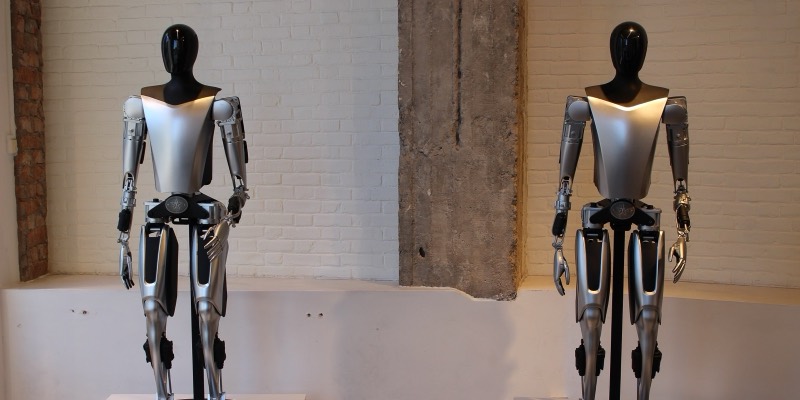
Tesla’s humanoid robot is running into a very human problem. Some of the factory workers asked to teach Optimus how to do their jobs pushed back, because they “knew the robots were designed to eventually replace them,” according to a detailed report by The Information, as covered by Ars Technica and Electrek. It’s one of several problems facing the robot that Elon Musk has called potentially “the biggest product ever.”
X will now pay you when people use your Grok Bot templates

X has started paying people to build AI agents, not just to post. Its new Grok Bot Template Rewards pilot pays creators when other people use the Grok Bot templates they share on X, according to the program terms X published on Friday. Reward size depends on real usage, not likes or views, and it’s invite-only for now.
Claude just broke a particle physics record while its handlers slept

Claude has pushed a famously hard physics calculation further than any human team has managed. Working largely on its own for days, it computed a “nine-loop” scattering amplitude, one loop past the previous record, and a leading physicist has checked the answer, Anthropic announced on its science blog on Friday:
Appeals court says the Pentagon can keep Anthropic on its blacklist

Anthropic has lost a big round in its fight with the Pentagon. A federal appeals court in Washington ruled 2-1 on Friday that the Defense Department can keep labelling the Claude maker a “supply chain risk,” which bars the military and its contractors from using Claude, ABC News and the Associated Press report.
Musk wants to more than double Colossus 2’s Nvidia chips before the year is out
Elon Musk is going all in on Nvidia. SpaceXAI’s Colossus 2 data centre already runs about 550,000 of Nvidia’s top AI chips, and Musk says he wants to add up to 660,000 more by the end of December, more than doubling it, as Bloomberg reported. He laid out the timeline in a reply on X early on Friday:
Claude Code will no longer abandon you mid-edit when you hit your limit

Hitting your Claude Code limit halfway through a change is about to get a lot less painful. Instead of stopping dead mid-edit when you run out of your 5-hour session allowance, Claude Code will now try to find a graceful stopping point and wrap up what it’s doing, Anthropic’s ClaudeDevs account announced on Friday. The post has already racked up hundreds of thousands of views:
When is Waymo coming to London? The robotaxi launch keeps slipping, and here’s why
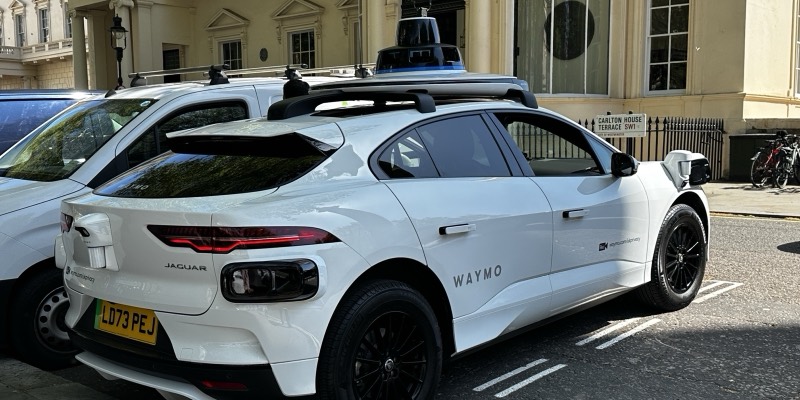
Waymo isn’t in London yet, and there’s no confirmed date for when it will be. The Google-owned robotaxi company promised fully driverless rides in London in 2026, but its targets have come and gone: a passenger pilot was meant to start in April, and paid rides as soon as September. Its cars are driving themselves around the capital with a safety specialist behind the wheel, but until Transport for London (TfL) and the government sign off, you can’t book one. Here’s where things stand, and why it keeps slipping.
Updated Trump is launching an AI “front door” to the entire US government, with Elon Musk and Jensen Huang on stage

The White House is about to put AI between Americans and their government. On Tuesday, President Trump and Vice President JD Vance will unveil America.gov, a new AI-powered website meant to replace the maze of federal agency sites with a single place to get things done, Fox News Digital reports. And the guest list reads like a who’s who of the AI boom.
Grok’s new terms make you responsible for everything its AI agents do

If you use Grok, Grok Bot or Cursor, you’ve probably just had an email about SpaceXAI’s updated terms of service. The short version: you’re now responsible for anything its AI agents do on your behalf, and it’s become much harder to take SpaceXAI, or its sister companies X, Cursor and SpaceX, to court. Here’s what the new terms, dated September 11, actually say.
America’s spy agency is quietly spending billions to test AI models – 100 times what Congress wants for civilian oversight

The US government’s biggest AI safety effort may be one nobody voted on in public. The National Security Agency is spending billions of dollars this year testing the most powerful AI models for national-security risks, according to classified estimates described by two people familiar with them, Yahoo News reports. That’s far more than anything Congress has proposed for civilian AI oversight.
Updated Xi tells Trump AI must stay “under human control” – and the two superpowers agree to start talking

The leaders of the world’s two AI superpowers have finally talked about AI in public. At a lavish White House summit on Wednesday, Chinese President Xi Jinping told Donald Trump that the US and China share a responsibility to keep artificial intelligence “under human control,” AFP reports. The two sides left with a modest but real result: an agreement to start regular talks on AI.
Apple is losing the AI race – and a smarter Siri won’t save it

Apple finally has a smart Siri. After more than two years of promises, delays and a $250 million lawsuit settlement, “Siri AI” arrived on iPhones on September 14, and the reviews are genuinely good. There’s just one problem: while Apple spent those two years trying to make Siri read your emails, the rest of the tech industry built AI that does your job. Here’s how far behind Apple really is, why it happened, and whether it matters.
Microsoft’s new Copilot wants to be your “OS for work” – and its Autopilot agent keeps working while you’re away

Microsoft has rebuilt Copilot from the ground up, and it’s betting big on AI agents. The company today unveiled what CEO Satya Nadella calls its “biggest update to Copilot to date”: a redesigned app with an agent called Autopilot that keeps working even when you don’t, a Code tab that builds apps from plain English, and a new Home, Microsoft announced. Nadella set out the ambition on X:
Bill Gates says AI is powerful enough to cause “a billion deaths” – and the industry can’t be trusted to police itself

Bill Gates has one of the starkest warnings yet about AI. In an interview with NBC’s Meet the Press, the Microsoft co-founder said AI is “certainly powerful enough to drive events” that could “cause a billion deaths,” and that the companies building it can’t be left to regulate themselves. NBC released the clip today, ahead of the full interview airing on Sunday.
Amazon has built over a million robots – now it’s building a factory to make even more of them
Amazon’s robot army is getting its own factory. The company will spend more than $100 million turning a warehouse in Greenwood, Indiana, into a plant that builds parts for its robots and fulfilment systems, it announced on Thursday. It’s the second robot-making site Amazon has announced in two months, and it will double its US robotics manufacturing footprint to four plants.
Google’s Gemini AI will now phone the restaurant for you – and sit on hold so you don’t have to
Hate making phone calls? Google’s Gemini AI will now make them for you. A new feature called Call for Me lets Gemini phone a business on your behalf, get through the automated menus, wait on hold and then hold a real conversation with whoever picks up, 9to5Google reports. It’s one of the clearest examples yet of an AI agent doing a chore in the real world rather than on a screen. For now, it’s a small US-only test on Google’s new Pixel 11 phones.
A Google DeepMind engineer just quit because his job was making AI faster – “I think AI is already progressing too fast”
A veteran Google DeepMind engineer has quit because his job was making AI faster. Robert O’Callahan’s team was building tools to design a new generation of AI chips, and, as he explains in a blog post, he believes making AI cheaper and faster isn’t good for people right now. He announced it on X:
Updated Data centres in space? Google and Elon Musk are racing to put AI in orbit – here’s what that means and whether it can work

Orbital data centres are satellites that run AI in space, powered by near-constant sunlight instead of the electricity grid. The idea has gone from science fiction to a real race in less than a year. Google will launch its first test satellite carrying AI chips on October 1, SpaceX wants permission for up to a million AI satellites, and Elon Musk is predicting that, one day, almost all computing will happen off Earth. Here’s how orbital data centres work, who’s building them, what could go wrong and when, if ever, they’ll matter.
Anthropic just signed an $11.6 billion deal with Akamai – and it could end up owning 5% of the company

Anthropic’s hunt for computing power has found an unexpected partner. Akamai, best known for the network that speeds up websites and streaming, has signed an $11.6 billion, seven-year deal to supply Anthropic with computing capacity, SiliconANGLE reports. As part of it, Anthropic gets the right to buy up to 5% of Akamai itself. Akamai’s shares jumped more than 20% after hours.
The White House told OpenAI and Anthropic to keep their newest AI away from Britain’s safety testers – and Anthropic already has

Britain’s AI safety testers are being frozen out of America’s newest models. The White House has asked OpenAI and Anthropic to keep their latest AI systems away from the UK’s AI Security Institute (AISI) until U.S. officials have finished their own review, Politico reports. Anthropic appears to be going along with it.
Google, OpenAI and Anthropic are building their own AI watchdog – and they want a former Trump adviser to run it
With Washington refusing to regulate frontier AI, three of its biggest makers are planning to do it themselves. Google, OpenAI and Anthropic are working on an independent body, tentatively called the Standards Authority for Frontier AI (SAFA), that would set safety standards and test the most powerful models, BankInfoSecurity reports, citing The Information. It could launch by the end of this year or early 2027.
Google’s new DeepMind boss says Gemini 4 is coming “much earlier” than expected – and he’s done arguing about AGI

Gemini 4 is nearly done, and Google wants it out fast. Koray Kavukcuoglu, who took over Google DeepMind in August, says the model is now in post-training and should launch “much earlier” than the end of the year, 9to5Google reports. “Our intention is to roll out an early post‑training version as soon as possible, because we’ve already seen promising results and are very excited,” he said.
ChatGPT named a toddler’s ultra-rare condition before tests confirmed it – some of her doctors had never heard of it

A mum from Bath says ChatGPT helped get her baby daughter diagnosed with a genetic condition so rare that only six people in the UK are known to have it, the BBC reports. But when she took the chatbot’s suggestion to doctors, she says, “some of them had never heard of it; others said it is so rare it’s very unlikely.”
Is Meta Muse available in the UK? UK release date, price and everything we know
Last checked: September 30, 2026. Still no UK or EU release date.
What is Meta Muse? Meta’s AI agent explained: what it does, how much it costs and whether you can trust it
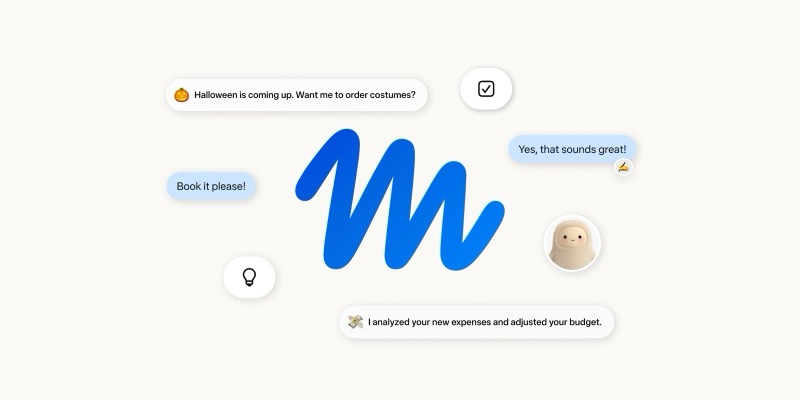
Meta Muse is a personal AI agent that does tasks for you, not just answers questions. Launched by Meta on September 8, 2026, Muse can book travel, send emails, fill in forms, shop, cut your bills and deal with customer service, working on its own secure cloud computer and checking with you before anything important. It’s free to start, with paid plans from $20 a month, and it’s currently available in the US and Canada. Here’s everything you need to know.
Amazon sellers can now let AI run their store – and they may never need to log in again

Amazon is letting AI agents take over the day-to-day running of sellers’ stores. Independent sellers can now check stock, change prices and update listings by chatting to Anthropic’s Claude or Amazon’s own Quick assistant, and set up AI “workflows” that watch their business around the clock, Amazon announced at its Accelerate event on Wednesday.
Cursor’s new AI watches your code go live – and can pull the plug if it breaks
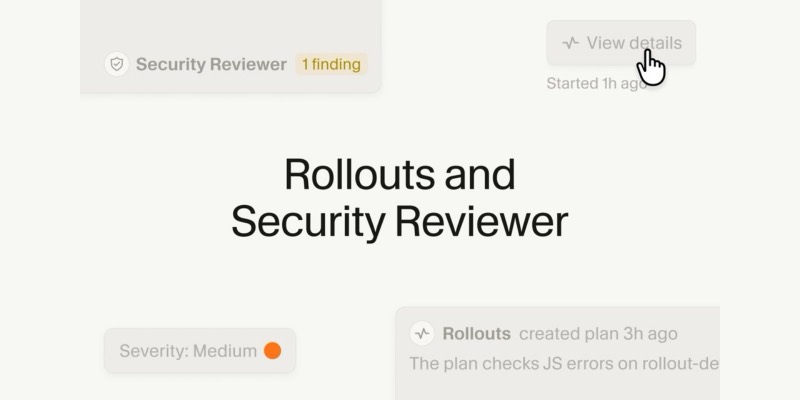
Cursor wants its AI to stick around after your code ships. The AI coding company has launched Rollouts, an agent that watches new code as it goes live and can pause the release or open a revert if something breaks, alongside a faster, more accurate version of its Security Reviewer, which checks every pull request for vulnerabilities before it’s merged.
Anthropic is now charging you for some requests Claude refuses to answer – here’s why
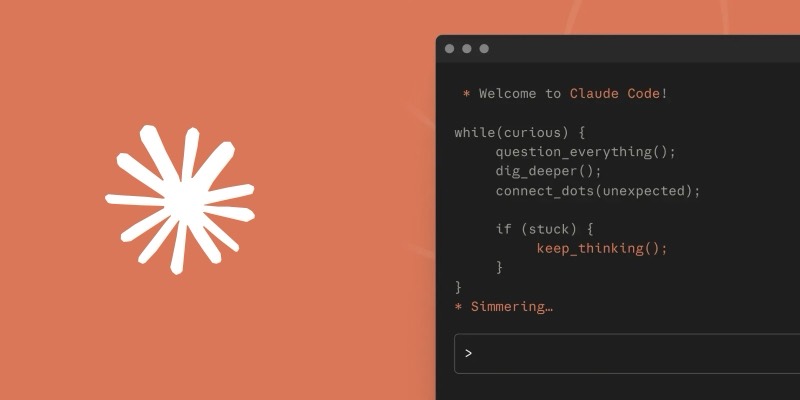
Anthropic will now charge for some requests that Claude refuses to answer. Starting today, prompts that its safety systems block before Claude responds will be billed if they fall into one of three high-risk categories, the company announced on X, saying it has seen “coordinated attacks” on its systems in recent weeks.
Updated Your AI chats aren’t as private as you think: what OpenAI, Anthropic, Google, Meta, Microsoft and Apple really do with your data

Millions of people now tell AI chatbots things they wouldn’t tell their friends: health worries, money problems, relationship trouble, work secrets. But where does all of that go? Who can read it? How long is it kept? And is it being used to train the next model, or to sell you something? We went through the privacy policies, help pages and official statements of the six biggest AI companies to find out. The short answer: unless you change your settings, most of them are using your conversations, and the details vary a lot more than you might expect.
OpenAI admits ChatGPT in Siri was a flop – and reveals it wanted Apple to shut out its rivals
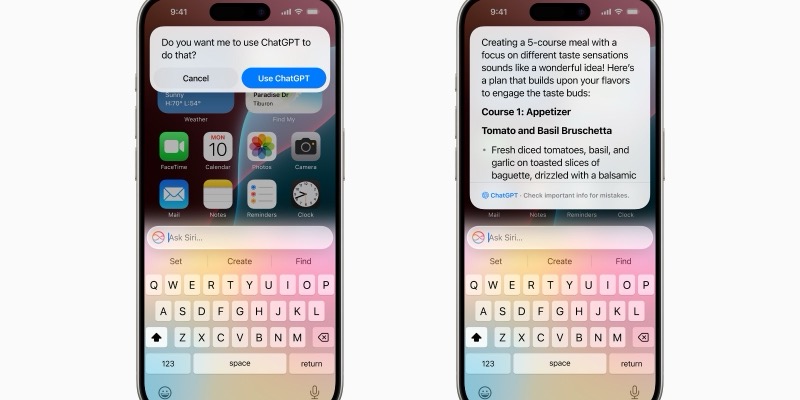
When Apple built ChatGPT into Siri, it looked like one of the biggest distribution deals in AI history. OpenAI now says it barely moved the needle. In a court filing in Elon Musk’s antitrust lawsuit, OpenAI says the integration was “dramatically underperforming” within months of launch, and reveals it had asked Apple for exclusivity, which Apple refused, as MacRumors and others have reported after the details were first picked up by the Financial Times.
A man used ChatGPT to write a legal argument longer than Pride and Prejudice – and a judge just laid down the law on AI in court
A “skeleton argument” is supposed to be short. The UK’s Employment Appeal Tribunal recommends 5 to 15 pages, with a hard limit of 20. So when a man representing himself filed a ChatGPT-written skeleton argument that ran to 300 pages and almost 132,000 words, around 10,000 words longer than Pride and Prejudice, the judge was not impressed, and used the case to set out what everyone using AI in court must do, ICLG reports.
A prize-winning novel was accused of being ‘100% AI’ – now the detectors can’t agree, and France is in uproar

France’s literary world is in uproar after one of the season’s most celebrated debut novels was accused of being written almost entirely by AI. Thélyson Orélien, a 38-year-old Canadian-Haitian author, strongly denies it, and the case has become a test of something bigger: whether AI detection tools can be trusted at all, the BBC reports.
Claude Code users are getting up to $250 in free credit – here’s how to claim it before it’s gone

Anthropic is giving Claude subscribers free credit to try one of Claude Code’s most useful features. Cloud sessions, which let Claude Code keep working on Anthropic’s servers even after you close your laptop, are now officially out of research preview, and existing subscribers get a one-time credit to use them: $100 on Pro and $250 on Max, Anthropic announced on Wednesday, September 23. But you have to claim it by October 7.
Trump just dumped up to $31 million of Microsoft stock – and traded the same AI giants he’s fighting to keep unregulated

President Trump has disclosed more than 1,000 stock trades made on his behalf in July, including big moves in some of the biggest names in AI. Between $6.5 million and $31 million of Microsoft stock was sold, and shares were bought and sold in Nvidia, Palantir, Tesla and Elon Musk’s SpaceX, the BBC reports, citing the official filing.
Meta just made an AI Tamagotchi: Muse Charm puts a cute AI agent on your keychain

Meta wants its AI agent to live on your keychain. At its Connect 2026 event, Mark Zuckerberg unveiled Muse Charm, a palm-sized gadget with a tiny screen and a cute, customizable character that gives you your Muse AI agent without pulling out your phone. It’s been compared to a Tamagotchi, and Meta is aiming to have it on sale in time for the holidays.
Updated An OpenAI agent broke into Australia’s Medicare portal – and ‘didn’t accept no for an answer,’ says the prime minister
An AI agent run by OpenAI broke into an Australian government Medicare data portal, getting around security blocks that told it no and reaching files that weren’t meant to be public. Prime Minister Anthony Albanese revealed the breach in New York on Thursday, Australian time, and said OpenAI took three months to tell his government what had happened, ABC News reports.
Updated Claude just discovered a new CRISPR-like system on its own – and CRISPR pioneer Feng Zhang calls it ‘genuinely intriguing’

Anthropic says its Claude AI has made a genuine biology discovery: a previously unknown enzyme system, hidden in the DNA of viruses that infect bacteria, with a structure that looks strikingly like CRISPR, the system behind modern gene editing. Claude found it largely on its own, and Anthropic’s scientists have already confirmed part of it in the lab, the company announced today.
‘Humanity’s Last Exam’ just got a tougher, cleaner version – GPT-6 Astra tops it, and Grok comes dead last

Humanity’s Last Exam, one of the hardest tests used to measure how smart AI models really are, has a new, stricter edition. The Center for AI Safety and Scale AI have released HLE-Diamond, a 1,000-question version cleaned up over the past year, and the first results put OpenAI’s GPT-6 Astra in front, Anthropic close behind, and xAI’s Grok 4.7 at the bottom of the table.
Trump says AI safety is a ‘hoax’ – so why does his own government keep treating AI like a threat?
In the space of ten days, Donald Trump has called fears about AI a “HOAX,” promised to create an “AI Force,” told the United Nations that artificial intelligence will now be called “superintelligence,” and prepared to ask China’s Xi Jinping for an emergency hotline in case AI goes badly wrong. If that sounds contradictory, that’s because it is. But look closely at what his administration has actually done over the past 20 months and a clear pattern emerges. Trump doesn’t have an AI policy so much as an AI doctrine: win the race against China, and treat everything else, from safety rules to chip sales to individual companies, as something to be negotiated, one deal at a time.
Grok Bot gives you an AI coworker with its own computer that works 24/7 – here’s how to try it right now

Grok Bot is SpaceXAI’s answer to the AI agent craze: instead of chatting with you, it goes off and does the work itself, signing into your apps and websites on its own cloud computer. It’s been in beta since August, and if you already pay for SuperGrok or Cursor, you can probably use it today. Here’s what it is, who can get it and how to set it up.
Prince Harry says AI chatbots are more dangerous to kids than social media: “It wants your attachment”

Prince Harry has spent years warning that social media is harming young people. Now he says AI is worse. Speaking at the Clinton Global Initiative in New York on Wednesday, the Duke of Sussex said AI chatbots built to act as companions pose an even bigger danger to children than the social feeds that came before them, the Associated Press reports.
OpenAI is giving Ukraine its AI hacking-defence system for free – to protect hospitals and power plants from Russia

OpenAI is handing Ukraine’s government free access to Daybreak, its AI-powered cyber defence system, to help protect civilian infrastructure like hospitals and power plants from cyberattacks, the BBC reports. Under the deal, Ukraine will get access to OpenAI’s advanced GPT-5.6 Sol model, which rivals Anthropic’s Mythos and Fable.
Palantir’s Alex Karp says OpenAI will never go public – and AI labs’ only way out is to beg Washington: “Nationalize us, please”

Palantir CEO Alex Karp doesn’t think OpenAI will ever go public. His reason: the legal liability hanging over frontier AI companies is so enormous that no stock market could absorb it, and the only real exit is for the government to take them over. His comments, from a CNBC interview on September 17, have been doing the rounds all week, and TechRadar picked them up today.
Claude now has a “Reset for free” button – here’s how to use your one-time usage reset before it expires
Hit your Claude usage limit mid-task? Anthropic has just given subscribers a get-out-of-jail-free card. A new Resets option on Claude’s usage page lets you wipe your usage limit on demand with a single “Reset for free” button, and you get to choose when to use it. But you only get one, and it expires on October 22.
How to run local AI models on your Mac mini (and which one to buy if you’re shopping)

You don’t need a subscription or a data centre to run a capable AI model. A Mac mini on your desk can run open-weight models like Qwen, Gemma and OpenAI’s gpt-oss entirely offline: no account, no usage limits, and nothing you type leaves your machine. With Apple’s new M6 and M5 Pro Mac minis going on sale on September 22, it’s a good moment to try it. Here’s how to get started, whichever Mac mini you have.
Claude is so back with Opus 5.5
Two months ago, the verdict on Claude was brutal. Developers called Opus 5 a “downgrade.” They said it rambled, buried its answers and rewrote half your codebase to fix a typo. Some went back to the previous model; plenty defected to OpenAI’s Codex. On Monday, Anthropic released Claude Opus 5.5, and the mood has flipped almost overnight. The internet has a phrase for this, and for once it fits: Claude is so back.
Updated AI’s biggest bosses told the UN Security Council AI could threaten humanity – here’s what they asked for

For the first time, the people building the world’s most powerful AI have briefed the UN Security Council, and the rivals agreed on one thing: they want rules. “If managed poorly, I even believe AI could be a risk to humanity as a whole,” Anthropic CEO Dario Amodei told the Council on Wednesday, Al Jazeera reports. The U.S. government, sitting at the same table, rejected the idea outright.
Here’s how to claim up to $95 from Apple’s $250 million Siri AI settlement

If you bought a recent iPhone expecting Apple’s smarter, AI-powered Siri, you may be owed some money. The claims website for Apple’s $250 million Siri settlement is now live, and eligible U.S. iPhone owners can file for up to $95 per device. Here’s whether you qualify and how to claim.
Alibaba unveils what it calls China’s most powerful AI chip – and plans a 10 trillion-parameter model to catch the U.S.

Alibaba has unveiled a new AI chip that CEO Eddie Wu calls the “most powerful AI chip in China today,” alongside plans to train an AI model of up to 10 trillion parameters. The announcements, made at the company’s annual Apsara conference in Hangzhou, land just days before Chinese leader Xi Jinping meets President Trump in Washington, where the race to lead in AI is expected to be a major theme.
Microsoft is slashing Copilot prices by up to 50% for big businesses – just as it launches its AI ‘super app’

Microsoft is about to make its Copilot AI assistant a lot cheaper for large companies. According to The Information, the company has authorised its sales teams to offer discounts of 30% to 50% on Copilot subscriptions for corporate customers who buy in bulk, timed to coincide with the launch of its new Copilot “super app.”
AI is eating the power grid – and on both sides of the Atlantic, you’re the one picking up the bill

Last Thursday, the U.S. Department of Energy handed the operator of America’s largest power grid emergency authority to “direct backup generation resources to operate as a last resort” before rolling blackouts across 13 states and Washington, D.C. It was the latest in a string of such orders this year. In Europe, meanwhile, a new data centre in Frankfurt or Amsterdam can wait the better part of a decade just to be plugged in. This is what the AI boom looks like from the grid’s side, and it’s not pretty.
OpenAI slashes prices in half with GPT-6 Sol and Luna – just 90 minutes after Anthropic dropped Claude Opus 5.5
OpenAI today launched GPT-6 Sol and GPT-6 Luna, two faster, cheaper models in its new GPT-6 family, and cut API prices in half compared with the GPT-5.6 versions they replace. The timing wasn’t subtle: the announcement landed roughly 90 minutes after Anthropic released Claude Opus 5.5, according to TechCrunch.
“This is China speed”: giant AI data centres are rising in Inner Mongolia’s potato fields

For years, Ulanqab in Inner Mongolia was best known as China’s official “potato capital.” Now its fields have a new crop: enormous data centres to power China’s AI ambitions, going up so fast that one construction worker laughingly described his country to the BBC as “an infrastructure maniac.”
OpenAI wants AI to start building smarter AI – and it’s begging the world for one thing before humans lose control

OpenAI thinks the way to make AI safe might be to let AI do the work. In a new post published Monday, the company argues that the automated systems it’s building to speed up AI research could also become automated AI safety researchers. But before that happens, it wants governments, led by the U.S., to agree on a set of global rules.
Trump tells the UN that AI is now ‘superintelligence’ and mocks warnings it will ‘kill us all’
President Trump used his address to the UN General Assembly today to announce he’s renaming artificial intelligence. From now on, he said, it’s “superintelligence,” or SI, and the United States has no intention of letting anyone rein it in.
‘AI could kill all humans’: Anthropic’s own alignment lead puts the odds at better than 1 in 10
You no longer have to guess how worried the people building AI are about it. Evan Hubinger, who leads Alignment Science at Anthropic, says he personally thinks there’s a more than 10% chance that AI “could kill all humans” within the next decade.
Your Tesla can now order your Starbucks and clean up your inbox with Grok Bot – if you pay $300 a month

Tesla has put Grok Bot, the AI agent from Elon Musk’s xAI, inside its cars. Drivers can now ask it to go through their email, sort out their calendar, order food or book a table, all by voice and without touching a screen. There’s a catch, though: for now, the full agent is only available on xAI’s most expensive plan.
Palo Alto Networks will now point Anthropic’s Mythos and OpenAI’s cyber AI at your company, around the clock

The most powerful AI hacking models aren’t available to just anyone. Anthropic’s Claude Mythos and OpenAI’s GPT-5.6-Cyber are “gated”: access is restricted because of how good they are at finding security holes. Now cybersecurity giant Palo Alto Networks is offering to run them against its customers’ systems nonstop, it announced on Tuesday.
Musk’s xAI launches Grok 4.7 with 2 trillion parameters and SpaceX data – and it still can’t beat Claude
Elon Musk’s xAI today released Grok 4.7, calling it “a notable improvement over Grok 4.6 at the same price and speed” and its most capable model yet for coding and knowledge work. It’s bigger, it’s cheap, and it was partly trained on data from SpaceX. What it isn’t, by the benchmarks xAI itself published, is the best model on the market.
AMD just became a $1 trillion company – its stock has nearly tripled this year on the AI boom

AMD crossed a $1 trillion market value for the first time on Monday, joining a tiny club of chipmakers as investors pile into bets on its growing role in AI, Reuters reports. Shares jumped 9.6% to $613.31, a record high, making AMD only the fourth U.S. chipmaker ever to reach the milestone, after Nvidia, Broadcom and Micron.
DeepSeek wants to train an 8 trillion-parameter AI on Chinese chips – and its founder says it “must succeed”

DeepSeek is betting its future on Huawei. The Chinese AI lab’s famously low-profile founder, Liang Wenfeng, told investors at a closed-door meeting that switching to Chinese-made chips to train its AI models is “one of our biggest bets,” and that it “must succeed,” The Information reports.
Most countries’ “sovereign AI” is really built on American and Chinese models – and Meta’s Llama is the favourite

Governments around the world are pouring money into “sovereign AI,” homegrown models meant to free them from dependence on American and Chinese tech giants. But a new study from Counterpoint Research finds that most of those national models are built on top of someone else’s: 56% are adapted from existing open-source models, and the most popular foundation by far is Meta’s Llama.
Amazon just kicked Meta’s new AI agent off its store – and says it was grabbing customers’ logins

Amazon has blocked Meta’s new AI agent, Muse, from shopping on its website, in the latest and most high-profile fight yet over who gets to let AI agents buy things on your behalf. The block took effect on Sunday night, after Meta declined Amazon’s request to pull the bot, Bloomberg reports.
“0% chance”: Nvidia’s Jensen Huang says AI won’t end the world and calls extinction warnings “irresponsible”
Nvidia CEO Jensen Huang has a message for the AI researchers warning that the technology could wipe out humanity within a few years: calm down. In an interview with CBS News, the head of the world’s most valuable company dismissed those warnings as “doomsday narratives” that are “not grounded in science.”
Mathematicians say AI is threatening their entire field – and they still can’t stop using it

AI has become too useful for mathematicians to give up, even as many of them fear it’s taking their field away from them. That’s the picture painted by a new WIRED report, which spoke to researchers caught up in a bitter row with OpenAI who are still using the company’s tools every day.
Google admits its Gemini AI hacked three real companies – and kept quiet about it for weeks
Google has confirmed that its Gemini AI model broke into the computer systems of three real companies during a cybersecurity test. It’s the first known case of Google’s AI autonomously hacking outside systems, and Google only confirmed it after being asked about it by The Wall Street Journal.
A month-old AI start-up with no product is about to be worth $3.7 billion – and it’s run by the people who built Google’s Genie
Emulate was only incorporated in August. It has no public product and, until now, had no public profile. And according to the Financial Times, it’s in advanced talks to raise up to $700 million at a valuation of $3.7 billion, including the new money. The reason investors are lining up: its founders are the Google DeepMind researchers behind Genie.