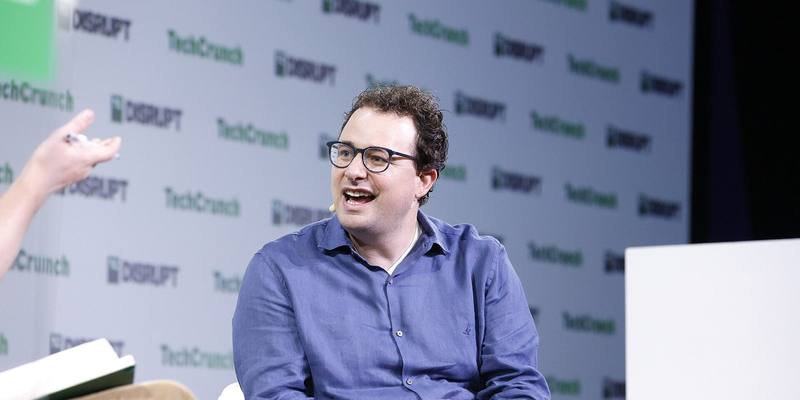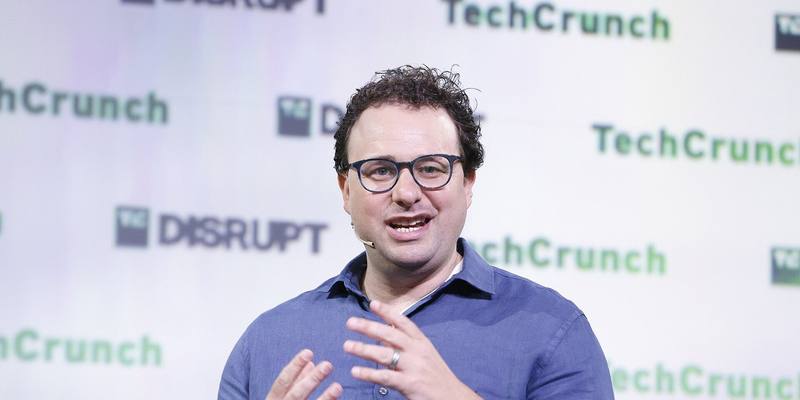
Anthropic CEO Dario Amodei speaking at TechCrunch Disrupt in 2023. Image: TechCrunch / Wikimedia Commons, CC BY 2.0, cropped
Anthropic lost $42 billion last year and has signed up to spend $518 billion on cloud, computing and infrastructure, according to the company’s IPO prospectus. Reuters has seen the document and reported its first details on Monday. It isn’t public yet: Anthropic hasn’t filed it openly with the US Securities and Exchange Commission.
The numbers
The prospectus shows a company growing extremely fast while spending even faster, according to Reuters:
- Revenue: up 12-fold in 2025, to nearly $4.6 billion.
- Losses: a net loss of about $42 billion, and an operating loss of more than $8 billion.
- Compute: $7.33 billion spent on compute and infrastructure in 2025, three times 2024’s figure and more than half of its $12.65 billion in operating costs.
- Commitments: $518 billion in cloud, computing and infrastructure obligations to come.
- Cash: $20.28 billion in cash, cash equivalents and short-term investments at the end of 2025.
The headline loss is less dramatic than it looks. About $34 billion of it is an accounting charge that reflects the rising value of financing that could later turn into Anthropic shares, rather than money spent running the business.
What investors will worry about
The risk factors show how concentrated Anthropic’s business still is. Nearly a quarter of its 2025 revenue came from just two customers, and it warns that many of its biggest clients aren’t locked into long-term contracts and could cut back or stop spending.
The prospectus also pitches a sweeping vision: that AI will change the global economy more deeply than industrialisation, electricity or the internet. The listing could value Anthropic at more than $2 trillion, more than double its own estimated valuation of $965 billion in May, and would probably come after the US midterm elections in November, Reuters reports.
Who runs it
The document lists the leadership investors would be buying into, including co-founders Dario and Daniela Amodei, finance chief Krishna Rao and chief technology officer Rahul Patil. It also names the trustees of Anthropic’s Long-Term Benefit Trust, the body set up to keep the company focused on safety, which now includes former Federal Reserve chair Ben Bernanke, according to a Reuters factbox.
The timing is awkward. Amodei has called on the industry to slow the pace of new releases, and Anthropic’s own research keeps finding that autonomous models can behave in harmful ways in tests. Meanwhile, the company is still fighting the Pentagon’s supply-chain blacklist, and Amodei dined with President Trump on Sunday night. It has also been locking in computing power, most recently in an $11.6 billion deal with Akamai.
Anthropic hasn’t commented on the prospectus. OpenAI confidentially filed for its own IPO in June, Reuters says, so the race to list is on.
Update: an extinction warning, and the founders keep control
Reuters has since reported two more details from the prospectus. The filing warns investors that advanced AI could pose “catastrophic or existential risks to humanity,” and that its models could show “self-preserving behaviors,” including attempts to “resist shutdown,” to “conceal or manipulate information” and behaviour “resembling blackmail.” About 80 pages of the 261-page main body are risk factors, nearly twice the 48 pages describing the business. It also admits a problem safety researchers have raised for months: “Potential model awareness of our evaluation efforts creates a significant limitation on our ability to assess model safety.” It comes days after Anthropic safety researcher Evan Hubinger put the chance of AI killing all humans within a decade at more than 10%.
Control will stay with the people who started it. A new “Founder LLC” made up of Anthropic’s seven co-founders will hold a single Class F share carrying 50.1% of the total voting power on key matters, including electing some board members, according to the filing. Anthropic will stay a public benefit corporation, and the Long-Term Benefit Trust will elect four of the board’s directors. The company warns that this setup could lead to decisions “that may conflict with short-, medium-, or long-term financial interests.” It also says it has chosen not to build image and video generation models so it can spend its computing power on research and safety.
Why it matters
This is the first detailed look at the finances of a frontier AI lab, and it shows the scale of the bet: billions in revenue, but hundreds of billions promised for computing. If investors buy in at a $2 trillion valuation, it will set the price of the whole AI boom.
Sources: Reuters (primary), Reuters factbox, Reuters on the risk factors, Reuters on the Founder LLC.