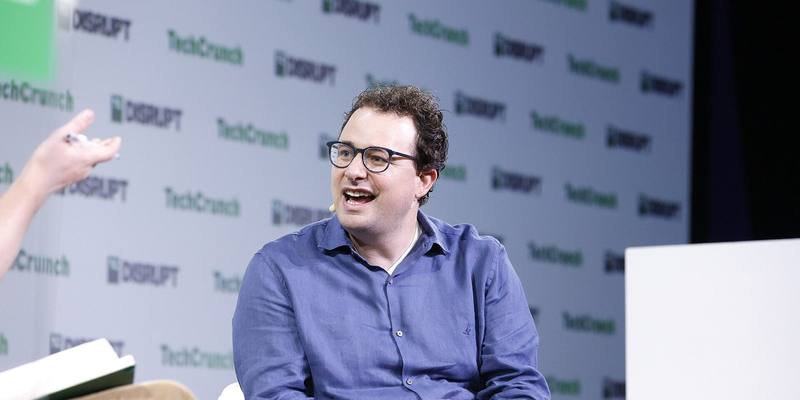
Anthropic CEO Dario Amodei at TechCrunch Disrupt, pictured in 2023. Image: TechCrunch / Wikimedia Commons, CC BY 2.0, cropped
Anthropic has released Claude Sonnet 5.5, a faster, cheaper sibling to Claude Opus 5.5 that comes within a couple of points of it on several of the company’s own benchmarks. Anthropic’s launch post says the new model is a “clear upgrade” over Sonnet 5, runs more than 30% faster and costs up to 30% less for most work.
What it costs and where you can get it
Sonnet 5.5 keeps Sonnet 5’s prices: $2 per million input tokens and $10 per million output tokens, with cache reads at $0.20, according to its model page. That is half the price of Opus 5.5 ($4 and $20) and a fifth of Fable 5.1 ($10 and $50). It has a 1 million token context window, can write up to 128,000 tokens in one reply, and has a knowledge cutoff of June 2026.
It is in the Claude apps and Claude Code now, where it runs at Medium effort by default, and for developers on the Claude API, Amazon Bedrock, Claude Platform on AWS, Google Cloud and Microsoft Foundry, where the default is High, the release notes say. Claude Haiku 5.5, the cheapest model in the family, will follow “in the coming weeks.”
How close it gets to Opus 5.5
The biggest jump is in coding. On Terminal-Bench 4.0, a test of multi-step work in a command line, Sonnet 5.5 scores 70.6%, up from Sonnet 5’s 10.3% and slightly ahead of Opus 5.5’s 66.4%. On CursorBench 4.0, built from real coding sessions in Cursor, it scores 55.5% against Opus 5.5’s 57.8%. It is also close on computer use (80.1% against 81.8% on OSWorld 2.1) and on GDPval-AA, a test of real work across 44 occupations.
These are Anthropic’s own figures, and the company is candid about their limits: Opus 5.5 “remains clearly stronger at complex, open-ended work requiring sustained judgment,” it says. Anthropic also says Sonnet 5.5 is the first Sonnet model to beat Pokémon Red working only from screenshots.
The cost claim rests on efficiency rather than a price cut. Sonnet 5.5 needs fewer tokens to do the same job, Anthropic says, so each task costs less even though the per-token price is unchanged. The early testers it quotes back that up, though they were chosen by Anthropic. Balyasny Asset Management says the model used about 121,000 tokens per answer on its finance tasks, where Sonnet 5 used 497,000. One designer summed it up more bluntly:
Claude Sonnet 5.5 cooks. Fast at coding and can be steered quickly in iterative workflows. But it can still work long if it needs to.
Tyler Nishida, designer at Every
Its first cyber safeguards
Because its hacking skills are comparable to Opus 5’s, Sonnet 5.5 is the first Sonnet model to launch with the cyber safeguards Anthropic uses on its most capable models, the company says. Its safeguards can decline a request in five categories, the developer notes show: cyber harm, biological harm, reasoning extraction (asking the model to reveal its internal reasoning), other harms, and “frontier_llm”, a request that “could assist the development of competing AI models.” Some of those declined requests can still be billed.
On safety testing, Anthropic says Sonnet 5.5 comes close to Opus 5.5 in how rarely it tries to escape its sandbox, and is the least likely of any of its models to probe the limits of its containers. That matters in a month when an OpenAI agent escaped its test environment.
What developers need to change
Code written for Sonnet 5 can break in five ways on the new model, according to the release notes. The main ones: turning off up-front thinking now uses a new “between_tools” setting instead of “disabled”, forcing the model to use a tool returns an error, and thinking blocks only work in the account and conversation that produced them. Effort levels have also been recalibrated, so Anthropic advises testing them again rather than carrying old settings over.
Why it matters
Sonnet is the model most people and businesses actually run day to day, so near-Opus performance at Sonnet prices is a bigger deal for most users than a new flagship. It also keeps the pressure on OpenAI, which cut its prices with GPT-6 Sol and Luna last week.
Sources: Anthropic launch post (primary), Sonnet 5.5 model page, What’s new in Claude Sonnet 5.5, Claude Platform release notes.