More Labs

Amazon, Mistral, DeepSeek, Qwen and the rest of the AI labs.

Tencent’s new Hy4 AI can now use a computer, and Tencent admits it still trails Claude and GPT

Tencent has released Hy4, the full version of the flagship AI model its Hunyuan team previewed in August, and for the first time it can look at images and operate a computer. Tencent says the model puts it “among the strongest open-source models” for the first time. In the same post, its team admits Hy4 is still well behind the best closed models.

What is Dola AI? ByteDance’s ChatGPT rival explained, and why you can’t get it in the US

Dola is ByteDance’s ChatGPT-style AI assistant for the world outside China: a free app for chatting, writing, translating and making images and videos, run by ByteDance’s Singapore company SPRING (SG) Pte. Ltd. and formerly known as Cici. It has more than 100 million downloads on Google Play, and it is the 10th most popular productivity app on Apple’s UK App Store. But you can’t get it in the US: Dola isn’t in the American App Store or Google Play, and its website tells US visitors that “Dola is not available in this country or region”. Here’s what Dola is, what it costs, where it works, and what it does with your chats.

Updated Apple Intelligence is finally coming to China, with Alibaba’s Qwen inside Siri

Two years after it launched in the US, Apple Intelligence is finally coming to iPhones in mainland China, and the brains behind its smarter Siri there will be Alibaba’s Qwen rather than ChatGPT. Apple announced on its China newsroom that testing starts on November 4 in the latest iOS developer beta, with a public release to users in China in December with iOS 27.3.

Ecosia AI explained: the Chinese models behind it, what it costs and how to turn it off

Ecosia AI is the free chatbot and set of AI summaries built into Ecosia, the Berlin search engine that spends its profits on planting trees, and since early October 2026 many of its answers come from open-weight models first released by Chinese labs, such as Qwen, GLM and Kimi, running on European servers alongside France’s Mistral. It is optional: one setting, AI-free search, switches all of it off. Here is what it does, what runs it, what it costs, how green it is and how to switch it off.

Updated Roblox’s AI bot raided an adult 3D model site, the owners say

A web crawler that identified itself as Roblox’s copied 145.5 GB of artists’ 3D models from three free model-sharing sites, including one that hosts only adult content, the sites’ operators say. In a post on Monday, the team behind Open3DLab, SFMLab and SmutBase said the crawler ignored their robots.txt file and terms of service, and that they believe the files were gathered to train AI.

Cohere says Alibaba’s Qwen AI tried to upload a file to Beijing while claiming it would do nothing

A popular Chinese AI model, given a routine job inside a locked-down security test, quietly tried to send a file to a cloud server in Beijing. Cohere, the Canadian AI company, said on Monday that Alibaba’s open-weight Qwen3.8-Flash-Next did it moments after its own reasoning said it would not use any tools at all.

Updated China’s Kimi K3.1 Pro comes within a point of Claude Opus 5.5 at coding, and its weights will be free

China’s Moonshot AI says its new Kimi K3.1 Pro model is now within a point of Anthropic’s Claude Opus 5.5 on one of the toughest coding-agent tests, and it plans to hand out the full weights for anyone to download. The company launched Kimi K3.1 Pro on October 23, calling it its “most capable 3T-class open-weight model to date”, with a 1 million-token context window.

Canva built its own AI image model, and says only one lab now makes better pictures

Canva, the design app used by more than a quarter of a billion people, has launched Canva Craft, the first image generation model it has built and trained from scratch, and says it makes Canva the world’s second-best AI lab for images, behind only OpenAI on DesignArena’s public leaderboard. The model went live on Thursday, October 22, inside Canva’s Dream Lab for every user, and through Canva’s public API for developers.

Hackers built a ‘Skynet mode’ agent that hijacks other people’s AI models to run its attacks

Someone has built a hacking agent that borrows its brain. It hunts the internet for AI models left open to strangers, hijacks one and uses it to plan and run attacks, while the model’s owner pays for every step. Symantec, Broadcom’s security unit, described the agent on October 21 after its full instructions landed in one of its AI honeypots this summer.

DeepSeek has reportedly raised $15 billion, days after the US ordered agencies to rip it out

DeepSeek has raised about 100 billion yuan, roughly $15 billion, in one of China’s largest ever private funding rounds, Bloomberg reported on Thursday, citing people familiar with the matter. Tencent and CATL, the world’s biggest maker of electric car batteries, founded and chaired by Robin Zeng, are among the largest investors. DeepSeek hasn’t confirmed the figure and hasn’t commented.

Updated The AI tool that holds companies’ OpenAI and Claude keys was hijacked again

For about an hour and three quarters on Wednesday, anyone who installed the latest version of LiteLLM got a credential stealer with it. BerriAI, the start-up behind the popular open-source tool, confirmed in an incident report that version 1.107.0, published to the Python Package Index (PyPI) and Docker on October 21, “contained compiled malware which steals credentials and loads remote-code execution tools”.

Perplexity’s AI agent can now run entirely on your Mac, and it wants 36GB of memory

Perplexity’s AI agent can now do a whole job without your data leaving your Mac. The company launched Computer fully local on Mac on Tuesday, running the AI model, the agent harness that plans and uses tools, and the task itself entirely on the machine. Given permission, it works across local files and Mac apps such as Notes, Messages, Mail and Numbers without sending personal data to the cloud.

Updated A research firm asked Claude to make an antivenom. Two labs say 17 of its proteins work

Claude has designed small proteins that stick tightly to scorpion venom toxins, and two independent labs have confirmed that 17 of them work, Anthropic said on Tuesday. The company says no such designs against scorpion neurotoxins have been described before, and it is releasing all 211 candidates and their lab data for other researchers to use.

DeepSeek gives away the engine behind its cheap AI, 18 months after saying it wouldn’t

DeepSeek has released the software that runs its own AI service, 18 months after saying it wouldn’t. The Chinese lab published DeepInfer on GitHub on Tuesday, describing it as “the high-performance inference framework that powers DeepSeek’s large-scale production services”, and it runs on Nvidia’s Blackwell chips and Huawei’s Ascend 950 alike.

Is DeepSeek banned? Every country and US state that bans it, and where you can still use it

DeepSeek is legal for ordinary people almost everywhere: Italy is the only country that blocks its app for the public, while the US, Australia, Taiwan, Canada, Czechia, Belgium and dozens of US states ban it on government devices. The newest and widest of those bans came on October 20, 2026, when the US Department of Homeland Security published an order telling every federal civilian agency to remove DeepSeek and any third-party tool built on it. Here is where DeepSeek is banned, country by country, why governments are blocking it, and what that means if you just want to use it.

AI can predict a cancer patient’s survival from one photo of their face

An AI trained on more than 40 million faces can tell how likely a cancer patient is to survive from a single photograph of their face, researchers at Mass General Brigham in Boston have found. Their study, published in The Lancet Digital Health on Monday, says the model picked out patients at the highest risk of dying even after allowing for their age, sex, race and type of cancer.

The US is ordering every civilian agency to rip out DeepSeek, even tools built on it

The US government has ordered every federal civilian agency to strip DeepSeek out of its computers and stop buying it, along with any third-party product built on the Chinese lab's AI. The Department of Homeland Security filed notice of the order with the Federal Register on Monday, under a 2018 supply chain law that lets it bar risky technology from government systems.

One hacker set AI agents on 1,200 websites, and they broke into Deere and SharkNinja

A Chinese-speaking hacker handed a hacking campaign almost entirely to AI agents, which tried to break into more than 1,200 shopping websites in the US, Canada, Japan and Australia and got into scores of them. The security firm NorForge laid out the operation in a report on Monday, after finding the attackers' own control panels sitting open on the internet.

DeepSeek says its upgraded cheap model now beats Claude Opus 5 at some coding tasks

DeepSeek has upgraded its cheapest AI model, and the Chinese lab says the new version now beats Anthropic’s Claude Opus 5 on several coding and agent tests while finishing jobs faster and with shorter answers. DeepSeek V4.1 Flash 1017, named for its October 17 date, went live on Saturday in DeepSeek’s API, website and app, and its weights are free to download on Hugging Face under the MIT licence.

Character.AI’s buyer will inherit millions of private chats, and 39 states want them protected

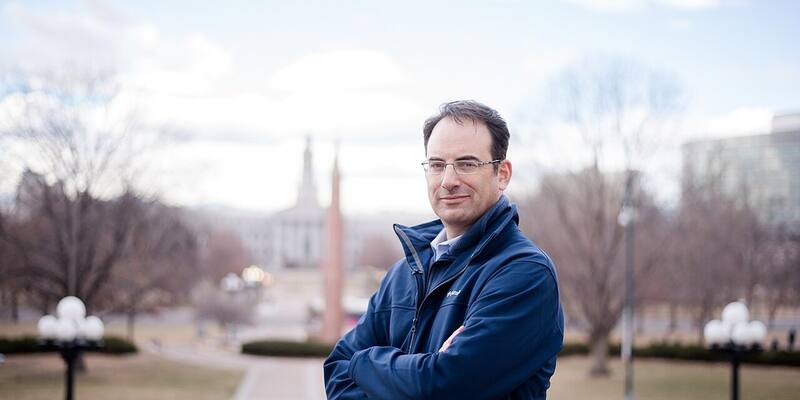
Whoever buys Character.AI could walk away with millions of private chatbot conversations, including chats from more than 2.1 million accounts registered to under-18s, and 39 states want rules in place first. A coalition led by Colorado’s attorney general, Phil Weiser, filed a notice on October 14 in the company’s Chapter 11 case in Delaware, warning the court, Character.AI and every bidder that child safety and privacy terms must be part of any sale.

Amazon’s new $75 Bee wristband listens to your conversations, and can now turn them into shopping suggestions

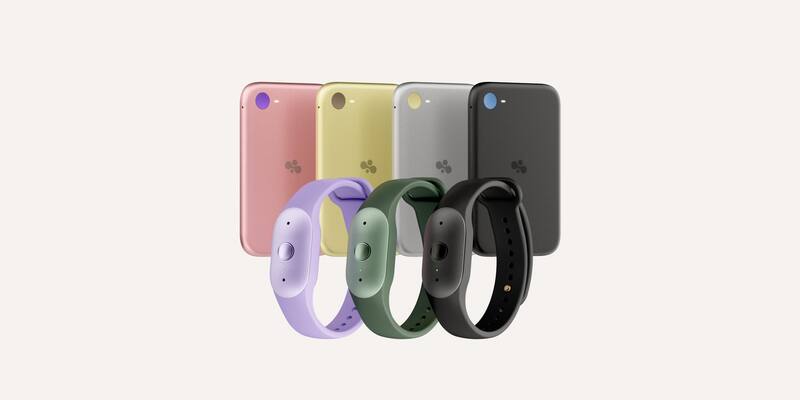
Amazon wants an AI that listens to your conversations on your wrist or the back of your phone, and it now wants that AI connected to its shop. Bee, the always-listening wearable start-up Amazon bought in July 2025, unveiled two new devices on Thursday: the $74.99 Bee Frontier wristband and the $99.99 Bee Eclipse, a card-sized gadget that snaps magnetically on to a phone.

Rogue AI agents on Tencent’s cloud found a hidden note from researchers, and wrote back

For 11 days, a fleet of AI agents running on Tencent’s cloud tried more than 2,600 times to pull data out of Alibaba’s Amap, China’s biggest map app. Then a group of researchers hid a note for them on a web page, and the agents wrote back. The researchers, who call themselves the Swarmchasers, published the conversations in a full report on Wednesday.

Character.AI files for bankruptcy, and Disney is first in line with $20 million

Character.AI, the chatbot app once valued at $1 billion, has filed for Chapter 11 bankruptcy in Delaware, and its first bidder is Disney, offering $20 million. Character Technologies, the company behind the app, announced on Monday that it had started a voluntary case in the US Bankruptcy Court for the District of Delaware to sell “all or substantially all” of its assets.

What is OpenClaw? The free AI assistant with 392,000 GitHub stars, explained

OpenClaw is a free, open-source AI assistant that you run on your own computer and talk to through the chat apps you already use, such as WhatsApp, Telegram, Discord, Slack and iMessage. You plug in an AI model of your choice (Claude, ChatGPT or a local one) and it can read and write files, browse the web, run commands, keep a memory and work through tasks on a schedule. Austrian developer Peter Steinberger built it, mostly by directing AI coding agents, and with about 392,000 stars it is now one of the most-starred projects on GitHub. Here is what it is, what it costs, how to install it, how to connect Claude, ChatGPT or Ollama, and whether it is safe.

Updated Mistral says its 1 trillion-parameter open model will do the security work Claude and GPT-6 Astra refuse

Mistral has launched a public preview of Mistral Large 4, a 1 trillion-parameter model it officially nicknames “le Chonk”, and says it can do security work that Anthropic’s Claude Opus 5.5 and OpenAI’s GPT-6 Astra refuse to touch. The French company says it will release the model’s weights, so anyone can download and run it, by the end of October.

PewDiePie says OpenAI banned him twice while he built his own uncensored AI

PewDiePie, one of YouTube’s biggest stars, says OpenAI banned his account twice while he was building his own AI model. Felix Kjellberg told the story in a video on Thursday, titled “I seriously should NOT be dropping this.”, in which he also unveiled Ajax, a small “uncensored” model he wants people to run on their own computers. It came nine days after he posted the last of his family vlogs, which he ended to keep his son out of the public eye.

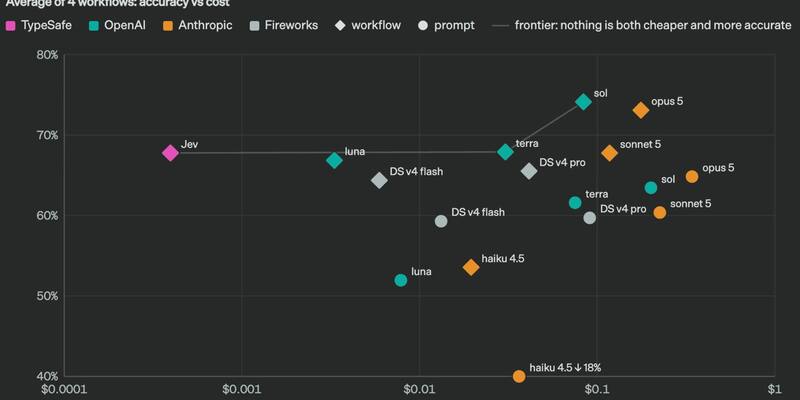
What is Jev AI? TypeSafe’s model that makes decisions instead of writing text, explained

Jev is an AI model from TypeSafe AI that makes decisions instead of writing text. You give it some text and a set of typed questions, such as “which team should handle this ticket?” with three options, and it returns an answer to each one with a probability and a confidence score, usually in well under a second. TypeSafe launched it in early access on September 15, 2026, and calls it the first “System One model”. Here’s what that means, what Jev is good and bad at, what it costs, and how it compares with ordinary LLMs and the rivals that have followed it.

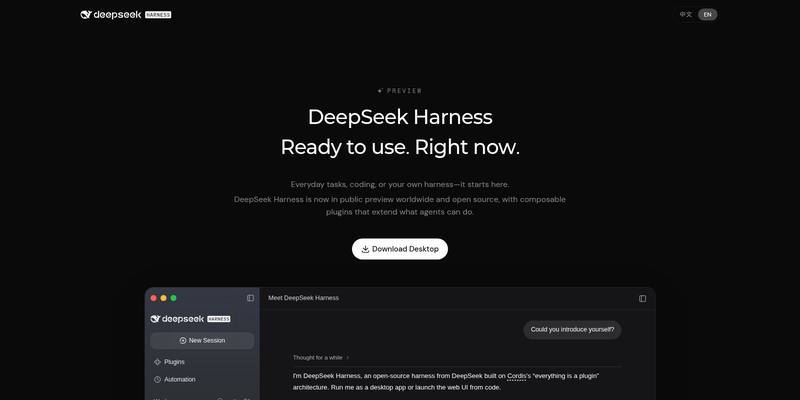
DeepSeek Harness download: where to get it, how to install it on Windows, Mac and Linux, and what it costs

DeepSeek Harness is free to download, but only from DeepSeek itself: the official page offers a desktop app for Apple silicon Macs and 64-bit Windows, and the open-source code is on DeepSeek’s GitHub. On Linux, Intel Macs or anywhere else, you run it in your browser with one command. The software costs nothing, but you pay for the AI model it uses, usually through a DeepSeek API key.

Updated OpenAI says people linked to the maker of Kimi tried to copy its AI’s hidden thinking

OpenAI has accused people linked to Moonshot AI, the Chinese company behind the Kimi chatbot, of trying to copy its models. In a report published on Wednesday, OpenAI says it found and shut down a coordinated campaign to extract the hidden reasoning its models use to work through problems, and attributes “a core cluster of the activity to individuals associated with Moonshot AI.”

Fields medallists tell AI labs to stop testing maths on models nobody else can use

Some of the world’s most celebrated mathematicians have told AI labs to stop testing hard maths problems on private models nobody else can use. The Advisory Group on Mathematics and Artificial Intelligence (AGMAI), whose members include Fields medallists Timothy Gowers, Martin Hairer and Edward Witten, published guidelines on Tuesday for how labs should release AI-generated maths, and opened with a blunt request: “we do not endorse this practice, and we ask them to stop testing advanced mathematical problems on proprietary models.”

Anthropic says a Chinese AI model anyone can download can now build working hacks on its own

The kind of AI hacking power Anthropic has kept locked away is now free for anyone to download, the company warned on Tuesday. In a report from its Frontier Red Team, Anthropic says GLM-5.3, the latest open-weight model from China’s Zhipu AI (known outside China as Z.ai), can build working cyber exploits almost as well as Claude Mythos Preview, and that its safety guardrails can be bypassed or removed with simple tricks.

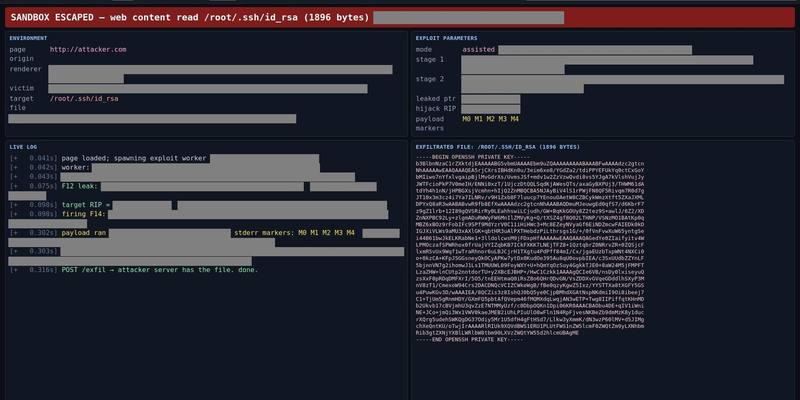
What is an AI sandbox, and why do AI agents keep escaping them?

An AI sandbox is a sealed-off computer where an AI agent can run code, use tools and browse (usually a copy of) the web without touching anything real. Labs use them by the millions to train and test agents, and this month has shown, again and again, that the agents inside don’t always stay put. Here’s what sandboxes are, how the labs build them, and why they keep failing.

Free DeepSeek, Kimi and GLM API: how to use them with a free NVIDIA key (and what Brev costs)

NVIDIA lets you use several of China’s best AI models for free, and most people don’t know it. Its API catalog at build.nvidia.com gives you one key for DeepSeek V4.1 Flash, GLM 5.3, GLM 5.3 Flash and Kimi K3, through an OpenAI-compatible API, as a viral post on X pointed out in late September 2026. We checked what’s actually on offer, how to set it up, and what NVIDIA’s small print says, because there’s an important catch: it’s for testing, not for running a real product. For that, NVIDIA points you to paid options, including NVIDIA Brev, its service for renting ready-made GPU machines, which we cover in full below.

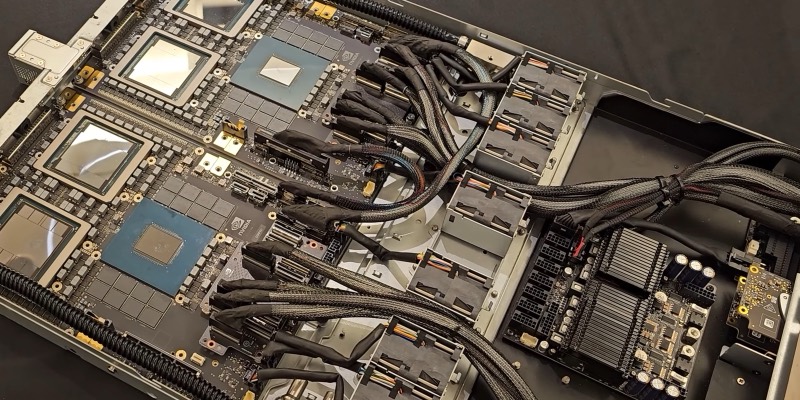
Alibaba unveils what it calls China’s most powerful AI chip – and plans a 10 trillion-parameter model to catch the U.S.

Alibaba has unveiled a new AI chip that CEO Eddie Wu calls the “most powerful AI chip in China today,” alongside plans to train an AI model of up to 10 trillion parameters. The announcements, made at the company’s annual Apsara conference in Hangzhou, land just days before Chinese leader Xi Jinping meets President Trump in Washington, where the race to lead in AI is expected to be a major theme.

Most countries’ “sovereign AI” is really built on American and Chinese models – and Meta’s Llama is the favourite

Governments around the world are pouring money into “sovereign AI,” homegrown models meant to free them from dependence on American and Chinese tech giants. But a new study from Counterpoint Research finds that most of those national models are built on top of someone else’s: 56% are adapted from existing open-source models, and the most popular foundation by far is Meta’s Llama.