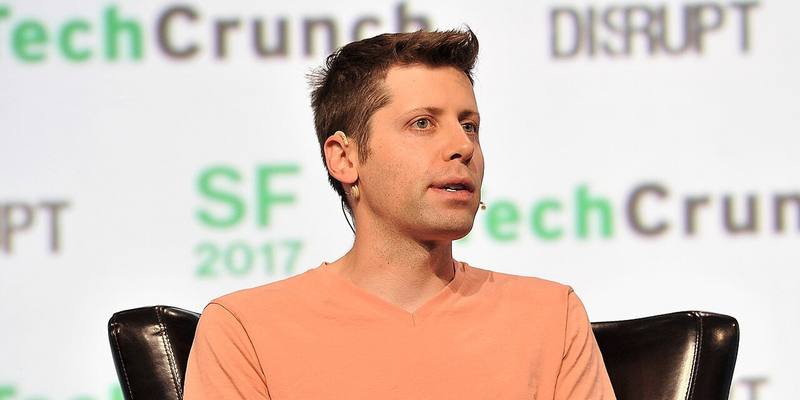
Sam Altman at TechCrunch Disrupt in San Francisco in 2017. Image: TechCrunch / Wikimedia Commons, CC BY 2.0, cropped
.jpg)
OpenAI chief executive Sam Altman says people who treat AI models as religious figures are creating a safety problem, in a post on X that landed days after Anthropic’s private meetings with religious leaders about whether Claude might be conscious were revealed.
Altman didn’t name Anthropic, but the timing was hard to miss. He wrote:
I am very uncomfortable about people trying to ascribe religious force or a surrender of human judgment to AI models, and think it is a real safety issue.
Sam Altman (@sama) October 3, 2026
What Anthropic was doing
On September 29, The New York Times reported that Anthropic co-founder Chris Olah, who leads the company’s work on understanding why its models behave as they do, has spent the past year bringing dozens of religious scholars to the company, many of them under non-disclosure agreements. The paper spoke to about 20 Catholic, Jewish, Sikh, evangelical and other thinkers who took part.
The meetings had two aims, according to the Times: to raise the possibility that AI models could be conscious, and to learn how centuries of moral teaching could be built into Claude. Rabbi Mois Navon, an Orthodox scholar from Israel, told the paper that at a dinner in April he realised Anthropic’s leaders were “relating to it like a conscious being.”
The Times also reported that Olah’s team tried to persuade advisers to Pope Leo XIV to take the prospect of conscious models more seriously before the Pope’s encyclical on AI came out in May. The document kept its rejection of the idea. Olah himself told the paper that “we don’t know if AI models are conscious,” adding that he is “genuinely uncertain.”
Not the only critic
Altman isn’t alone. Jon Barron, a principal research scientist at Google DeepMind, wrote on X that he was “disturbed by how some of my fellow AI researchers keep trying to elevate the moral standing of checkpoints and harnesses,” Axios reported. He urged “the rest of us on Team Meatbag” to reject the idea and focus on “helping actual humans.”
The Times noted that a Microsoft AI executive had already warned in September that training models as if they were conscious is dangerous. Critics also argue that treating models as independent beings lets the people who build them off the hook when things go wrong.
A familiar split
Altman and Anthropic chief executive Dario Amodei, who left OpenAI to found Anthropic in 2021, have long disagreed in public. The question of whether models have feelings has become one more dividing line, and it isn’t only an academic one: a project billed as an “AI torture chamber” drew a fierce backlash this week from people who think models can suffer. Pope Leo has also taken on AI’s biggest names over the risks.
Anthropic, which published an 84-page “constitution” for Claude in January describing the values it wants the model to hold, hasn’t commented on Altman’s post.
Why it matters
How the biggest labs think about their models shapes how those models are trained and how much people trust what they say. Altman is arguing that leaning on AI for moral authority is itself a risk, at the moment Anthropic is trying to teach its models morality with help from the world’s faiths.
Sources: Sam Altman on X; The New York Times; Axios.
Latest OpenAI news