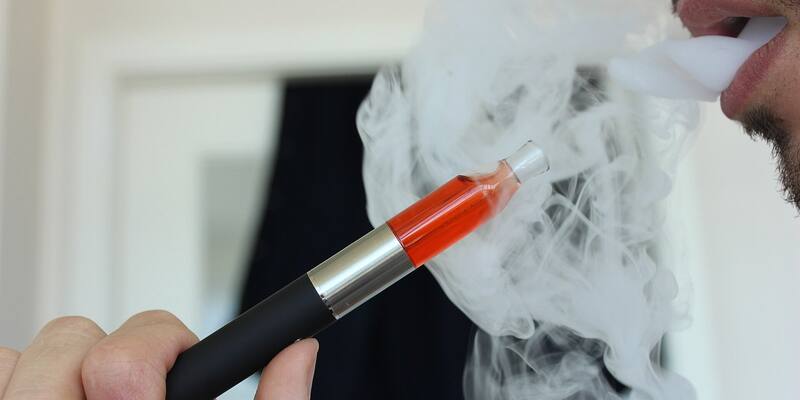
A man exhales a cloud of vapour from a refillable vape pen, in a 2016 photo. Illustrative photo: the UK ban covers single-use vapes. Image: Lindsay Fox / Wikimedia Commons, CC BY 2.0, cropped

When the UK government asked the public whether it should ban disposable vapes, most of the answers came from machines. Of the 118,756 responses to its 2023 tobacco and vapes consultation, 90,835, or 76%, were sent by bots, according to a study published on Tuesday in the journal Tobacco Control.
The paper, by Nason Maani of the University of Edinburgh and Anna Gilmore of the University of Bath, looks at a flood of automated submissions that the Department of Health and Social Care (DHSC) caught and threw out. Almost all of them pushed one message: don’t ban disposable vapes.
90,835 fake answers, nearly all to one question
The consultation, “Creating a smokefree generation and tackling youth vaping”, ran from October 12 to December 6, 2023, under Rishi Sunak’s Conservative government. In its response, the DHSC said 90,835 responses were “unambiguously identified as having been submitted by automated programmes, commonly known as bots, and so deemed to be fraudulent”.
The fake responses didn’t follow the path real people took through the online form, the department said, and were “often duplicated many times and sent at high frequency from a small number of IP addresses, which is consistent with a mass automated campaign”. All but two of them answered the same question, opposing the plan to ban disposable vapes, according to the study.
They call it what “appears to be the first documented instance of large-scale automated interference in a formal public health policy consultation”. Nobody has been named as being behind it.
Real respondents backed the ban
With the bots removed, the DHSC analysed 27,921 genuine responses, 896 of them from organisations. The bot responses had outnumbered them by more than three to one. Of the real respondents who answered, 79.6% wanted restrictions on disposable vapes and 69% agreed they should be banned from sale outright.
The ban went ahead. Single-use vapes have been banned from sale in the UK since June 1, 2025, and the wider Tobacco and Vapes Act, which means anyone born on or after January 1, 2009 can never legally be sold tobacco, became law in April 2026.
“A handful of powerful interests looking like a mass movement”
This campaign was caught. Maani told the Guardian that the next one might not be:
The threat is that future campaigns become harder to catch, and what we can’t catch, we don’t know about. Such campaigns are a threat because they raise the possibility of a handful of powerful interests looking like a mass movement.
Nason Maani, University of Edinburgh
The DHSC’s description points to crude automation: the same answers sent again and again from a few addresses. It doesn’t say whether AI wrote any of the text. Azzurra Moores, associate director for information ecosystems at the think tank Demos, told the Guardian that AI raises the stakes for whoever is checking:
Every barrier that keeps bots out also makes it harder for real people to take part, and AI makes fake responses far harder to spot. Interference can adapt faster than departments can update their checks.
Azzurra Moores, Demos
Caroline Cerny, deputy chief executive of the charity Action on Smoking and Health, called the findings “deeply concerning”, pointing to “the tobacco industry’s history of seeking to undermine public health regulation”. A DHSC spokesperson said its controls “worked effectively in this case” and that the fake responses were removed.
Fake crowds are an old trick, and AI makes them cheaper
Faking public opinion at scale isn’t new. In 2021 New York’s attorney general found that nearly 18 million of the more than 22 million comments sent to the US Federal Communications Commission on repealing net neutrality in 2017 were fake. Bots have also been used to fake listeners: one man is going to prison for streaming his AI-made songs billions of times with them.
AI companies now write rules against it. Anthropic’s new usage policy, which takes effect on November 12, bans sockpuppets, astroturfing and bots that claim to be human.
Why it matters
Public consultations count voices, and bots make voices cheap. This campaign was caught because its answers were copied and sent from a handful of IP addresses; one that uses AI to write thousands of different, plausible answers from many machines would be much harder to tell from the real public, and every government that asks for comments online faces the same risk.
Sources: Maani and Gilmore, “Examining the nature of bot responses to public health consultations: the example of automated submissions to the 2023 UK Tobacco and Vapes Bill”, Tobacco Control; DHSC, consultation government response; UK government, single-use vapes ban; New York Attorney General; the Guardian (comments from Maani, Moores, Cerny and the DHSC).
Latest Policy & Safety news