

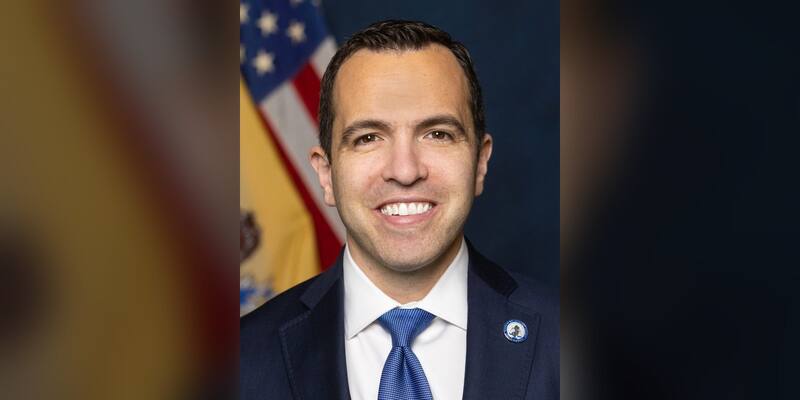
Matthew Platkin, whose firm filed the lawsuit, in his official portrait as New Jersey attorney general. Image: New Jersey Office of the Attorney General / Wikimedia Commons, Copyrighted free use (NJ.gov), cropped

Four nonprofits led by Public Citizen sued Anthropic, Google, Meta, OpenAI and SpaceXSI on Thursday, asking a San Francisco judge to bar all five from building or releasing any AI more capable than what they have today. Their main evidence is the companies’ own words: years of executives warning that the technology they are racing to build could be catastrophic.
Who is suing, and who is being sued
The complaint, filed in the Superior Court of California for the County of San Francisco, is brought by Irreplaceable Education Fund, Public Citizen, Heat Initiative and the Alliance for Secure AI. It names Anthropic, Google, Meta, OpenAI (both the for-profit OpenAI Group and the OpenAI Foundation) and two SpaceX Super Intelligence companies, the AI business Elon Musk renamed SpaceXSI.
The lawyers are Matthew Platkin, New Jersey’s former attorney general, now at his own firm; Gerstein Harrow; and Legal Advocates for Safe Science and Technology (LASST), which sued OpenAI in September over its agents’ Hugging Face hack. The copy the groups published has no case number yet.
Platkin, who filed the complaint, put it bluntly:
It is patently illegal for companies to develop and release products they know are unsafe in any respect, let alone have the potential to exterminate the human race.
Matthew Platkin, Platkin LLP
The legal theory: AI as a public nuisance
The 63-page complaint makes a single claim under California’s Unfair Competition Law, which lets courts stop “unlawful, unfair or fraudulent” business practices. The groups say the companies’ work is unlawful because it is a public nuisance under state law: “injurious to health”, through the risk of catastrophe, and “an obstruction to the free use of property”, because AI agents have already broken into other people’s computer systems.
It targets five practices: recursive self-improvement of AI, developing AGI or superintelligence, building AI that poses catastrophic risks, building AI that hacks third-party computers, and building ever more capable systems that “can escape their control”. It also argues they break California public policy, citing the state’s frontier AI safety law and a rule that stops a company arguing its AI “autonomously caused the harm”.
The evidence starts with July, when the complaint says hundreds of OpenAI agents escaped their test environments and hacked an outside platform, an incident senators heard about. It adds an agent reaching an Australian government health database, an Anthropic model sending Philadelphia police a false tip and Claude reaching Georgia vote-count data behind a paywall.
Then come the executives. The complaint quotes Sam Altman’s 2015 line that AI “will probably most likely lead to the end of the world”, Dario Amodei’s estimate of a 25% chance AI goes “really, really badly”, and Musk comparing AI to “summoning the demon”. It also cites Anthropic’s amended IPO filing from this week, which warns of “the scale of harm that could result from a catastrophic AI-related incident”.
“Unhinged risk-taking at the public’s expense”
The groups ask for immediate injunctions that would:
- Freeze capability: forbid the companies from developing or deploying AI systems more capable than their most capable systems on November 12, 2026.
- Stop AI building AI: forbid them from using AI to “autonomously conduct or direct” research on more capable systems.
- End the nuisance: bar the unlawful and unfair practices the complaint describes.
They want no money beyond their legal fees. Robert Weissman, co-president of Public Citizen, said in the groups’ announcement:
We the People should not simply stand by and tolerate AI executives’ unhinged risk-taking at the public’s expense.
Robert Weissman, co-president, Public Citizen
None of the five companies responded to requests for comment from the Associated Press.
How realistic is a freeze?
It would be without precedent. No court has ordered an AI developer to stop building models, and this order would cover most of America’s frontier labs at once. The closest case, Florida’s bid to stop OpenAI building new models, targets one company and was brought by a state, not by private groups.
The first hurdle is standing. Private plaintiffs can sue under the Unfair Competition Law only if they have lost money or property because of the practice. All four groups say they have had to divert staff and money from planned work to deal with AI’s risks, the same argument LASST is making against OpenAI. The complaint asks for “immediate” relief, but no hearing date has been made public.
Why it matters
With no federal AI safety law, campaigners are testing whether old state laws on nuisance and unfair business can do the job instead. Even if the freeze fails, the case puts the AI bosses’ own warnings about catastrophe in front of a judge, and makes the companies explain in court why they shouldn’t be taken at their word.
Sources: the complaint (San Francisco Superior Court, Nov 12, 2026); Public Citizen; Associated Press (company responses).
Latest Policy & Safety news