
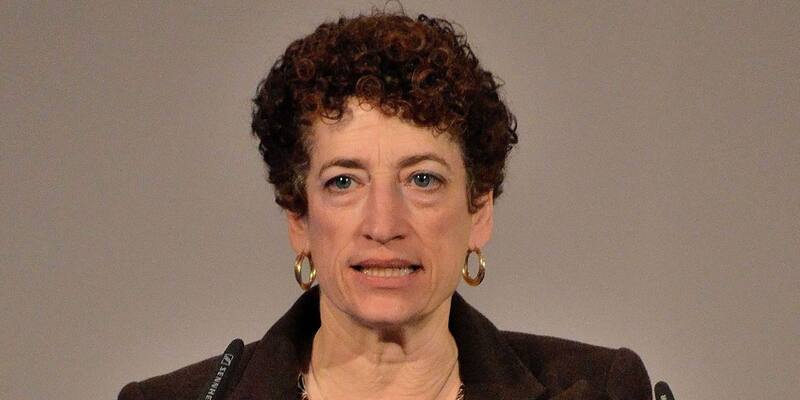
Naomi Oreskes speaking at the 2nd European Technology Assessment conference in Berlin in 2015 (file photo). Image: Adrian Grycuk / Wikimedia Commons, CC BY-SA 3.0 PL, cropped

A US federal judge has ruled that Harvard historian Naomi Oreskes must hand over the ChatGPT prompts her team used to sift Shell’s documents for her expert report in a climate lawsuit, because those prompts are “the basis” for her opinions. Judge Vernon Oliver upheld a magistrate’s May order on Friday and gave the plaintiffs until December 18 to comply.
What the judge ordered
The case is a Clean Water Act and Resource Conservation and Recovery Act suit that the Conservation Law Foundation (CLF), a New England environmental group, brought in 2021 over a bulk fuel terminal in New Haven, Connecticut. The group says the site is not prepared for flooding and storms made worse by climate change. The remaining defendants are Equilon Enterprises (trading as Shell Oil Products US), Triton Terminaling and Motiva Enterprises, which deny the claims.
On May 18, Magistrate Judge Thomas Farrish ordered CLF to disclose “any artificial intelligence prompts and/or queries used by Dr. Oreskes or her team in the course of producing her expert witness report”. CLF objected, the order was put on hold and the two sides argued it before Oliver on November 3. His 13-page memorandum, filed November 20 in the US District Court for the District of Connecticut, overrules every objection, affirms the order “in its entirety” and lifts the stay.
‘AI as a sieve’
Oreskes, the Charles Henry Lea Professor of the History of Science at Harvard, worked with a computational scientist, Alexander Kaurov, who loaded the documents Shell had produced into a private Microsoft Azure environment and used ChatGPT to search them for material she should read. At her deposition she described the method:
AI as a sieve to identify all the documents that could be relevant to a particular question.
Naomi Oreskes, Harvard historian of science, deposition quoted in the ruling
She said the two of them “sat down together to discuss what the prompts would be”, Kaurov ran the analysis and she then reviewed the documents herself. Oliver found that this culling of Shell’s production was part of her methodology, which the other side is entitled to test. Under Rule 26(a)(2)(B) of the Federal Rules of Civil Procedure, a paid expert’s report must state the basis and reasons for every opinion, and Oliver wrote that the prompts fit that description:
Thus, it appears that the prompts and queries comprise the basis for Dr. Oreskes’s opinions.
Vernon D. Oliver, US District Judge, District of Connecticut
Prompts are not ‘notes’
CLF’s main defence was an agreement between the parties that keeps experts’ drafts, notes and communications out of discovery. Oliver agreed with Farrish that the deal “does not even mention the use of artificial intelligence”, and he quoted ChatGPT’s own help pages, which say “prompting is how you tell ChatGPT what you want to know, make, or change”, to conclude that prompts are something different from an expert’s notes on a draft. He also rejected arguments that Shell’s requests came too late or were sent informally by email.
The prompts nobody saved
There is a catch: CLF says the prompts may not exist. In a supplement filed on November 12, it said Kaurov searched the documents in sessions between March 30 and July 13, 2025, changed his prompt scripts as he went “without saving each iteration”, and that the Azure setup, chosen to keep confidential litigation files private, did not log prompts. The model’s output was lists of document numbers and excerpts.
Oliver held that sworn testimony from Oreskes and Kaurov is “solid evidence” that the prompts existed at one time, which justifies an order to produce whatever can be found. CLF must now revise its discovery responses to disclose them by December 18.
The ruling is binding only in this case and deals with AI used to sort documents, not to write an expert’s conclusions. But it comes as courts are cracking down on careless AI use in litigation: Europe’s human rights court barred a lawyer for two years this week over AI-invented cases, and Anthropic’s Claude now checks lawyers’ citations. It is also a reminder that what you type into a chatbot can end up in front of the other side.
Why it matters
Experts, lawyers and analysts increasingly use ChatGPT, Claude and similar tools to triage huge document sets. This ruling treats the prompts behind that triage as part of the expert’s method, so anyone using AI on a case should assume the prompts and outputs may have to be disclosed, and keep them.
Sources: Memorandum and order, Conservation Law Foundation v. Equilon Enterprises, No. 3:21-cv-933 (VDO), D. Conn., November 20, 2026; CLF supplemental response on Dr. Kaurov’s use of AI, November 12, 2026.
Latest Policy & Safety news