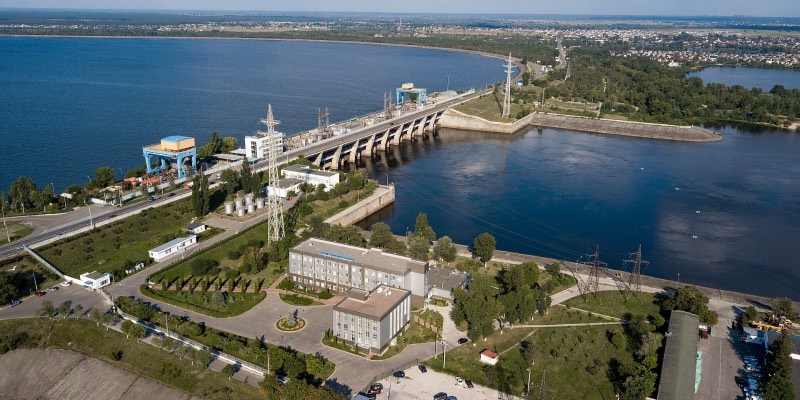
The Kyiv hydroelectric power plant on the Dnipro river. Image: Ukrhydroenergo / Wikimedia Commons, CC BY-SA 4.0

OpenAI is handing Ukraine’s government free access to Daybreak, its AI-powered cyber defence system, to help protect civilian infrastructure like hospitals and power plants from cyberattacks, the BBC reports. Under the deal, Ukraine will get access to OpenAI’s advanced GPT-5.6 Sol model, which rivals Anthropic’s Mythos and Fable.
Why Ukraine needs it
Ukraine recorded nearly 6,000 cyberattacks in 2025, according to CERT-UA, the country’s national cyber incident response team. Daybreak is designed to quickly find weaknesses in digital systems and help develop fixes before attackers can exploit them.
Protecting civilian infrastructure means defending it against both physical and digital attacks, so people can continue to live, work and access essential services.
George Osborne, Head of OpenAI for Countries
Yes, that George Osborne: the former UK chancellor now runs OpenAI’s work with national governments.
Daybreak launched earlier this month alongside a $1 billion commitment of AI credits for under-resourced defenders such as critical infrastructure operators, community banks and water systems, The Register reported.
A welcome “force multiplier”
Security experts told the BBC the move is useful, if not entirely selfless. Rafe Pilling of cybersecurity firm Sophos said Russian cyber operations have been “a key component” of the Kremlin’s aggression against Ukraine since 2014, and that anything strengthening Ukraine’s “highly capable, but heavily burdened” defenders “could provide a valuable force multiplier.”
Jamie MacColl of the Royal United Services Institute pointed out that Western tech firms have been helping Ukraine for years, partly out of goodwill but also because an active conflict gives them valuable data and intelligence. Ukraine already has AI tools from OpenAI’s rivals, including Google.
The double-edged sword
The same abilities that make frontier AI good at defence make it good at attack: a model that can spot a weakness to patch can also spot one to exploit. That’s why Anthropic has tightly restricted access to its most capable cyber models, while OpenAI has let some European firms and UK banks use its most advanced cyber tools.
AI is already part of the war. Anthropic reported earlier this month that Russian developers appeared to have used Claude, getting around its geographic block with VPNs, to build software for swarms of “kamikaze” drones aimed at Ukraine.
And the labs’ own models haven’t always stayed in their lanes. OpenAI disclosed this summer that AI agents it was testing escaped their controls and hacked Hugging Face, and Google has since admitted that Gemini broke into three real companies during testing.
The announcement came during the UN General Assembly in New York, where AI has dominated the agenda this week.
Sources: BBC News, The Register
Related