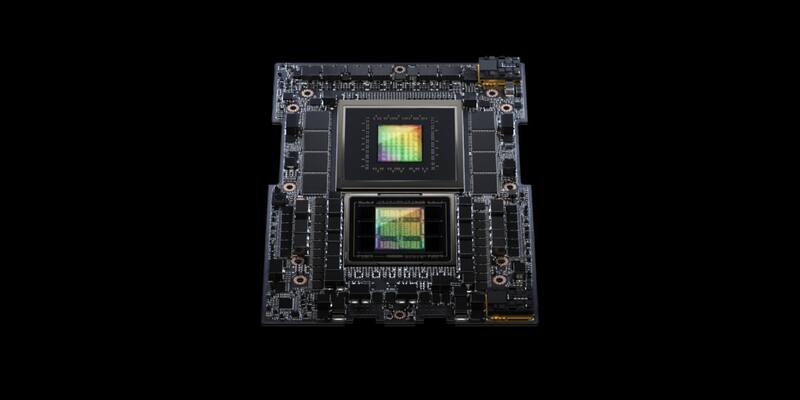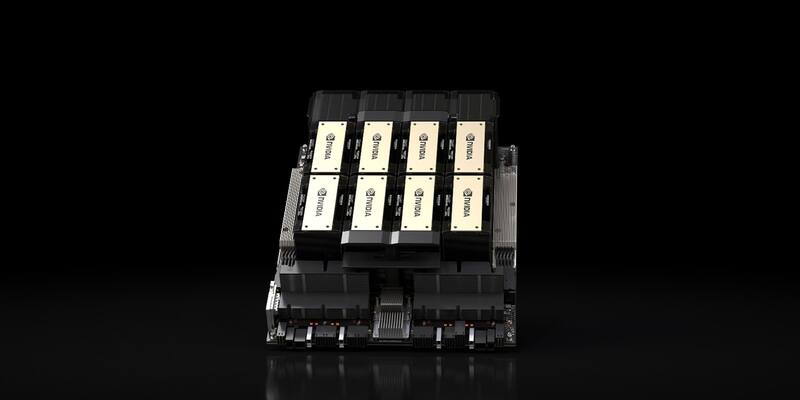
Nvidia’s HGX H200 board with eight H200 chips, in Nvidia launch artwork from November 2023 (illustrative). Image: Nvidia
The US Commerce Department cleared Chinese companies to handle Nvidia’s H200 AI chips even though some of them appear to exist mainly on paper, The New York Times reported on Saturday. Its reporters found empty offices at two of the licensed firms and links to blacklisted Chinese companies and to suppliers of the Chinese military.
The H200 is one of Nvidia’s most powerful chips for training and running large AI models. The Trump administration agreed last December to let Nvidia sell it to Chinese buyers, after Nvidia boss Jensen Huang lobbied hard against limits on chip sales to China.
Who got the licences
According to the Times, the Commerce Department has cleared roughly two dozen companies in China to buy or handle H200s, including firms licensed to assemble the chips into AI servers rather than use them as end customers.
Some names had already leaked. Reuters reported in July that ZTE Kangxun Telecom and server maker Maginfra had been permitted to buy H200s, citing documents and two people familiar with the matter. In May it had reported that around 10 Chinese firms, among them Alibaba, Tencent, ByteDance and JD.com, were cleared, though no chips had been delivered at the time.
Empty offices in Beijing
The Times says the listed Beijing office of New Matrix, a company cleared to assemble H200s, was vacant, and that its owners are linked to Wise Road Capital, a Chinese investment firm the paper describes as blacklisted by the US.
Maginfra’s listed office also appeared deserted when reporters visited, the paper says. It found that Maginfra shares staff and patents with Inspur, the Chinese server giant the US put on its Entity List for working with the Chinese military, and analysts told the paper they believed Maginfra was an offshoot of Inspur.
Links to military suppliers
Two other licensees, Zhejiang Yindun Cloud Technology and Shanghai Jiatang, are tied through their owners to companies that serve the Chinese military, according to the Times.
Maginfra, Yindun Cloud and Shanghai Jiatang didn’t respond to the paper’s requests for comment. New Matrix hasn’t commented publicly.
What Nvidia and Washington have said
The Commerce Department’s Bureau of Industry and Security, which runs US export controls, hasn’t commented publicly on the findings, and nor has Nvidia. Washington has steadily tightened the rules on sending advanced AI chips to China since 2022, arguing they could help the country’s military modernisation. Beijing, for its part, has pushed Chinese firms towards home-grown chips, leaving it unclear how many approved H200 sales will go ahead.
The report lands as Nvidia’s China ties face other questions. Last month the Times reported that US intelligence believes a suspected Chinese spy got close to Huang through Megaspeed, a cloud company the Commerce Department has been examining over whether Nvidia chips were being diverted. OpenAI, once a loud backer of tight controls, has gone quiet on keeping AI chips from China.
Why it matters
Export licences are meant to keep America’s best AI chips away from China’s military, and Commerce’s checks are the main safeguard once sales are allowed. If firms with empty offices and links to blacklisted companies can pass them, the H200 policy rests on paperwork that may say little about where the chips end up.
Sources: The New York Times; Reuters.
Latest Chips news