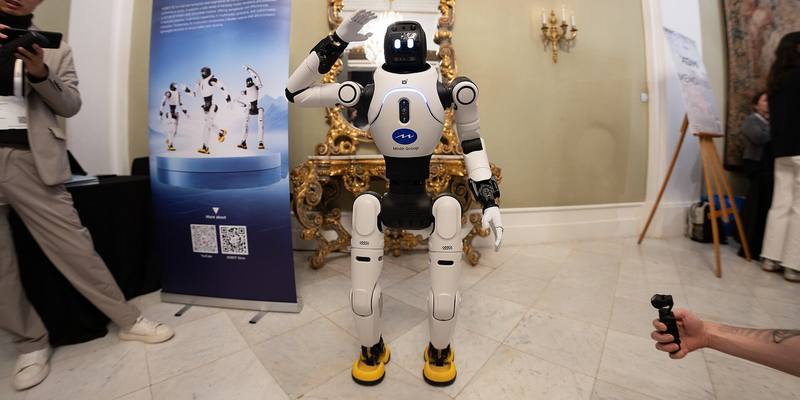
An AgiBot X2 humanoid robot waves at a demonstration during MWC 2026 in Barcelona. Image: JJxFile / Wikimedia Commons, CC BY 4.0, cropped

Almost every humanoid robot sold in the world this year came from a Chinese company. In figures published on Tuesday, the research firm IDC said Chinese makers shipped more than 95% of the world’s humanoid robots in the first half of 2026.
Five times as many robots as a year ago
IDC counted close to 25,000 humanoid robots shipped worldwide between January and June, up 432.1% on the same period last year. The market was worth more than $740 million, up 322.7%.
China itself took more than 19,000 of them, about 77.9% of the total, making it by far the biggest market as well as the biggest maker. IDC puts that down to government support, with local authorities, industrial parks and state-owned companies funding innovation centres, publishing use cases and buying robots, and to a supply chain that covers everything from parts and complete robots to the AI models that run them.
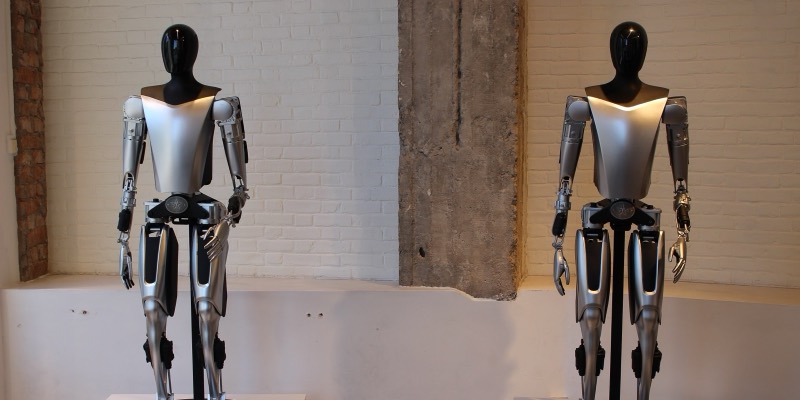
It names three Chinese makers focused on factory work: AgiBot, UBTech and Galbot. The figures leave little room for the US names that get most of the attention in the West, such as Tesla’s Optimus, Figure and Boston Dynamics’ Atlas, though IDC’s summary doesn’t give company-by-company numbers.
Most still end up in labs and on stage
The numbers are big in percentage terms but small in absolute ones, and most of these robots aren’t doing real work yet. Research and education, performances and exhibitions, and government “data collection centres”, where robots are used to gather training data, still took 69% of shipments in the first half. That is down from 83.8% across 2025.
The rest are starting to spread into car and electronics factories, shops, logistics and tourism. IDC also says small, low-cost humanoids are now being sold to consumers online in China, pitched for children’s education and companionship.
It has raised its forecast for 2030 by about 50%, and now expects more than 750,000 humanoid robots to ship that year. Li Junlan, a research manager at IDC China, said the fight is moving from hardware to the AI that controls the robots:
Whoever can close the loop between technology, data, engineering and real-world use fastest will have the advantage in the next stage of competition.
Li Junlan, research manager, IDC China
Beijing is getting pickier about robot IPOs
The boom has a wobble. On Tuesday, CNBC reported, citing three people familiar with the matter, that China’s securities regulator has informal guidance for humanoid robot makers hoping to list on the stock market: they need stable revenue and orders, narrowing losses, and their own core technology, such as a robot “brain” or hands. More than 20 robot companies have applied to list in Hong Kong. The regulator hasn’t published the guidance.
Outside China, the pressure on workers is already showing. Tesla staff have said they don’t want to train the Optimus robots built to replace them, and in Ukraine a former defence minister wants a humanoid robot on the front line within six months.
Why it matters
Humanoid robots are the physical end of the AI race, and on IDC’s numbers China is already far ahead on making and selling them. Most are still demo and research machines, but if the forecast of 750,000 a year by 2030 is anywhere near right, the country that builds them will shape how fast they reach factories and homes.
Sources: IDC (September 29, 2026, in Chinese), CNBC.
Latest Robotics news