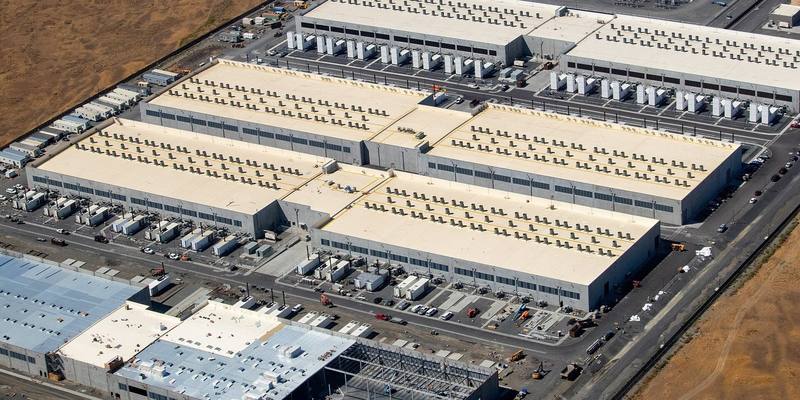
Amazon Web Services data centres in Morrow County, Oregon, part of its us-west-2 region, in August 2023. Image: Tedder / Wikimedia Commons, CC BY-SA 4.0, cropped

Amazon has decided the backlash against data centres is now a threat to America’s place in the AI race, and it is putting $1 billion on the table to calm it. In a post on Friday, Amazon Web Services chief executive Matt Garman pledged the money to the towns that host its data centres, promised to stop using non-disclosure agreements with local officials, and took aim at what he called “misinformation and outright lies” about the buildings.
“Writing its own losing ticket”
Garman compared the AI buildout to the US interstate highway system of the 1950s, with one difference: this time, he said, private industry is “picking up the tab” rather than taxpayers. He warned that the countries that lead in AI “will shape it and get the most from it”, and that a lapse in focus “could put us behind, and potentially irreparably so.”
The opposition is the problem, in his telling:
Right now there are over 100 data center moratoriums being considered across the country. If these measures are enacted, the U.S. could be writing its own losing ticket to this race, and the consequences would last generations.
Matt Garman, CEO, Amazon Web Services
He also claimed there are “widespread reports of various countries intentionally seeding misinformation in the U.S. about data centers to trick us into slowing down”, though the post doesn’t say which countries or point to the reports.
Amazon’s case against the critics
Most of the post is a list of what Amazon calls myths. On water, it says a typical data centre uses about 170,000 gallons a day, not the five million often quoted, and that Amazon’s average is under 13,000 gallons, about what 42 US households use. On power bills, it calls blaming data centres “misleading and convenient scapegoating”, pointing to an old grid that hasn’t kept up and saying prices have fallen in some states with lots of data centres. On pollution, it says backup diesel generators run about 10 hours a year, mostly for testing.
These are Amazon’s own figures and haven’t been independently checked. Critics in many of the places we have covered, from Trump’s home county to Phoenix and Memphis, have argued about exactly these points, and who ends up paying for the grid is still a live fight in several states.
What the $1 billion pays for
The new programme, called Built Together, adds more than $1 billion over five years on top of the more than $1 billion Amazon says it has already given data centre communities in the last three years. It has three parts:
- Free college and training: free community college for residents of data centre areas, which Amazon estimates will reach more than 300,000 students in five years, plus 16 more on-site training centres for trades such as electricians and fibre technicians.
- Energy and water: grants for efficiency upgrades at more than 300 schools and community buildings and over 30,000 homes, which Amazon says should save about $700 a household a year.
- Local priorities: “millions of dollars per year in each community” for things like roads, parks, fire equipment and affordable housing, chosen with local groups.
Alongside the money, Amazon published a Data Center Commitment. It says the company no longer uses NDAs with the government agencies it works with on projects, will pay enough for energy that its data centres don’t raise local electricity bills, will fit the cleanest EPA-rated backup generators at new sites, and will publish its energy and water use every year.
Why it matters
When the biggest cloud company starts framing local planning fights as a national security problem, it shows how much the AI boom now depends on winning over county boards and town halls. The end of NDAs and the yearly water and energy figures are concrete promises residents can hold Amazon to; the rest depends on whether those communities trust the company’s numbers.
Sources: Amazon, “Amazon’s approach to data centers: community-focused, sustainable and efficient” (Matt Garman, October 2, 2026); Amazon Data Center Commitment.
Latest Business news