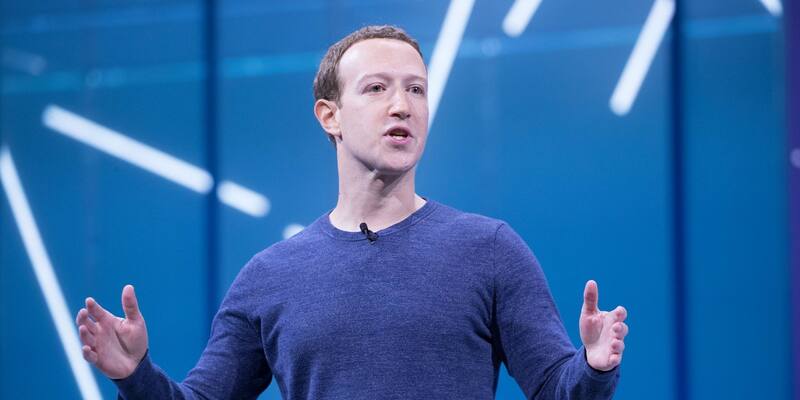
Meta chief executive Mark Zuckerberg speaking in February 2016. Illustrative photo. Image: Alessio Jacona / Wikimedia Commons, CC BY-SA 2.0, cropped

Meta plans to raise up to $95 billion by selling new shares, the company announced on Monday, to pay for the data centres and AI models behind Mark Zuckerberg’s push for what he calls personal superintelligence.
The money comes in two parts: about $35 billion from stock offerings launched today, and up to $60 billion more sold gradually from early next year. The first instalment alone is bigger than Saudi Aramco’s 2019 listing, which at $29.4 billion is still the largest IPO on record.
How the $95 billion breaks down
The prospectus filed with the SEC sets out three pieces:
- $22.5 billion of Class A shares. These are sold through forward sale agreements with Morgan Stanley and Goldman Sachs, so Meta receives the cash only when it settles them, on dates it picks up to November 19, 2027. At Friday’s closing price of $642.62, that is about 35 million new shares. The underwriters can buy a further $3.375 billion.
- $12.5 billion of convertible preferred stock. Meta is selling 250 million depositary shares, each a twentieth of a preferred share, which convert automatically into common stock around August 15, 2029. They will trade on Nasdaq as METAM. The dividend rate and conversion terms are set at pricing.
- Up to $60 billion of Class C shares. This “at-the-market” programme lets Meta sell stock into the market bit by bit. It can only start once Meta’s new non-voting Class C shares begin trading, which Meta expects in the first quarter of 2027. Meta says it has signed no agreement yet and that the timing, size and terms are undecided.
Meta says the proceeds are for “general corporate purposes”. Morgan Stanley and Goldman Sachs are running the sale.
Nvidia, AMD and Broadcom may buy in
Three chipmakers whose hardware fills AI data centres have offered to act as cornerstone investors. Nvidia, AMD and Broadcom have indicated an interest in buying up to $5 billion of the Class A shares between them, at the same price as everyone else.
The offer is not binding. The filing says any of the three could buy more, fewer or no shares, and the underwriters could choose not to sell to them.
Why Meta needs the money
Last week Meta raised the bottom of its 2026 spending forecast to $135 billion to $145 billion, and today’s announcement repeats that range. In the third quarter it spent $34.91 billion on capital projects, more than the $32.79 billion its operations brought in, leaving free cash flow at minus $2.12 billion.
Its cushion is thinner too. Meta had about $82 billion of cash and marketable securities at September 30, while long-term debt stood at $80.92 billion, up from $58.74 billion at the end of 2025, according to its quarterly report.
The spending is going on sites such as its gigawatt Prometheus supercluster in Ohio. Meta says it owns data centres in 23 US states, is building four superclusters of more than a gigawatt each and is on track to nearly double its computing capacity this year. It also points to more than 10 million users of its Muse AI agent in the US and Canada in the first weeks after launch, and to Muse Wonder, its first frontier model.
Meta says it will fund all this through “a balanced mix of operating cash flow, investment-grade debt, strategic partnerships, and equity capital”, calling the share sales “a complementary source of capital”.
Zuckerberg keeps his grip
Most of the new money is planned to come from Class C shares, which carry no votes. Each Class A share has one vote and each Class B share, held mostly by Zuckerberg, has ten. Shareholders will get one Class C share for every Class A or B share they own. The change to Meta’s charter takes effect on January 19, 2027, and the payout date has not been set.
That lets Meta sell tens of billions of dollars of stock without diluting the voting control Zuckerberg holds, though ordinary shareholders will still see their slice of the company’s earnings shrink. The prospectus warns the new shares “will have a dilutive effect on our earnings per share and return on equity”.
Why it matters
Meta made $97 billion of operating cash in the first nine months of 2026 and still needs outside money to keep building. When one of the richest companies in tech turns to shareholders as well as bond markets, it is a sign the AI build-out has outgrown even Big Tech’s cash, one of the warning signs in our AI bubble checklist.
Sources: Meta announcement (SEC free writing prospectus); Meta prospectus supplement; Meta Form 10-Q for the third quarter of 2026.
Latest Meta news