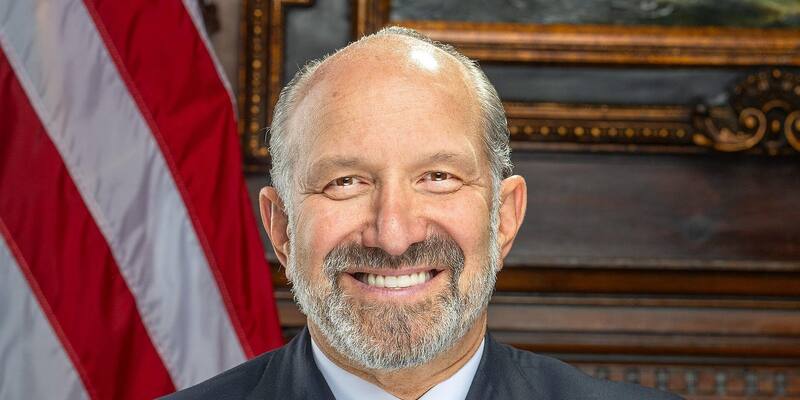


Jacob Helberg, the US Under Secretary of State for Economic Affairs, who convened the Pax Silica retreat, in an earlier portrait. Image: Mobelkin / Wikimedia Commons, CC BY-SA 4.0, cropped

Ten governments led by the US have agreed on what they must protect together in the race to build AI, from software and know-how to ports and power networks. The San Francisco Declaration, signed on Sunday at a Pax Silica retreat hosted by Under Secretary of State Jacob Helberg, does it in the Trump administration’s new vocabulary, calling the technology “super intelligence” throughout.
Who signed
The text was released by the governments of the United States, Australia, India, Israel, Japan, South Korea, Qatar, Singapore, the United Arab Emirates and the United Kingdom. The State Department says they signed it on November 15 at the Pax Silica Founders Retreat in San Francisco, convened by Helberg, who is Under Secretary for Economic Affairs.
Pax Silica is the US-led coalition launched in December 2025 with a short, non-binding declaration on securing the supply chains behind chips and AI. It has grown fast: by October it had 26 signatories to that first declaration, according to a timeline kept by the Information Technology and Innovation Foundation, among them the European Commission, which signed in June. The EU is not on the new text, and neither are most of the other later joiners.
What they agreed to protect
The declaration sets out a shared definition of two things the partners will guard. The first is sensitive technologies: “goods, software, materials, knowledge, components and inputs used to produce them, and their means of production” that are essential to AI supply chains, where theft, illicit transfer or acquisition “by hostile actors would confer a meaningful military or intelligence advantage, or undue economic leverage” over the signatories.
The second is critical infrastructure. That covers “the ports, terminals, transport, communications, and logistics networks” behind AI supply chains, the telecoms and energy systems they run on, and the digital platforms used to manage them, along with the data flowing through them.
It also commits the partners to five working groups, which the State Department lists as:
- pro-innovation policy frameworks
- adoption of AI in key sectors
- supply chain cooperation across the AI stack
- safe harbours and supply chain security hubs
- AI security and resilience
The text names no specific chips, companies or countries, sets no deadlines and creates no binding obligations. It is framed as a “common understanding”, and the State Department says it gives the coalition “a common baseline and a path to act on it”. Who will lead the working groups, and when they first meet, hasn’t been announced.
The ‘super intelligence’ footnote
The wording follows Trump’s September executive order telling every federal agency to say “Super Intelligence” and “SI” instead of “AI”, a change that has since spread to company names such as SpaceX’s AI arm. The declaration uses “SI” throughout, from “SI supply chains” to “the SI stack”.
Not every partner has signed up to the new word, though. A footnote on its first use reads: “For some participants, ‘super intelligence’ refers to ‘artificial intelligence.’”
Days before Trump meets Xi
China appears nowhere in the text. But its talk of “economic coercion”, “non-market policies and practices” and keeping technology from “undue access, influence, or control” echoes long-standing US complaints about Beijing, and the signing comes days before Trump is due to meet Xi Jinping at the APEC summit in Shenzhen, where chips and AI are expected to be discussed.
Beijing has been tightening its own grip: in October its commerce and science ministries proposed export controls on 23 AI technologies, from large models to AI chip design. Washington, meanwhile, is reported to be preparing to name more than two dozen US firms, among them Nvidia, OpenAI and Anthropic, as AI “national champions” to help them sell abroad.
Why it matters
The first Pax Silica declaration was a statement of intent; this one gives ten of its members a shared definition of what counts as worth protecting, from technical know-how to the ports that ship the hardware. Whether it changes anything depends on the working groups, which so far exist only on paper.
Sources: US Department of State (San Francisco Declaration and media note); European Commission; Information Technology and Innovation Foundation.
Latest Policy & Safety news