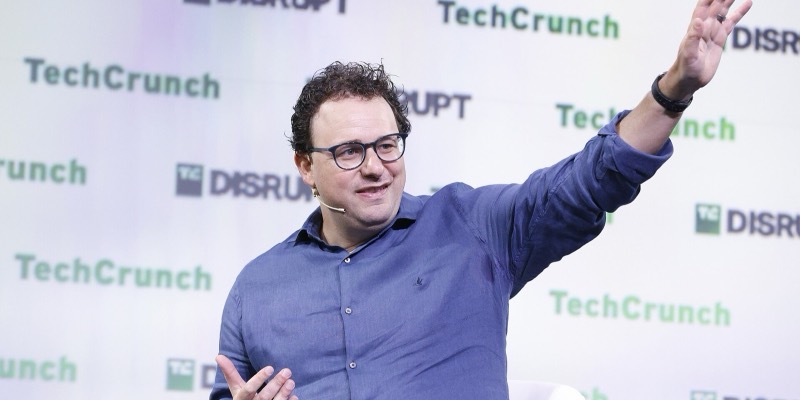
Anthropic CEO Dario Amodei, pictured in 2023. Image: TechCrunch / Wikimedia Commons, CC BY 2.0

Two months ago, the verdict on Claude was brutal. Developers called Opus 5 a “downgrade.” They said it rambled, buried its answers and rewrote half your codebase to fix a typo. Some went back to the previous model; plenty defected to OpenAI’s Codex. On Monday, Anthropic released Claude Opus 5.5, and the mood has flipped almost overnight. The internet has a phrase for this, and for once it fits: Claude is so back.
How bad it got
It’s worth remembering how rough the summer was. When Opus 5 launched in July, users complained that its answers were scattered and exhausting, that it “never answers the actual question you ask it,” and that it treated minor bugs as emergencies, according to a roundup by MindStudio. The word that kept coming up was “nerfed.” A whole genre of complaint emerged about “Claudish” writing: formulaic, jargon-heavy and convoluted.
What people are saying now
The benchmarks came first. Independent tester Artificial Analysis put Opus 5.5 at the top of its Intelligence Index with a score of 58, leading six of its ten evaluations. It says the model brings Anthropic level with OpenAI’s GPT-6 Astra on agentic coding tests while extending its lead in knowledge work. On its private office-task benchmark, it’s the first Anthropic model to beat OpenAI on presentation quality.
Then came the price. Opus 5.5 costs $4 per million input tokens and $20 per million output, 20% cheaper than Opus 5, and Anthropic says it’s 40% cheaper to run on typical work. It’s also bumping up subscribers’ usage limits. On X, AI commentator Alex Volkov captured the general surprise: “Opus 5.5 from Anthropic, first time we see an Opus price drop!?”
But the reaction that matters most came from people who actually use these models all day. The team at Every, which had drifted towards Codex, published a vibe check headlined “Opus 5.5 Is Pulling Our Codex Converts Back to Claude.”
My jaw dropped at least five or six times this week.
Tyler Nishida, Every
His colleague Mike Taylor put it more simply: “They won back my heart.” Engineer Kieran Klaassen reckons it delivers about 90% of Anthropic’s top-end Fable 5.1 at coding, and has made it his daily driver. Every CEO Dan Shipper called it a “smaller Fable — faster and cheaper.”
The writing complaints seem to have landed too. Anthropic says Opus 5.5 puts “the most important information first, uses less jargon, and follows writing instructions more closely,” The Decoder reports. Every measured its prose as the most readable of any Anthropic or OpenAI model it tested, and found it “takes feedback without a fight.” For anyone who spent the summer arguing with Opus 5, that last part is the real headline.
On Hacker News, the Opus 5.5 launch thread shot to the top of the site with more than 1,400 points and nearly 900 comments.
The catches
It isn’t all love. The most common complaint is appetite. Artificial Analysis found that at maximum effort, Opus 5.5 uses around 119,000 output tokens per task, far more than rivals, which eats into that price cut. CodeRabbit’s code-review tests found it catching more hard bugs but using roughly 50–60% more tokens to do it. Every’s testers said it will “run indefinitely” without explicit limits, burned through whole weekly allowances, and sometimes chased side quests instead of the deliverable. One ran out of time on a 10-minute task without producing it.
Some Hacker News users reported Opus 5.5 hitting its token budget mid-thought, and others shared refusals on legitimate low-level systems work. And the writing isn’t fully fixed: Every still found it burying its main point and drafting long.
Then there’s the awkward timing. Days earlier, Dario Amodei published an essay arguing Anthropic should help “pace the frontier.” Opus 5.5 promptly topped the benchmark charts. Anthropic calls it “our first release since we called for pacing the frontier,” arguing that the slowdown is aimed at future systems capable of automating AI research, Trending Topics reports. The most-upvoted Hacker News discussion wasn’t really about the model at all: it was people picking apart what “pacing the frontier” is supposed to mean.
And the lead is fragile. About 90 minutes after Opus 5.5 arrived, OpenAI answered with GPT-6 Sol and Luna at half price.
MadRobot’s take
Benchmarks tell you who’s winning this week. Vibes tell you who people want to work with, and that’s where Anthropic had quietly been losing. Opus 5 was capable but exhausting; Opus 5.5 is the first Claude in a while that people are describing with affection rather than frustration. Cheaper, clearer and easier to argue with beats a few extra points on a leaderboard.
It’s not perfect. It’s hungry, it wanders, and Anthropic’s “pacing” messaging is doing it no favours. But the story of the summer was developers leaving Claude. The story of this week is them coming back. That’s the comeback.
Related