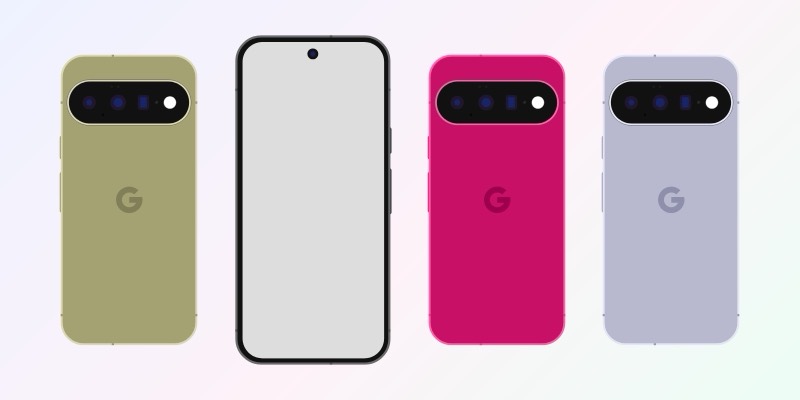
Illustrations of the Pixel 11 in its four colours: Pistachio, Obsidian, Hibiscus and Frost. Image: DM115Wiki / Wikimedia Commons, CC BY-SA 4.0, cropped
.svg)
Hate making phone calls? Google’s Gemini AI will now make them for you. A new feature called Call for Me lets Gemini phone a business on your behalf, get through the automated menus, wait on hold and then hold a real conversation with whoever picks up, 9to5Google reports. It’s one of the clearest examples yet of an AI agent doing a chore in the real world rather than on a screen. For now, it’s a small US-only test on Google’s new Pixel 11 phones.
What Call for Me can do
Google’s examples are the sort of calls most people put off:
- booking a table, or asking for patio seating at a restaurant;
- checking whether a shop has something in stock, and putting it on hold;
- moving an appointment, like a haircut, to another day;
- updating an order or making a special request.
You tell Gemini what you need, and it places the call from your own number. You follow along on a live transcript in the Gemini app, can take over at any point, and get a summary when it hangs up. It can also share personal details you’ve approved, such as your name or a booking reference, TechCrunch reports.
The person answering is told straight away that they’re talking to an AI. In Google’s demo, the call opens with Gemini introducing itself as “an AI assistant calling on behalf of” the user.
How the AI behind it works
A phone call is a surprisingly hard job for an AI. It has to understand what you want, make sense of a phone menu, recognise when a real person comes on the line after a long hold, then hold a live, spoken conversation with a stranger who might go off-script, and know when to stop and hand back to you.
Google has been building the pieces for years. Direct My Call already transcribes automated phone menus on Pixels, and Hold for Me waits on hold and alerts you when a human answers. Call for Me combines those with Gemini’s ability to understand requests and talk naturally, so the whole call can be handed over, Engadget notes.
Google hasn’t said which Gemini model handles the calls. The feature is part of Gemini Intelligence, the Pixel 11’s suite of AI features, which mixes Gemini Nano running on the phone’s Tensor G6 chip with larger models in the cloud; simpler tasks like transcription can run on the device, while more complex, open-ended requests generally need the cloud, Know Your Mobile explains.
Who can get it, and how
For now you need all of these:
- a Pixel 11, 11 Pro, 11 Pro XL or 11 Pro Fold;
- to be in the US;
- a paid Gemini subscription (Google hasn’t said which plans are included);
- to join the Phone by Google public beta, which you can do from the app’s Google Play testing page.
Even then, it’s an early preview rolling out gradually, so it may not appear straight away. There’s no word yet on other countries, including the UK, or older Pixels; Android Police expects it probably won’t come to anything older than the Pixel 10.
Why Google is taking it slowly
Google is moving carefully. It’s “starting this experiment at a small scale because real-world conversations are nuanced,” and says it wants to respect the time of “neighborhood shops and front-desk staff,” because these calls are “real customers conducting real transactions.”
That caution has history. When Google first demoed an AI phoning a hair salon, called Duplex, at its I/O conference in 2018, it faced a backlash because the eerily human voice didn’t say it was a machine. Google has made AI disclosure standard since, and 2025’s Ask for Me feature let Gemini call local businesses to check prices and availability for you. Call for Me goes further: it acts on your behalf, from your number, and can make changes to your bookings.
What about the person who picks up?
Businesses already have some say over Google’s AI calls. Google’s help pages let owners switch off “Google automated calls and text messages” in their Business Profile’s advanced settings, or simply say “please stop calling my business” during a call. Google hasn’t said whether that setting also covers Call for Me, which rings from the customer’s own number rather than from Google.
Regulators are paying attention to AI voices on the phone, too. In 2024 the US Federal Communications Commission ruled that AI-generated voices count as “artificial” under America’s robocall law, aimed mainly at scam calls using cloned voices. A one-off call that a customer asks for isn’t a robocall in the usual sense, but it shows why clearly saying “I’m an AI” matters. Google also hasn’t said how long call audio or transcripts are kept.
The AI agent race moves to the phone
Google isn’t alone. Meta’s Muse agent can already make calls for its users, according to TechCrunch, and every big AI lab is racing to build agents that do tasks rather than just answer questions. Phone calls are one of the last everyday chores that still need a human voice, which makes them an obvious next target.
Whether it works in practice is another matter. Small businesses may not have much patience for awkward AI calls, as Droid Life points out, and a busy front desk that’s getting calls from AI assistants may soon be answering with an AI of its own.
Why it matters
This is AI agents stepping out of the browser and into live conversations with real people. If it works, restaurants and shops will increasingly find an AI on the other end of the line, so how clearly these assistants identify themselves, and how politely they behave, will matter as much as what they can do.
Sources: 9to5Google, TechCrunch, Engadget, Android Police, Droid Life, Know Your Mobile, Google Business Profile Help, FCC
Related