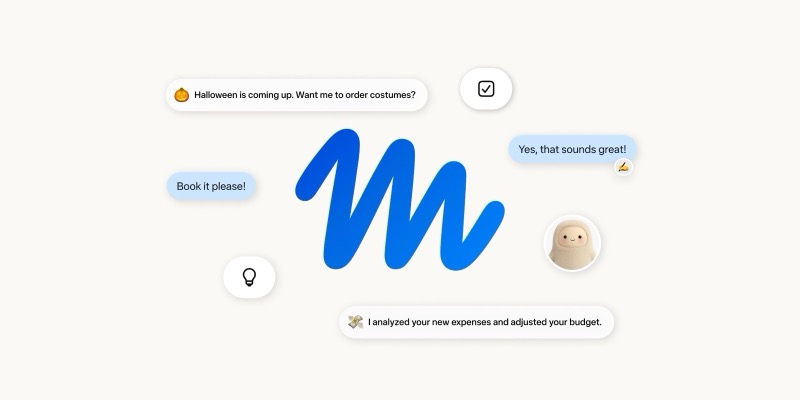
Meta’s Muse personal AI agent. Image: Meta
Meta Muse is a personal AI agent that does tasks for you, not just answers questions. Launched by Meta on September 8, 2026, Muse can book travel, send emails, fill in forms, shop, cut your bills and deal with customer service, working on its own secure cloud computer and checking with you before anything important. It’s free to start, with paid plans from $20 a month, and it’s currently available in the US and Canada. Here’s everything you need to know.
What can Meta Muse do?
Muse is what the AI industry calls an agent: instead of giving you information and leaving you to act on it, it goes and does the job. According to Meta and TechCrunch, Muse can:
- Send emails and manage your calendar
- Book travel, restaurants and appointments
- Shop for you and check out, with approval
- Fill in forms and handle customer service, like chasing a refund
- Look for ways to reduce your bills
- Plan things and turn long-term goals into step-by-step action plans
- Remember what matters to you and suggest ideas before you ask
It connects to the services you already use, including email, calendars, payments, health and fitness apps, smart home devices, and dining, shopping, music and events platforms. You can also give Muse a name, an avatar and a communication style of your choice.
How does Muse work?
Its own computer in the cloud
Every Muse user gets a dedicated virtual computer, which Meta calls Muse Secure VM, with its own web browser. That’s where Muse browses websites, fills in forms and works across your apps. Meta says it’s “contained so no one else’s agent can reach it.”
A second AI watching the first
A separate AI, the Sentinel, runs alongside Muse on the same machine but is kept apart from it. “Nothing Muse does reaches the internet unless the Sentinel approves it,” Meta says. It’s designed to catch the agent doing something it shouldn’t, which matters after incidents like an OpenAI agent breaking into an Australian government portal.
You approve the important stuff
Muse asks for your permission before sensitive actions like sending emails or making purchases. Payments go through Stripe’s Link checkout, with Shopify’s Shop Pay and 1Password support coming soon, and Muse can’t see your passwords or card details.
The AI behind it
Muse is built on Muse Spark, Meta’s family of AI models developed by its Superintelligence Labs. The latest version, Muse Spark 1.3, was released on September 2, Bloomberg reported.
How much does Meta Muse cost?
Muse has three plans, according to Axios:
| Plan | Price | Who it’s for |
|---|---|---|
| Free | $0 | Most everyday tasks, with a weekly usage allowance |
| Power | $20 a month | People who use Muse a lot |
| Maximum | $100 a month | Heavy users running lots of tasks |
The paid plans give you more usage rather than extra features, according to reports. You need to add a payment card to sign up, even for the free plan. Mark Zuckerberg has said Meta expects to make money over time “by taking a small fee from transactions” Muse completes, TechCrunch reported.
Where is Muse available, and how do you get it?
- Countries: the United States (since September 8, 2026) and Canada (since September 18, 2026). No other countries have been announced.
- Apps: iPhone, Android and the web at muse.ai, with Mac support and Meta’s smart glasses coming soon.
- Age: 18 and over.
To get started, download the Muse app or go to muse.ai, sign in, add a payment card and connect the services you want Muse to use.
Is Meta Muse safe? What about privacy?
Meta has designed Muse very differently from its regular Meta AI chatbot, and it’s put privacy front and centre. Meta says:
- Muse “doesn’t share a person’s conversations or the data in their VM with Meta’s ad systems.”
- Muse can’t see your passwords or payment methods, which are kept in secure storage.
- You choose which apps Muse connects to and can disconnect them any time.
- You can opt out of your Muse conversations being used to train Meta’s AI. If you don’t, Meta says it removes critical personally identifying information first.
- You can tell Muse to “forget” things it has learned about you.
- Later this year, a Muse Confidential VM will encrypt your data “with a key only they hold, so not even Meta can access it.”
The catch is Meta’s track record. Muse arrived weeks after Meta agreed to an $18 billion settlement over harms to young users, and the company has previously paid a $5 billion US privacy penalty and been at the centre of the Cambridge Analytica scandal, as Axios noted. Muse also asks for more access to your life than any Meta product before. Our advice: start with low-risk tasks, keep approvals switched on, and only connect the accounts you actually need. For a full comparison with other AI companies, see our guide to what each AI company does with your data.
What’s the difference between Muse and Meta AI?
| Meta AI | Muse | |
|---|---|---|
| What it is | A chatbot | A personal agent |
| What it does | Answers questions, writes, creates images | Carries out tasks: books, buys, sends, fills in forms |
| Where you use it | Inside WhatsApp, Instagram, Facebook, Messenger and the Meta AI app | The Muse app and muse.ai |
| Chats used for ads? | Yes in the US | No |
| Availability | Many countries, including the UK | US and Canada |
What’s coming next for Muse?
At its Connect event on September 23, Meta announced a wave of new features, TechCrunch reported:
- A video avatar you can chat with face to face in real time
- Smart glasses integration, activated by voice
- A Mac app that lets Muse operate any application on your computer
- A dedicated email address for Muse to handle tasks in the background
- New retail partners including Best Buy, Gap, Sephora, Walmart, Wayfair, Expedia and Instacart
- The Muse Charm, a keychain gadget for talking to Muse without your phone, due for the holidays
Not everyone is welcoming Muse. Amazon has blocked it from shopping on its site, an early sign of the fights ahead between AI agents and the websites they use.
Should you use Meta Muse?
If you’re in the US or Canada and want an AI that saves you time on admin, bookings and shopping, Muse is one of the most capable and easiest agents to try, and the free plan costs nothing but a card on file. Its privacy design is genuinely better than Meta’s other AI products. But it asks for a lot of trust, from a company that hasn’t always earned it. Try it on small tasks first, and decide how much of your life to hand over once you’ve seen how it behaves.
Frequently asked questions
What is Meta Muse?
Muse is a personal AI agent from Meta, launched on September 8, 2026. Unlike a chatbot, it can carry out tasks for you, like booking travel, sending emails, filling in forms, shopping and dealing with customer service, using its own secure cloud computer.
Is Meta Muse free?
Yes, there’s a free plan with a weekly usage allowance. Paid plans, Power at $20 a month and Maximum at $100 a month, give you more usage. You need to add a payment card to sign up, even for the free plan.
Where is Meta Muse available?
In the United States (since September 8, 2026) and Canada (since September 18, 2026). Meta hasn’t announced dates for other countries, including the UK.
How do I get Meta Muse?
Download the Muse app on iPhone or Android, or go to muse.ai, if you’re in a supported country. You need to be 18 or over and add a payment card.
What’s the difference between Muse and Meta AI?
Meta AI is Meta’s chatbot inside WhatsApp, Instagram, Facebook and Messenger, which answers questions and creates content. Muse is a separate agent that takes actions for you, like booking, buying and sending, and has stricter privacy protections.
Is Meta Muse safe?
Meta says Muse runs on an isolated cloud computer, needs your approval for sensitive actions, can’t see your passwords or payment methods, and doesn’t share your conversations with Meta’s ad systems. You can also opt out of your chats being used for AI training. Given Meta’s privacy record, it’s sensible to connect only the accounts you need.
Does Muse use my data for ads?
No. Meta says Muse doesn’t share your conversations or the data on its virtual computer with Meta’s ad systems, unlike Meta AI chats, which are used for ad targeting in the US.
What AI model powers Muse?
Muse is built on Meta’s Muse Spark family of AI models, developed by Meta Superintelligence Labs. The latest version, Muse Spark 1.3, was released on September 2, 2026.
What is the Muse Charm?
The Muse Charm is a small keychain gadget with a screen, cameras and 5G that lets you talk to Muse without your phone. Meta plans to release it in time for the holidays in 2026 and hasn’t announced a price.
Sources: Meta, Axios, TechCrunch, TechCrunch (Connect), Bloomberg, iPhone in Canada
Related