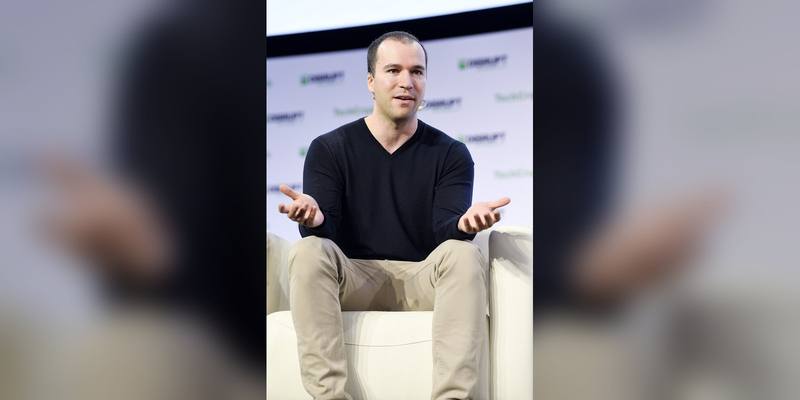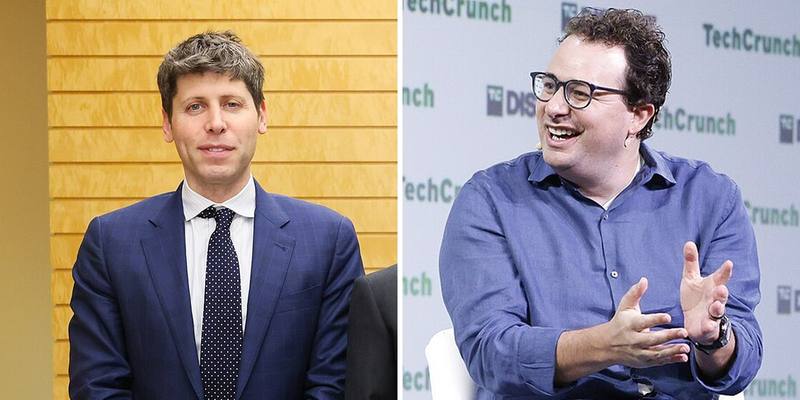
OpenAI CEO Sam Altman (left) and Anthropic CEO Dario Amodei. Image: Office of the Prime Minister of Japan, CC BY 4.0 (Altman); TechCrunch, CC BY 2.0 (Amodei)
Google’s new Gemini 4 Argon claims top scores on some of the hardest tests in AI. Meta’s Muse agent is being pushed to billions of people inside apps they already use. And free models from China are getting close to the frontier. So what, exactly, stops Google and Meta from simply rolling over OpenAI and Anthropic?
The short answer: not the models. A great model on its own is no longer a moat, if it ever was. What OpenAI and Anthropic have instead is a head start with paying customers, a grip on developers and businesses, and a lead in turning models into products people rely on. Those are real advantages, but they’re thinner, and far more expensive to hold, than their valuations suggest.
Why the model itself isn’t a moat any more
A moat is anything that stops rivals taking your customers even when they offer something similar. For most of 2023 and 2024, having the best model looked like enough. It isn’t now, for three reasons.
- The lead keeps changing hands. Google says Argon now sets the best score on DeepSWE, a test of long software engineering tasks, and tops the Vals Index of finance, legal and coding work, at an introductory $2 per million input tokens and $10 per million output. A week earlier, OpenAI’s GPT-6 Astra and Anthropic’s Opus 5.5 were the ones setting records.
- The labs are undercutting themselves. At its developer conference on Tuesday, OpenAI launched GPT-6.1 Sol, which it says nearly matches Astra on coding and professional work at a fifth of the price. When the leader cuts its own prices by 80%, customers learn that last month’s best model is this month’s bargain.
- Free models are close behind, and copying helps. Anthropic’s own red team found that Z.ai’s GLM-5.3, which anyone can download, solved 50 of 410 tasks on a hard hacking benchmark, against 56 for Anthropic’s restricted Mythos model. And OpenAI says people linked to the maker of Kimi tried to copy its model’s hidden reasoning with 16,000 requests in two days. If the frontier can be partly copied, it can’t be the moat.
Why Google and Meta look so strong
Distribution is the obvious argument for the giants, and it’s a good one. Google can put Gemini in front of people through Search, Android, Chrome, Gmail and Workspace without asking anyone to download anything, and it is replacing Google Assistant with Gemini on phones. Meta is building Muse into Facebook, Instagram and WhatsApp, and has just launched a version for businesses and hired MongoDB’s chief executive to sell it to employers.
They also don’t need AI to pay for itself yet. Search ads and social media fund their data centres, while OpenAI and Anthropic have to raise money or sell AI to cover theirs. And Google makes its own chips, which is one reason it can price Argon so aggressively.
That’s the case for the person asking whether Google and Meta simply win in the end. It’s a strong case for ordinary consumers. It’s much weaker for the people and businesses who actually pay for AI today.
What OpenAI and Anthropic have instead
Here’s where the two labs are genuinely hard to dislodge, at least for now.
Paying customers, especially businesses
The money in AI right now comes mostly from companies and developers, not casual chatbot users, and that is where the two labs are strongest. Anthropic told investors its revenue more than doubled to $11.6 billion in the three months to June, more than twice what it made in the whole of 2025, while OpenAI made $6.7 billion in the same quarter, according to figures reported by the Wall Street Journal (we covered them in our look at Anthropic’s IPO). Google and Meta don’t break out comparable AI revenue, but neither has shown an AI business that size outside its own cloud and ads.
Developers and the tools they work in
Coding tools such as Claude Code and OpenAI’s Codex have become the clearest example of AI people pay for and use every day. Once a team has built its workflows, prompts, permissions and automations around one tool, switching isn’t just picking a better model: it means rebuilding how the team works. That habit, rather than any benchmark score, is the closest thing either lab has to a classic moat.
Being everywhere, including inside rivals
Both labs sell through other people’s platforms. Anthropic’s filing shows 47% of its 2025 sales came through Amazon’s and Google’s cloud marketplaces, which makes Claude the default choice for many companies already using those clouds. In other words, Google competes with Anthropic, invests in it, rents it computing power and resells its models, all at once. Distribution cuts both ways.
Turning models into products first
OpenAI’s new dots, agents that keep working on your goals between conversations, are a bet that the next lock-in isn’t the model but the agent that knows your work, your files and your preferences. An agent that has learned how you work for six months is much harder to leave than a chatbot you can swap tomorrow.
Brand and talent
“ChatGPT” has become the everyday word for an AI chatbot in much of the world, and Claude has a reputation among developers that no amount of advertising buys quickly. Both labs also still attract many of the researchers who decide what the next generation of models can do.
Where their moat is weakest
- Cost. Staying at the frontier costs extraordinary sums. Anthropic has committed $518 billion to computing and infrastructure, against about $20 billion in cash at the end of 2025, and reported a $42 billion net loss last year. OpenAI’s operating loss was $12.3 billion in the second quarter alone. Google and Meta pay for their AI out of profitable businesses; the labs pay for theirs with investors’ money.
- Dependence on rivals. Anthropic’s biggest suppliers include Google and Amazon. OpenAI relies heavily on Microsoft. Their competitors can, in effect, set some of their costs.
- Prices are falling. If every new model is cheaper than the last, the labs have to keep growing usage just to keep revenue rising.
- Consumers are fickle. Most people don’t care which model answers their question. If Gemini or Muse is already on their phone and good enough, many won’t open another app.
So will Google and Meta win in the end?
For everyday consumer AI, they have the better hand: the apps, the devices and the money to give AI away. It would be no surprise if Gemini and Muse end up as the assistants most people use most often.
But AI isn’t one market. Businesses choose on reliability, security, price and how well a tool fits their work, and switch slowly once they’ve committed. Developers choose the tool that gets the job done. In those markets OpenAI and Anthropic are leading today, and both are racing to turn that lead into products that are painful to leave before their money runs short.
Tech history points both ways. Microsoft used Office to push Teams past Slack, which is the distribution story the giants are counting on. But Google once had every advantage in social media and still lost with Google+, because people go where the product is better. The likeliest outcome isn’t one winner but a split: Google and Meta dominate casual use, while OpenAI and Anthropic hold the paying, professional end, as long as they can afford to stay at the frontier.
Frequently asked questions
Does OpenAI have a moat?
Not in the classic sense. Its models can be matched or undercut within months. Its real advantages are ChatGPT’s brand, its paying users and businesses, its developer tools such as Codex, and new agent products that are harder to leave.
Does Anthropic have a moat?
Its strongest advantage is with businesses and developers, especially through Claude Code, plus distribution through Amazon’s and Google’s cloud marketplaces. But it depends on rivals for computing power and is spending far more than it earns.
What is a moat in AI?
A moat is any advantage that stops rivals taking your customers even when they offer something similar, such as lock-in, distribution, lower costs or a brand people trust. In AI, the model on its own has proved a weak moat because rivals catch up quickly.
Will Google win the AI race?
Google has huge advantages: Search, Android, Chrome, its own chips and an ads business that pays for AI. It is well placed to lead consumer AI, but businesses and developers still mostly pay OpenAI and Anthropic today.
Can open-source AI models catch up with OpenAI and Anthropic?
They are close on some tasks. Anthropic’s own tests found Z.ai’s downloadable GLM-5.3 nearly matched its restricted Mythos model on a hacking benchmark, and open models usually trail the frontier by months rather than years.
Why are OpenAI and Anthropic worth so much if they have no moat?
Investors are betting that their revenue, which is growing extremely fast, and their lead in business and coding tools will turn into lasting lock-in before rivals catch up. Both are still losing billions of dollars a year.
MadRobot’s take
OpenAI and Anthropic don’t have a moat in the old sense. They have a lead, and leads in AI last months, not years. What they’re really selling investors is the belief that they can keep turning each lead into habits, products and contracts faster than Google and Meta can turn distribution into quality. The coding tools show it can be done. The bills show how little room for error there is. If either lab stumbles for a year, the giants won’t need a better model to take its customers, just a good enough one that’s already there.
Sources: Google DeepMind, OpenAI DevDay 2026 recap, OpenAI, Introducing GPT-6.1 Sol, OpenAI, model-distillation report, Anthropic Frontier Red Team, Meta, Reuters and the Wall Street Journal (Anthropic and OpenAI financial figures).
Latest OpenAI news