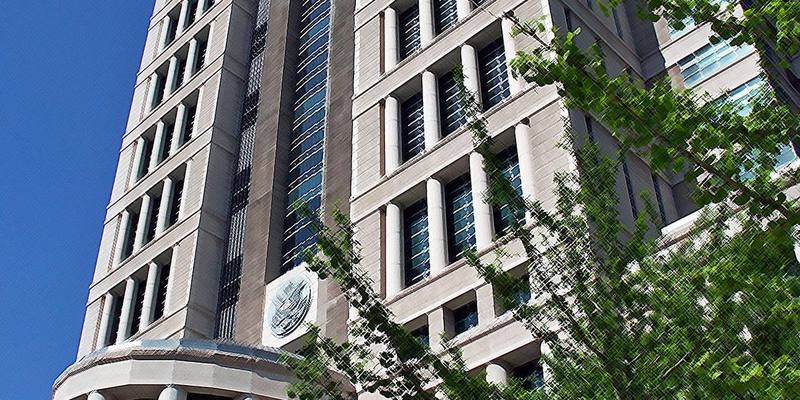
The Thomas F. Eagleton US Courthouse in St. Louis, home of the 8th US Circuit Court of Appeals, in 2012. Image: United States District Court for the Eastern District of Missouri / Wikimedia Commons, Public domain, cropped
.jpg)
Elon Musk’s xAI has persuaded a federal appeals court to put Minnesota’s ban on AI-generated fake nude images on hold, Reuters reported on Friday. The 8th US Circuit Court of Appeals in St. Louis granted the company an injunction while it challenges the first-in-the-nation law as a breach of free speech, overturning a lower court that had let the state enforce it.
The order itself wasn’t publicly available when this story was published, so it isn’t yet clear which judges decided it or how they reasoned. The appeal is case No. 26-2806, brought against Minnesota Attorney General Keith Ellison by xAI, which now trades as SpaceXAI.
What the law bans
The law took effect on August 1. It bars website operators, software developers and others from letting users create realistic images showing an intimate body part that isn’t visible in the original photo of an identifiable person. It passed the Legislature with near-unanimous support: 197 lawmakers voted for it and one against, according to Ellison’s office. Regulators can fine companies up to $500,000 per violation, according to MPR News.
xAI sued on July 27 and asked for an emergency order two days later. A federal judge refused it on July 31, noting that xAI had filed “nearly three months after the law was signed, and only three days before the law is set to take effect”, which “suggests that harm is not immediate”. In earlier arguments, xAI said it would switch off features for Minnesota users rather than risk fines.
“Undisputed harm”
On September 4, US District Judge Donovan Frank turned down xAI’s request to block the law while the case goes on. He found the company hadn’t shown it would suffer irreparable harm and had waited too long to seek emergency relief, and he pointed to the financial and psychological damage done to people whose images are faked:
The state has enacted, democratically and nearly unanimously, a civil statute aimed at protecting the public from the undisputed harm stemming from AI-nudification technology and the resulting proliferation of photorealistic sexualized images.
Judge Donovan Frank, US District Court for the District of Minnesota
He also accepted that the constitutional questions are “complex, particularly when considered in the context of this new technology”.
On appeal, xAI disputed the finding that it had delayed, and said its Grok Imagine tool includes “rigorous protections” against creating nudified or sexualised images of real people. Free speech groups backed it: the Foundation for Individual Rights and Expression, the Woodhull Freedom Foundation and the First Amendment Lawyers Association filed a brief supporting its emergency motion on September 29.
Minnesota points at Grok
The state had urged the appeals court to leave the law in place, saying it was passed to fight what it called a “staggering amount (of) child sexual abuse material that AI products like Grok Imagine generate”. In its filings, Ellison’s office cited a class action brought by five children who say their photos were turned into abuse images on Grok Imagine, a suit by two Arkansas families, and a UK lawmaker’s case over sexualised fake images of her.
When the first ruling went his way in July, Ellison named xAI’s tool directly:
These nudification apps, including Grok Imagine, have been used to generate child sexual abuse materials and harass people in the vilest ways imaginable. That repulsive behavior is not welcome in Minnesota.
Keith Ellison, Minnesota Attorney General
xAI said in May that Grok would no longer digitally undress images of real people, and it has since started suing users it says get around Grok’s blocks to make sexual images of people without consent. But tests published this week found Grok would still strip a hijab from a photo of a Muslim woman, showing how narrowly those rules are drawn. Neither xAI nor Ellison’s office had commented publicly on the appeals court’s order by Saturday morning. The state also has a motion pending to dismiss xAI’s lawsuit altogether.
Why it matters
Minnesota went further than any other state by targeting the tools that make fake nudes, not just the people who share them, and the order means that approach is frozen while the courts decide whether it can survive the First Amendment. Other states drafting their own deepfake rules will be watching, and so will victims, who for now lose the threat of $500,000 fines hanging over the companies.
Sources: Reuters (via MPR News); 8th Circuit docket, No. 26-2806 (CourtListener); Minnesota Attorney General’s Office; MPR News.
Latest SpaceXAI news