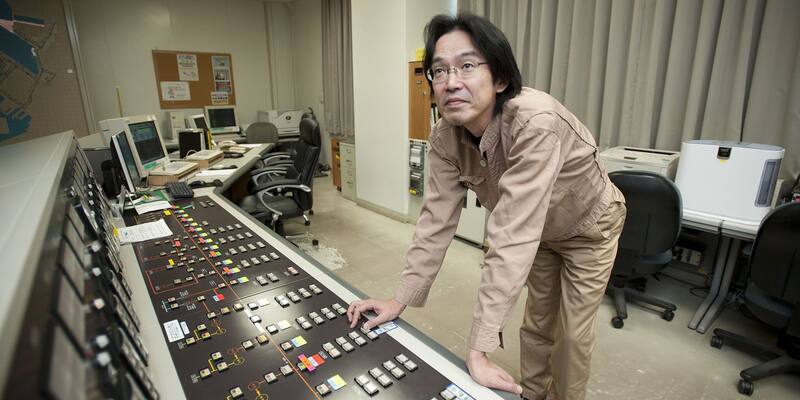
A power dispatcher at the SCADA control panel balancing the electrical load at Commander Fleet Activities Yokosuka, Japan, in March 2011 (illustrative). Image: Joe Schmitt, U.S. Navy / Wikimedia Commons, Public domain, cropped
_system_to_balance_an_electrical_load_insid.jpg)
Anthropic is sending its engineers, its threat researchers and its strongest Claude models to the companies that protect power grids, water systems and transport networks. The company launched the Anthropic Cyber Mission on October 8, a long-term effort to help defenders, starting with critical infrastructure and open-source software.
It comes two days after Anthropic folded Project Glasswing into an expanded Cyber Verification Program that gives vetted security teams wider access to Claude’s hacking skills. Anthropic says Glasswing turned up many vulnerabilities but “we haven’t yet achieved a sufficient reduction in cyber risk”, because finding bugs is now easy while verifying, prioritising and fixing them is still slow.
Engineers on site for the grid
The first part is the Critical Infrastructure Defense Program (CIDP). Rather than selling to utilities directly, Anthropic is working through the providers operators already rely on to secure “operational technology”: the controllers, control software and industrial networks that run plants, substations and water works. The program brings frontier Claude models, on-site Anthropic engineers and the company’s threat research to those providers.
The 11 founding partners are Accenture, Booz Allen, CrowdStrike, Deloitte, Dragos, Hitachi, Insane Cyber, Nozomi Networks, Palo Alto Networks, PwC and Rockwell Automation, a mix of consultancies, security firms and the manufacturers that build and patch the equipment. Anthropic says several are already using Claude to fix vulnerabilities, and that its first step is a small cohort to learn what works. Other companies that build security products for critical infrastructure can register their interest.
Anthropic admits the problem is hard: operational technology often cannot be taken offline to patch, so known holes can stay open for years, and “a mistake can take down a plant”. It says the cyber defence program it opened in June for US state, local, tribal and territorial governments now reaches more than half of all US states.
Dan Gunter, chief executive and founder of Insane Cyber, said the sites most at risk are the hardest to staff:
The sites that need protection most, like remote substations, offshore platforms, and air-gapped plants, are exactly where traditional tools can’t reach and specialists can’t be.
Dan Gunter, CEO and founder, Insane Cyber
“Machine-speed defense”
Several partners framed the program as a race against attackers who already use AI. Sam Rubin, senior vice president of Palo Alto Networks’ Unit 42, said threat actors “are using AI to find and exploit exposures at machine speed”. Palo Alto already runs Anthropic’s Mythos against its customers’ systems around the clock. CrowdStrike’s chief business officer put it bluntly:
Critical infrastructure is where cyber risk becomes real-world risk.
Daniel Bernard, chief business officer, CrowdStrike
Free bug scans for open-source projects
The second part is OSS Scanner, a free, opt-in service modelled on Google’s OSS-Fuzz. Enrolled projects get periodic scans from Anthropic’s most capable models, and each report includes a proof of concept, an explanation and a suggested fix where one exists.
The catch is that the reports are sent without human review. Anthropic says it expects a true-positive rate above 90%, an unverified figure, and warns some reports will contain mistakes such as a wrong severity rating. It is aimed at established projects with the staff to keep up; core maintainers enrol by opening a pull request on GitHub, and there is no 90-day disclosure deadline on the unreviewed findings. Everyone else keeps getting human-checked reports through Anthropic’s existing disclosure process, which the company says had reviewed more than 6,000 reports by October.
Anthropic also says it has funded the Python Software Foundation, the Apache Software Foundation, and Alpha-Omega and OpenSSF through the Linux Foundation. It did not give amounts. Maintainers can apply for free Claude Max subscriptions through Claude for Open Source.
Why it matters
Anthropic forecasts that within two years AI will favour defenders, but says that in the near term it may not, a worry sharpened by its own finding that a downloadable Chinese model can now build working exploits. OpenAI is making a similar pitch with free cyber defence for Ukraine’s hospitals and power plants; the test for both is whether fixes start landing as fast as the bugs are found.
Sources: Anthropic, Anthropic (OSS Scanner).
Latest Anthropic news