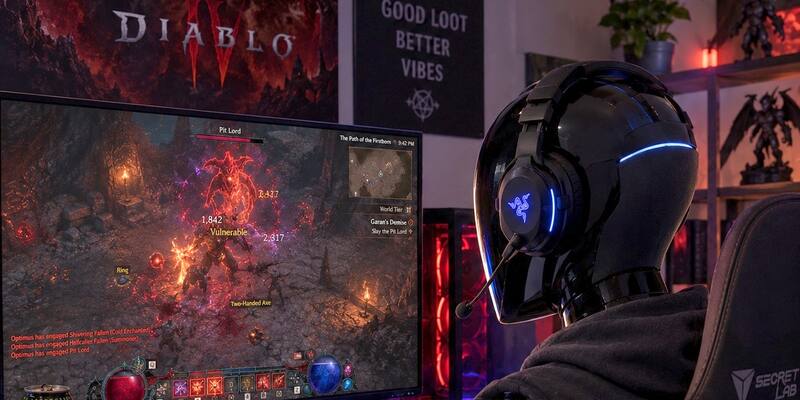
Illustration of a Tesla Optimus robot playing Diablo IV. Digital Optimus itself is software that plays on a computer, with no robot needed. Image: MadRobot illustration, made with ChatGPT
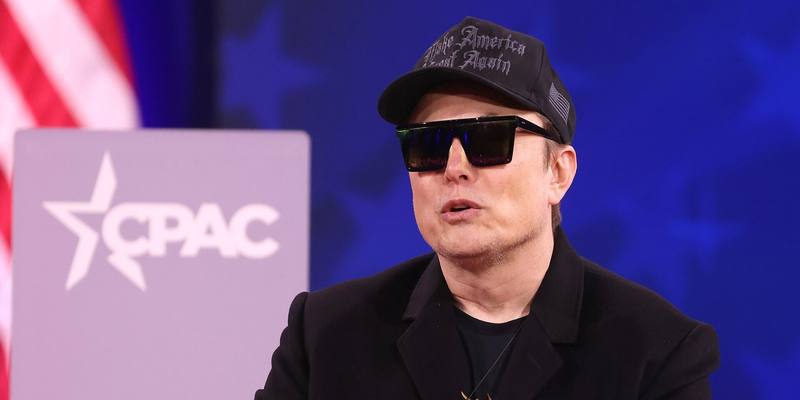
Elon Musk says Digital Optimus, the AI that Tesla and SpaceXAI are building to use computers like a person, can now play about halfway through a Diablo campaign with nothing to go on but what it sees on the screen. Musk said so on X on Saturday morning, two years to the day after Tesla showed off its Optimus robots at its We, Robot event.
He gave no video, benchmark or paper to back it up, so for now the claims are his alone.
What Musk said
Musk was replying to a post about a new Tesla job listing for a machine learning engineer working on games:
We’re making interesting progress here.
— Elon Musk (@elonmusk) October 10, 2026
Digital Optimus can play about halfway through the Diablo campaign so far just by looking at the screen like a human.
Skill at Counter-Strike and other fast games is good too.
League is also in training.
Goal is to generalize across all games.
He didn’t say which Diablo game, what difficulty it plays on, how long it took to get that far or how it compares with human players. “League” most likely means League of Legends, the online battle game. A few hours later he added: “Join @TeslaSI if you’re interested in solving generalized real-world super intelligence!” @TeslaSI is Tesla’s AI account on X, which took the name Tesla Super Intelligence this week, days after Musk said SpaceXAI would become SpaceXSI.
What Digital Optimus is
Musk announced Digital Optimus, which he also calls Macrohard, on March 11 as a joint project between Tesla and xAI, the AI company SpaceX took over in February. In his description, Grok does the high-level thinking and acts as “the master conductor/navigator”, while Digital Optimus handles the fast part, “processing and actioning the past 5 secs of real-time computer screen video and keyboard/mouse actions”.
He compared the pair to the two systems of the human mind, with Digital Optimus as the instinctive “System 1” and Grok as the slower, thinking “System 2”. He said it would run on Tesla’s AI4 chip, which he priced at $650, with “relatively frugal” use of xAI’s more expensive Nvidia hardware, and that “in principle, it is capable of emulating the function of entire companies”.
No version has been released to the public, and Tesla hasn’t shown footage of it working.
Why games
The job listing that started the thread is for a Machine Learning Engineer, Realtime Games, on the Digital Optimus team in Palo Alto. It describes agents that play AAA games, browse the web and use professional apps at superhuman levels.
Games make a useful training ground for that kind of agent. They run in real time, punish slow reactions and can be replayed endlessly without breaking anything. An AI that only sees pixels and presses keys has no shortcut into the game’s code, which is the same position it would be in when using a spreadsheet, a browser or an app with no API.
Others have tried this before. Google DeepMind’s SIMA agents learned to follow instructions in a range of 3D games through the screen, keyboard and mouse, and OpenAI and DeepMind built game-playing systems for Dota 2 and StarCraft II years ago, though those connected to the games directly. Computer-use agents are now a crowded field: SpaceXAI’s own Grok Bot works on a cloud computer and is already inside Tesla’s cars.
Big claims, no demo yet
Musk often sets out bold timelines for Tesla’s AI, and Optimus itself has been slower to arrive than he promised. Insiders said last month that the humanoid robot can’t yet reliably handle a wide range of tasks. Getting halfway through a slow, mouse-driven role-playing game is also a very different job from carrying out a long piece of office work without mistakes.
Musk said the goal is to generalise across all games. Whether the skills carry over to everyday software, and eventually to a physical robot, is the question Tesla hasn’t answered yet.
Why it matters
If Digital Optimus can really play fast games from the screen alone, Tesla and SpaceXAI have a serious entry in the race to build AI that uses computers the way people do. Until Tesla shows it working, though, the progress rests on a few lines from Musk on X.
Sources: Elon Musk on X (October 10); Elon Musk on X (March 11); Tesla careers.
Latest SpaceXAI news