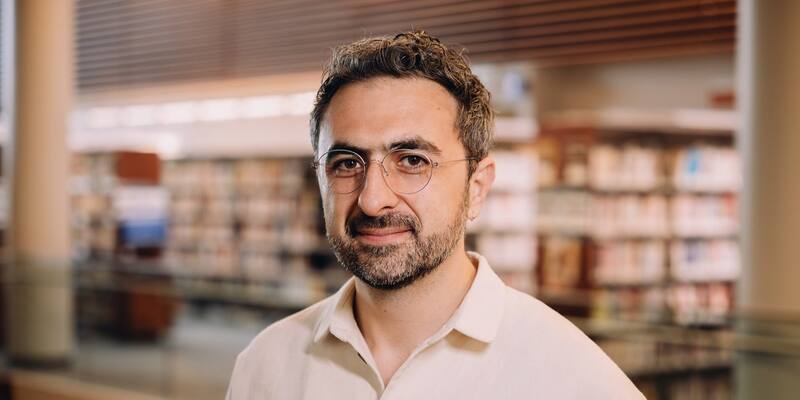
Mustafa Suleyman, CEO of Microsoft AI, whose team trained MAI-Base-2, photographed in April 2024. Image: Christopher Wilson / Wikimedia Commons, CC BY-SA 4.0, cropped

Microsoft has built a giant AI model of its own, and it did it without OpenAI. Microsoft AI, the lab run by Mustafa Suleyman, said on Thursday it has finished pre-training MAI-Base-2, a mixture-of-experts model with 2.8 trillion parameters in total, of which 80 billion are active for any given word.
The model is not something anyone can use yet. It is now in post-training, the stage that turns a raw base model into a chatbot or assistant, and Microsoft says it will share more results “soon”.
16,000 Nvidia chips, 38 days
Microsoft says it trained MAI-Base-2 on 16,000 Nvidia GB200 GPUs over 38 days in August and September 2026, on a mixture of 50 trillion tokens with a knowledge cutoff of March 2026. Its chips were kept busy 89% of the time the run was going, it says, with an average model FLOPs utilisation (the share of the hardware’s theoretical maximum actually put to work) of 21%.
It is a big step up. MAI-Base-1, the base model under the MAI-Thinking-1 reasoning model Microsoft released in June, has about 1 trillion parameters in total and 35 billion active. Microsoft says its pool of unique training data grew by roughly 36% between the two.
MAI-Base-2 is also Microsoft’s first model trained to see from the start. Instead of bolting on a separate image encoder, it learns from pictures and text together, from chart reading and computer use to medical images and sheet music. Vision-language data made up 18% of the training mix.
Microsoft says it beats every open model it tested
Microsoft claims MAI-Base-2 outperforms every open-weight model it tested on its own held-out tests in code, maths, STEM and question answering, against DeepSeek-V4-Pro-Base, Kimi K3, Qwen3.8-2.4T-A95B and MiMo-V2.6-Pro-RL. It measured them by how well each predicts unseen text, using code from Microsoft’s own codebase and test sets it commissioned from vendors to avoid contamination.
Its headline claim is efficiency. Microsoft estimates its training recipe is 4.2 to 12.3 times more compute-efficient than the one behind DeepSeek-V4-Pro-Base, the only released open base model above a trillion parameters, and 6.3 to 12.7 times more efficient than its own recipe for MAI-Base-1. It says it spent that saving on training a larger model.
These are Microsoft’s own figures on its own tests, and nobody outside the company has checked them. Three of the four rivals were only available as post-trained models, which Microsoft admits may skew the comparison, and it has not published standard benchmark scores. Leading closed models from OpenAI, Anthropic and Google were not in the comparison.
Built from scratch, with no copying
Microsoft stresses that MAI-Base-2 is trained on “organic data” rather than distilled from other companies’ models, and that it processed every training token in-house. Its web crawler respects robots.txt, it says, and it leaves out sites on the US Trade Representative’s Notorious Markets list of piracy hubs.
That provenance is the sales pitch. Microsoft says it plans to license MAI-Base-2’s weights to “trusted partners” through Foundry, its AI platform for businesses. It has not named any partners, a price or a date. That is a different route from the Microsoft-Decision-1 model it put on Foundry days earlier, which is built on top of Alibaba’s Qwen.
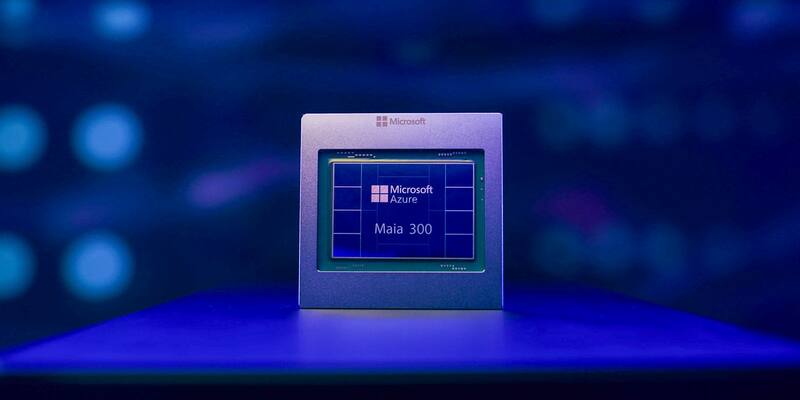
The work behind it is part of the same push as the Maia 300 chip Microsoft unveiled on October 12, which Suleyman tied to his team designing models and hardware together. Microsoft says preparations for MAI-Base-3 are already under way.
Why it matters
Microsoft still leans heavily on OpenAI’s models, and MAI-Base-2 is the clearest sign yet that it means to have a frontier model of its own. If the efficiency claims hold up once the finished model ships, it would also undercut the idea, popularised by Chinese labs like DeepSeek, that the cheapest way to train giant models is their way.
Sources: Microsoft AI: Frontier pre-training at Microsoft AI; Microsoft AI: Introducing MAI-Thinking-1
Latest Microsoft news