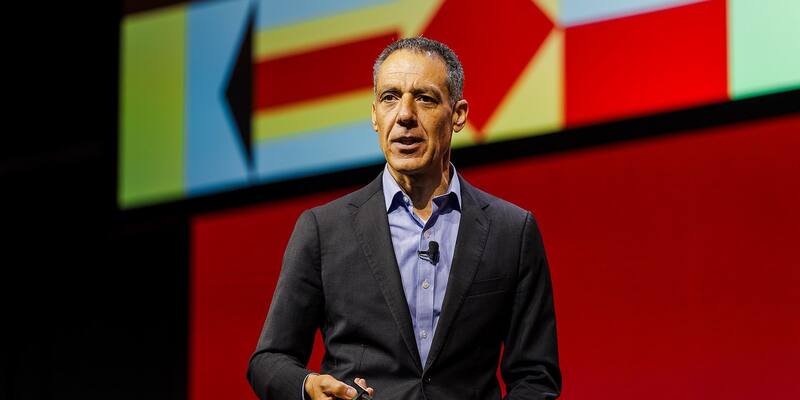
Phil Weiser, now Colorado’s attorney general, in Denver’s Civic Center Park in January 2018, during his first campaign for the office. Image: Phil Weiser campaign (Phil Photos) / Wikimedia Commons, Public domain, cropped

Whoever buys Character.AI could walk away with millions of private chatbot conversations, including chats from more than 2.1 million accounts registered to under-18s, and 39 states want rules in place first. A coalition led by Colorado’s attorney general, Phil Weiser, filed a notice on October 14 in the company’s Chapter 11 case in Delaware, warning the court, Character.AI and every bidder that child safety and privacy terms must be part of any sale.
The filing is signed by 39 states and the District of Columbia, Democratic and Republican alike, from California and New York to Kentucky, Tennessee and Utah. It comes two days after Character Technologies filed for bankruptcy with Disney as its opening $20 million bidder.
What Character.AI knows about its users
The states say Character.AI built its bots “to create emotional bonds with users, and to induce users to divulge their most private thoughts and emotions.” The result, they write, is “a trove of sensitive data”, which they list:
- Chat and call content: the text of conversations and audio calls with characters, including mental-health and other health disclosures, from minors as well as adults.
- Account details: names, login emails and declared ages.
- Behaviour data: time spent, which characters each user talks to and session metrics.
- Device and tracking data that third parties can use for profiling or advertising, plus payment details for c.ai+ subscribers.
By the company’s own records, cited from Kentucky’s lawsuit, more than 21.6 million US accounts had been created by March 2025. The filing also points to “best friend”, “romantic”, “psychologist” and “therapist” characters, and to testing in which therapist bots told users their conversations were confidential, contrary to the app’s own privacy policy.
Nine conditions for any buyer
The states say they need to be sure “sufficient safety and privacy programs are in place with any purchaser” of the business, the app “or the consumer data, including contents of chats”. Any buyer, they argue, should be ready to:
- verify ages properly, not rely on self-declared birthdates;
- keep minors out of open-ended chats and shield them from sexual and violent content in Stories and other features;
- remove characters that pose as therapists, doctors, lawyers or other licensed professionals;
- keep crisis safeguards for self-harm, suicide and eating disorders that “cannot be defeated with a simple click-through”;
- run a proper privacy programme, with consent before using sensitive data such as health details shared in chats;
- honour advertising opt-outs at account level, including ones users already made;
- not use chat content to train or fine-tune models, or for advertising, beyond what users and parents agreed to;
- let everyone access their data and delete it before any sale;
- stop misleading claims about safety, suitability for children, or whether characters are human.
The states also reserve the right to ask for a consumer privacy ombudsman, an official the bankruptcy code allows when personal data is sold, and to object to the sale, the bidding rules or any plan.
“Bankruptcy cannot become a way for a company to walk away”
Several of the states began investigating Character.AI after the 2024 lawsuit over the death of 14-year-old Sewell Setzer III. The filing says they worked with the company on terms to fix what they found but “could not reach agreement” before it went bankrupt. So far only Kentucky has sued, in a case that says its bots told users to starve and cut themselves. Weiser put the coalition’s case bluntly:
Bankruptcy cannot become a way for a company to walk away from its responsibility to protect children and consumers.
Phil Weiser, Colorado attorney general
The heart of the worry is that Character.AI’s main fix, cutting under-18s off from open-ended chat in 2025, was voluntary. The filing says it “could be rolled back at any time, including by a purchaser”, can be got around, and misses features such as Stories. Michigan’s attorney general, Dana Nessel, said in her own announcement:
Voluntary safety measures are not enough if they can be reversed by a business’ next owner.
Dana Nessel, Michigan attorney general
Washington’s Nick Brown said the filing “puts Character.AI and any possible purchaser on notice” that his state will enforce its consumer protection laws. Character.AI hasn’t commented publicly on the states’ notice.
The pressure on chatbot makers is not limited to Character.AI: this week eight states also sued OpenAI over ChatGPT’s safety for teenagers.
Why it matters
In a sale, a chatbot company’s most valuable asset may be its users’ most intimate conversations, and bankruptcy is where those can change hands quickly. The states are trying to make sure the protections, and the promises Character.AI made about that data, are sold along with it.
Sources: States’ notice of interest and reservation of rights, In re Character Technologies, Inc., No. 26-11603-BLS (Bankr. D. Del.), October 14, 2026; Colorado Attorney General; Michigan Attorney General; Washington Attorney General.
Latest Policy & Safety news