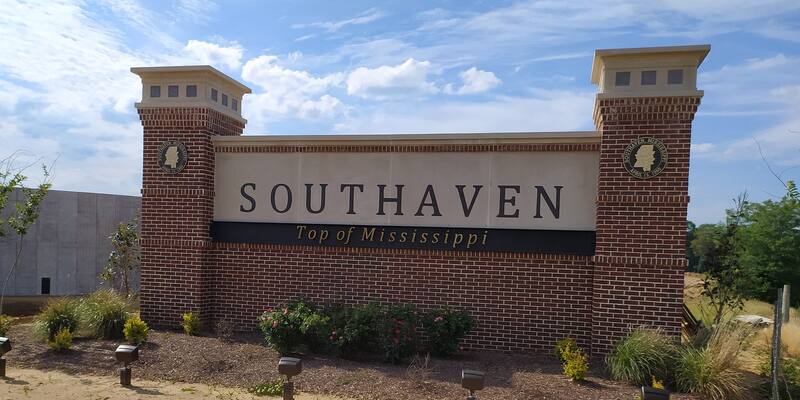
The Southaven city sign off Interstate 55, photographed in 2020. The buyouts are in Colonial Hills, on the city’s western edge. Image: Chillin662 / Wikimedia Commons, CC BY-SA 4.0, cropped

Elon Musk’s AI company is buying up the houses around its noisy power plant in Southaven, Mississippi, as long as the owners agree not to sue. Estate agents working for it have been going door to door in the Colonial Hills neighbourhood, residents told the Guardian, and in a recording the paper heard, one realtor told a homeowner the target is 418 homes.
The plant, a former Duke Energy site running 69 temporary gas turbines, powers the company’s data centres either side of the Mississippi and Tennessee border, including Colossus 2, where Musk is racing to add hundreds of thousands more Nvidia chips. xAI was folded into SpaceX in February, and its AI business now goes by SpaceXAI.
418 homes, one condition
A letter handed to residents by MZX Tech, the SpaceXAI subsidiary that runs the site, says it “requires property for its business purposes” and will buy nearby houses on one contractual condition: the sellers must not join the class action over the turbines’ noise. In the recording, the realtor put the target at 418 homes, with 18 owners already agreed. DeSoto County records show MZX has bought five homes in the neighbourhood since October 9, the Guardian found.
The offers are at market value, in an area where homes average about $180,000 (roughly £135,000 or €155,000). Even all 418 would come to around $75 million, a small sum for an AI business that took in $7.6 billion in its last quarter alone.
Southaven’s mayor, Darren Musselwhite, told the Guardian the homes will house some SpaceXAI staff and called the buyout “a goodwill gesture from a good corporate citizen for those who perceive the industrial development near them as a negative.” He added: “The buyout is not intended to be a company city at this point.”
“It drives you insane”
Jason Haley has owned his home, about half a mile from the turbines, for 20 years. In June he and two neighbours filed Haley v. X.AI Corp. in federal court in Mississippi, against X.AI, SpaceX and MZX, over what they call “near-constant noise, vibrations and other nuisance-level harms.” Their complaint says more than 10,000 people live in the affected area. Haley told the Guardian:
There’s a high-pitched hum and then another sound like an airplane over your house. It’s been so torturous I can’t sleep. It drives you insane.
Jason Haley, Southaven resident and plaintiff, to the Guardian
The offer is working on some. Gavin Foust, a paramedic who lives nearby, said his elderly neighbours have just agreed to sell, but he won’t, because of the clause barring him from suing. “Why push people out? It’s reckless and shameful,” he said. Elizabeth Rose, a piano teacher who lives about two miles from the site and says the noise wakes her at 2am, fears the buyout is spreading:
It will become Elon Musk’s little playground, basically. Elonville.
Elizabeth Rose, Southaven resident, to the Guardian
What SpaceXAI says
SpaceXAI didn’t answer the Guardian’s questions about the numbers or its plans for the neighbourhood, and hasn’t commented publicly on the buyouts. It denies all the claims in the noise lawsuit and has said before that “we care deeply about being good neighbors”, pointing to sound-dampening walls and changes to its power output. In July it agreed with state regulators to replace the temporary turbines with a permanent gas-fired plant by next summer, which should cut the noise. Musselwhite says city monitors have not recorded a breach of Southaven’s 70-decibel noise limit.
Lawsuits on both sides of the state line
The Mississippi case isn’t the only one. On September 23, the firms Lieff Cabraser and Greer Injury Lawyers filed a federal class action in Tennessee for south Memphis residents, claiming the data centres and turbine plant have cost them the use of their homes, cut property values and left dust and ash on their land. In April, the NAACP and environmental groups sued to stop the turbines, which the US Environmental Protection Agency says ran without the federal permits the law requires. On October 20 a federal judge rejected a Justice Department bid to block that suit on national security grounds. The fight is part of a wider backlash against AI data centres across the US.
Why it matters
AI companies need land, power and quiet neighbours, and SpaceXAI appears to be paying for all three at once. Every home bought on condition the seller stays out of court is one fewer neighbour in the class suing it, and at about $180,000 a house, the buyouts cost little next to what the company spends on chips.
Sources: The Guardian, Haley v. X.AI Corp. (N.D. Miss.), Lieff Cabraser and Greer Injury Lawyers, NAACP, Reuters.
Latest SpaceXAI news