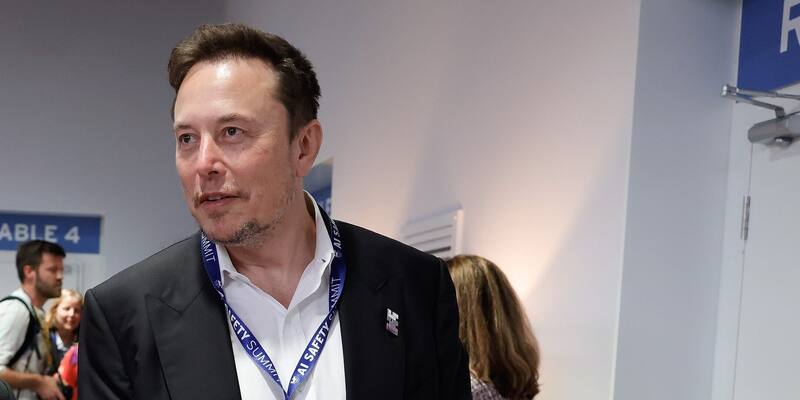
Elon Musk at the Conservative Political Action Conference (CPAC) in National Harbor, Maryland, in February 2025. Image: Gage Skidmore / Wikimedia Commons, CC BY-SA 2.0, cropped

Elon Musk’s AI company has failed to get the NAACP’s pollution lawsuit thrown out. In a 28-page opinion and order signed on Friday, October 30, US District Judge Debra M. Brown refused to dismiss the civil rights group’s Clean Air Act case over the gas turbines that power xAI’s Colossus 2 data centre, ruling that the turbines were never exempt from permits.
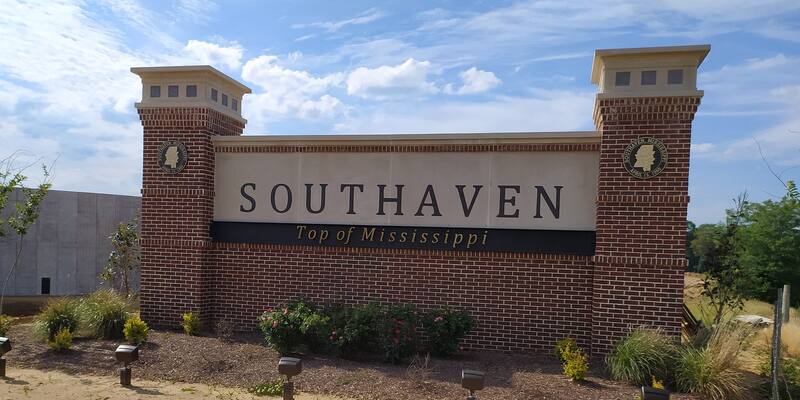
The NAACP sued X.AI Corp. and its subsidiary MZX Tech in April, saying they built and ran the Colossus Gas Plant in Southaven, Mississippi, just over the state line from Memphis, without the permits the law requires. The order says the plant powers Colossus 2, in the Whitehaven area of Memphis. xAI was folded into SpaceX in February and now goes by SpaceXAI.
Three arguments, all rejected
xAI argued that the NAACP had no right to sue on its members’ behalf, that the turbines were “mobile sources” exempt from the permits a fixed power plant needs, and that the Clean Air Act’s citizen suit provision unconstitutionally hands the president’s law enforcement power to private groups. The judge rejected all three: “the plaintiffs’ claims will proceed.”
Turbines on trailers
The mobile source fight turned on a letter. In July 2025, the order says, Mississippi’s environmental regulator, MDEQ, told xAI it understood the turbines would be “mobile” because each would stay fixed to a flatbed trailer, and “temporary” because each would be on site for less than 12 months, so they were exempt from permits.
Judge Brown found otherwise. Under federal rules, a turbine that isn’t self-propelled while it works counts as a stationary combustion turbine, even when mounted on a vehicle, and these are big enough to fall under federal emission standards, so they can’t be mobile sources. MDEQ’s letter “is not consistent with Mississippi’s SIP”, the state’s federally approved clean air plan, she wrote, so it doesn’t bind the court. Her conclusion: the plant “was not (and is not) exempted from permitting requirements.”
The complaint, as the order summarises it, counted at least 27 turbines in April, able to emit about 1,700 tons of nitrogen oxides and 19 tons of formaldehyde a year. The NAACP wants pollution controls and civil penalties of up to $124,426 a day per violation.
“They are not exercising the federal government’s executive power”
On the constitutional point, the judge drew a line between citizen suits and cases brought on the government’s behalf. “Because citizen suit plaintiffs sue on their own behalf, in their own name, and seek penalties that redress harm to themselves, they are not exercising the federal government’s executive power,” she wrote.
Citizen suits are how community groups across the US take polluters to court when regulators don’t. The NAACP, represented by the Southern Environmental Law Center and Earthjustice, welcomed the ruling in a joint statement:
Our position has been clear: xAI cannot operate gas turbines without the required permits. Now that the motion to dismiss has been denied, we look forward to continuing to defend our position in court.
Abre’ Conner, NAACP director of environmental and climate justice
Kym Meyer, the SELC’s litigation director, called it “a victory for communities across the nation, but especially for those in South Memphis and North Mississippi.” SpaceXAI hasn’t commented on the ruling. In July, the company said it would replace the temporary turbines with a permitted 1.2-gigawatt plant and remove them all by July 2027, and that its data showed local air quality met or exceeded EPA standards.
What happens next
The court has yet to rule on the NAACP’s request for a preliminary injunction, which could force changes at the plant before a trial.
The Trump administration is still trying to end it. On October 19 Judge Brown let the US join the case on the EPA’s behalf but ruled that “nothing in the Clean Air Act” lets it dismiss a citizen suit on its own. The government has an appeal before the Fifth Circuit, which has refused to pause the case, and on October 23 it filed a claim against the NAACP asking the court to declare that the suit “cannot proceed against the objection of the United States.”
Neighbours also have a separate noise lawsuit, and the company has been offering to buy their homes if they don’t join it, part of a wider backlash against AI data centres.
Why it matters
The ruling knocks out the defence xAI built its Southaven power supply on: a state letter calling the turbines temporary and mobile. It keeps alive a case that could bring penalties and pollution controls at the plant feeding one of the world’s biggest AI data centres, and leaves the government’s bid to end it resting on an appeal.
Sources: Opinion and order denying motion to dismiss, NAACP v. X.AI Corp. (N.D. Miss., Oct 30, 2026), Opinion and order on the US motion to intervene and dismiss (Oct 19, 2026), United States’ complaint for declaratory relief (Oct 23, 2026), case docket, NAACP, SELC and Earthjustice statement, Engadget
Latest SpaceXAI news