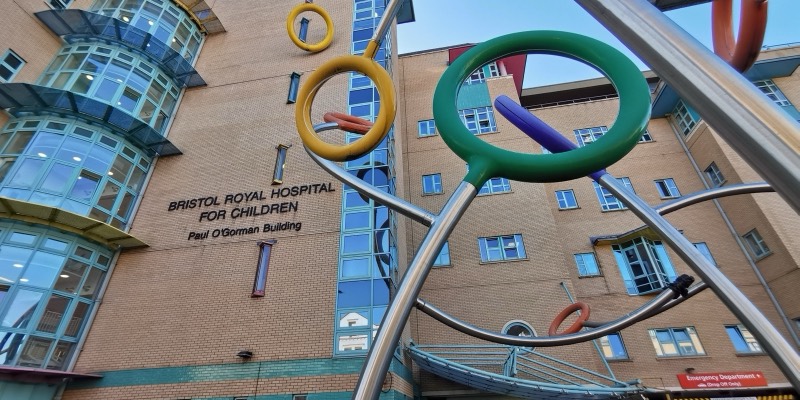
Bristol Royal Hospital for Children, one of the hospitals caring for Lily. Image: Lewis Clarke / Wikimedia Commons, CC BY-SA 2.0, cropped

A mum from Bath says ChatGPT helped get her baby daughter diagnosed with a genetic condition so rare that only six people in the UK are known to have it, the BBC reports. But when she took the chatbot’s suggestion to doctors, she says, “some of them had never heard of it; others said it is so rare it’s very unlikely.”
What happened
Lily, now 19 months old, had surgery for an unexplained heart condition when she was just four months old. Her pupils were also always dilated, and she now has to wear sunglasses outdoors.
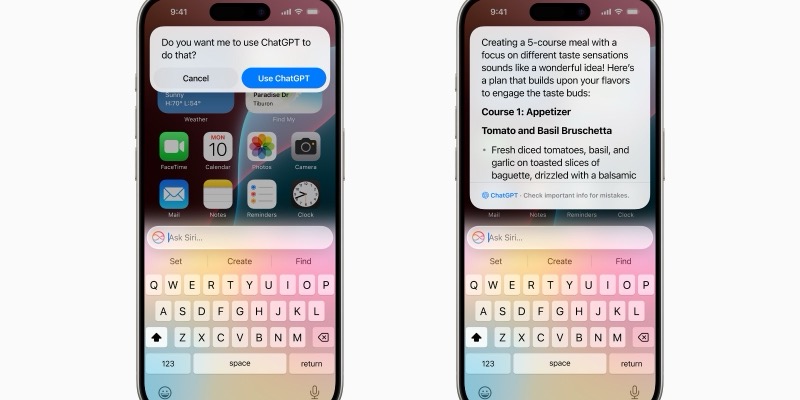
Her mum, Rosie, typed Lily’s symptoms into ChatGPT, which suggested Multisystemic Smooth Muscle Dysfunction Syndrome (MSMDS). In January, tests confirmed that was the answer.
MSMDS is caused by a specific change in a gene called ACTA2 and affects organs including the heart and kidneys. Lily is one of only around 70 people known to have it worldwide. She is now being cared for by Great Ormond Street Hospital and Bristol Royal Hospital for Children.
Experts urge caution
Not everyone thinks families should follow Rosie’s lead. Nick Meade, chief executive of the charity Genetic Alliance UK, told the BBC that Lily’s case is unusual and that the charity isn’t aware of many diagnoses coming from AI.
Machine learning models learn mainly from whatever appears most often in their training data. This is a well-documented problem in AI, and rare conditions are, by definition, the kind of case it affects most.
Nick Meade, Genetic Alliance UK
Research from the University of Oxford earlier this year reached a similar conclusion. Dr Rebecca Payne, a GP who co-wrote the study, has told the BBC that “despite all the hype, AI just isn’t ready to take on the role of the physician,” warning that asking a chatbot about your symptoms “can be dangerous, giving wrong diagnoses and failing to recognise when urgent help is needed.”
A race for a cure
Lily’s parents, Rosie and Jonny, have set up a charity, ACTA2 Alliance UK, to fund research into the condition. International work on a cure is being led from Boston in the US, but the family says the potential gene therapy there is “very invasive.” They are now trying to raise £30,000 towards a proof-of-concept for a less invasive gene therapy being discussed with researchers in England.
This week the family held a “move-a-thon,” asking supporters to log miles walked, run, swum or danced to cover the 3,300 miles from Bath to Boston. Lily’s grandfather, Andy, said the condition is progressive: “We feel we are on a bit of a ticking time bomb.”
Why it matters
Stories like Lily’s are becoming more common as millions of people use chatbots as a first stop for health questions, and they show both sides of it. For families of children with rare diseases, who often wait years for answers, a chatbot that suggests an obscure condition worth testing for can be a breakthrough. But the same tools can confidently get things wrong, and rare diseases are where they’re weakest.
The lesson from this case isn’t that ChatGPT diagnosed Lily. It’s that it gave her mum a lead that doctors then confirmed with proper tests. If you do use AI to research symptoms, treat it as a starting point for a conversation with a doctor, not an answer, and think about what you’re sharing: here’s what each AI company does with your chats.
Source: BBC News
Related