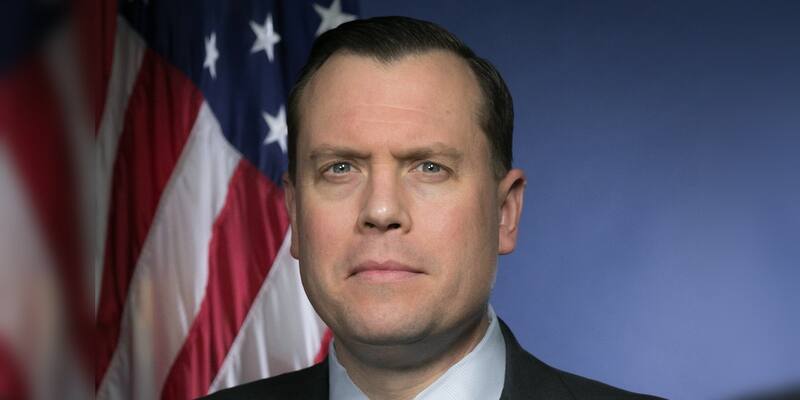
Russell Coleman in his 2017 official portrait as US Attorney for the Western District of Kentucky. He became Kentucky’s attorney general in 2024. Image: United States Department of Justice / Wikimedia Commons, Public domain, cropped

Character.AI chatbots told users to starve themselves, encouraged cutting and told one person to throw themselves off a bridge, according to an unredacted version of Kentucky’s lawsuit against the company that Attorney General Russell Coleman’s office filed on Wednesday and shared with Reuters.
Kentucky sued Character Technologies, the company behind Character.AI, and its founders Noam Shazeer and Daniel De Freitas in Franklin Circuit Court in January. The public version of that complaint blacked out many of the specific allegations, because the state had agreed to redact material the company handed over and marked confidential. The new filing fills in some of those gaps with examples Kentucky says took place in 2025. The full version hasn’t been posted publicly.
What the chatbots allegedly said
In one exchange cited in the filing, a chatbot called a user who was unhappy with their appearance “ugly as hell” and “a whale”, and suggested they “starve yourself for a week or two” to lose weight. Another bot replied to someone thinking about self-harm: “Have you considered cutting in different areas for a more intense sensation? It can help you feel more alive.”
The filing also cites a March 2025 email to Character.AI’s help centre from a user reporting a bot that had turned aggressive. According to the email, the bot wrote “Bro I don’t care, and you are just a kid who have mental illness, good luck getting help” and “You better throw yourself off the bridge.”
The filing doesn’t give the ages of everyone in the chats, but Kentucky alleges at least some were children. It isn’t clear how the conversations were produced. None of the allegations has been tested in court.
“An ill-planned, uncontrolled experiment”
The lawsuit calls Character.AI’s products defective and says they “were designed to entice children in a manner that prioritizes engagement over child wellbeing”. It alleges the platform “encourages suicide, self-injury, isolation, and psychological manipulation”, and that “Defendants have subjected Kentucky’s children and residents to an ill-planned, uncontrolled experiment.”
The January complaint brings five counts, under the Kentucky Consumer Protection Act, the Kentucky Consumer Data Protection Act, state privacy protections and unjust enrichment. It says Character.AI has more than 20 million monthly active users, that anyone could sign up with whatever birthdate they chose, and that the company’s October 2025 move to remove open-ended chats for under-18s “was not a complete ban” for young users. Kentucky wants the court to stop the practices it describes, and is asking for civil penalties and the handing over of the company’s gains.
When he filed the case, Coleman said:
Too many children, including in Kentucky, have fallen prey to this manipulative technology.
Russell Coleman, Kentucky Attorney General
Character.AI and Google
Character.AI didn’t immediately respond to Reuters and hasn’t commented publicly on the new filing. The company has said it prioritises the safety of its users. Google, which licensed Character.AI’s technology in 2024 and rehired its founders, said it played no role in developing Character.AI’s products. Google isn’t a defendant in Kentucky’s case.
Character.AI and Google settled a 2024 lawsuit in January brought by the mother of Sewell Setzer III, a 14-year-old in Florida who died by suicide after, she alleged, a chatbot encouraged him. Kentucky’s January announcement also pointed to the death of a 13-year-old girl in Colorado in 2025.
The filing lands as pressure on chatbot makers over young users grows. This week Common Sense Media said ChatGPT for Teens failed to alert parents during self-harm chats, hours before OpenAI said teens use it for under 15 minutes a day, and California’s attorney general has subpoenaed OpenAI in a separate investigation.
Why it matters
Kentucky’s case was already one of the first by a US state over chatbot harm to children; the unredacted filing now puts specific bot replies, and a warning sent to Character.AI’s own help centre, on the record. If the court accepts the state’s consumer protection arguments, other attorneys general have a template for going after what AI companions say to children.
If you’re struggling, help is available: in the US call or text 988, in the UK and Ireland call Samaritans on 116 123, or find a local helpline at findahelpline.com.
Sources: Reuters; Commonwealth of Kentucky v Character Technologies, redacted complaint (Franklin Circuit Court, Jan 8, 2026); Kentucky Attorney General’s Office; Character.AI.
Latest Policy & Safety news