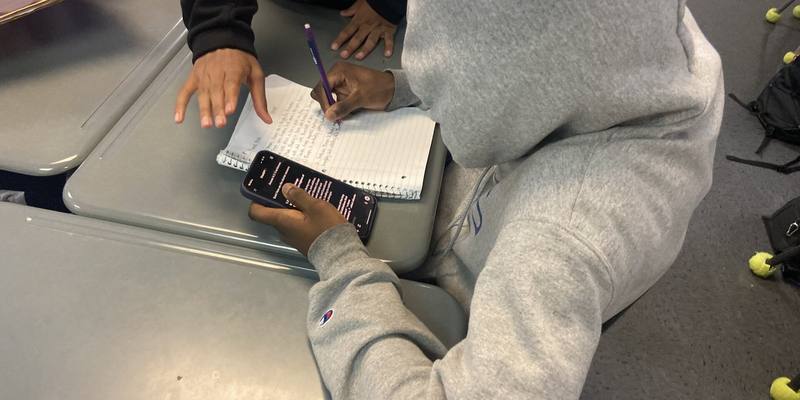
A student using ChatGPT on a phone during classwork, 2025 (illustrative). Image: MCGAMER YOUTUBE / Wikimedia Commons, CC0, cropped
OpenAI says teenagers spend less than 15 minutes a day on ChatGPT on average. The company shared its first figures on ChatGPT for Teens on Wednesday and announced a College Planner and new study tools, on the same day a children’s safety group told parents to keep under-18s off the service.
ChatGPT for Teens is the version OpenAI applies by default to accounts it identifies as belonging to someone under 18. The figures come from OpenAI itself and haven’t been checked independently.
What OpenAI says teens do
According to OpenAI, fewer than 2% of teens spend more than three hours in a row on ChatGPT. In almost half of teen conversations that showed a “Ready for a break?” reminder, the teen took a break or ended the chat within five minutes. OpenAI compares that with the roughly five hours a day teens are reported to spend on social media.
It also says the most popular conversation starters are “ask questions to develop my ideas”, “give feedback on my draft” and “help me check my evidence”. In one week, nearly 1.2 million teens used its Learning Visualizations for maths and science, and more than 180,000 used Study Mode for step-by-step help.
OpenAI calls these “early signs” that are “encouraging”, and says it will keep evaluating the experience with teens, families and educators.
A College Planner for US students
OpenAI says hundreds of thousands of US teens already use ChatGPT each week to plan for college, so it will “soon” add a College Planner to ChatGPT for Teens. It pulls each school’s application requirements, deadlines, tasks and financial aid steps into one plan with a timeline, and students can ask ChatGPT questions as they go, including about scholarships and fee waivers.
The first version is for US high school students in grades 10 to 12 who plan to go to a four-year college. OpenAI says it wants to bring it to more countries over time and add two-year colleges, technical colleges and trade schools. It says it is designing the planner to handle the practical steps “without taking over the personal work” of choosing where to apply.
OpenAI is also funding College Advising Corps, a nonprofit that places recent graduates as advisers in under-resourced high schools, to expand into new states and start an AI fellowship.
Flashcards, quizzes and a teen advisory council
Students can now photograph several pages of notes in one go and have them combined into a single PDF, on iOS for now with Android to follow. ChatGPT can turn notes or a topic into flashcards saved in a teen’s Library, and make quizzes from uploaded notes.
OpenAI is also backing Boston Children’s Hospital’s Digital Wellness Lab for three years. For the 2026 to 2027 school year, about 22 students aged 14 to 20 will join its Student Advisory Council, with one group testing AI tools and giving feedback on teen safety defaults, parental controls, notifications and AI literacy. OpenAI says it will report back to the students on what it changes and why.
A very different picture from Common Sense
Common Sense Media’s Youth AI Safety Institute rated ChatGPT for Teens an “Unacceptable Risk” on Wednesday morning after testing more than 4,000 prompts on teen accounts. It found parents linked to new teen accounts got no alerts during conversations about self-harm, and that the service missed more than one in four chances to refer teens in crisis to help.
OpenAI’s post doesn’t mention the report. Its usage figures describe how long teens spend on ChatGPT and which learning tools they pick, not how the safety features perform when a conversation turns dangerous.
Why it matters
OpenAI wants ChatGPT to be the place teenagers study and plan their futures, and a College Planner would put it at the centre of one of the biggest decisions they make. Its own numbers say teens use it lightly and sensibly, but they don’t answer the safety questions raised the same day, and parents have only OpenAI’s word for them so far.
Sources: OpenAI, Common Sense Media.
Latest OpenAI news