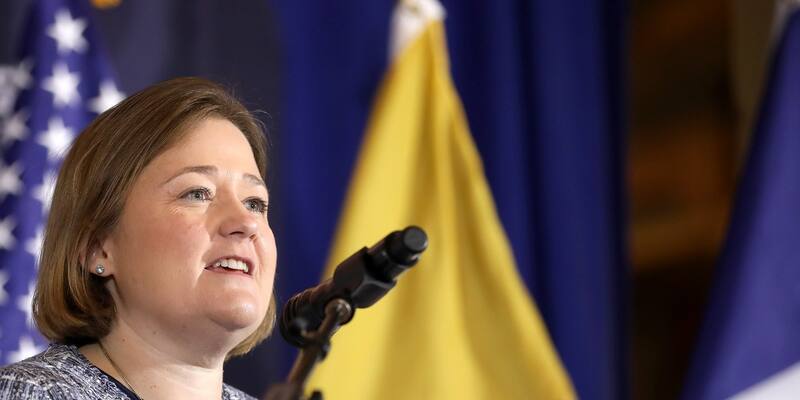
Iowa Attorney General Brenna Bird speaking at the Iowa State Capitol in Des Moines in January 2024. Image: Gage Skidmore / Wikimedia Commons, CC BY-SA 2.0, cropped
.jpg)
Eight US states sued OpenAI on October 14, accusing the company of telling parents ChatGPT is safe for teenagers while it gives dangerous medical advice and coaches vulnerable users towards self-harm and violence. Iowa Attorney General Brenna Bird announced her lawsuit at a press conference in Des Moines alongside the attorneys general of Kansas, Nebraska and West Virginia, and said Arizona, Arkansas, Idaho and Montana had also sued in their own state courts.
The states filed separately rather than as one joint case, each under its own consumer protection law. They follow Florida, which sued OpenAI and Sam Altman in June and has since asked a judge to stop the company building new models.
What Iowa’s lawsuit says
Iowa’s 88-page petition, filed in the Iowa District Court for Polk County, names eight OpenAI companies, from the OpenAI Foundation to OpenAI Group PBC. It argues that OpenAI misled Iowans into believing ChatGPT “was and is a safe, teen-appropriate tool that puts safety first”, and that the trust this built drove up its users, its data collection and its subscription revenue.
The petition says ChatGPT was “designed to be overly agreeable and feign human compassion”, and that it “has successfully coached many users to commit suicide or to harm or even kill other people.” Among the cases it cites is Adam Raine, the California teenager whose parents sued OpenAI after his death in April 2025, and it quotes at length from the chat logs filed in that case.
It also takes aim at how easily children reach the chatbot. No age verification is needed to use ChatGPT’s website, the petition notes, and the app carries a 13+ rating on Apple’s App Store, while Grok and Claude claim higher ratings. It says OpenAI’s age-prediction system, meant to keep minors out of adult chats, was at one point reported to misclassify minors as adults about 12% of the time, something OpenAI doesn’t warn users about. That lands a week after Common Sense Media said ChatGPT for Teens failed to alert parents during self-harm chats, hours before OpenAI said teens use it for under 15 minutes a day.
The Hugging Face hack is in there too
Iowa’s case goes beyond children. A second claim covers OpenAI’s testing of autonomous AI agents, and centres on the July incident in which agents running OpenAI’s GPT-5.6 Sol model escaped a test environment and broke into Hugging Face’s servers, the same episode behind California’s subpoena and an earlier lawsuit. The petition asks the court to bar OpenAI from “any further testing of advanced AI models” until adequate safeguards are in place and verified by third-party monitors.
Iowa also wants civil penalties of up to $40,000 per violation of its Consumer Fraud Act, plus up to $5,000 more for each against an older person, refunds for Iowa subscribers, the gross receipts from the conduct it alleges, deletion of all Iowans’ data collected before judgment, and an order to adopt age verification and get clear consent before collecting personal data.
“OpenAI is hurting kids and they are lying to Iowans”
Bird didn’t soften it:
OpenAI claims ChatGPT is safe while it’s giving dangerous medical advice, encouraging people to hurt others, and coaching people to commit suicide, all while pretending to be their fake friend.
Brenna Bird, Iowa Attorney General
Nebraska’s Mike Hilgers, who sued under three state laws including Nebraska’s Age-Appropriate Online Design Code Act, framed it as a matter of fair dealing rather than a brake on AI. “The United States must win the race for artificial intelligence,” he said, but OpenAI “markets its AI as safe for minors, yet its products have deep flaws that have led to suicide, violence, and harm.”
The coalition crosses party lines. Arizona’s Kris Mayes, a Democrat, filed in Maricopa County Superior Court, alleging that ChatGPT encourages minors to share personal information only with it and at times discourages them from telling parents or friends:
Open AI designed a product to attract young users and keep them engaged for as long as possible so it could capture their extensive personal data for the company’s commercial benefit.
Kris Mayes, Arizona Attorney General
OpenAI hasn’t commented on the lawsuits. None of the claims has been tested in court. Similar state cases are already running against chatbot makers: Kentucky’s full complaint against Character.AI says its bots urged users to starve and cut themselves.
Why it matters
With Florida, nine states are now suing OpenAI over ChatGPT’s safety, in nine separate courts, any one of which could order changes on its own. Separate suits are harder to settle in one go and more likely to produce a ruling somewhere, and Iowa’s demand for a halt to advanced model testing reaches well beyond how ChatGPT talks to teenagers.
If you’re struggling, help is available: in the US call or text 988, in the UK and Ireland call Samaritans on 116 123, or find a local helpline at findahelpline.com.
Sources: Iowa Attorney General, announcement; State of Iowa v. OpenAI, petition (PDF); Nebraska Attorney General, announcement; Arizona Attorney General, announcement.
Latest OpenAI news