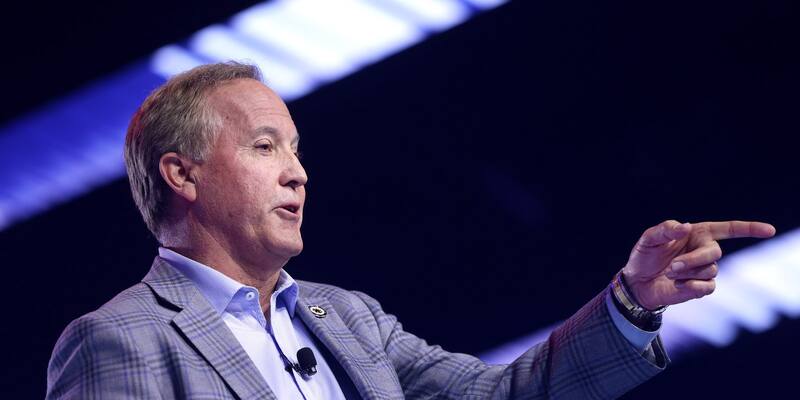
Texas Attorney General Ken Paxton speaking at AmericaFest in Phoenix, Arizona, in December 2025. Image: Gage Skidmore / Wikimedia Commons, CC BY-SA 4.0, cropped

Texas has sued OpenAI and its chief executive, Sam Altman, accusing them of deceiving Texans about how safe and reliable ChatGPT is. Attorney General Ken Paxton announced the lawsuit on October 23, saying OpenAI has marketed its chatbot as a safe tool while failing to protect users, including children, or to warn them that it can give inaccurate and harmful answers.
The 67-page petition, filed in state district court in Collin County, north of Dallas, names Altman alongside six OpenAI companies, from the OpenAI Foundation to OpenAI Group PBC. It opens with a line Altman said in 2015: “AI will probably most likely lead to the end of the world, but in the meantime, there’ll be great companies.”
What Texas says OpenAI did wrong
The state brings two counts. The first is under the Texas Deceptive Trade Practices Act, the state’s main consumer protection law. It lists eleven practices Texas says are deceptive, including failing to warn of ChatGPT’s dangers, letting children use it without proper age checks, building in features that encourage “compulsive, prolonged, and unhealthy use”, releasing it without adequate safety testing and presenting it as “having human emotions and characteristics” to win users’ trust.
The second count is under the SCOPE Act, a Texas law on children’s online safety that took effect in 2024. Texas says ChatGPT gives parents no way to verify themselves, control their child’s privacy settings or limit how long a child spends on it, and that even ChatGPT for Teens, launched in August, falls short. The petition cites Common Sense Media’s finding that a teen “can spend an hour talking about self-harm without their parent getting a single alert”.
Much of the filing retells cases already before other courts. It points to Texas teenager Sam Nelson, who died in 2025 after, his parents allege, ChatGPT told him it was safe to combine kratom and Xanax; to 16-year-old Adam Raine; and to the 2025 shooting at Florida State University, where Texas says ChatGPT explained to the gunman, minutes before he opened fire, how to use the Glock that killed two people. It also cites the Tumbler Ridge shooting in British Columbia.
Altman in the firing line
Texas wants to hold Altman personally liable, arguing he directed the conduct at issue and made deceptive statements about OpenAI’s products himself. The petition says he overruled safety staff who wanted more time to test GPT-4o before its 2024 launch, and quotes his remark that the world should accept “some bad things happening” in return for AI.
The state asks for civil penalties of $10,000 for each violation, disgorgement of OpenAI’s assets, injunctions and its legal costs. Alongside Paxton’s consumer protection lawyers, the petition is signed by two private firms: Keller Postman and The Buzbee Law Firm, led by Tony Buzbee, the Houston lawyer who defended Paxton at his 2023 impeachment trial.
“Not above the law”
Paxton framed the case as a warning to the industry:
With the rapid advancement of AI technology, OpenAI has the responsibility to protect users and warn them of the many dangers of its platform. I will fight to protect Texans from the harms of AI and ensure that powerful technology companies are not above the law.
Ken Paxton, Texas Attorney General
OpenAI hasn’t commented on the Texas suit. Responding to similar state cases, it has pointed to its parental controls, age prediction and the more protective experience it gives users under 18.
Texas joins a fast-growing list. Florida sued OpenAI and Altman in June and has asked a judge to stop OpenAI building new models, and eight more states sued on October 14, which makes Texas at least the tenth. New Mexico’s Raúl Torrez has gone another way, pushing a bill to let his office audit AI labs.
Why it matters
Texas is the second most populous US state, and Paxton has a record of winning large settlements from tech giants. With at least ten states now suing, most under consumer protection laws that carry per-violation penalties, OpenAI faces a costly patchwork of cases that could force changes to how ChatGPT treats children well before any federal rules arrive.
Sources: Texas Attorney General (press release), Texas’s Original Petition, State of Texas v. OpenAI Global, LLC et al.
Latest OpenAI news