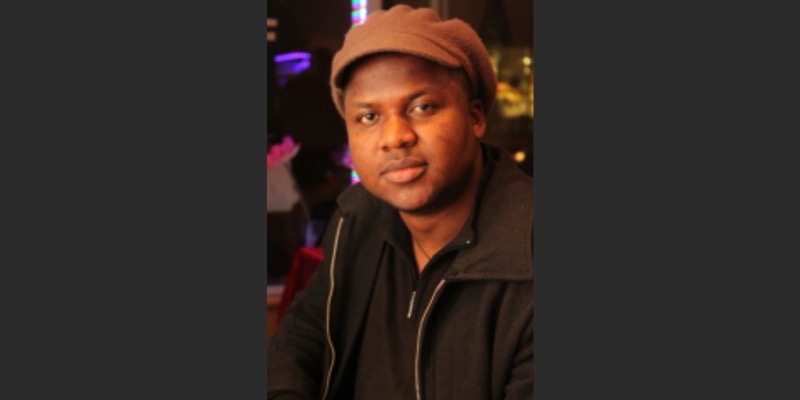
Thélyson Orélien, pictured in 2013. Image: Jean Laposte / Wikimedia Commons, CC BY-SA 3.0, cropped

France’s literary world is in uproar after one of the season’s most celebrated debut novels was accused of being written almost entirely by AI. Thélyson Orélien, a 38-year-old Canadian-Haitian author, strongly denies it, and the case has become a test of something bigger: whether AI detection tools can be trusted at all, the BBC reports.
The accusation
Orélien’s novel, C’était ça ou mourir (It was either that or die), has just won the Prix du Roman Fnac, the first big prize of the French literary season, and is a finalist for the prestigious Goncourt and Renaudot awards.
This week, an anonymous account on X called Balance ton Claude (“Denounce your Claude,” a nod to Anthropic’s AI) claimed the book was “almost totally” AI-generated. It said it had run several passages through an AI detector called Pangram:
We tested several passages, from different bits of the manuscript, to come up with the identical result: 100 percent AI.
Balance ton Claude, on X
The account had just 92 followers before the post, which then racked up more than 3 million views, according to Swiss broadcaster RTS. The group claims Pangram makes a wrong call only once in every 24,400 cases. Who is behind the account isn’t known.
The author: ‘they are my own’
Orélien, who was born in Haiti and moved to Montreal in 2010, flatly denies using AI.
I have always loved creation and literature. I can’t see why I would feel compelled to use a machine.
Thélyson Orélien, to Libération
He says he’s putting together a dossier with his publisher to prove he wrote the book, that the first draft dates from 2019, before AI writing tools were widely available, and that the style being flagged comes from his roots. “My traditions are Haitian and Caribbean. The images, the repetitions and the rhythms are the living word, they are my own,” he said.
His publisher, Grasset, called the allegations “atrociously injurious to a writer with an exceptional life-story” whose work is “original and powerful.” And Philippe Claudel, president of the Académie Goncourt, urged people not to “cast shame” on the author, saying he “at no moment” suspected AI when reading the book, franceinfo reports. He added that if “irrefutable proof” emerges before the Goncourt’s final list on October 6, the jury would act.
The detectors disagree
This is where the case gets shaky. AFP ran the same passages through other tools and got very different answers. Its own verification tool, InVID-WeVerify, said the text was “very probably written by a human,” and seven other detectors gave mixed results, according to RTS.
Even Pangram’s co-founder, Max Spero, has said the tool should never be “the final arbiter,” only “a starting point for deeper investigation.”
That fits what researchers have long warned about AI detectors:
- They don’t actually know who wrote a text. They look for statistical patterns common in AI writing, which can also show up in human writing.
- They can wrongly flag human work as AI, and miss AI text that has been edited or paraphrased.
- Critics say they’re built around standard English or French, and may misread writing shaped by Caribbean dialect and oral traditions, which is exactly the style Orélien says is his own.
Not the first time
The row echoes the case of Trinidadian writer Jamir Nazir, whose Commonwealth Short Story Prize was withdrawn in July over claims his story was AI-generated, then given back after organisers said they were satisfied the writing was genuine.
Why it matters
As AI writing gets harder to spot, prizes, publishers and universities are increasingly leaning on detection tools to police it. This case shows the risk of that. An anonymous account, one tool and a viral post were enough to put a debut author’s reputation, and possibly France’s biggest literary prize, on the line, while other tools say the opposite.
Unless stronger evidence emerges, the real lesson may be less about one novel and more about how much weight a percentage score from an AI detector should carry when a writer’s career is at stake.
Sources: BBC News, RTS, franceinfo
Related