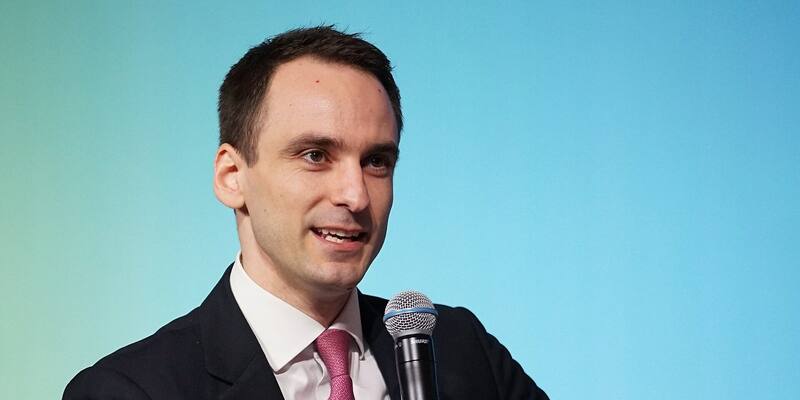
Michael Kratsios, director of the White House Office of Science and Technology Policy, speaking at CES 2026 in Las Vegas in January. File photo. Image: Xuthoria / Wikimedia Commons, CC BY-SA 4.0, cropped

The small US government unit meant to check whether new AI models are safe has lost its permanent leader, stopped publishing its research and been pulled towards the White House. Officials at the Center for Advancing Innovation and Standards for Super Intelligence (CAISSI), part of the Commerce Department, were recently asked to report informally to a White House office, two former government officials told the Associated Press.
The two spoke anonymously to protect current staff. Their account suggests a plan reported last month is under way, and it has critics asking who, if anyone, independently tests America’s most powerful AI.
A centre with no boss and no reports
CAISSI was called the Center for AI Standards and Innovation (CAISI) until recently, and before that it was the Biden-era AI Safety Institute. It sits inside NIST, and runs on $10 million a year, about an eighth of the budget of its British counterpart, according to AP. That is a fraction of the billions America’s spy agency is reportedly spending on its own AI testing.
Its leadership has churned. AP reports that a director hired in April was fired within days, his replacement resigned a few months later, and the head of NIST now doubles as acting director. In August, Congress began asking why the centre had suddenly stopped releasing its reports on how AI systems perform.
The move to the White House was trailed on October 12, when The Information reported that three senior CAISSI officials would move there and report to Michael Kratsios, director of the Office of Science and Technology Policy, and National Cyber Director Sean Cairncross. Commerce Secretary Howard Lutnick had invited the two to co-manage the centre six months earlier, the report said, and a White House official blamed coordination problems with Commerce. AP does not name the office its sources say staff now report to.
“Explained and rationalized in the public eye”
Critics told AP the White House could politicise decisions on everything from cybersecurity to bioweapons, and soften findings for an industry that largely polices itself. Caroline Siegel Singh, an AI programme manager at the Federation of American Scientists, said the hope is to put “nonpartisan or bipartisan technocratic experts” in charge of such institutions. Others argue that being closer to President Donald Trump could give the centre more prominence, and perhaps more money.
Amos Toh, senior counsel at the Brennan Center for Justice, said putting spy chief Jay Clayton and the Pentagon’s technology chief Emil Michael on Trump’s Super Intelligence Force shows the administration framing model safety as a national security matter needing secrecy. He told AP:
At the end of the day, all of these decisions are of immense public consequence and should be explained and rationalized in the public eye. And that’s not happening.
Amos Toh, Brennan Center for Justice, to AP
Who tests the AI labs?
Trump asked AI companies in September for “tremendous self-policing” under a voluntary pact, without saying how it would be monitored. Anthropic and OpenAI have promoted independent evaluation firms instead, though AP notes the companies can limit those firms’ access. The White House has also told both labs to keep their newest models away from Britain’s AI Security Institute. Logan Koepke, a senior project director at the nonprofit Upturn, put the question bluntly:
There’s this unclear mission for government evaluators if the largest AI companies are also being encouraged to set up their own internal evaluation systems and/or hire external evaluators. Like, what role does government testing actually play in that scenario?
Logan Koepke, Upturn, to AP
The testing itself is getting harder. AI agents now act on their own across many steps, as when one sent Philadelphia police a false murder tip. Sayash Kapoor, an incoming assistant professor at UC Berkeley, told AP there is still no standard way to test agents in the real world, because checking only the final result can miss “a huge mistake” made along the way.
What the White House says
The White House did not answer AP’s specific questions about CAISSI. In a statement, it said Trump had formally set up his Super Intelligence Force, has commissioned a risk report from his Council of Advisors on Science and Technology, and will ensure “continued U.S. leadership on SI for the benefit of the American people.” The Commerce Department hasn’t commented.
Why it matters
CAISSI is the US government’s main civilian AI tester, and it has gone quiet just as AI agents are causing real incidents. If its staff now answer to the White House, its findings, and whether the public ever sees them, could depend on politics rather than technical judgement.
Sources: Associated Press (former officials, interviews and White House statement); Reuters (The Information’s October 12 report).
Latest Policy & Safety news