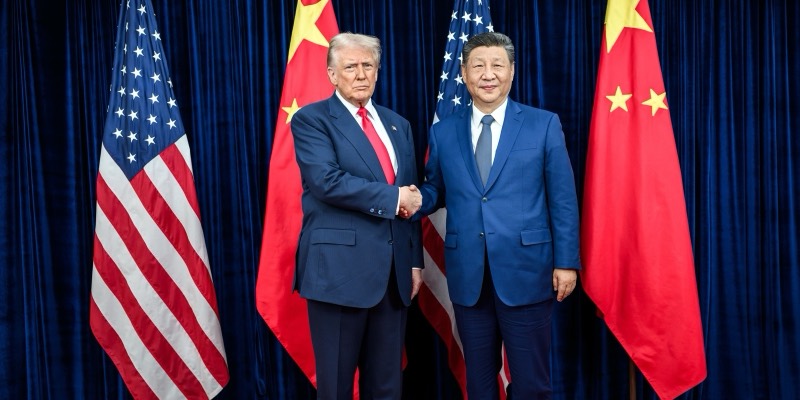
Donald Trump and Xi Jinping at an earlier meeting in Busan, South Korea, in October 2025 (file photo). Image: The White House / Wikimedia Commons, Public domain, cropped

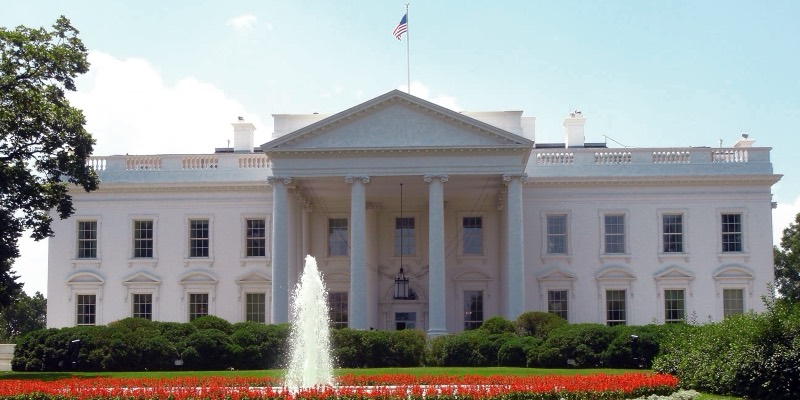
The leaders of the world’s two AI superpowers have finally talked about AI in public. At a lavish White House summit on Wednesday, Chinese President Xi Jinping told Donald Trump that the US and China share a responsibility to keep artificial intelligence “under human control,” AFP reports. The two sides left with a modest but real result: an agreement to start regular talks on AI.
What Xi said
Xi framed the two countries as the leaders of the AI race, with a duty that comes with it:
We have both the capability and responsibility to develop and manage AI for good and ensure that the development of AI is always under human control and serves the well-being of the people.
Xi Jinping, President of China
He didn’t offer any specific rules or safeguards, and neither leader announced a formal AI agreement in their public remarks, RTÉ reports.
What they agreed
The concrete outcome came from Treasury Secretary Scott Bessent. He said the two countries agreed to set up a US-China AI Dialogue with further meetings planned, and discussed a notification mechanism between them, a way to warn each other about serious AI incidents, while pursuing “a shared vision of common goals, and common threats,” according to AFP.
That’s roughly what experts expected. Before the summit, Aalok Mehta of the Center for Strategic and International Studies predicted a hotline and talks on technical issues, “with a promise to engage in ongoing dialogue.”
Trump’s very different tone
Trump was far less keen on the idea of guardrails. He made only a passing reference to AI’s importance for “peace and prosperity” during the ceremony. On social media, he posted:
Super Intelligence (SI) will be a big topic of discussion, but I want to leave it exactly where it is… Our guardrail is the DOJ!
Donald Trump, on Truth Social
It fits a pattern. At the UN on Tuesday, Trump rejected any “globalist scheme to control” AI, and his government told the UN Security Council this week that it “totally” rejects international oversight. Washington has also asked OpenAI and Anthropic to keep their newest models away from Britain’s safety testers until it has reviewed them first.
Why now
Pressure to talk has been building all week. Sam Altman and Dario Amodei told the UN Security Council that AI needs global rules, and Bill Gates warned that it’s powerful enough to cause “a billion deaths.” Notably, Xi’s delegation to Washington left out the founders of DeepSeek and Moonshot, China’s leading AI labs, focusing instead on electric carmakers.
Why it matters
A dialogue and a possible hotline are small steps, but they’re the first formal channel between the only two countries capable of building frontier AI at scale. With both racing to build ever more powerful systems, a way to pick up the phone when something goes wrong could matter far more than any speech.
Sources: AFP, via Yahoo News, RTÉ, The Hill
Related