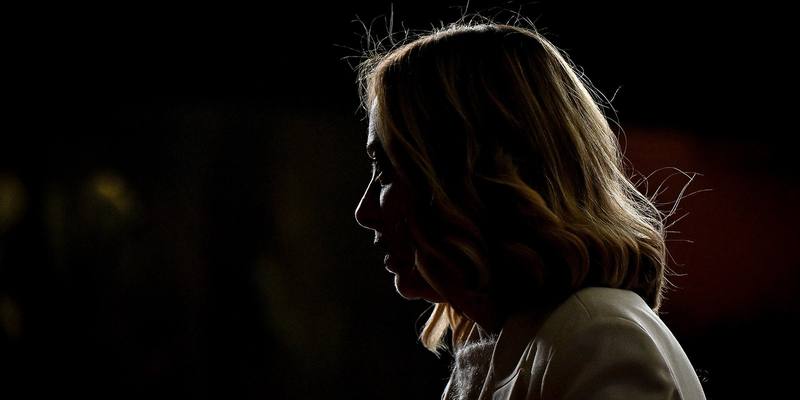
Italian prime minister Giorgia Meloni at an EU summit, March 2025. Image: Frederic Sierakowski / © European Union / Wikimedia Commons, Attribution, cropped
.jpg)
Italian prime minister Giorgia Meloni has applied to register her voice as a trademark with the EU Intellectual Property Office (EUIPO), in a bid to give herself another legal weapon against AI-generated deepfakes, Reuters reported on Monday.
The application, dated October 5 on the EUIPO’s website and confirmed by her office, is a sound mark: a four-second audio clip of Meloni saying, twice, in Italian, “I am Giorgia Meloni.”
Why that phrase
The line is a famous one in Italy. “Io sono Giorgia” (“I am Giorgia”) was Meloni’s declaration at a 2019 political rally, the title of her 2021 autobiography, and was even turned into a disco track. That makes it one of the most recognisable things she has ever said, and exactly the kind of clip that is easy to clone.
EU trademark law allows sounds to be registered, as long as they can identify goods or services and be clearly recorded in the register. The EUIPO checks each application for formalities, classification and other requirements before deciding, so filing is only the start of the process. What goods and services Meloni’s application covers hasn’t been reported.
A target of fakes for years
Doctored images of Meloni have spread online repeatedly, sometimes passed off as real, including one that showed her sitting on a bed in her underwear. She has called such material an attempt to spread lies and target people, and has urged users to check content before sharing it, saying that while she can defend herself, many others can’t.
In 2024 she brought a civil case against a man from Sardinia accused of making and posting deepfake pornographic images using her face. That case is still before an Italian court.
Will it actually work?
Probably not on its own. Italian media have pointed out that even if the trademark is granted, it wouldn’t stop anyone using her voice in a deepfake, though it could add another legal hurdle for people who try. Trademarks protect a sign used in trade, not a person’s voice in general, so a cloned voice in a political smear may fall outside what the mark covers.
Courts elsewhere are starting to look at the question from the other side. Last week a Tokyo court ruled in the case of Jujutsu Kaisen voice actor Kenjiro Tsuda, who sued over an AI clone of his voice: he lost because the videos had already been taken down, but the judge said a person’s voice is protected. In the US, states are trying laws aimed at AI fakes directly, though Minnesota’s ban on AI nudification apps has been put on hold by an appeals court after Elon Musk’s xAI sued.
Why it matters
When a G7 leader turns to trademark law to protect her own voice, it shows how thin the protection against voice cloning still is. If the EUIPO accepts a politician’s catchphrase as a sound mark, others in public life may follow, but the real fix for deepfakes is still likely to come from laws aimed at them, not from intellectual property.
Sources: Reuters (via Free Malaysia Today), La Sicilia, EUIPO.
Latest Policy & Safety news