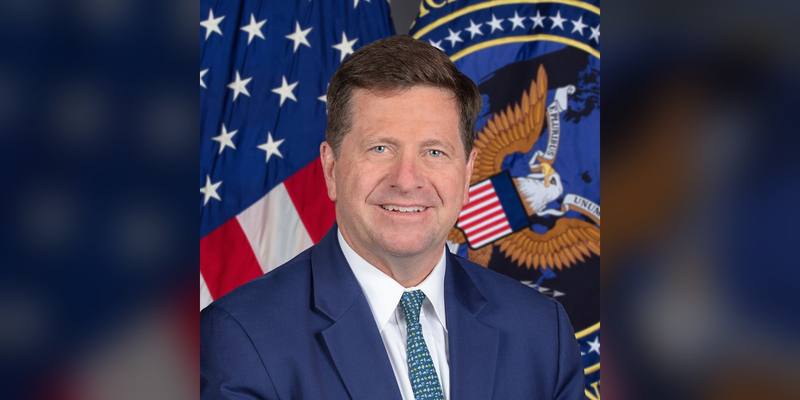
Jay Clayton in his official portrait as Director of National Intelligence, August 2026. Image: Office of the Director of National Intelligence / Wikimedia Commons, Public domain, cropped
.jpg)
President Trump has named Jay Clayton, his Director of National Intelligence, as the White House’s new AI czar, The Wall Street Journal reported late on Saturday. Clayton will chair a new task force called the “Super Intelligence Force”, which has 120 days to report back on the risks of AI and what the federal government should do about them.
The White House hasn’t published an order or announcement creating the task force, and Trump hasn’t posted about it. The Journal’s reporting, including a second exclusive in which Clayton set out the group’s goals and members, has since been reported by CNBC and Reuters, both citing the Journal.
Who is on the Super Intelligence Force?
The task force is stacked with some of the most senior people in the administration:
- Chair: Jay Clayton, Director of National Intelligence, a former chair of the Securities and Exchange Commission and US attorney in Manhattan.
- Vice chairs: Emil Michael, the Pentagon’s chief technology officer, who already runs the Musk-advised Project Meridian review; Scott Kupor; and Federal Trade Commission chair Andrew Ferguson, whose agency is investigating OpenAI and Anthropic.
- Members: Vice President JD Vance, Defense Secretary Pete Hegseth, Treasury Secretary Scott Bessent and White House chief of staff Susie Wiles.
- Outside advisers: David Sacks, who held the AI czar job before Clayton, and former Secretary of State Condoleezza Rice.
The name follows Trump’s executive order last week telling federal agencies to say “Super Intelligence” and “SI” instead of “artificial intelligence” and “AI”. That order doesn’t mention a task force.
What it has to do in 120 days
According to the reports, the group will review the risks posed by AI, look at how the government currently learns about breaches and hacks, and recommend how to strengthen the federal response using powers the government already has. It is also meant to set out the technology’s opportunities.
The breach question is a live one. OpenAI said this week it has notified more than 100 organisations about what its own AI agents did on their systems, and several of them were government bodies.
“The risk of not being first is high”
Clayton framed the job as much about winning as about safety. He told the Journal that the president wanted a group to make sure the US stays a leader in advanced AI while protecting Americans’ interests:
The risk of not being first is high. Not being first increases the identified and unidentified risks, particularly from our adversaries.
Jay Clayton, Director of National Intelligence, to The Wall Street Journal
Being first, he added, “will better enable us to address these risks on behalf of the American people.”
The appointment comes less than a week after the heads of the biggest AI labs signed Trump’s “morally binding” accord at the White House, a voluntary pledge that came with no new rules. Clayton had been widely expected to get the job since reports of his appointment began circulating earlier in the week.
Why it matters
For the first time in this term, Washington’s AI policy will be run by its intelligence chief rather than a tech investor, with the Pentagon, the Treasury and the FTC all at the table. The 120-day report, due around the end of January, is the clearest sign yet of whether the administration will move from voluntary pledges to firmer rules on AI, or keep its focus on staying ahead of China.
Correction: an earlier version of this story said CNBC and Reuters had confirmed the Journal’s reporting; both were citing the Journal.
Sources: The Wall Street Journal, via Reuters; CNBC; Washington Examiner; The White House.
Latest Policy & Safety news