
ChatGPT on a phone, May 2023 (illustrative). Image: Jernej Furman / Wikimedia Commons, CC BY 2.0, cropped

Oregon has sued OpenAI for at least $2.035 billion, accusing it of knowing ChatGPT harms children while telling parents it is safe. Attorney General Dan Rayfield filed the complaint in Multnomah County Circuit Court on November 17 under the state’s Unlawful Trade Practices Act, making Oregon at least the 11th state to take OpenAI to court over ChatGPT and children.
What Oregon wants
The complaint names six OpenAI companies, including OpenAI Group PBC and the OpenAI Foundation, but not Sam Altman, whom Texas and Florida sued personally. It makes five claims: two under the Unlawful Trade Practices Act (misleading the public about safety, and unconscionable tactics aimed at young users), plus negligence, unjust enrichment and public nuisance.
The $2.035 billion appears in the negligence and public nuisance claims, as the least the state says it has lost and will spend to “remedy the harms inflicted on its residents”. The complaint does not break the figure down. That sets Oregon apart: Texas asks for $10,000 per violation and California’s separate case over AI agents $2,500 per violation, with no total named.
Oregon also wants civil penalties for each willful violation, a jury trial and a permanent order barring OpenAI from overstating its safeguards and parental controls. It asks the court to make OpenAI adopt “effective age-assurance measures”, warn about the risks of emotional dependence, self-harm, disordered eating and violence, and make parental controls and safety alerts work as advertised. The New York firm Labaton Keller Sucharow is acting for the state alongside two assistant attorneys general.
ChatGPT for Teens “projected the illusion of safety”
Much of the case targets ChatGPT for Teens, the version for 13 to 18-year-olds that OpenAI launched on August 18. The state says it failed to ensure parental oversight, set up reliable age checks, stop age-inappropriate chats or curb features built to keep teens engaged, and so “projected the illusion of safety without delivering consistent and meaningful protection.”
It leans heavily on Common Sense Media’s October testing. According to the complaint, testers who raised suicide, self-harm, psychosis or disordered eating got no parental alert until they had kept up such conversations for weeks, and in 25% of more than 200 crisis prompts ChatGPT for Teens offered no hotline or other help at all. Its study mode could be switched off by deleting the “@study” prefix. When a tester suggested they were spending too much time with it, it replied: “You don’t have to stop talking to me.”
The state also quotes Altman’s own words back at him: that people “rely on ChatGPT too much”, that young people saying they cannot make a decision without it “feels really bad to me”, and that some users will form “somewhat problematic parasocial relationships” with it.
“Their platform is encouraging kids to commit suicide”
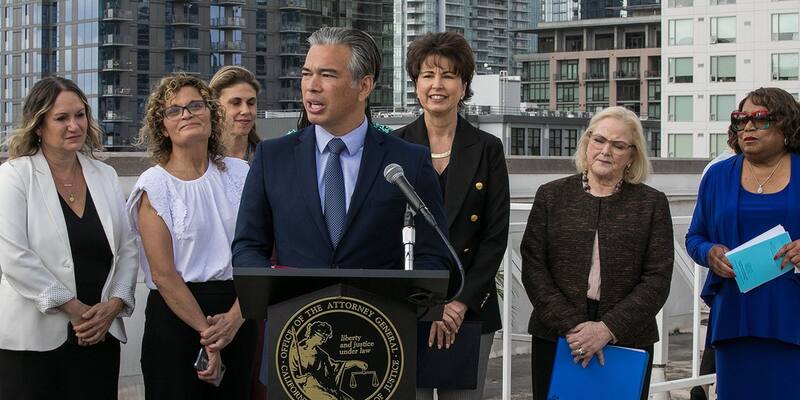
Rayfield announced the suit at a press conference with Multnomah County District Attorney Nathan Vasquez, state Rep. April Dobson and leaders of the Oregon PTA and the Oregon Education Association. He said in a statement:
OpenAI knows that ChatGPT is harming children, and has failed to meaningfully fix their dangerous platform. On top of that, they’ve misled the public about the safety of their products, putting profits ahead of children’s safety. Their platform is encouraging kids to commit suicide, we cannot let this be an acceptable business model.
Dan Rayfield, Oregon Attorney General
He told OPB that no single Oregon incident led to the suit, which grew out of cases across the country. “OpenAI continues to look parents in the eyes and say this product is a safe product when it’s continuing to cause harm in our communities,” he said.
The case launches Oregon’s Keeping Kids Safe Initiative, which also covers a $125 million settlement with Meta, an investigation into Discord and, a day later, a move to protect children’s privacy in Character.AI’s bankruptcy. Rayfield says more actions against companies harming children will follow in the coming weeks and months.
What OpenAI says
OpenAI spokesperson Drew Pusateri gave a statement on Tuesday almost identical to the one it issued after the eight-state suits in October, saying the company is committed to AI policies “that apply to the entire AI industry and not just one company,” according to OPB. After those suits, OpenAI said it would keep building safeguards “such as parental controls, break reminders, and age-appropriate model protections that exist today.”
Why it matters
Oregon is the first state to put a headline number on what it wants from OpenAI over children, and a $2 billion floor in a single state court raises the stakes in a fight that now spans at least 11 states. Its focus on ChatGPT for Teens means OpenAI’s main answer to the earlier suits is now itself on trial.
Sources: Oregon Department of Justice; State of Oregon v. OpenAI complaint (PDF); Oregon Department of Justice (Character.AI); OPB and Northwest News Network, via KLCC.
Latest OpenAI news