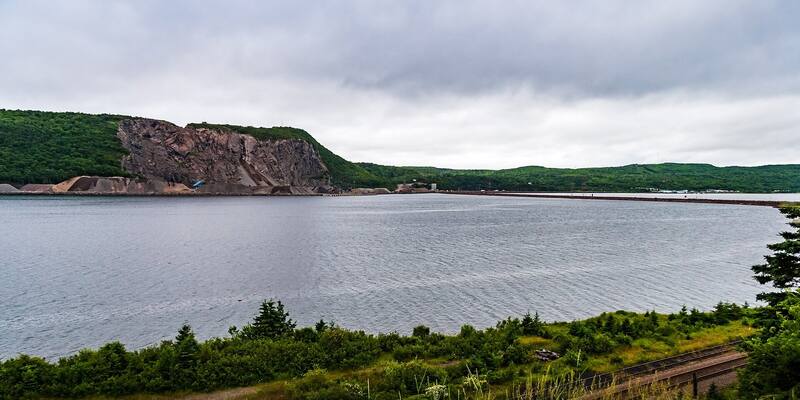
The Strait of Canso and the Canso Causeway at Port Hawkesbury, Nova Scotia, in 2004. Point Tupper, the site of the planned data centre, lies along the strait on the Cape Breton side. Image: Michel Rathwell / Wikimedia Commons, CC BY 2.0, cropped
.jpg)
Anthropic has signed its first data centre deal in Canada. The Claude maker will lease the first phase of a new campus at Point Tupper, on Cape Breton Island in Nova Scotia, which developer EverWind announced on Friday as part of a plan worth more than C$10 billion, the largest private investment in the province’s history.
EverWind’s release only named its tenant as “a leading frontier AI developer”. Anthropic confirmed later in the day that it was the customer, and told CBC News in a statement that the site “will power Claude models and serve growing demand from Canadian and global customers.” Anthropic will lease the first phase for at least 20 years. EverWind will build, own and finance the campus.
How big the Point Tupper campus will be
EverWind plans to build in two stages:
- Phase one: 95 megawatts, due online in late 2027. This is the part Anthropic has leased.
- Phase two: a 325 MW expansion targeted for 2028, taking the campus to 420 megawatts, subject to commercial, technical and regulatory conditions.
For scale, Nova Scotia’s whole electricity system can generate close to 3,000 MW, according to CBC. EverWind puts more than C$8 billion into the campus and C$2 billion into four of its onshore wind farms (Bear Lake, Windy Ridge, Kmtnuk and Upper Afton), which are meant to supply the data centre over time. To begin with, the campus will draw mainly on power already on the provincial grid.
The company expects about 2,000 construction jobs and 215 permanent ones across the campus and the wind farms. Land clearing has started, and officials hope to pour foundations before winter, CBC reported. EverWind is also negotiating an ownership stake in the campus for a First Nations consortium led by Membertou Development Corporation.
Who pays for the power
Data centres have become a fight in Canada as they have in the US, so EverWind spent much of its announcement on costs. It says it will fully fund connection, network upgrade and other grid costs caused by the project, so they aren’t passed on to Nova Scotia’s bill payers, and that the campus can cut or stop its grid draw when supply is tight. It also plans several hundred megawatt hours of battery storage.
The campus will use a closed-loop cooling system, cooled mostly by air. EverWind estimates phase one will use about 100,000 litres of water a day, rising to around 500,000 litres at full size, which it says is about 1% of the safe daily yield of nearby Landrie Lake. EverWind and Anthropic have both signed Ottawa’s voluntary Responsible Data Centre Development Principles.
The planned expansion won’t be connected until grid studies and approvals are complete. Nova Scotia NDP leader Claudia Chender told Global News that the government’s “resistance to regulation, to legislation, should be a huge red flag for people.”
‘Closer to the people who rely on it’
Jacob Glick, Anthropic’s head of Canada public policy, said in a statement reported by Global News:
Canadians are using Claude in growing numbers, and we want our infrastructure to be closer to the people who rely on it.
Jacob Glick, head of Canada public policy, Anthropic
He added that Canada “has set a high bar for responsible data centre development, as has the Premier of Nova Scotia, and we are committing to meeting it.” EverWind founder and CEO Trent Vichie pitched the project as a way to keep jobs in rural Nova Scotia:
For decades, Nova Scotians have helped build major projects across Canada, often leaving home to find well-paying work. With this investment, we’re creating more opportunities for people to find jobs and build their careers at home in rural Nova Scotia.
Trent Vichie, founder and CEO, EverWind
Premier Tim Houston called it “a powerful vote of confidence in Nova Scotia”, and federal energy minister Tim Hodgson said it showed “what a 21st century energy superpower looks like.”
What it means for Claude
Anthropic has been racing to lock in computing power. Its IPO paperwork shows a $518 billion bill still to pay, much of it for compute, and last month it signed an $11.6 billion deal with Akamai for more capacity. A 95 MW first phase is modest next to those deals, but it gives Anthropic its first site in Canada, one of Claude’s biggest markets per head, from late 2027.
It also tests whether developers can win over communities by promising to cover grid costs, the question behind the wave of data centre moratoriums in the US, a Senate probe into who pays and the proposed Make Data Centers Pay Act.
Why it matters
Claude’s growth depends on how much computing power Anthropic can secure, and Point Tupper adds its first capacity outside the US. For Canadian users and businesses, it means Claude running on Canadian soil from late 2027, if the grid studies and approvals go EverWind’s way.
Sources: EverWind news release; CBC News; Global News.
Latest Anthropic news