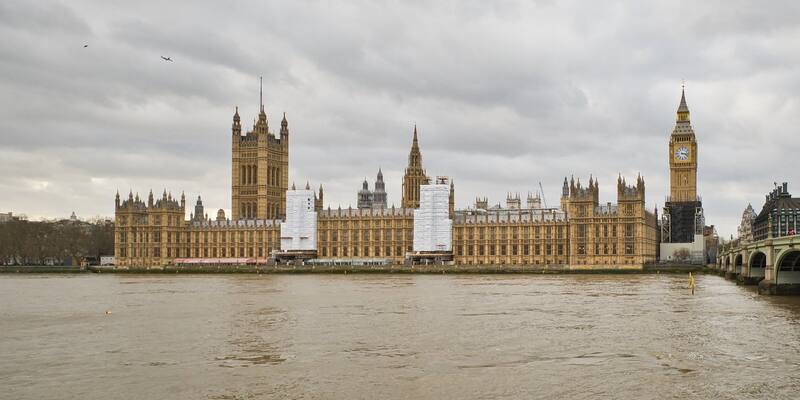
The Palace of Westminster, home of the UK Parliament, seen from the south bank of the Thames in London in February 2022. Image: chris.rycroft / Wikimedia Commons, CC BY 2.0, cropped
It is illegal in England and Wales to make a sexually explicit deepfake of an adult without their consent, or to ask someone else to make one: the offence came into force on February 6, 2026, even if the image is never shared. Sharing a fake intimate image, or threatening to, has been a crime since January 2024, and since June 29, 2026 it has also been a crime to make or supply the “nudification” apps and AI tools built to produce them. Scotland and Northern Ireland have their own laws, and they are not the same. Here is what the UK deepfake law covers in each nation, the penalties, and how to get a fake taken down.
Last checked: October 16, 2026, against legislation.gov.uk, the Ministry of Justice and a Northern Ireland Assembly research briefing. This is a plain-English guide, not legal advice.
Is it illegal to make deepfakes in the UK?
It depends on what the deepfake shows, where you live and what you do with it. There is no general UK law against making a fake image or video of someone. The new laws are aimed at sexual and intimate deepfakes: images that appear to show a real person nude, partly nude, in a sexual act or using the toilet. A non-sexual fake can still break other laws, such as fraud, harassment or defamation, depending on how it is used.
| What you do | England and Wales | Scotland | Northern Ireland |
|---|---|---|---|
| Create a sexual deepfake of an adult without consent | Crime since Feb 6, 2026 | No specific offence yet (proposed) | No specific offence yet (planned) |
| Ask someone else to create one | Crime since Feb 6, 2026 | Proposed | Planned |
| Share one, or threaten to | Crime since Jan 31, 2024 | Crime (2016 Act) | Gap for deepfakes |
| Make or supply a nudification app | Crime since Jun 29, 2026 | Proposed | Not covered |
| Any sexual image of an under-18, real or AI | Crime everywhere in the UK | ||
Scroll sideways to see the whole table on a phone.
Is it illegal to make AI images of people in the UK? The creation offence
In England and Wales, section 138 of the Data (Use and Access) Act 2025 added two offences to the Sexual Offences Act 2003. Section 66E makes it a crime to intentionally create a “purported intimate image” of an adult when they have not consented and you do not reasonably believe they have. Section 66F makes it a crime to ask someone else to create one. The commencement regulations, signed by justice minister Alex Davies-Jones on January 15, 2026, switched both on from February 6, 2026.
A purported intimate image is one that appears to be a photo or film of the person, appears to be of an adult and appears to show them in an intimate state, but is not (or is not only) a real photo or film of them. That covers AI nudification, face swaps onto pornography and edited photos alike. A few details matter:
- No sharing needed. Making the image on your own phone or computer is enough.
- Asking counts even if nothing is made. Requesting a deepfake is an offence in its own right, wherever the person you asked is based, according to a Northern Ireland Assembly research briefing on the law.
- No need to prove a motive. The offence turns on consent, not on whether you meant to cause distress.
- Penalty: both offences are tried in magistrates’ courts, with up to six months in prison, an unlimited fine, or both.
- More time to prosecute: charges can be brought up to three years after the offence, as long as it is within six months of police having enough evidence.
There is a defence of “reasonable excuse”, and the government must report to Parliament on how that defence is working within two years.
Is it illegal to share a deepfake in the UK?
Sharing a sexual deepfake has been illegal in England and Wales since January 31, 2024, when the Online Safety Act 2023 rewrote the intimate image offences in section 66B of the Sexual Offences Act. The offences cover any image that “shows, or appears to show” someone in an intimate state, which includes fakes:
- Sharing without consent: up to six months in prison.
- Sharing to cause alarm, distress or humiliation, or for sexual gratification: up to two years.
- Threatening to share: up to two years. Prosecutors do not have to prove the image exists.
The government also made sharing intimate images without consent a “priority offence” under the Online Safety Act, which means platforms have to look for and remove it, not just wait for reports.
Nudification apps ban: is it illegal to use a nudify app in the UK?
Since June 29, 2026, it has been a crime in England and Wales to make, adapt, supply or offer to supply a tool built to generate fake intimate images. Section 99 of the Crime and Policing Act 2026 added the offence as section 66I of the Sexual Offences Act. A “thing” here includes “a program, information in electronic form and a service”, and the Ministry of Justice’s factsheet says it covers nudification apps, websites, Telegram bots and AI models.
- Who is caught: developers and anyone who supplies or offers the tool, judged by whether a reasonable person would see it as made for that use. UK nationals and UK-registered companies are covered even when they act abroad.
- Penalty: up to three years in prison, an unlimited fine, or both.
- Defence: the maker has to prove it took “all reasonable steps” to stop the tool being used on people without their consent, a high bar the government chose on purpose.
Using a nudify app on a real person’s photo without their consent is already covered by the creation offence above, so the user and the app’s maker can both be prosecuted. The factsheet adds that, because supplying these tools is now illegal, social media sites must take down posts offering them and search engines must make them harder to find in the UK, wherever the service is based.
General-purpose image generators are the grey area. Chatbots such as xAI’s Grok have repeatedly been shown making sexualised images of real people, and in the US the company got Minnesota’s nudification ban put on hold in court. Whether a broad AI model counts as a tool “made or adapted” for intimate images under the UK law has not yet been tested.
The 48-hour takedown rule
Section 100 of the same Act, also in force since June 29, 2026 and applying across the whole UK, amends the Online Safety Act so that platforms must remove intimate image content reported by the person in it, or someone acting for them, as soon as reasonably practicable and within 48 hours at the latest. Platforms must also stop the same image being uploaded again, offer a clear reporting route and run a faster complaints process when content stays up. Ofcom enforces the duty, and in the most serious cases senior managers who ignore an Ofcom enforcement decision can face criminal charges.
Deepfake law in Scotland and Northern Ireland
Scotland. Sharing, or threatening to share, an intimate image that “appears to show” someone is already a crime under section 2 of the Abusive Behaviour and Sexual Harm (Scotland) Act 2016, which covers digitally altered images. Creating one is not yet a specific offence. The Scottish Government consulted in 2026 on new offences of creating, and asking someone to create, a fake intimate image, modelled on the law in England and Wales, and asked whether tools designed only to make them should be banned. No bill had been introduced when we checked.
Northern Ireland. The law is furthest behind. Northern Ireland’s offence of sharing a private sexual photo to cause distress, under the Justice Act (Northern Ireland) 2016, does not extend to deepfakes, according to the Assembly’s August 2026 research briefing. The Department of Justice consulted in 2025 on offences of creating, requesting, sharing and threatening to share sexual deepfakes of adults, and Justice Minister Naomi Long plans to add them to the Criminal Justice (Sentencing etc) Bill. In July 2026 she said she also wants a consent-based creation offence that would not require proof of motive. The 48-hour takedown duty does already apply in Northern Ireland and Scotland.
Deepfakes of under-18s
Any indecent image of a child, including one made by AI, is already illegal to make, share or possess in every part of the UK: the law calls these “pseudo-photographs”. The new adult offences sit on top of that. The Crime and Policing Act 2026 also creates offences of making, possessing or supplying AI tools built to generate child sexual abuse images, with up to five years in prison, but section 72 was not yet in force when we checked on October 16, 2026.
How to report a deepfake in the UK
- Police: report it on 101, or 999 if you are in danger. Save evidence first: screenshots, links, usernames and dates.
- The platform: use its report button and say you are the person in the image. Under the 48-hour rule it must act within two days.
- Revenge Porn Helpline (adults): free, confidential help getting images removed on 0345 6000 459, 10am to 4pm Monday to Friday, or via its website, which has a 24/7 chatbot. It handles deepfakes.
- StopNCII.org: creates a digital fingerprint (hash) of an image on your own device, without uploading it, so partner platforms can block it.
- Under 18: Childline and the Internet Watch Foundation’s Report Remove tool can get sexual images of young people taken down.
Not sure if an image is AI-made? Google’s SynthID Detector can flag images made with Google’s and some other companies’ tools, though detection is far from foolproof. Other countries are trying different routes: Italy’s prime minister Giorgia Meloni is trying to trademark her own voice to fight fakes.
Frequently asked questions
Is it illegal to make a deepfake in the UK?
It is illegal in England and Wales to create a sexually explicit deepfake of an adult without their consent, or to ask someone to make one, since February 6, 2026. There is no general ban on non-sexual deepfakes, though they can break other laws such as fraud or harassment. Scotland and Northern Ireland have not yet made creation a specific offence.
What is the punishment for making a deepfake in the UK?
Creating or requesting a sexual deepfake of an adult in England and Wales carries up to six months in prison, an unlimited fine, or both. Sharing one to cause distress or for sexual gratification carries up to two years, and making or supplying a nudification tool up to three years.
Is it illegal to use a nudify app in the UK?
Using a nudify app on a real adult’s photo without their consent is a crime in England and Wales under the creation offence. Since June 29, 2026, making or supplying such apps is also a crime there, punishable by up to three years in prison.
Is it illegal to make AI images of people in the UK?
Not in general. AI images of real people become illegal when they are sexual or intimate and made without consent (in England and Wales), when they depict a child in an indecent way (anywhere in the UK), or when they are used for fraud, harassment or defamation.
Is it illegal to share a deepfake in the UK?
Yes. Sharing a sexual deepfake without consent, or threatening to, has been a crime in England and Wales since January 31, 2024, and in Scotland under the Abusive Behaviour and Sexual Harm (Scotland) Act 2016. Northern Ireland’s sharing offence does not yet cover deepfakes.
Does the UK deepfake law apply in Scotland?
The creation offence and the nudification app ban apply only to England and Wales. Scotland already criminalises sharing fake intimate images and consulted in 2026 on a creation offence. The 48-hour takedown duty applies across the UK.
What is the 48-hour takedown rule?
Since June 29, 2026, online platforms in the UK must remove intimate images reported by the person shown in them as soon as reasonably practicable and within 48 hours, and stop them being uploaded again. Ofcom enforces it.
How do I get a deepfake of me removed?
Report it to the platform and say you are the person in the image, report it to the police on 101, and contact the Revenge Porn Helpline on 0345 6000 459. StopNCII.org can block the image across partner platforms. Under-18s can use Childline and the IWF’s Report Remove tool.
Latest Policy & Safety news



_from_the_south_bank_of_the_River_Thames.jpg)