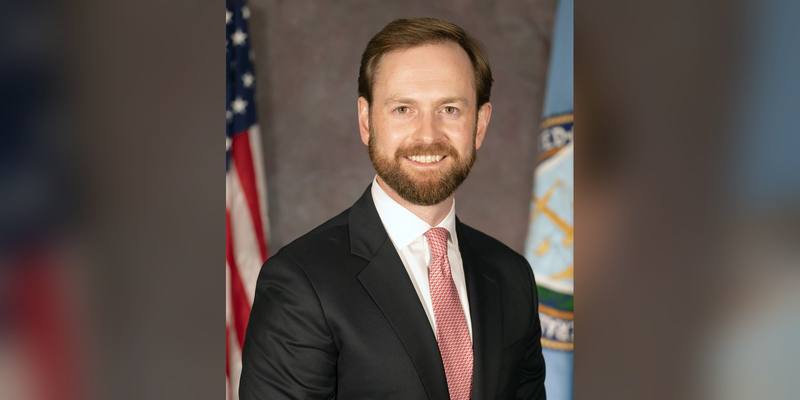
Secretary of War Pete Hegseth speaking at L3Harris in Camden, Arkansas, in February 2026 (file photo). Image: U.S. Navy Petty Officer 1st Class Alexander Kubitza, Department of War / Wikimedia Commons, Public domain, cropped

The US military is getting a new top-level command built around autonomous weapons. Secretary of War Pete Hegseth announced on Wednesday that an Autonomous Warfare Command will become a four-star combatant command by October 1, 2027, and that Elon Musk, Palmer Luckey and Newt Gingrich will lead a study of how America should fight its next wars.
Hegseth set out the plans in a speech to junior officers and non-commissioned officers at Marine Corps Base Quantico in Virginia, one of six initiatives he unveiled.
A command for robot warfare
The department calls the Autonomous Warfare Command “the fastest peacetime operational shift in modern military history”. Its job is to scale autonomous warfare across all of the US armed forces, and it will sit alongside commands such as Cyber Command and Special Operations Command as a four-star functional combatant command.
It builds on the Pentagon’s Drone Dominance programme, which the department says has already delivered thousands of robotic systems to the Middle East for Operation Epic Fury. The shift will be run under the name Project Agincourt by the office in charge of uncrewed systems, led by Owen West, the director of the Defense Innovation Unit, and Navy SEAL Senior Chief Max Strasiser, the first enlisted SEAL to graduate from Navy Test Pilot School.
The department did not say what role AI will play in choosing or striking targets, or what rules on human control the new command will follow.
Musk, Luckey and Gingrich get 120 days
The second AI-heavy announcement was Project Meridian, a study to identify the technology the military needs “for technological dominance on the next-generation battlefield”. It will be co-directed by Musk, who runs Tesla and SpaceX, Luckey, who co-founded the defence company Anduril, and Gingrich, the former Speaker of the House, with Pentagon chief technology officer Emil Michael helping to run it.
The team has 120 days. It will end with a public, unclassified report and a classified annex. According to Hegseth’s memo launching the project, as reported by The Next Web, artificial intelligence, autonomy, directed energy, robotics and biotechnology are the fields expected to change how wars are fought.
Hegseth told the audience at Quantico what it is for:
Project Meridian, the future of warfare, is not about developing new strategies or new policies. It is to identify the domains that we must conquer, and capabilities we must master.
Pete Hegseth, Secretary of War
Two of the three co-directors run companies that sell to the military. SpaceX builds launch and satellite systems for the Pentagon, and Anduril makes autonomous drones and weapons. The department has not said how any conflicts of interest will be handled.
The rest of the plan
Hegseth’s other four initiatives were FORTRESS America, which aims to give every major base its own power supply and bring supply chains such as semiconductors back to the US; a new off-grid base, with states competing to host it; new Corps of Cadets programmes at five universities; and an Office of Religious Affairs reporting directly to him.
Why it matters
A four-star command is the Pentagon’s way of saying autonomous weapons are no longer an experiment but a core part of how the US fights. It comes days after the US helped strip human control from the UN’s draft rules on AI weapons, and as Ukraine races to put robots on the front line. It also puts Musk back inside the Pentagon, which only last week was cleared to keep Anthropic on its blacklist.
Sources: US Department of War release, The Next Web.
Latest Policy & Safety news