
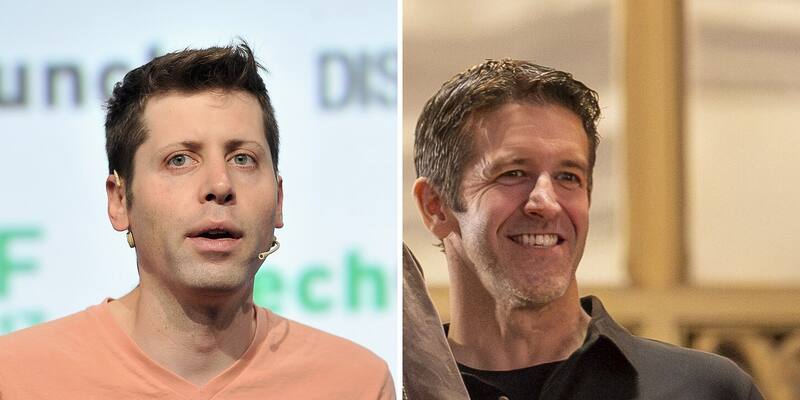
OpenAI CEO Sam Altman (left, at TechCrunch Disrupt in San Francisco in 2017) and Apple CEO John Ternus (right, in New York in March 2026). Image: TechCrunch (Sam Altman, CC BY 2.0) and Tessa Bury (John Ternus, CC BY 4.0), via Wikimedia Commons
OpenAI has hit back at Apple in court. In counterclaims filed on Friday, the ChatGPT maker accuses Apple of stealing its hardware trade secrets through a worker who left OpenAI to rejoin Apple, and of pressuring the suppliers the two companies share to stop working on OpenAI’s devices.
The worker OpenAI calls ‘Employee X’
The filing centres on a longtime Apple hardware and quality-inspection worker, named only as Employee X, who joined OpenAI’s East Asia devices operations on December 2, 2025. He worked mainly on one forthcoming OpenAI device, the filing says.
Within weeks, the filing says, he began sending confidential files to his personal email and phone numbers, and kept doing so until the day before he left on June 2, 2026. OpenAI lists a 76-page supplier measurement and inspection procedure for an unreleased component, a colour and resin workbook with nonpublic finish targets, and an archive called “structure.zip” with 3D scan data that it says reveals “nonpublic features and geometry of an unreleased OpenAI device”. On June 1 alone he sent six more archives to a Singapore phone number, it says.
When he resigned in May he said he was going back to China to care for his family and did not mention Apple, according to OpenAI. It alleges, “on information and belief”, that he rejoined Apple shortly afterwards and in July 2026 presented OpenAI’s hardware work and “unreleased-product roadmap” to senior Apple Asia-Pacific operations staff at Apple’s request. OpenAI says Apple has stalled since it sent a cease-and-desist letter on October 9, calling Apple’s response a “bad-faith shell game”.
Suppliers pushed to pick a side
The second charge is about factories. OpenAI says that for many parts it has only one or two qualified suppliers, many of which also work for Apple, and that its young device business can’t make up for the orders they would lose by crossing Apple.
It alleges that Apple’s supply-management staff asked shared vendors to name the workers assigned to OpenAI projects. One finishing supplier moved OpenAI parts to a separate overnight anodising shift after Apple objected to them going through the same line at the same time as its own, the filing says. Another key manufacturer told OpenAI it “could no longer undertake the planned work with OpenAI because of threats from Apple”, forcing OpenAI to rework its plans. The aim, OpenAI says, was to raise its costs and “compete unfairly by any means available”.
‘You can never leave’
OpenAI also turns Apple’s original lawsuit back on it. The filing opens by likening Apple to the Eagles’ Hotel California (“you can check out any time you like, but you can never leave”), arguing that Apple encourages staff to keep work files in personal iCloud accounts and do business over personal iMessage, so that almost anyone who leaves can later be accused of taking secrets. It says 400 Apple employees have left for OpenAI so far and that Apple “wants to scare the next 400 away”. It adds that Apple has “struggled to incorporate innovative AI capabilities” into its products, a weakness we have looked at before.
There are 12 causes of action in all, including trade secret theft under the federal Defend Trade Secrets Act, interference with supplier contracts and unfair competition. Chang Liu and Tang Tan, the two former Apple staff Apple sued, join in: both ask the court to declare parts of Apple’s employee Intellectual Property Agreement void under California law, and Liu accuses Apple of invading his privacy by imaging the MacBook he handed back and reviewing his personal messages after he left. They want damages, injunctions and a jury trial.
How the fight started
Apple sued in July, accusing Liu, Tan, OpenAI and io Products, the hardware firm Tan co-founded with Jony Ive that OpenAI bought in 2025, of misusing confidential Apple hardware information for OpenAI’s devices. Friday’s filing doubles as OpenAI’s formal answer, denying Apple’s claims, and on the same day the defendants withdrew their August motion to dismiss the case. The court’s scheduling order works towards a trial on July 19, 2027.
The two companies were partners not long ago: ChatGPT was built into Siri, a tie-up OpenAI admitted in another case was “dramatically underperforming”. OpenAI first raised the Employee X claims in October, and Apple said then that its investigation had not found OpenAI confidential information and that it had asked for more detail. Apple hasn’t commented on the counterclaims, and none of OpenAI’s allegations have been tested in court.
Why it matters
OpenAI needs the same small pool of specialist factories as Apple to ship its first devices, so a fight over suppliers goes to the heart of whether it can build hardware at all. The counterclaims turn Apple’s trade secrets case into a two-way battle and put Apple’s own hiring and iCloud practices on trial alongside OpenAI’s.
Sources: Counterclaims and answer of OpenAI, io Products, Tang Tan and Chang Liu, Apple Inc. v. Liu, No. 5:26-cv-07078 (N.D. Cal.), Dkt. 217; case docket; Apple’s complaint, Dkt. 1; 9to5Mac on Apple’s October response.
Latest OpenAI news